
Paris Became Quieter, but Great Tit Songs Stayed at a Higher Pitch
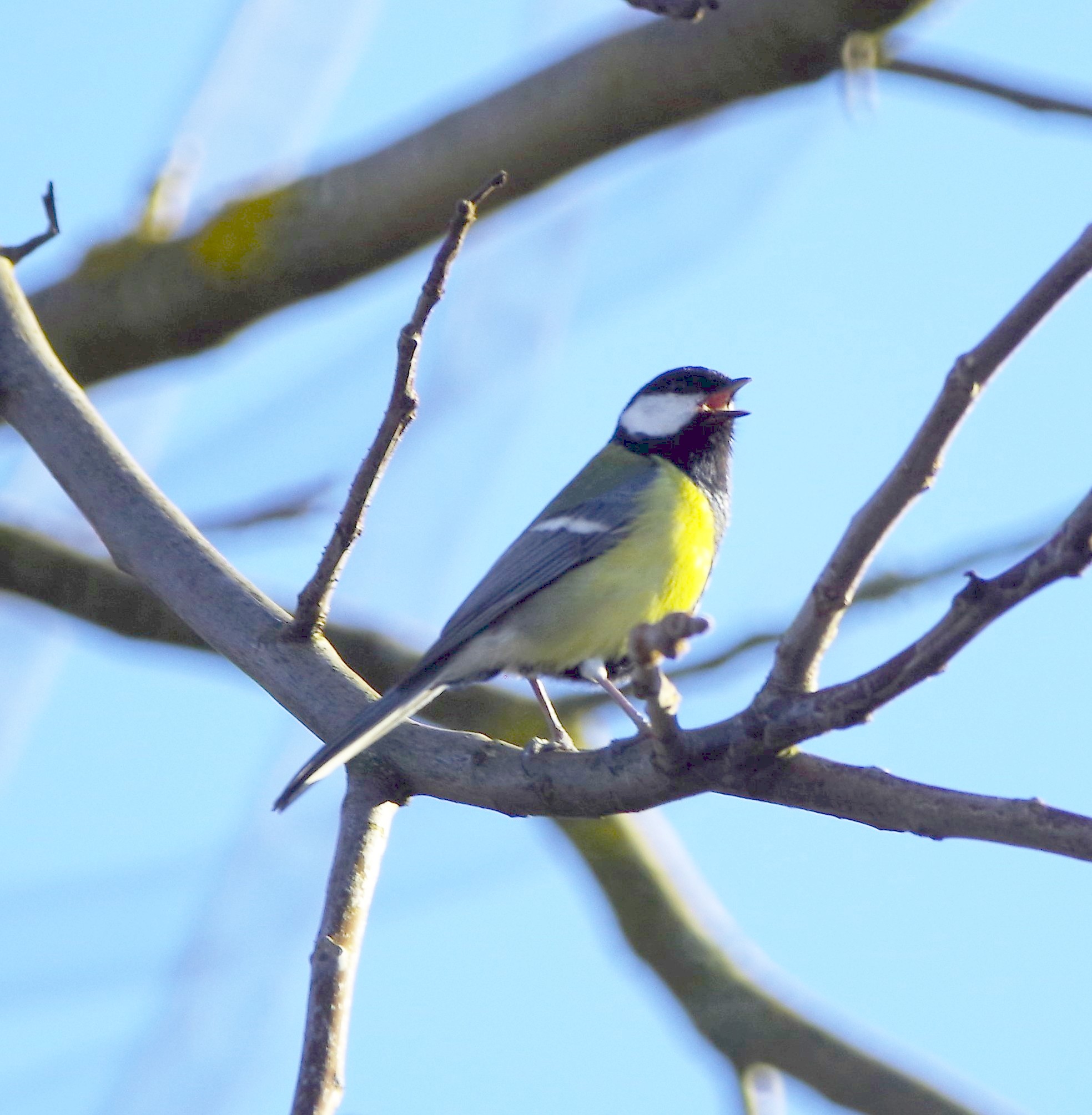
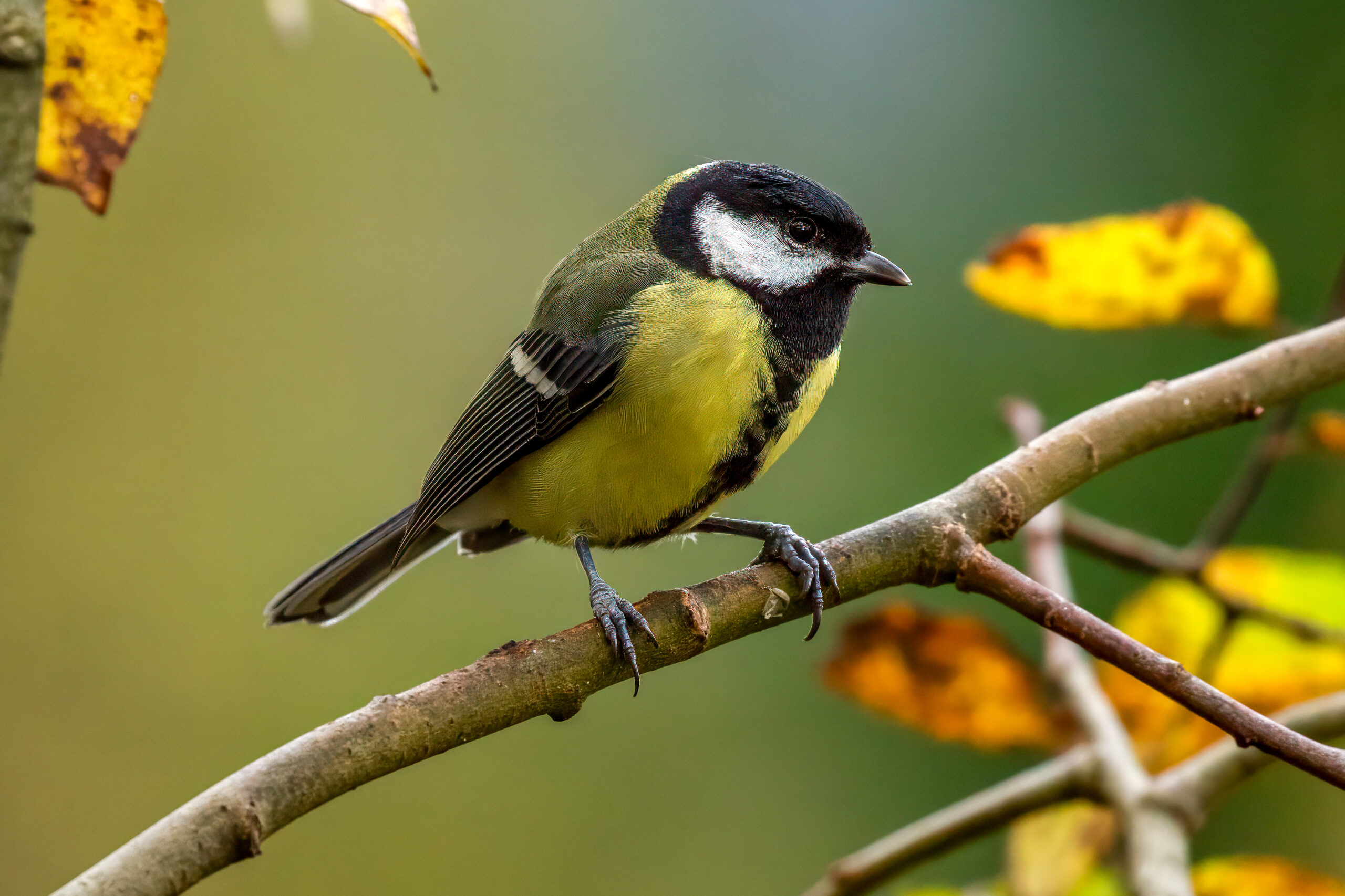
Paris has become quieter in recent years, but the songs of its urban great tits have not shifted back towards the lower frequencies heard in nearby forest. A study published in Ornithological Applications on 16 February 2026 found that the city birds still sang with higher minimum frequencies than birds in Fontainebleau in 2023, while their minimum song frequency in Paris had not declined since 2003.
Traffic and other human activity produce much of their sound energy at relatively low frequencies. That can mask parts of birdsong, making signals harder for other birds to hear. Many birds living in noisy places sing at higher frequencies, where their notes overlap less with the low-frequency background. The great tit (Parus major) is a well-studied example, and its varied, repeated songs make it useful for examining how animal communication changes across urban environments.
Daniel J. Mennill and Hans Slabbekoorn compared recordings made two decades apart. In both 2003 and 2023, they recorded free-living great tits at noisy sites within Paris and at quieter forest sites near Fontainebleau. Directional microphones captured the songs, while calibrated sound measurements described the immediate acoustic environment. The researchers also examined long-term monitoring data on noise in Paris.
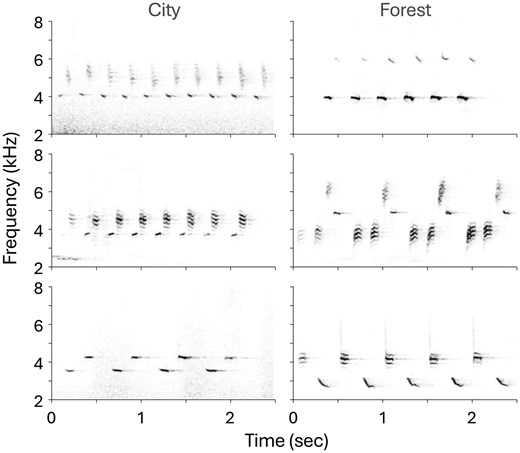
In 2003, the researchers recorded 27 individuals in Paris and 48 in Fontainebleau; in 2023 they recorded 57 urban and 30 forest individuals, with more than one song type analysed from some birds. The repeated city–forest comparison allowed them to ask whether the acoustic difference had narrowed as Paris became quieter.
Paris noise fell by 3.1 dB, but song frequency did not
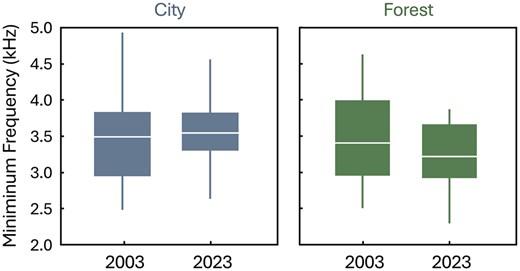
Government monitoring at 12 Paris sites showed that average anthropogenic noise fell from 69.3 dB(A) in 2008 to 66.2 dB(A) in 2023. Because the decibel scale is logarithmic, that 3.1 dB decline corresponds to roughly half the sound intensity. The bird recordings nevertheless showed a persistent difference in 2023: minimum song frequency averaged about 3.54 kHz in Paris and 3.26 kHz in Fontainebleau. Minimum song frequency in Paris had not declined significantly between 2003 and 2023.
Local background noise remained associated with minimum frequency in 2023
Background noise remained associated with song structure at individual recording sites. In 2023, songs recorded against louder background noise had higher minimum frequencies in Paris, and the same relationship appeared across the much quieter and narrower noise range in Fontainebleau. Songs also had narrower bandwidth — a smaller span between their lowest and highest frequencies — in noisier surroundings, while song duration showed no clear relationship with noise. These patterns are consistent with acoustic adjustment to the local sound environment. However, the broader historical comparison did not show a corresponding downward shift in Paris minimum frequency as average city noise declined.
The study could not identify why the urban song pattern persisted
A quieter city did not produce an immediate return to forest-like birdsong. The authors note that the Paris recording sites were still about 15 dB louder than the forest reference sites in 2023, so a larger reduction in noise may be needed before lower-frequency songs become advantageous again. They also raise a cultural explanation: young great tits learn from adult tutors, and decades of high urban noise may have left relatively few local tutors using lower-frequency songs. The study did not distinguish between these possibilities.
Behaviour
Related news
Juvenile Harris's Hawks Manipulated Pine Cones for About Five Minutes
Two juvenile Harris's hawks in Buenos Aires Province tore pine cones from trees, carried them to new perches…
Read story →
Rock Doves Preferred Predictive Information Despite a Lower Food Payoff
Seven rock doves preferred an informative option that paid on 20% of trials over a non-informative option that…
Read story →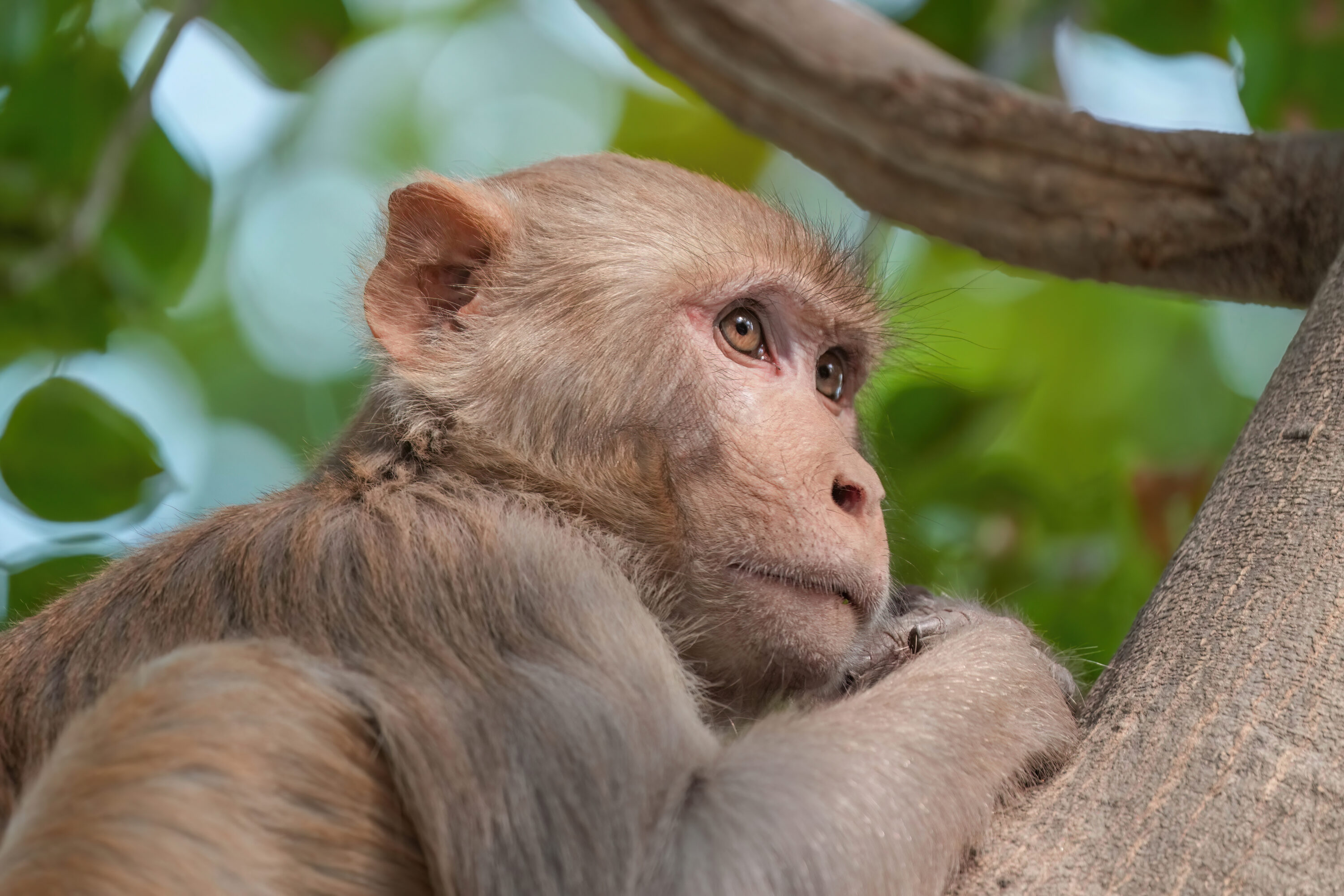
Task Uncertainty Increased Interference From Irrelevant Visual Information in Rhesus Macaque Decisions
Two rhesus macaques made less accurate visual decisions under task uncertainty; recordings and microstimulation in primary visual cortex…
Read story →SPECIES IN THIS STORY
Species in this story
Independent research and conservation news archive
Did you find this information useful?
Wildlife Vagabond is independently built and maintained. Voluntary support helps cover source verification, hosting and continued work on research and conservation news.
Support Wildlife VagabondThe news archive will remain freely available.