
Eurasian Skylark Breeding Success Was Much Higher in Extensively Managed Grassland Than Intensive Farmland
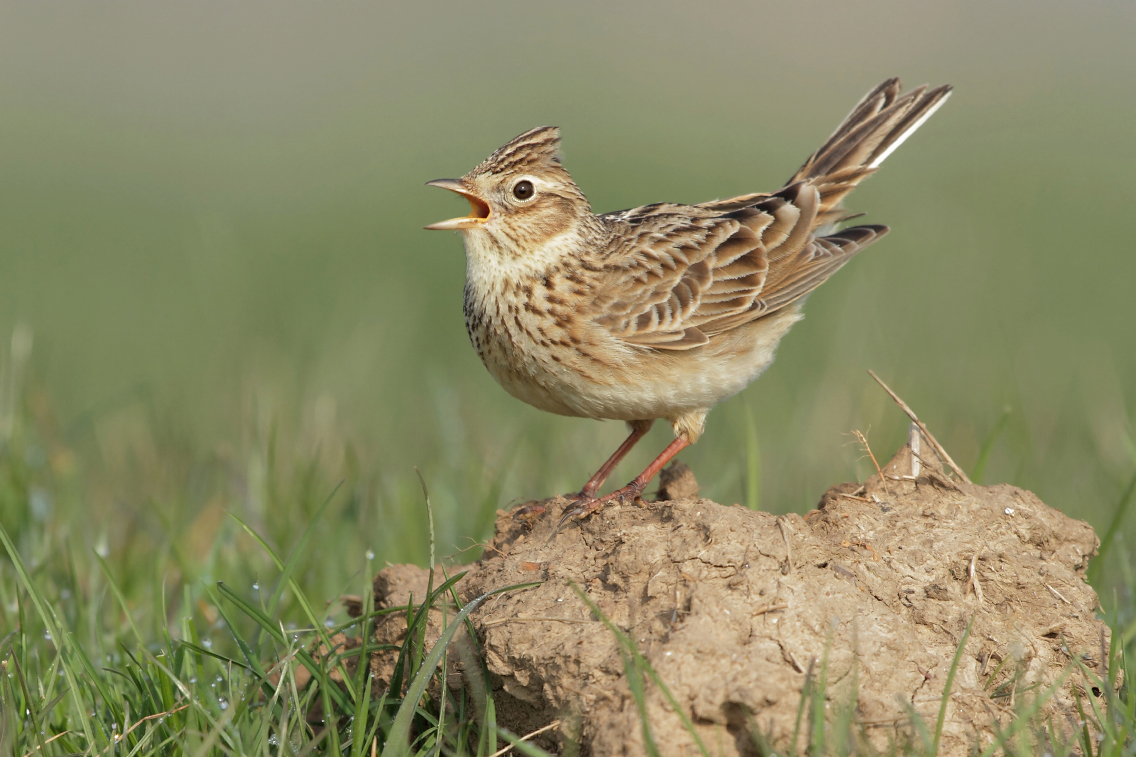
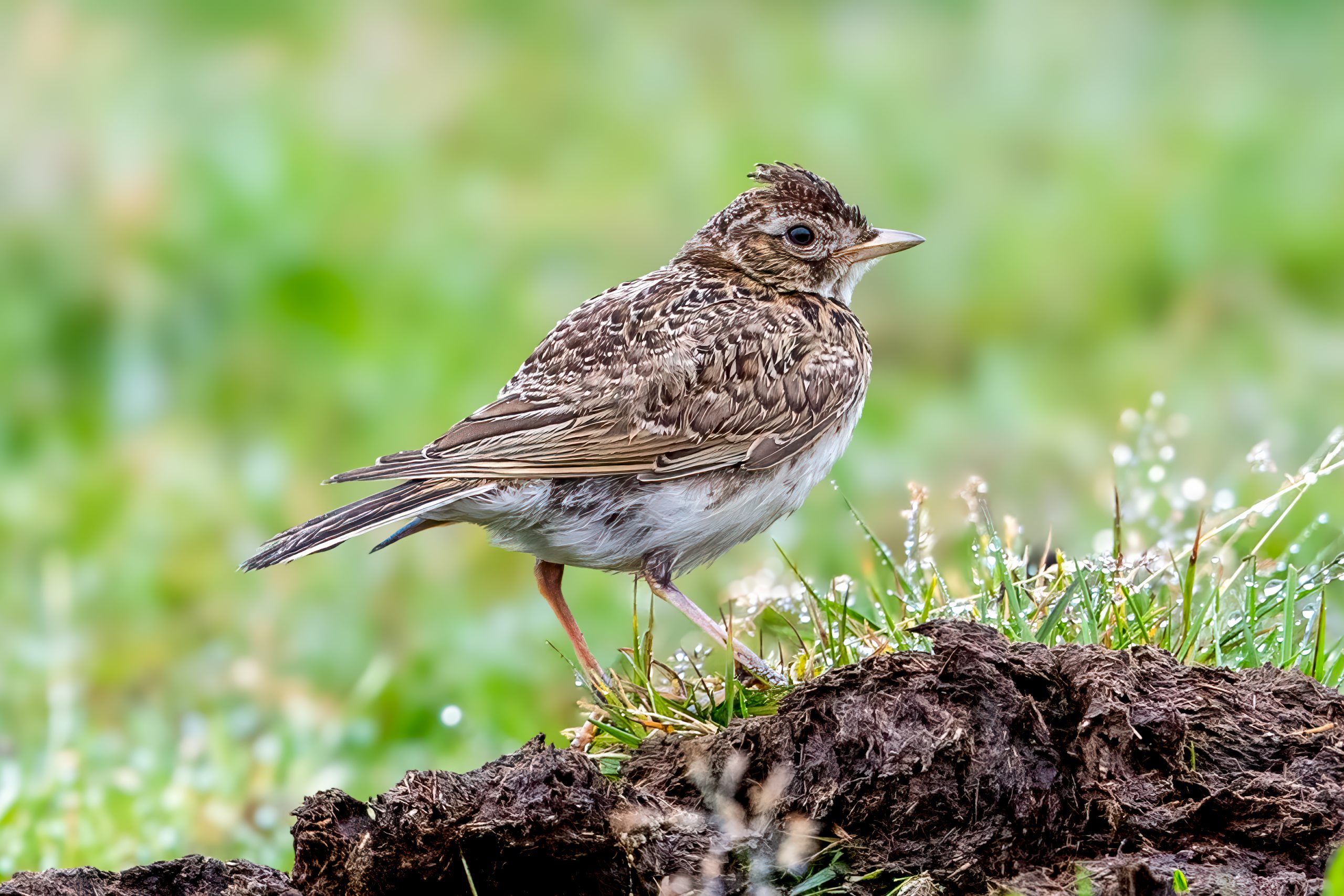
A study in Lower Saxony, Germany, found a large difference in breeding success between Eurasian skylarks (Alauda arvensis) nesting in extensively managed grassland in the Bleckriede nature reserve and birds using nearby intensive farmland. Mayfield-estimated breeding success was 81.7% in the reserve and 6.9% in the agricultural landscape. Breeding also began about a month earlier in Bleckriede.
The fieldwork took place in the Diepholzer Moorniederung from 2 April to 14 July 2025. Researchers first mapped territories and then observed 18 selected territories twice a week while searching for nests in both areas. They found 38 nests: 25 in Bleckriede and 13 in the agricultural landscape. The reserve grassland was managed without fertilisers or pesticides and was generally mown late. Large electric fences were also used there for predator management aimed at protecting breeding meadow birds. The surrounding agricultural area was dominated by conventionally managed maize and winter cereals, with some intensively managed grassland cut several times per year.
Breeding Began About a Month Earlier in Bleckriede
The estimated date of the first egg was 18 April in the reserve and 14 May in the agricultural landscape, a clear difference of almost one month. Estimated breeding-pair density was also much higher in Bleckriede: 2.5 pairs per 10 hectares compared with 0.4 pairs per 10 hectares in farmland.
Of the 25 nests in the reserve, 24 were successful or partly successful. In the agricultural area, six of the 12 nests whose outcome could be assessed were successful. Four farmland nests were lost to mowing and two to predation; the only recorded nest loss in the reserve was caused by predation. The Mayfield method estimated the probability that a nest would survive the full nesting period from daily survival and the number of days each nest was actually under observation, rather than simply dividing successful nests by all nests found. It produced estimated breeding success of 81.7% in Bleckriede and 6.9% in the agricultural landscape. Estimated productivity was 2.92 young leaving the nest per breeding attempt in the reserve and 0.12 in farmland.
Mean clutch size was 4.12 eggs in Bleckriede and 3.92 in the agricultural landscape. Clutch size tended to be larger in Bleckriede, but the analysis did not support a clear difference. The study also found no clear difference in the measured condition of chicks between the two habitat types. Thus, the study supported two of its three main predictions: breeding started later in the intensive agricultural landscape and breeding success was lower there, while the expected clutch-size difference was not confirmed.
Mowing and Vegetation Structure May Help Explain the Difference
The author discusses several mechanisms that could contribute to the contrast. One is food availability. Previous work has found higher insect diversity and abundance in extensively managed grassland, and the paper proposes that poorer food availability early in the season could delay the build-up of breeding condition in the agricultural landscape. Food availability was not measured in this study, so this remains a proposed explanation rather than a demonstrated mechanism.
Management and vegetation structure provide another possible explanation. The four documented nest losses to mowing show a direct risk from agricultural operations in the study area. The author notes that intensively managed grassland can function as an ecological trap when it initially attracts skylarks but repeated mowing, fertilisation and rapidly growing grasses leave too little time for a nesting attempt to succeed. Skylarks also need a mosaic of open ground and cover. In Bleckriede, small-scale variation and relatively low vegetation growth provided suitable nesting structure over a longer period, whereas crops in the agricultural landscape grew densely and more uniformly, narrowing the period when nesting conditions were suitable.
The fieldwork also illustrates how difficult late-season nesting in crops can be to document: in mid-July, adults carrying food were seen at five sites in maize more than 1.70 metres tall, but the nests could not be found in the dense vegetation.
The author concludes that maintaining or restoring heterogeneous farmland with structurally varied, extensively managed areas is important for providing high-quality breeding habitat. In this study, the strongest contrast was not in clutch size or chick condition, but in when breeding began and whether nesting attempts succeeded.
Reproduction & development
Related news
Satellite Data Found Bird-Rich Areas More Reliably Than Individual Species in Central Norway
Long-term counts from 89 routes in Trøndelag and Møre og Romsdal showed that satellite and climate data captured…
Read story →
Diversified Crop Patches Had More Bird Observations Than Conventional Fields in Germany
A three-year study in Brandenburg recorded 20.0 bird observations per hectare in a diversified patch-cropping field, compared with…
Read story →
Legume Plots and Low-Input Cereal Strips Had at Least Five Times More Skylark Sightings
Seven years of monitoring on nine German commercial farms showed large differences among ten agri-environmental measures, with fallows…
Read story →SPECIES IN THIS STORY
Species in this story
Independent research and conservation news archive
Did you find this information useful?
Wildlife Vagabond is independently built and maintained. Voluntary support helps cover source verification, hosting and continued work on research and conservation news.
Support Wildlife VagabondThe news archive will remain freely available.