
Social cues helped finches retain more body mass during food restriction, but House Finches lost more muscle
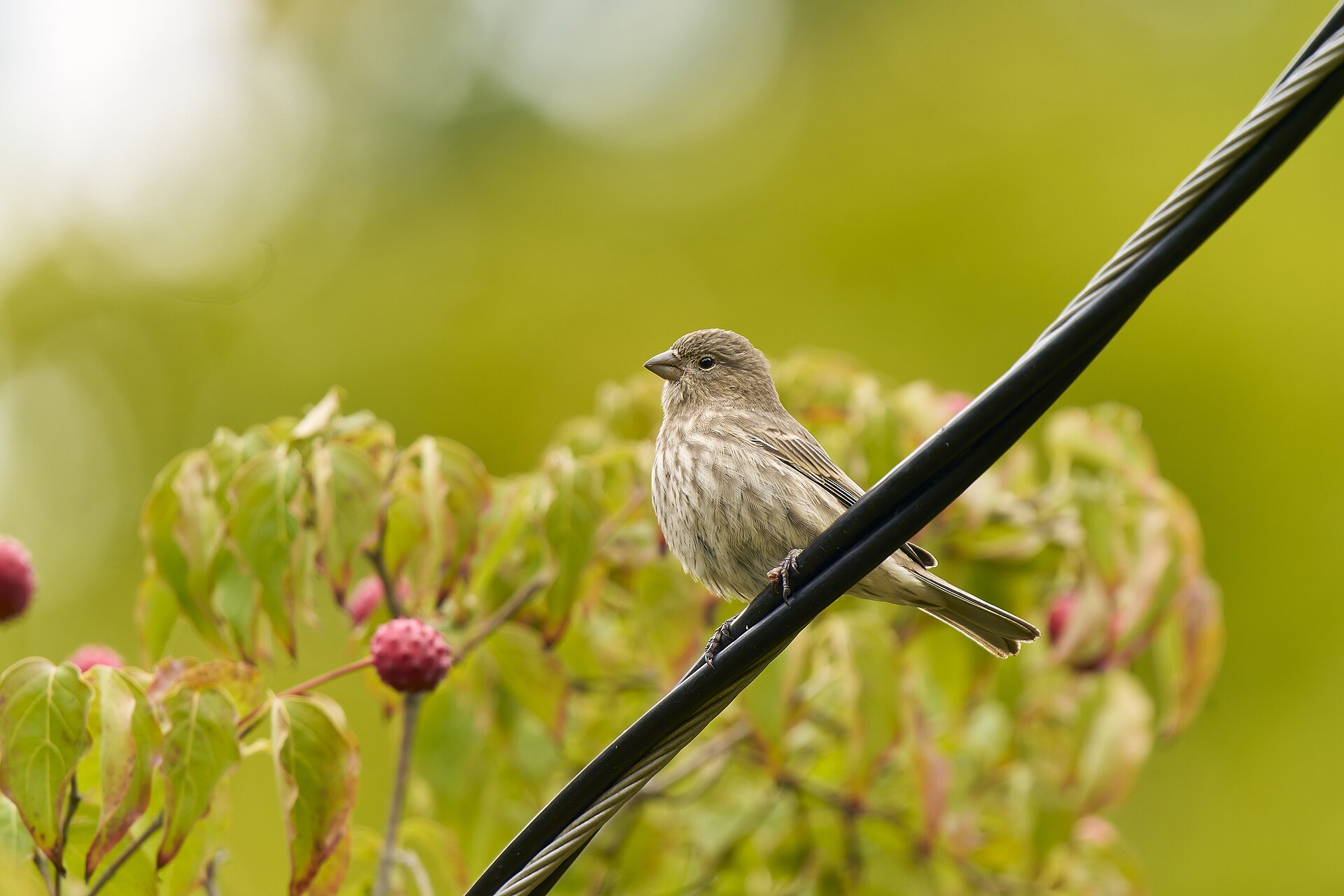
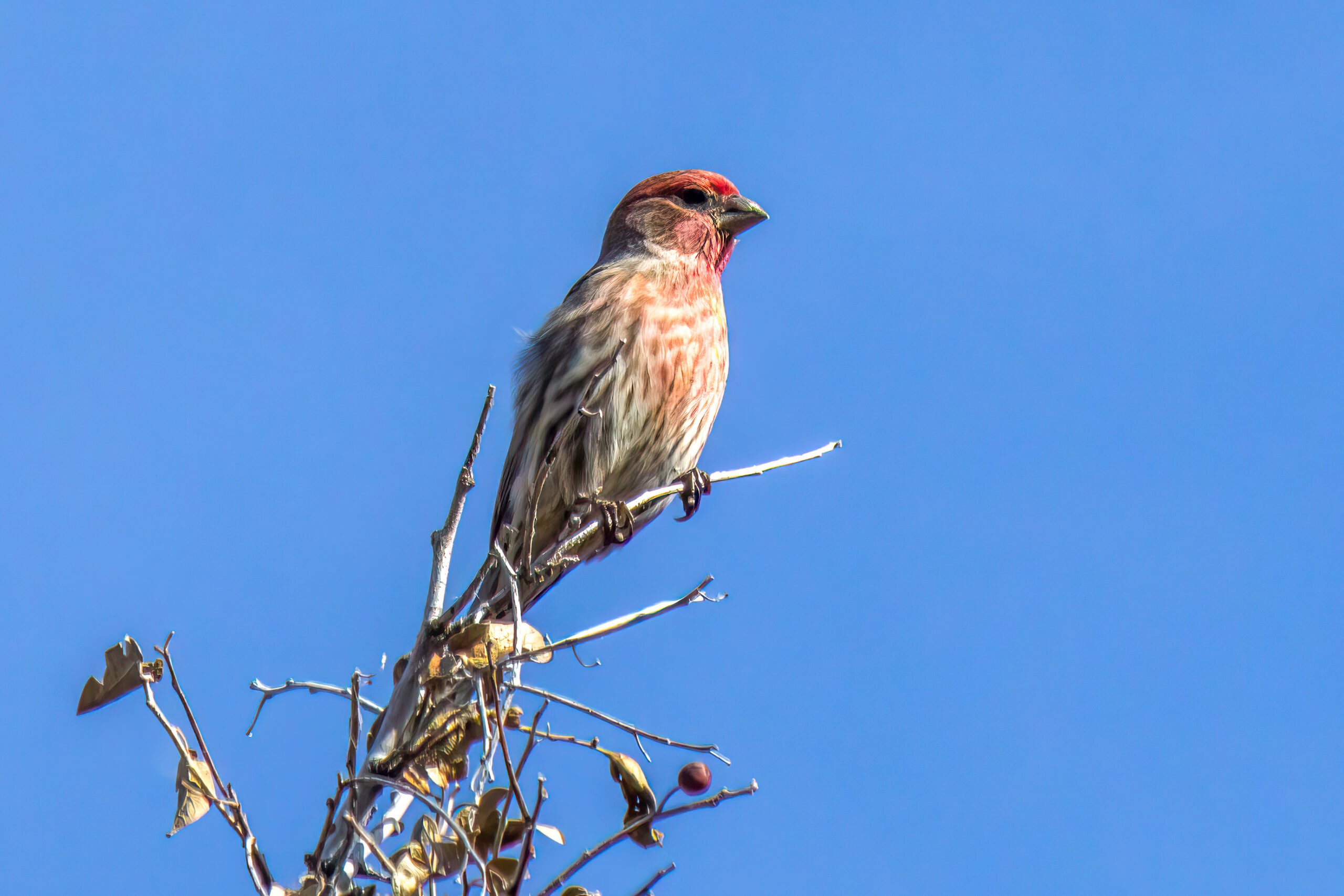
Watching a food-restricted flockmate may give a bird useful information about a changing food supply. In an experiment, House Finches (Haemorhous mexicanus) and nomadic Pine Siskins (Spinus pinus) that had first watched a bird of their own species undergo food restriction retained more body mass during their own time-limited restriction than birds that had not received this social information.
Social cues from neighbors can signal the presence of resources, predators or competitors. Earlier work found that Red Crossbills (Loxia curvirostra), highly social nomads that specialize on patchily distributed conifer seeds, better preserved body condition when they had observed food-restricted neighbors before food declined. The new study tested whether a similar response also occurs in finches with different life histories. Pine Siskins are nomadic but dietary generalists, while House Finches are resident dietary generalists.
Body mass was conserved, but muscle loss differed
In both species, birds that had received social information retained more body mass during food restriction than uninformed controls. This suggests that information from other finches may help birds respond when food becomes limited, even across species with contrasting movement patterns and diets.
The species did not respond alike in every measure. House Finches lost substantially more pectoral muscle—the chest muscles that power flight—than Pine Siskins during food restriction. Their muscle loss was also greater than that reported for Red Crossbills in earlier studies.
The authors suggest that social information may help buffer the effects of food restriction broadly among finches. They also propose that differences in how finches’ bodies cope with reduced calorie intake may be shaped by migratory strategy or evolutionary history.
Physiology
Related news
Early and late infection reveal different virulence patterns in House Finches
A reanalysis of experimental House Finch infections found distinct evolutionary trajectories for pathogen exploitation, harm per bacterium and…
Read story →
House Finch Reached a Record 667 in Alberta’s 2026 May Bird Count
Volunteers recorded 667 House Finches in Alberta’s 2026 May Bird Count, the highest total for the species in…
Read story →
Ottawa finch illnesses prompt warning about house finch eye disease
Tests confirmed mycoplasmosis in more than a dozen finches after numerous birds with crusted, inflamed eyes reached an…
Read story →SPECIES IN THIS STORY
Species in this story
Independent research and conservation news archive
Did you find this information useful?
Wildlife Vagabond is independently built and maintained. Voluntary support helps cover source verification, hosting and continued work on research and conservation news.
Support Wildlife VagabondThe news archive will remain freely available.