
Southern African Pythons Persist Despite a Changing Landscape
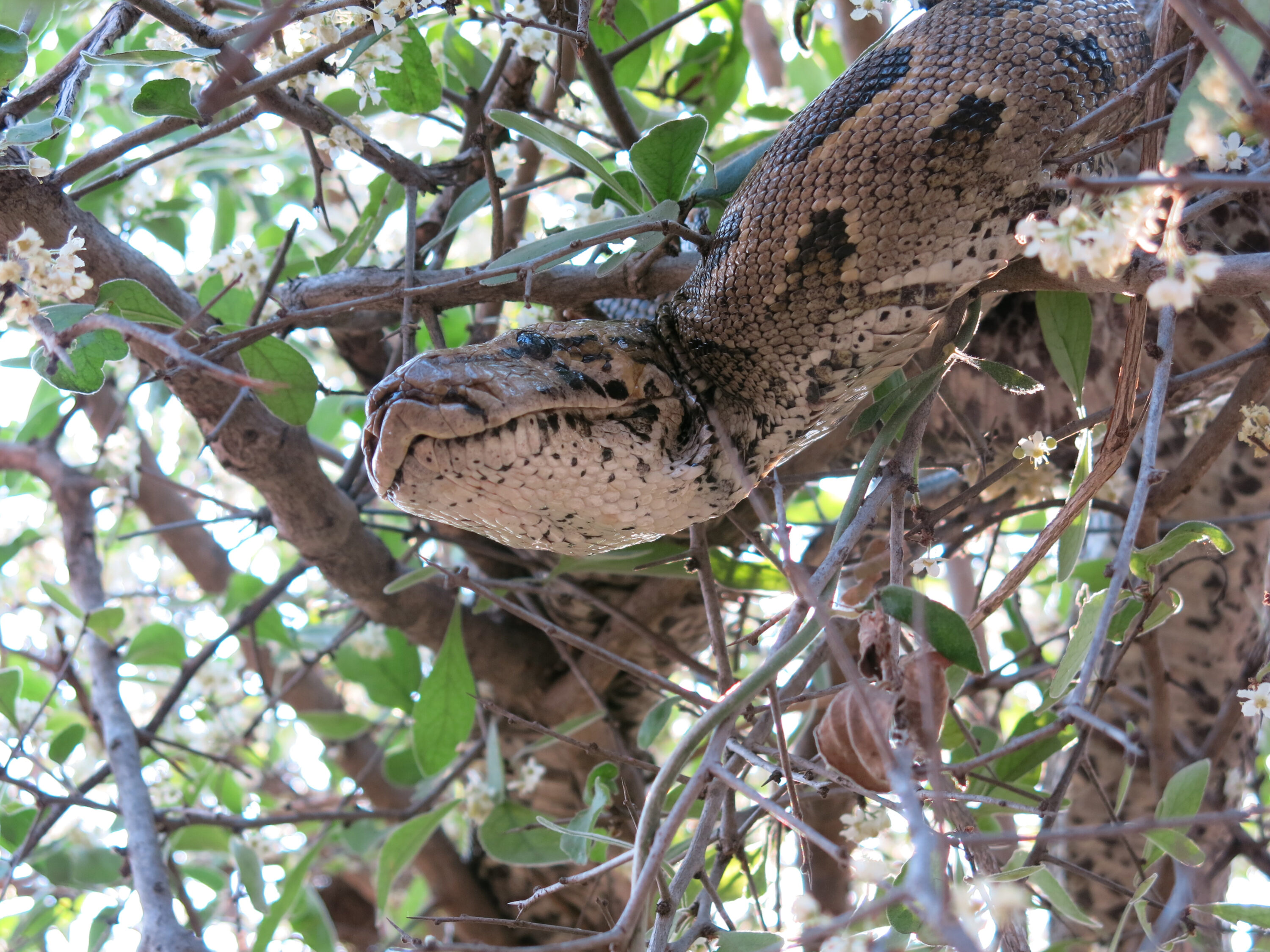
Southern African pythons (Python natalensis) still occur across a broad part of South Africa despite more than a century of land-use change and increasing human pressure. A study published in April 2026 brought together historical and modern records to examine where the species persists and which threats are most often documented.
More recent records do not demonstrate population growth
The researchers compiled 1,237 python records dating from 1907 to 2025. Records became much more numerous after 2015 and filled several gaps in the known distribution. This should not be interpreted as evidence that the python population has expanded. The increase is likely to reflect better reporting, growing use of citizen-science platforms and easier collection of wildlife observations.
The records were most strongly associated with the Forest biome, followed by the Indian Ocean Coastal Belt and Savanna. Pythons occurred from sea level to above 1,700 metres, but the grid-cell analysis showed the strongest concentration at low elevations: 81% of the available cells below 200 metres contained python records. Pythons occurred both inside and outside protected areas. Just over half of the records, 53%, came from protected areas, even though protected areas represented only 9.2% of the national land coverage used in the comparison. This indicates that protected landscapes contain a particularly high concentration of recorded python occurrence.
Roads, electric fences and direct killing remain documented threats
The study also documented several human-related causes of injury and death. Road traffic was an important source of mortality, while electric fences can kill snakes that attempt to cross them. Fires can also be dangerous, particularly when pythons are unable to escape quickly enough. Direct killing and harvesting add further pressure in some areas.
The review also shows that the python occupies both sides of predator–prey relationships. The authors documented 16 animal species feeding on southern African pythons and another three species that killed pythons without consuming them. This helps explain why they emphasise the snake’s ecological role not only as a large predator but also as prey within South African food webs.
The authors note that the occurrence data are affected by observer bias and by differences between the historical and recent reporting periods. They therefore use the records primarily to describe occurrence patterns and documented threats rather than to infer population growth.
The researchers conclude that southern African pythons continue to persist across large parts of South Africa despite extensive land-use change, while also facing road mortality, electric fencing, fires, direct killing and harvesting. They recommend mitigation of these human-related threats and continued protection of the species and its habitats. Suggested measures include road warning signs in areas with frequent python crossings, changes to electric-fence design and timing management burns to avoid periods when pythons are especially exposed while basking or gathering for breeding.
Ecology
Related news
Online Advert Led Police to a Live Southern African Python in North West Province
South African police recovered a live Southern African python in Delareyville after it was allegedly advertised online for…
Read story →
Patchier, More Diverse Landscapes Were Linked to More Reported Snake–Human Encounters in Eswatini
Using 2,216 public snake-rescue records from Eswatini, the study found that reported encounter likelihood increased with patch density…
Read story →
African Bush Elephants Distinguished Artificial Food-Quantity Patterns at Close Range
In experiments in South Africa, four semi-tame elephants chose between visual patterns representing canopy size and leaf density.…
Read story →SPECIES IN THIS STORY
Species in this story
Independent research and conservation news archive
Did you find this information useful?
Wildlife Vagabond is independently built and maintained. Voluntary support helps cover source verification, hosting and continued work on research and conservation news.
Support Wildlife VagabondThe news archive will remain freely available.