
Adult Male Vervet Monkeys Were Disproportionately First at More Exposed River Crossings
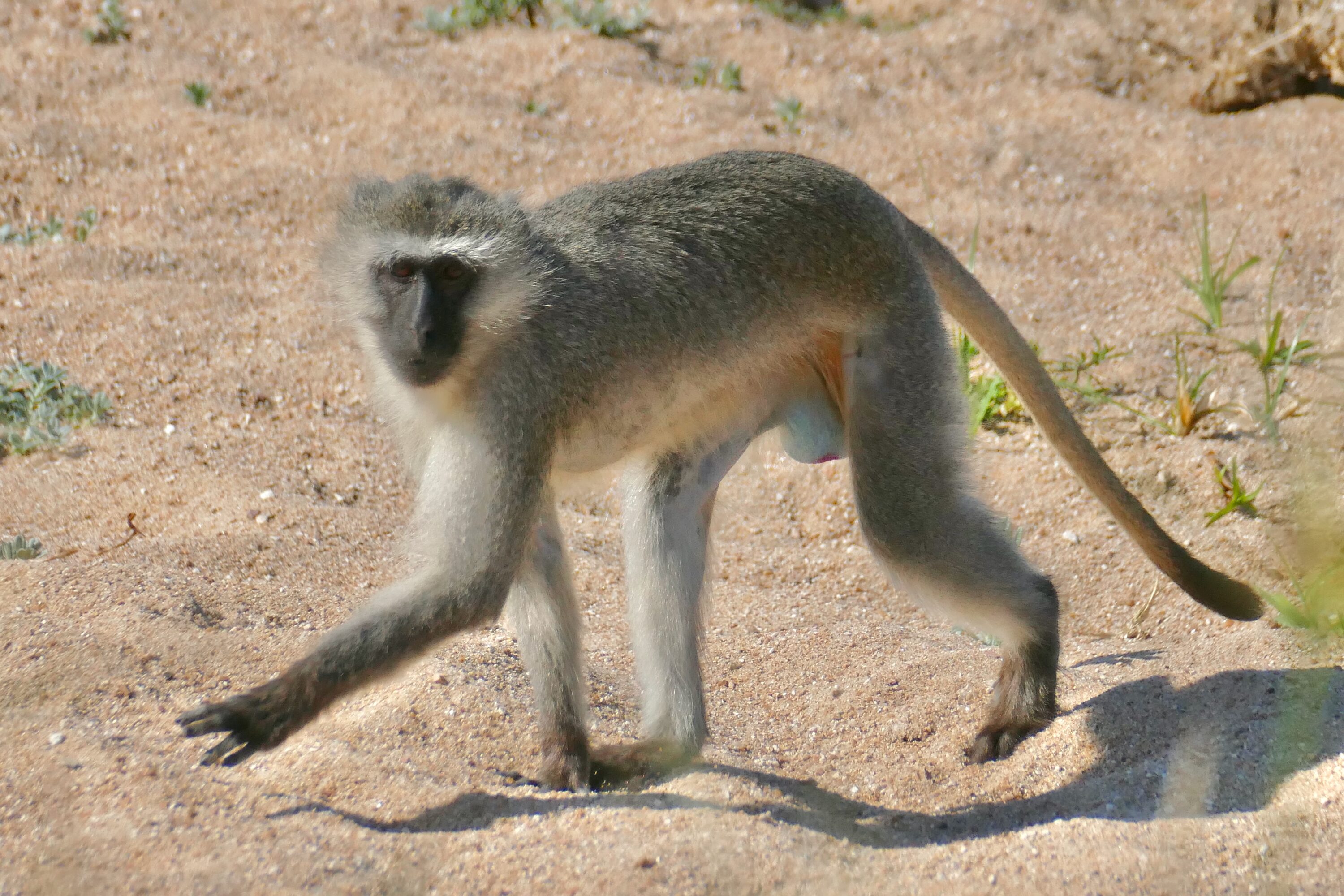
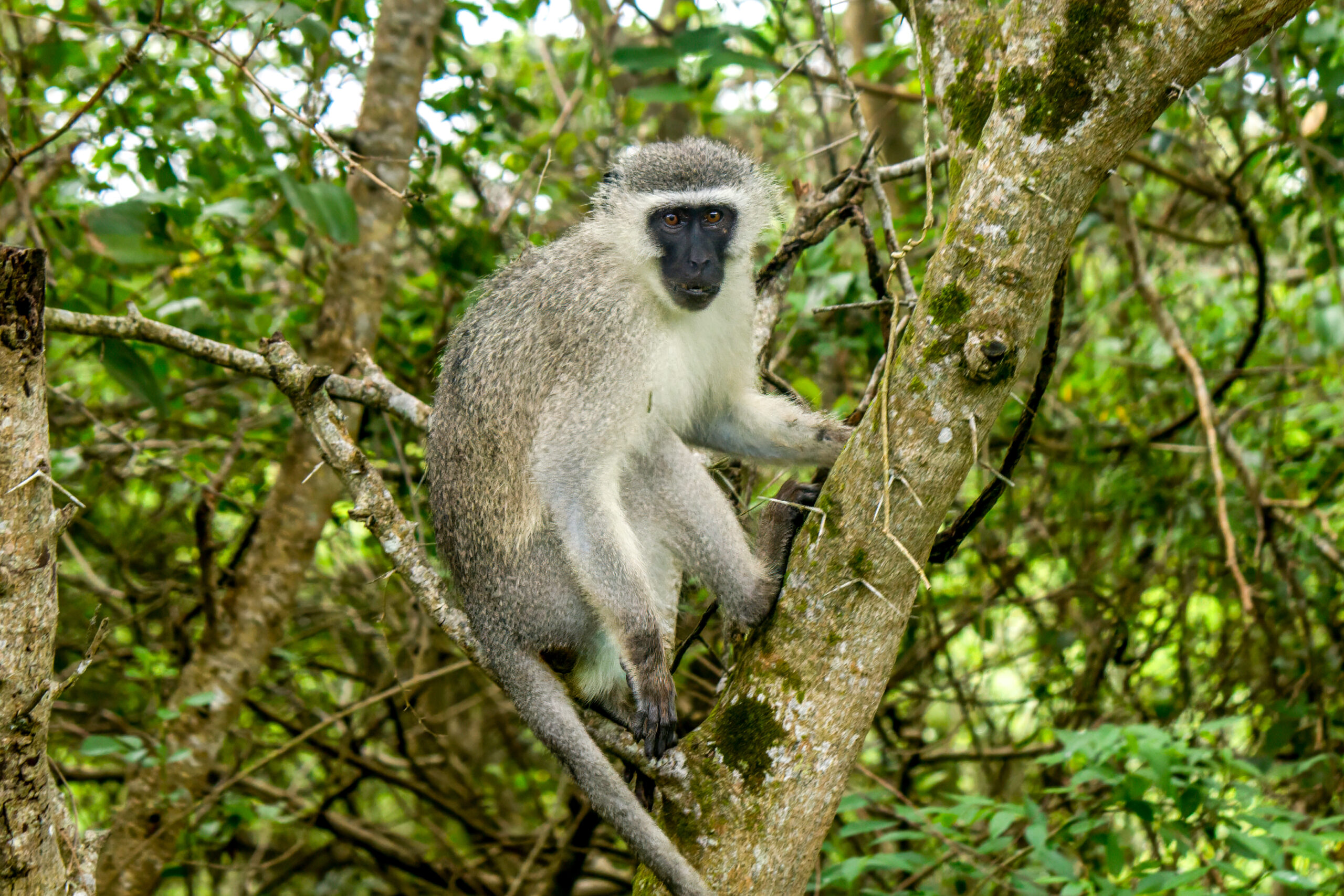
When a group of vervet monkeys (Chlorocebus pygerythrus) crosses exposed terrain, the first animal across may occupy a more exposed position than those that follow. A study published in June 2026 examined which individuals occupied this front position at river and dirt-road crossings. In the study, “leadership” simply meant being the first individual to cross the defined river or road line; it did not necessarily mean that the animal had decided when or where the whole group should move.
Researchers followed five neighbouring vervet groups at Mawana Game Reserve in KwaZulu-Natal, South Africa, from October 2021 to May 2024. They recorded 391 group crossings in which the first individual was known: 171 across single-track dirt roads and 220 across the Hlonyane River floodplain. The roads were narrow and carried very little slow traffic, whereas river crossings involved much wider, open terrain. Predator alarm calls were also recorded around about 15% of river crossings, compared with about 6% of dirt-road crossings, so the researchers treated rivers as the higher-risk context and roads as the baseline. The study did not directly measure how often predators attacked during the crossings.
Adult males were disproportionately first, especially at rivers
Adult males made up a median of only about 16% of group membership, yet they were first across in 52.7% of the 391 recorded group progressions. The raw proportion was 45.0% at dirt roads and 58.6% at rivers. Statistical models showed that adult males were more likely than adult females and juveniles to be first in both settings, with the age–sex differences stronger at rivers. The direct male river-versus-road comparison itself was only a non-significant tendency, so the study does not show a statistically secure increase in male front-positioning simply because the group reached a river.
Dominant males were particularly likely to be first, and this dominance difference was stronger at rivers. Front-position males were also unusually isolated there: during river crossings, males that were first crossed close in time to other individuals in only 20.0% of observations, compared with 80.3% for male non-leaders. This means the exposed front position was often genuinely solitary rather than merely the front edge of a tightly packed subgroup.
Neither paternal care nor direct mating benefits explained the pattern
The researchers tested two main explanations for male-biased front positioning: paternal care and benefits through reputation or mating opportunities. “Likely fatherhood” was not determined genetically; it was inferred from how long a male had been in the group and whether his tenure overlapped the relevant mating season before infants were born. The paternal-care hypothesis was not supported. The relationship between fatherhood and front positioning depended on dominance status: dominant males classified as non-fathers were more likely to be first than dominant likely fathers, whereas among subordinate males the pattern reversed, with likely fathers more likely to be first than non-fathers. Males classified as likely fathers were not more likely to stay close to infants during crossings.
A male’s leading rate also did not predict his subsequent recorded mating rate — the number of mounts per observation time over the following 12 months — or his change in Elo dominance score over roughly the next three months. These measures test short-term mating and status benefits, not genetic paternity or lifetime reproductive success. The authors therefore found no support for paternal care, immediate mating benefits or rapid rank gains as single explanations.
They conclude that male-biased positioning during group movement is context-dependent and probably reflects several overlapping processes, including ecological conditions, dominance and reproductive status.
Behaviour
Related news
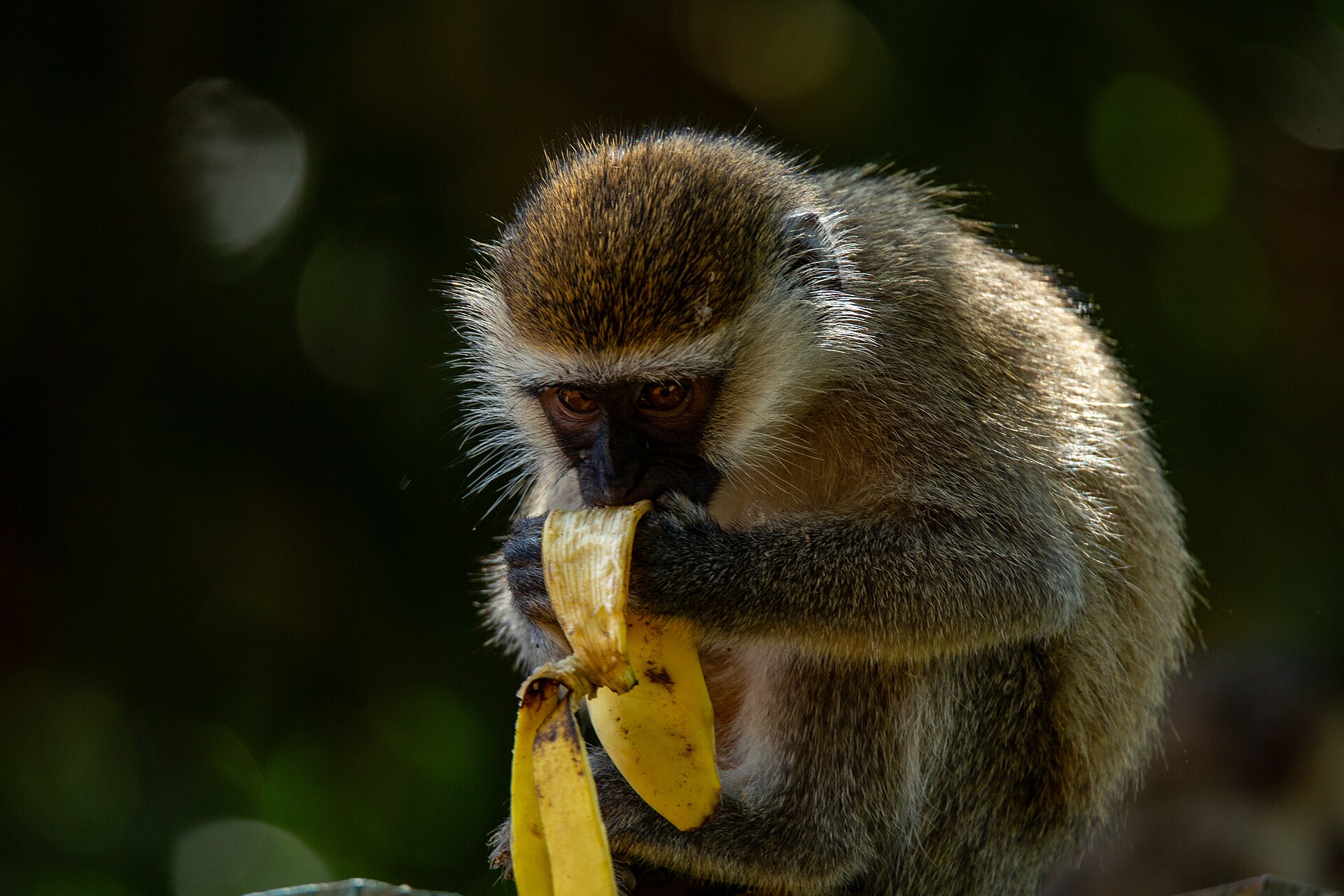
Only dominant vervet monkeys tackled the hardest food puzzle
In a field experiment with wild vervet monkeys, monkeys of different ranks used easier food puzzles, but only…
Read story →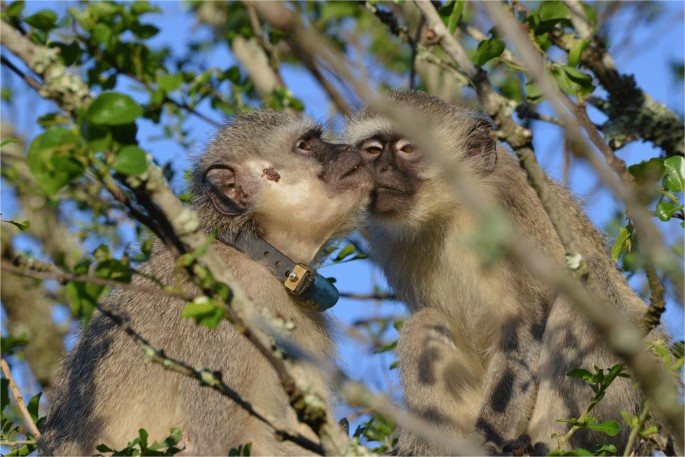
Wild Vervet Monkeys Used Vision in 96.8% of Food Evaluations
In 18,868 food-evaluation observations from 44 wild vervet monkeys in South Africa, vision was used in 96.8% of…
Read story →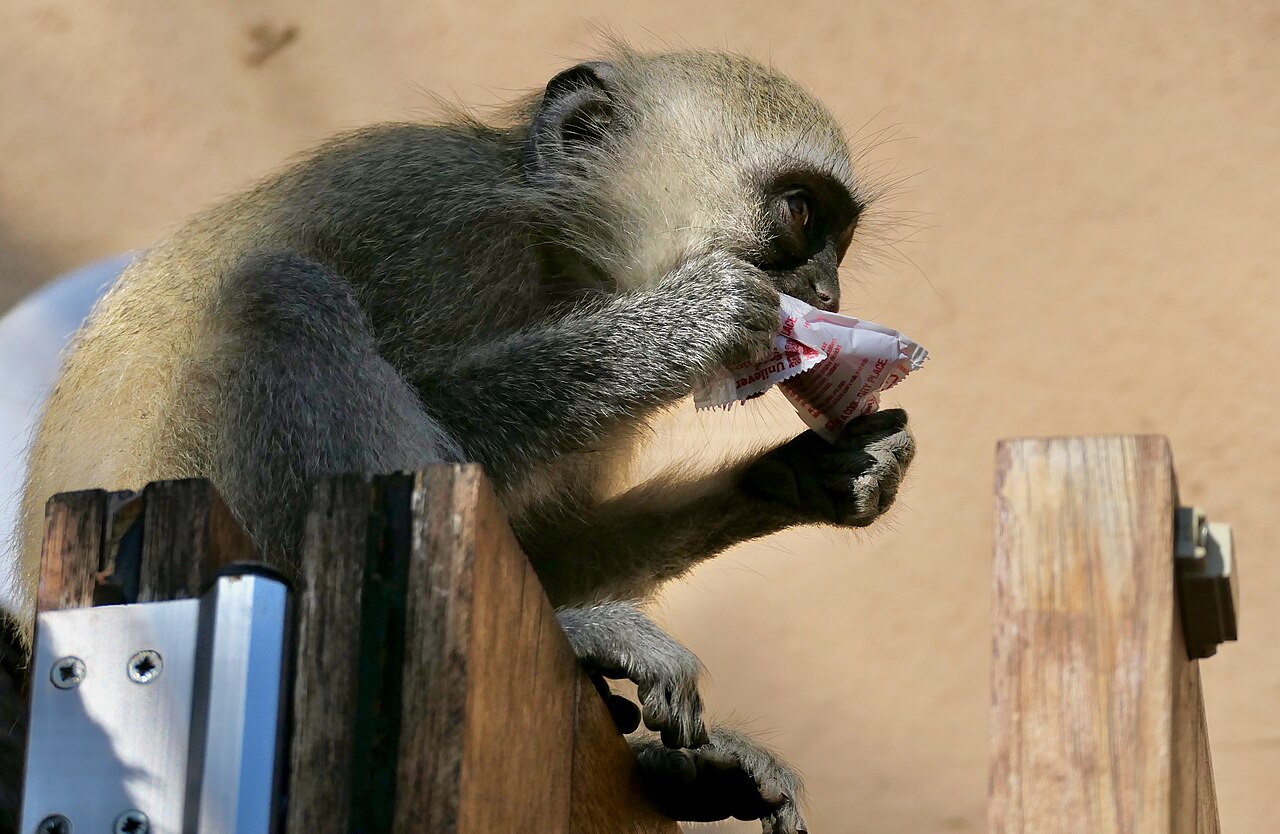
More Foraging Around Buildings and Bins Was Not Linked to Greater Flexibility in Vervet Monkeys
A study of 42 semi-urban vervet monkeys found that more experience foraging around buildings and bins did not…
Read story →SPECIES IN THIS STORY
Species in this story
Independent research and conservation news archive
Did you find this information useful?
Wildlife Vagabond is independently built and maintained. Voluntary support helps cover source verification, hosting and continued work on research and conservation news.
Support Wildlife VagabondThe news archive will remain freely available.