
Wild Vervet Monkeys Used Vision in 96.8% of Food Evaluations
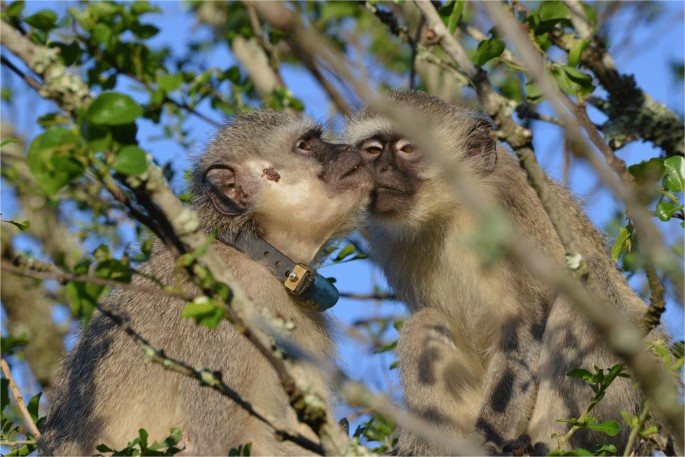
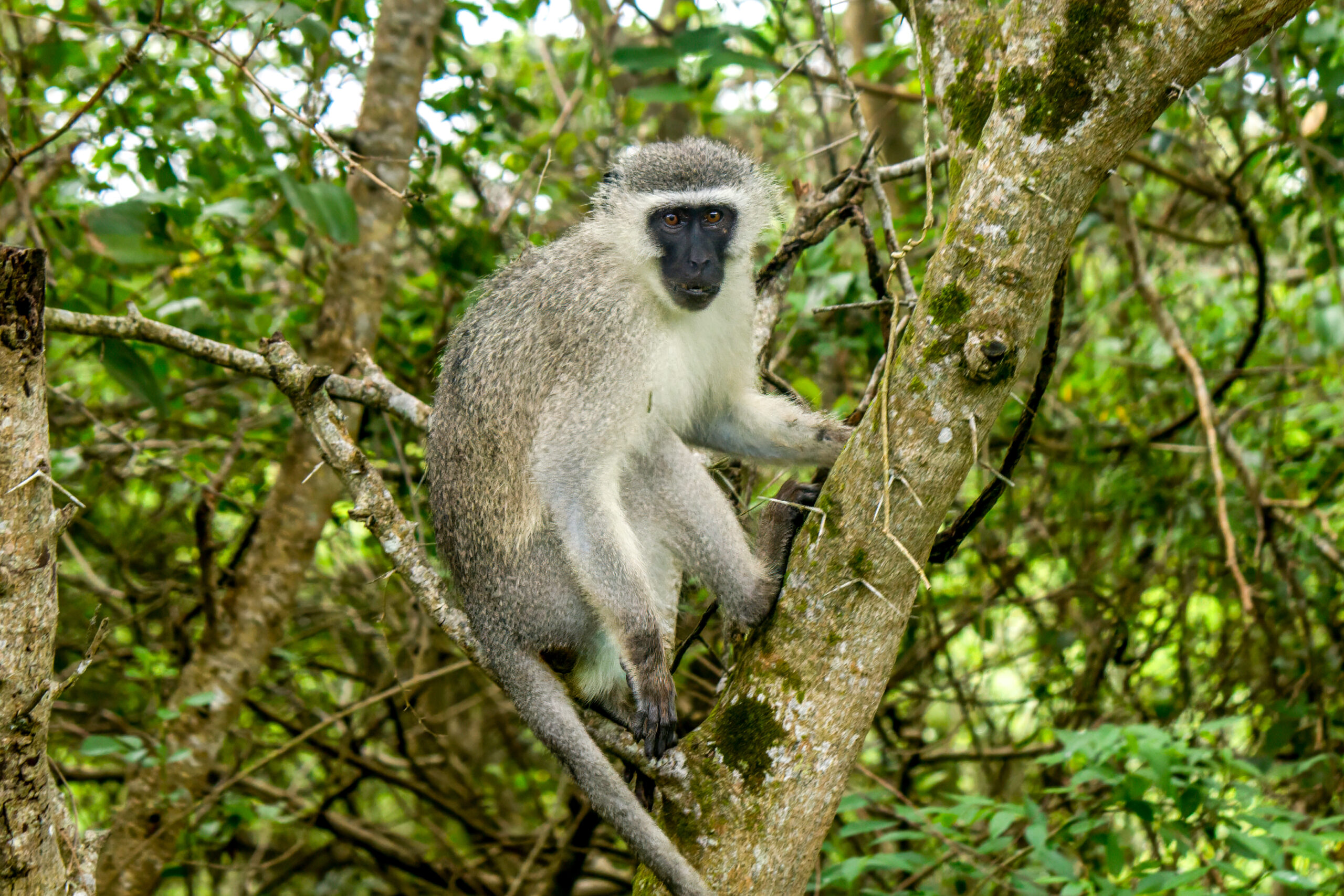
Wild vervet monkeys (Chlorocebus pygerythrus) used vision in 96.8% of the recorded occasions when researchers observed them evaluating possible food. That does not mean their other senses were unimportant. In a field study of 44 monkeys in South Africa, the use of touch, smell and taste varied with the kind of food and with the individual examining it.
The researchers followed two groups at Mawana Game Reserve in KwaZulu-Natal over five months and recorded 18,868 instances of sensory use during food evaluation. Vision was used 18,263 times, touch 334 times, smell 203 times and taste 73 times. Vervet monkeys have sharp vision and trichromatic colour vision, helping them assess the appearance and colour of potential food.
Young monkeys explored food by touch more often
Juveniles used touch to inspect food more frequently than adults. This may be useful while they are still learning which foods are edible and how to handle them. The researchers found no overall age difference in the use of vision, smell or taste. Males used smell more often than females when inspecting bark, but they were not generally more reliant on smell when evaluating all kinds of food.
Of the inspected food items for which an outcome was recorded, 98.9% were eaten. Fruit was rejected most often, but even there rejection occurred in only 2.4% of cases. The monkeys also prepared some foods before eating them, particularly roots and arthropods. Both rejection and preparation depended mainly on food type rather than the monkey’s age or sex.
Muzzle contact may provide information from other monkeys
The researchers observed 54 instances of muzzle contact, in which one monkey brought its nose and mouth close to another monkey while that individual was feeding. Such contact may provide information about what the other animal is eating through smell, making it a possible form of social food learning. Young monkeys initiated contact more often than adults in the overall analysis, while females were more than four times as likely as males to receive it. However, the total number of events was small.
The findings show how a visually oriented primate can adjust sensory information gathering to the situation. When food is familiar, a quick visual assessment may be enough. Touch and smell can provide additional information when food is less certain or while younger animals are still learning. This fits optimal foraging theory, in which animals balance the value of gathering more information against the time and energy needed to obtain it.
Behaviour
Related news
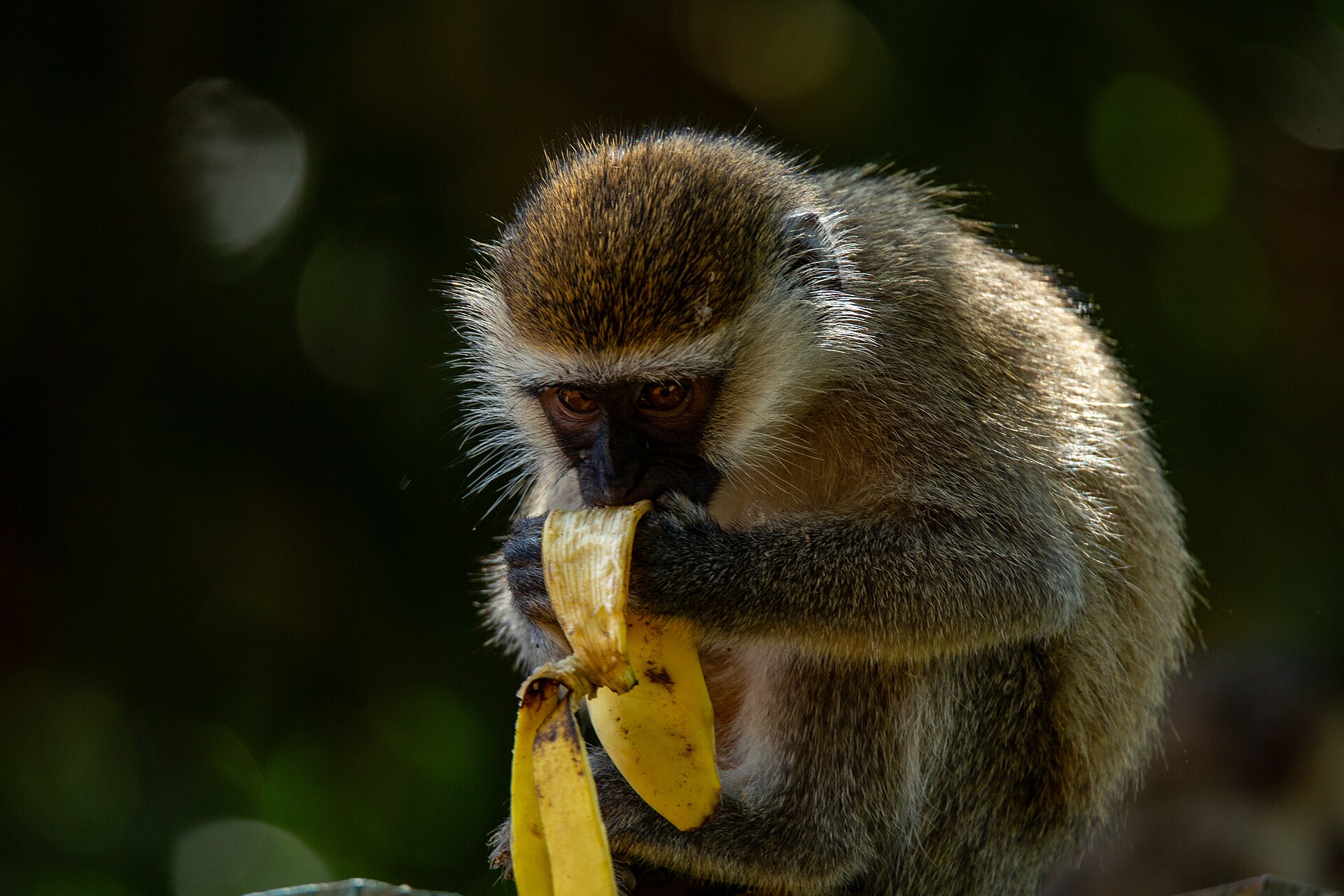
Only dominant vervet monkeys tackled the hardest food puzzle
In a field experiment with wild vervet monkeys, monkeys of different ranks used easier food puzzles, but only…
Read story →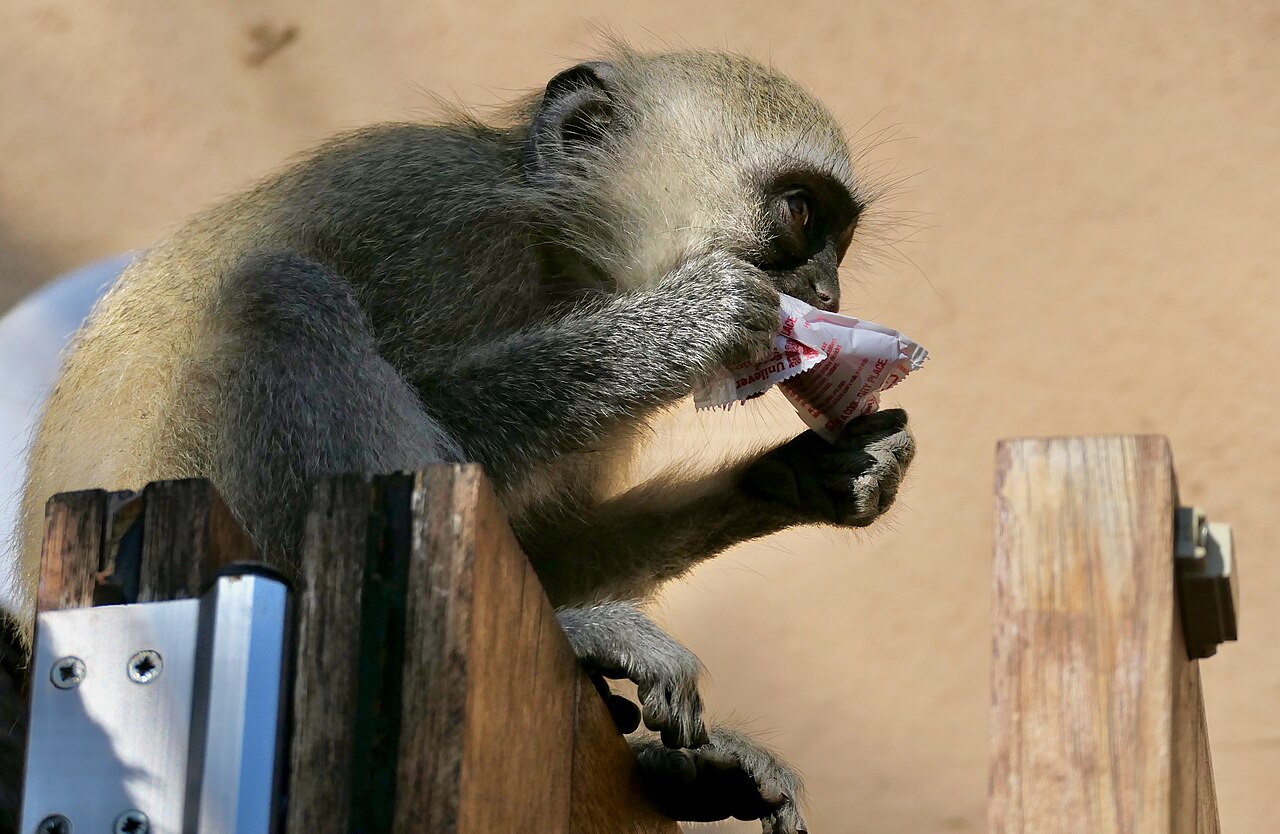
More Foraging Around Buildings and Bins Was Not Linked to Greater Flexibility in Vervet Monkeys
A study of 42 semi-urban vervet monkeys found that more experience foraging around buildings and bins did not…
Read story →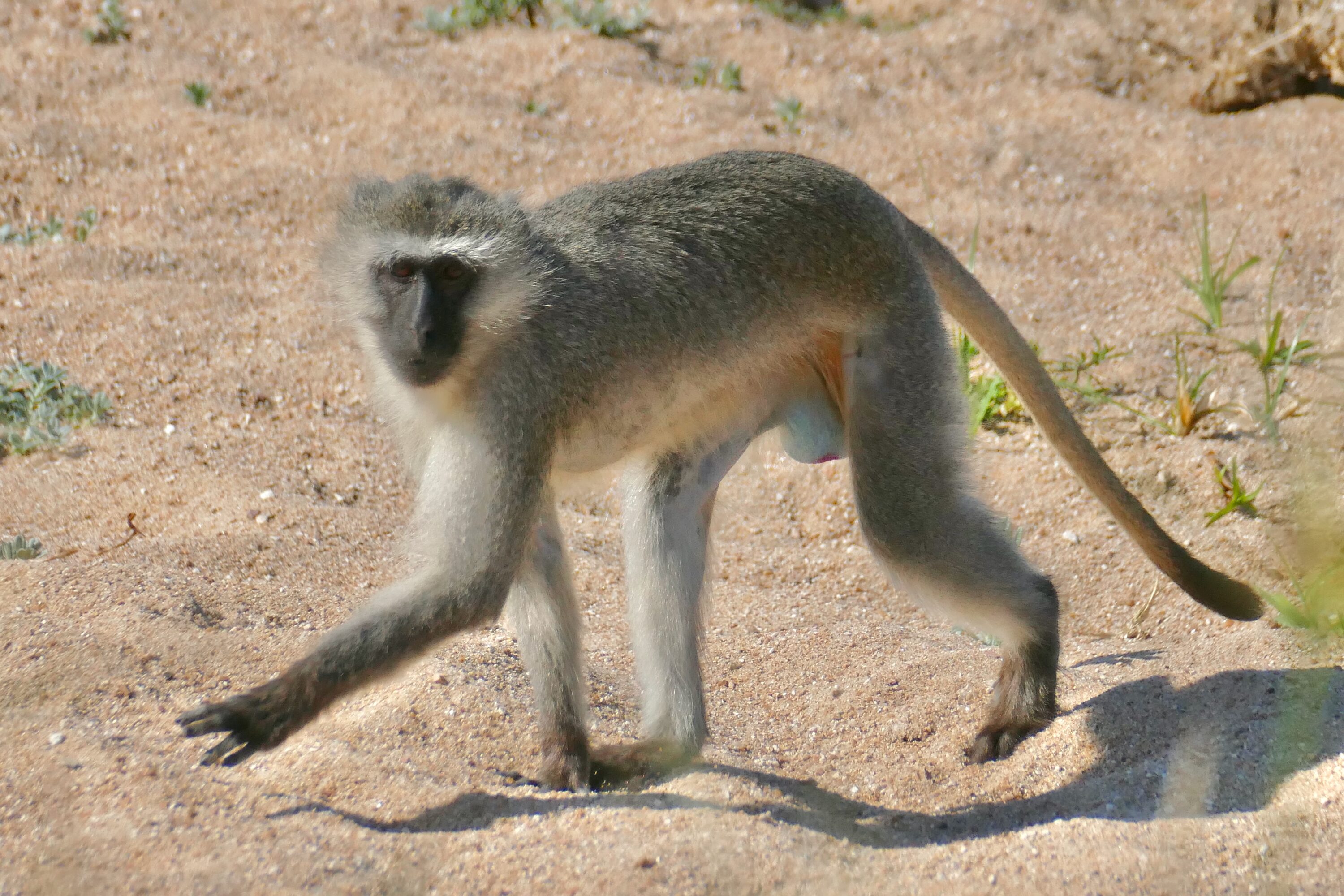
Adult Male Vervet Monkeys Were Disproportionately First at More Exposed River Crossings
Across 391 crossings in five vervet groups, adult males were disproportionately likely to cross first, with the strongest…
Read story →SPECIES IN THIS STORY
Species in this story
Independent research and conservation news archive
Did you find this information useful?
Wildlife Vagabond is independently built and maintained. Voluntary support helps cover source verification, hosting and continued work on research and conservation news.
Support Wildlife VagabondThe news archive will remain freely available.