
Male Village Weavers With Both Microfilariae and Active Moult Had the Lowest Glucose and Body Condition
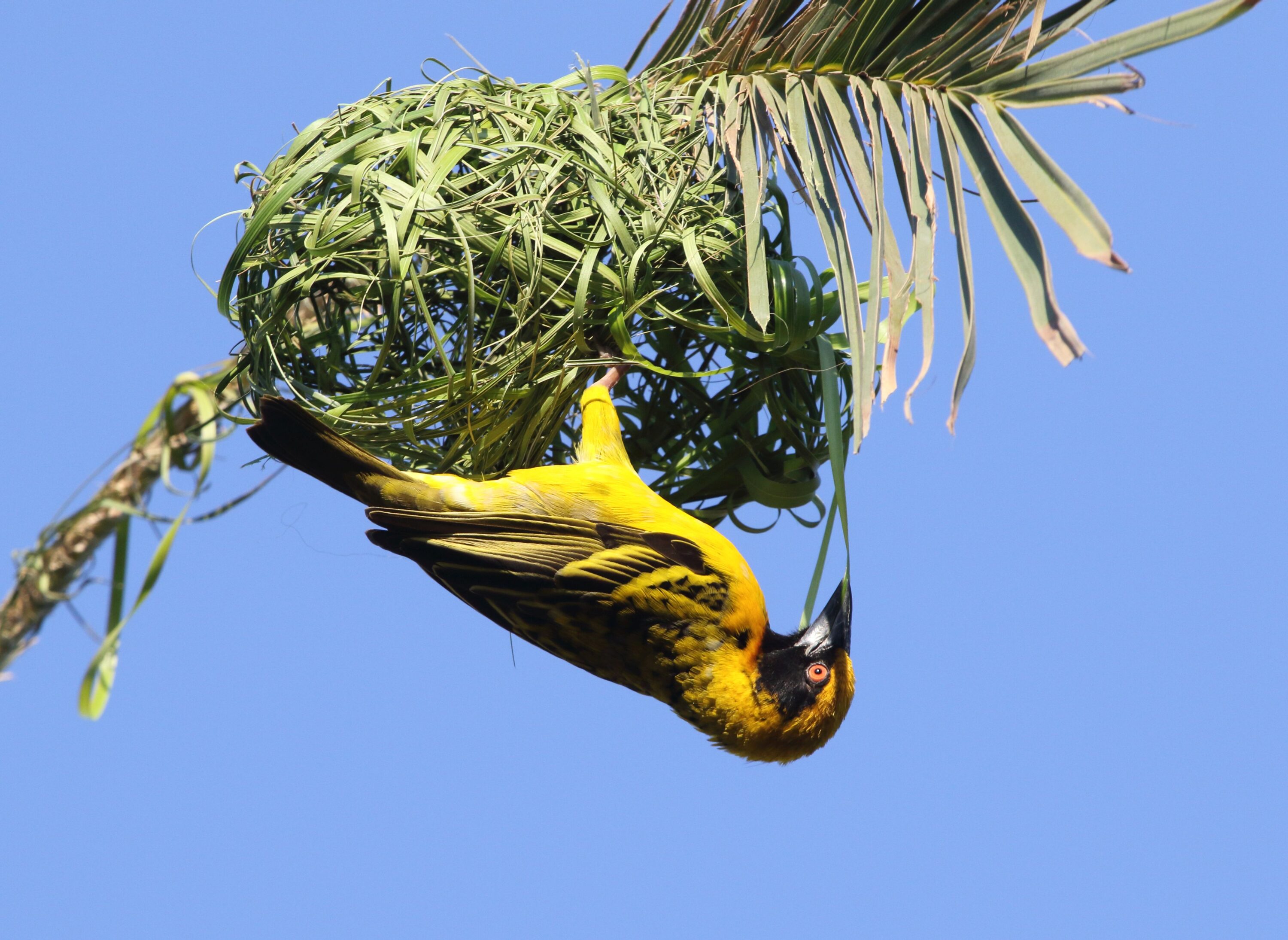
A study of breeding male village weavers (Ploceus cucullatus) in Nigeria found the strongest metabolic changes in birds that were both infected with microfilariae — larval filarial worms circulating in the blood — and actively moulting. The article was published on 6 April 2026 in Biochemistry and Biophysics Reports.
Researchers captured 128 adult males during the breeding season at Amurum Forest Reserve. The birds were divided into four groups according to microfilariae infection and moult status: 35 were infected and moulting, 25 were uninfected and moulting, 31 were infected and not moulting, and 37 were neither infected nor moulting.
Infected, moulting males had the lowest glucose and body condition
The researchers measured plasma glucose, triglycerides and β-hydroxybutyrate, together with a body-condition index adjusted for structural size. The index compares body mass with structural size, so lower values mean that birds were lighter for their size rather than simply being smaller-bodied individuals. β-hydroxybutyrate is a ketone body that rises when stored fat is being used more intensively for energy. The infected, moulting birds had the highest mean β-hydroxybutyrate concentration, at about 0.93 mmol/L, while their mean plasma glucose concentration, about 8.10 mg/dL, and body-condition index were the lowest among the four groups.
By comparison, males that were neither infected nor moulting had the highest mean triglyceride concentration, about 1.54 mmol/L, and a mean glucose concentration of about 10.8 mg/dL.
Infection and moult mostly showed independent metabolic associations
The analyses showed that both microfilariae infection and moult were independently associated with increased ketone concentrations and reduced triglycerides. The association between infection and glucose also varied with body mass, with smaller infected males tending to have lower glucose than larger infected males. For most measured markers, the study found no clear evidence that having both infection and moult produced an effect beyond their separate associations. β-hydroxybutyrate showed a weaker tendency toward such a combined effect.
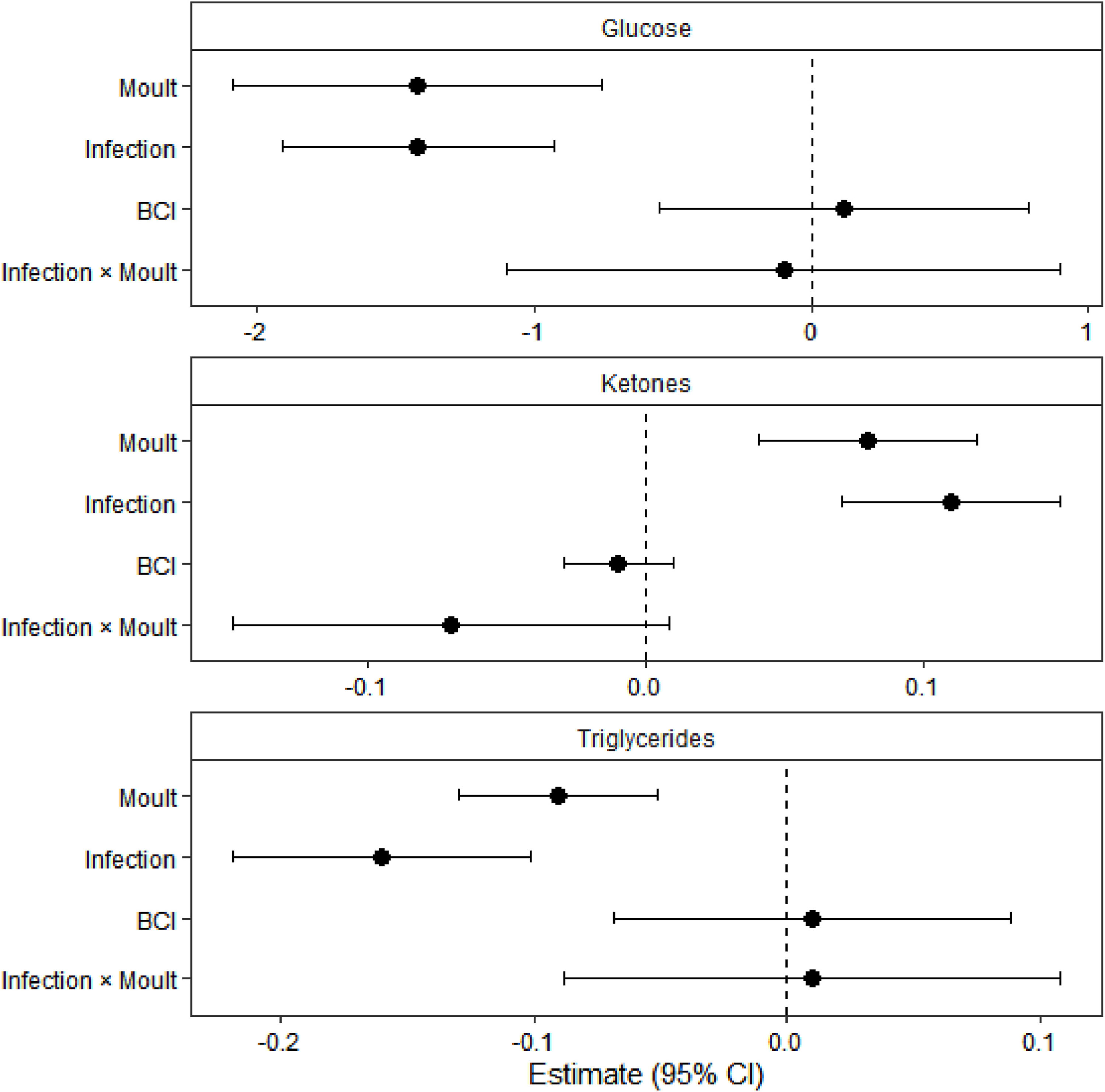
The authors interpret the combined pattern as a metabolic shift toward greater use of lipid reserves when parasitic infection overlaps with the energetic demands of feather replacement. They describe the simultaneous occurrence of infection and moult as a “double burden” on energy allocation during breeding.
The observational design cannot prove a causal “double burden”
The authors emphasise that the study is observational. Infection was recorded only as present or absent, so differences in microfilariae intensity were not tested. The associations therefore do not establish direct causality, and the researchers could not rule out ecological factors such as local food scarcity, undetected co-infections or differences in predation pressure as additional influences on body condition.
Physiology
Related news
Village Weaver Was a Wet-Season Indicator in a Nigerian Savanna Bird Community
A 2026 bird-community study in north-central Nigeria identified village weaver as a significant wet-season indicator and one of…
Read story →
Infection and Moult Were Linked to Weaker Carotenoid Plumage Signals in Male Village Weavers
A 2026 study of 148 breeding male village weavers found that microfilarial infection altered redox balance, while birds…
Read story →
Heavy Metals in Village Weaver Tissues Revealed Distinct Pollution Fingerprints Across Benue State
A 2026 study of wild village weavers from six sites in Benue State found distinct heavy-metal profiles among…
Read story →SPECIES IN THIS STORY
Species in this story
Independent research and conservation news archive
Did you find this information useful?
Wildlife Vagabond is independently built and maintained. Voluntary support helps cover source verification, hosting and continued work on research and conservation news.
Support Wildlife VagabondThe news archive will remain freely available.