
Black-backed Puffback
Dryoscopus cubla
At a glance
Habitat
- Woodland, thickets, riverine forest, forest edges, plantations and well-treed gardens
Diet
- Mainly insects and other invertebrates; occasional fruit and plant material
Activity
- Diurnal; forages mainly among foliage in the middle and upper canopy
Size
- Length: 16–18 cm Weight: 19–36 g
Range
- From parts of East and Central Africa south through Angola, Zambia, Mozambique, Botswana and eastern South Africa
Description
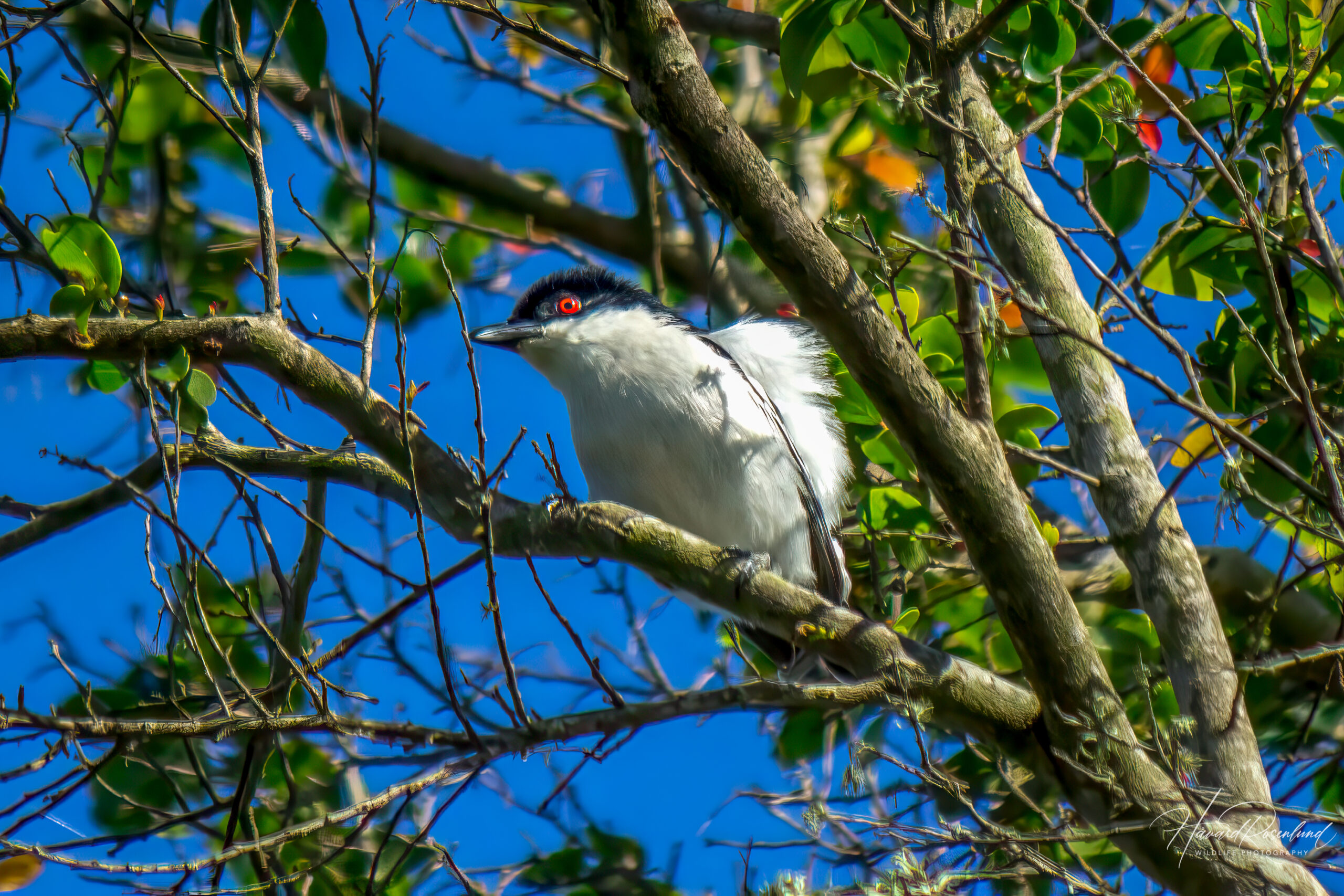
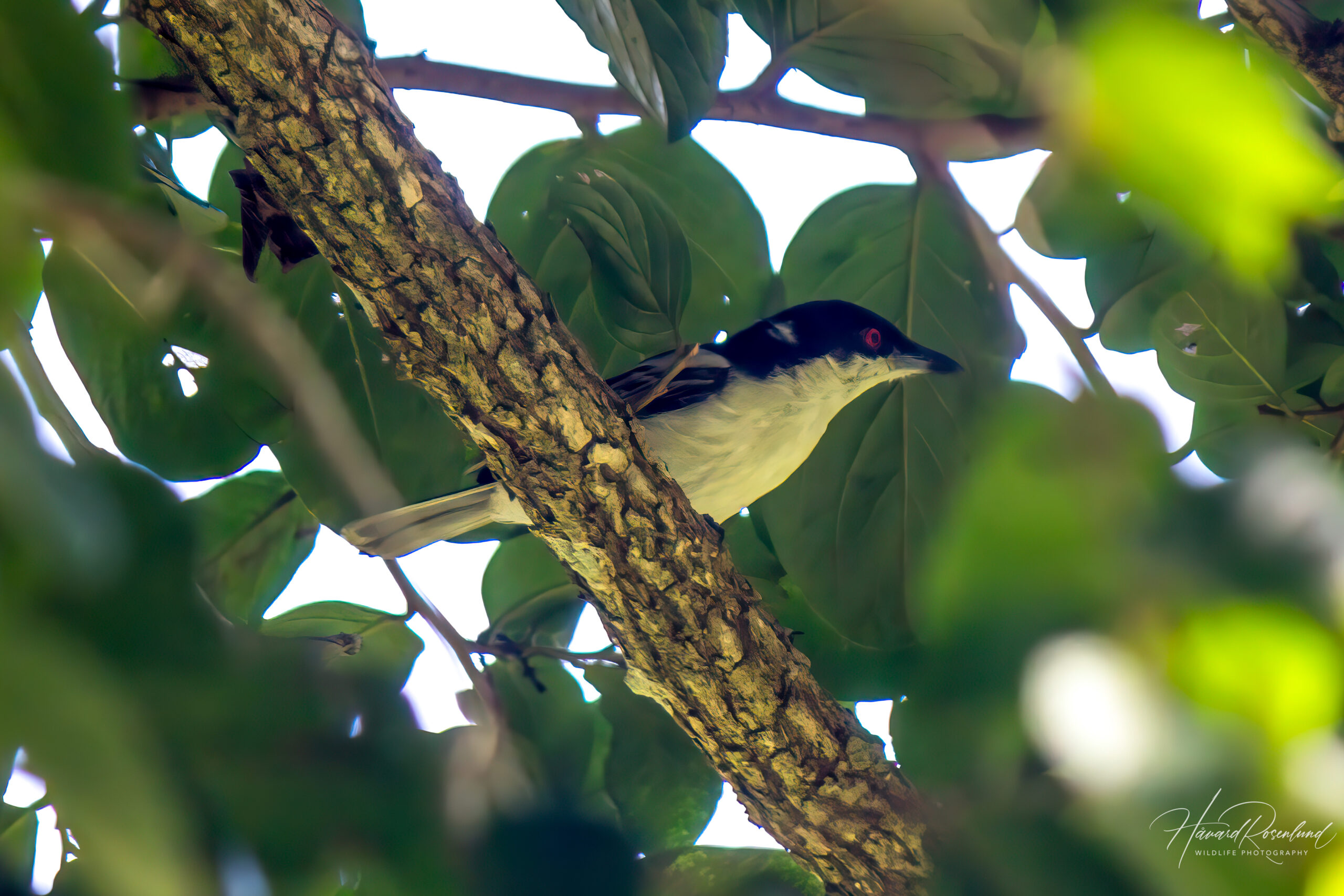
The black-backed puffback (Dryoscopus cubla) is a small African bushshrike, about 16–18 cm long and weighing 19–36 g. Adult males have glossy black upperparts, clean white underparts and striking red to orange-red eyes. Females are duller and browner, with less extensive black on the head and a short pale eyebrow.
The species occurs in several geographic forms across eastern, central and southern Africa. Plumage varies particularly in the amount of white on the wings and scapulars, but these forms remain within a single species in the current global taxonomy.
Habitat
Black-backed puffbacks use woodland, thickets, riverine forest, forest edges, plantations and well-treed gardens. They spend much of their time among foliage, especially in the middle and upper parts of trees, and can be surprisingly inconspicuous outside the breeding display even in fairly open woodland.
Diet
Insects and other invertebrates dominate the diet. Birds usually glean beetles, caterpillars and other arthropods from leaves and branches, but they also catch flying insects and take advantage of termite emergences. Fruit, buds and other plant material are eaten occasionally.
Behaviour
The species is resident and usually encountered alone or in monogamous pairs. Pairs maintain territories and spend much of the day moving quietly through foliage, where their black-and-white plumage can be surprisingly hard to keep in view.
Calls often reveal the birds before they are seen. Outside the conspicuous breeding display, most communication is delivered from within cover, and the birds may remain high in the canopy while calling.
Breeding
The male’s courtship and territorial display gives puffbacks their name. Long, loose white feathers on the lower back and rump are erected into a conspicuous white puff while the male bows, spreads the tail and vibrates or droops the wings. Short fluttering flights may be performed with the feathers expanded, and the wing movements can produce audible clicks.
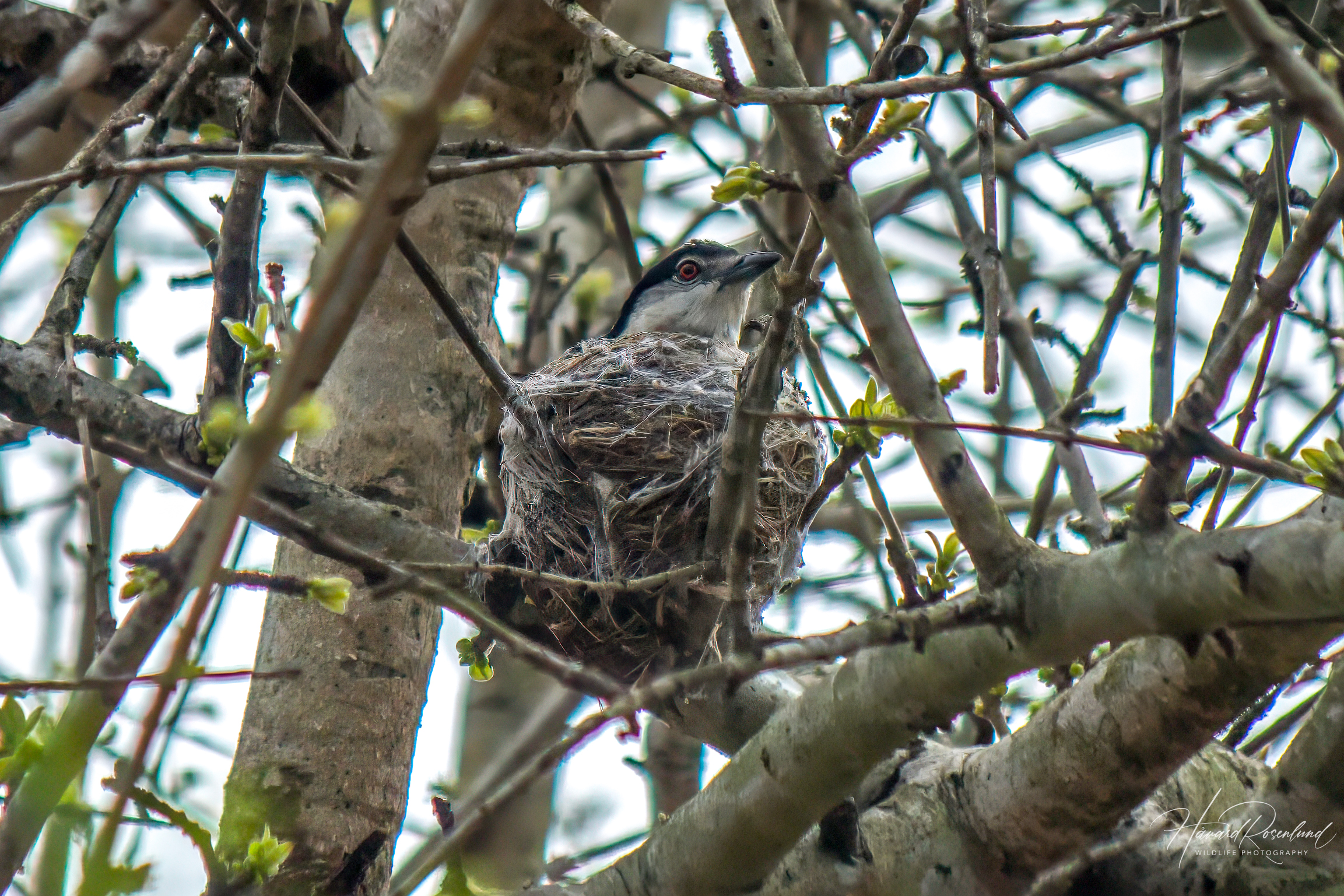
Breeding can occur through much of the year, with a strong peak from September to December in southern Africa. The female builds a compact cup nest of grass, roots and bark bound with spider web and lined with fine grass, while the male helps collect material and displays nearby. Lichen and bark may be added to the outside, helping the nest blend into the supporting branch.
Two or three eggs are usual. The female performs most of the roughly 13-day incubation, while the male regularly brings food and may briefly take over incubation. After hatching, the male initially brings much of the food, especially insects, to the female, who then passes it on to the young. The chicks leave the nest after about 18 days and can feed independently roughly three weeks later. Even after reaching this independence, young birds may remain within their parents’ territory into the following breeding season.
Status
The black-backed puffback is globally classified as Least Concern. It has a large range across eastern, central and southern Africa and remains locally common in many wooded habitats, including some plantations and suburban areas.
No precise global population estimate is available. Loss or simplification of woodland and thicket can affect local populations, but no major range-wide decline is currently known.
Image gallery
Loading map and observations…
Have you seen this species?
Independent species archive
Did you find this species page useful?
Wildlife Vagabond is independently built and maintained. Voluntary support helps cover hosting, maps, data storage and continued improvements to the species archive.
Support Wildlife VagabondSpecies content will remain freely available.
References
Information about the species’ global distribution and status is based primarily on global Red List data. See the references below for details.
- AviList. (2026). The Global Avian Checklist, v2025b. https://www.avilist.org/checklist/v2025b/
- Biodiversity Explorer. (n.d.). Black-backed Puffback. Iziko Museums of South Africa. https://www.biodiversityexplorer.info/birds/malaconotidae/dryoscopus_cubla.htm
- BirdLife International. (n.d.). Black-backed Puffback species factsheet. https://datazone.birdlife.org/species/factsheet/black-backed-puffback-dryoscopus-cubla
- International Union for Conservation of Nature. (n.d.). Black-backed Puffback. The IUCN Red List of Threatened Species. https://www.iucnredlist.org/species/22707463/94125722
- SAFRING. (n.d.). Black-backed Puffback. https://safring.ringing.africa/species/712