
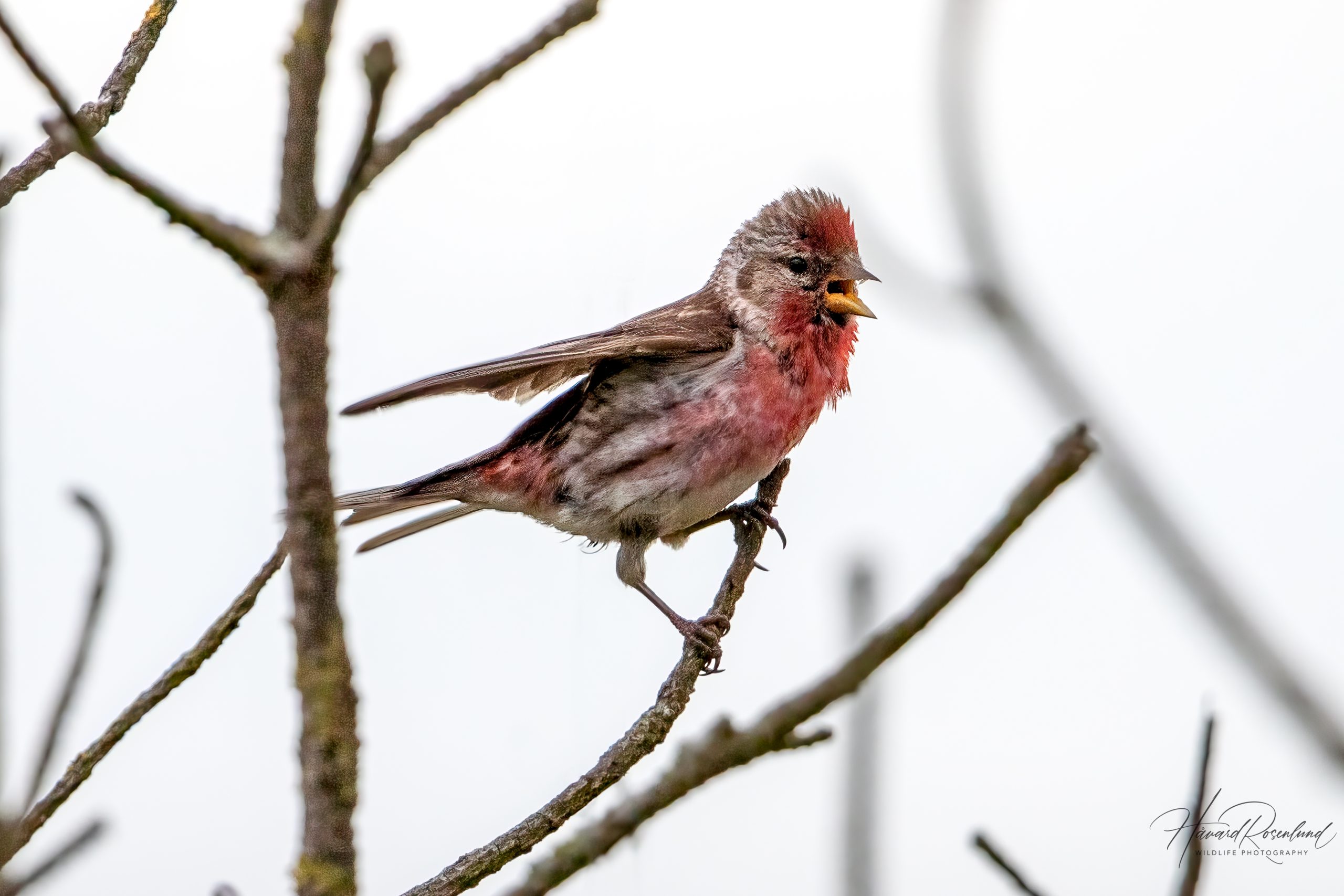
Lesser Redpoll
Acanthis flammea cabaret
At a glance
Habitat
- Open birch, alder and young conifer woodland, scrub, heathland, woodland edges and gardens
Diet
- Mainly small seeds, especially birch, alder and larch; more small invertebrates during breeding
Activity
- Diurnal
Size
- Length: 11.5–12.5 cm Weight: 11 g
Range
- Western and central Europe, including Britain, Ireland and southern Scandinavia, as the western European subspecies of the widespread redpoll
Description
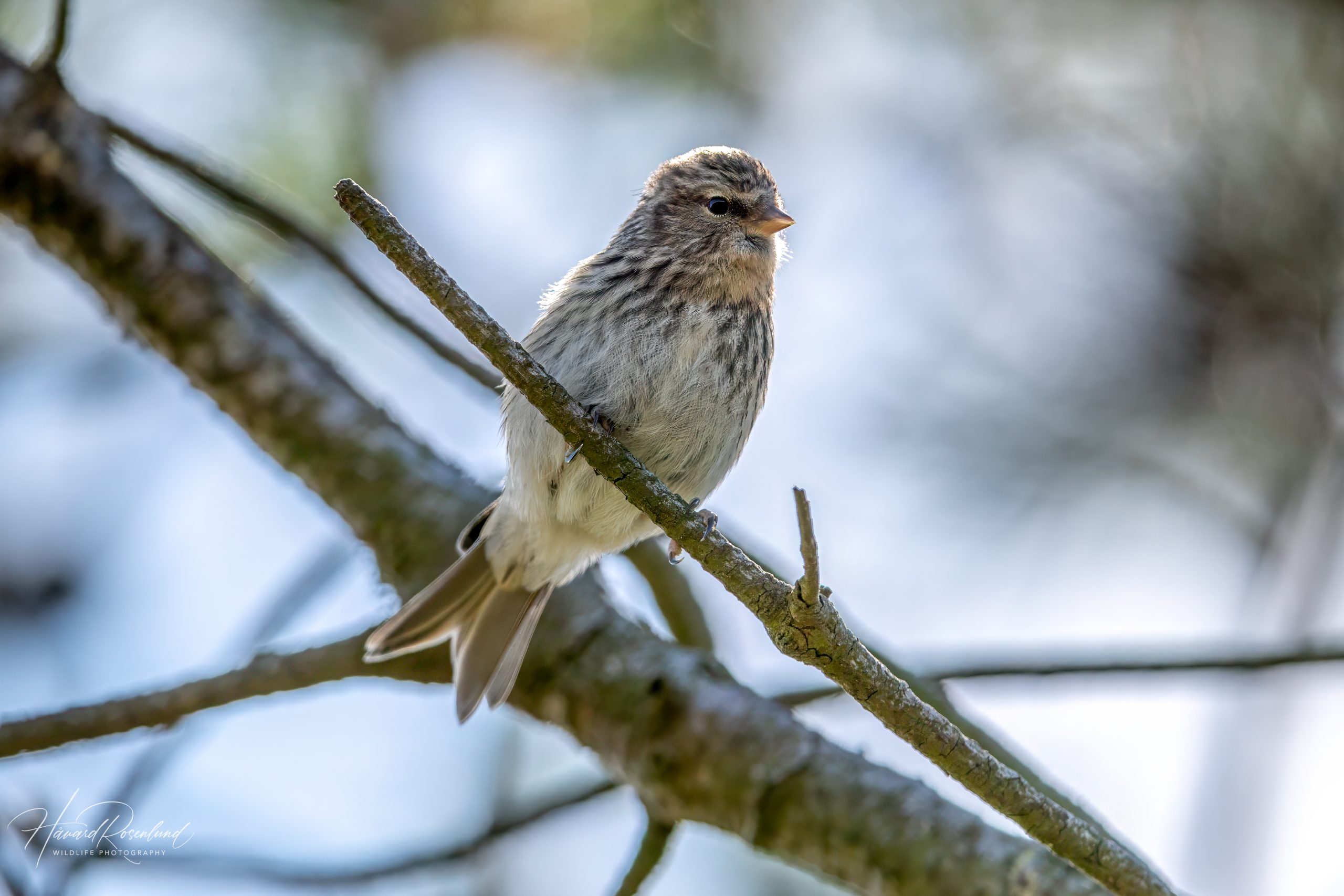
The lesser redpoll (Acanthis flammea cabaret) is the small, dark western European subspecies of the redpoll (Acanthis flammea). Typical cabaret are about 11.5–12.5 cm long, have a wingspan of roughly 20–23 cm and usually weigh around 10–12 g. They are strongly brown-toned, with a red forehead, black chin and heavily streaked flanks and upperparts. Adult males can develop a pink-red wash across the breast and lower face.
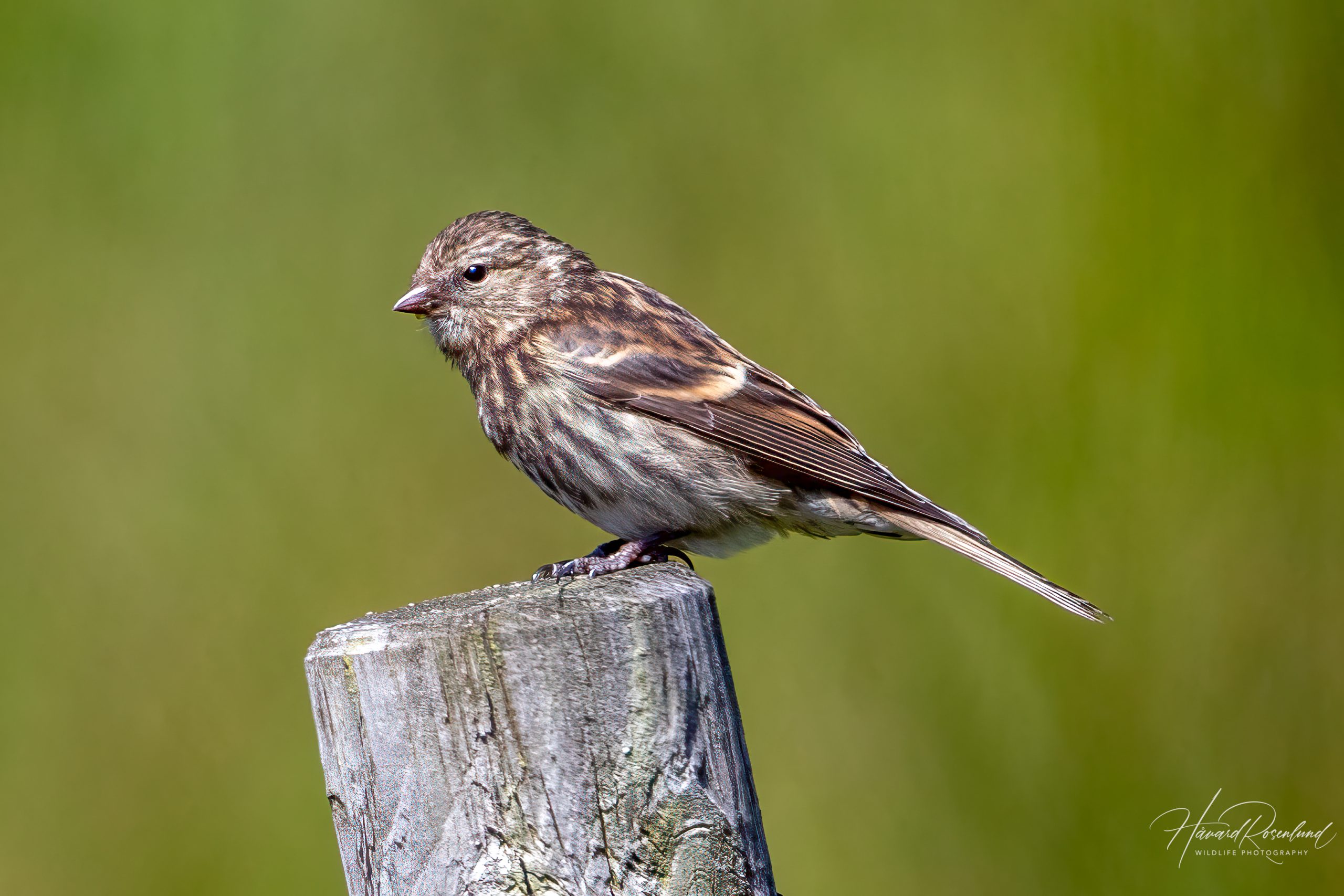
Compared with many northern redpolls of the nominate form A. f. flammea, the wing bars and feather fringes tend to be buffier rather than clean white and the overall plumage darker. These are tendencies rather than absolute field marks: variation within the redpoll complex is continuous, and some individuals cannot be assigned confidently to subspecies from plumage alone.
Taxonomy
The lesser redpoll was widely treated as a separate species, Acanthis cabaret, but is now included within the redpoll as Acanthis flammea cabaret. In the current AviList treatment, the redpoll complex forms a single species, A. flammea, encompassing forms formerly split as Common, Hoary and Lesser Redpolls. The former binomial remains an important synonym and is still widespread in older field guides and scientific literature.
This taxonomic change reflects the unusual biology of the complex. Genetic studies found little separation among the traditional redpoll species, while later genomic work showed that much of the linked variation in colour, bill shape and body form is associated with a large chromosomal inversion that keeps a group of genes linked so they tend to be inherited together, functioning as a supergene. The characteristic cabaret phenotype therefore remains recognisable and useful to record even though it is no longer ranked as a separate species.
Habitat
Lesser redpolls favour relatively open woodland and scrub, especially landscapes rich in birch, alder and young conifers. In western Europe they also use heathland, woodland edges, regenerating forest, gardens and other semi-open habitats.
In Norway, cabaret is associated particularly with lowland coniferous forest in the south, while many nominate flammea occur farther north and at higher elevations.
Diet
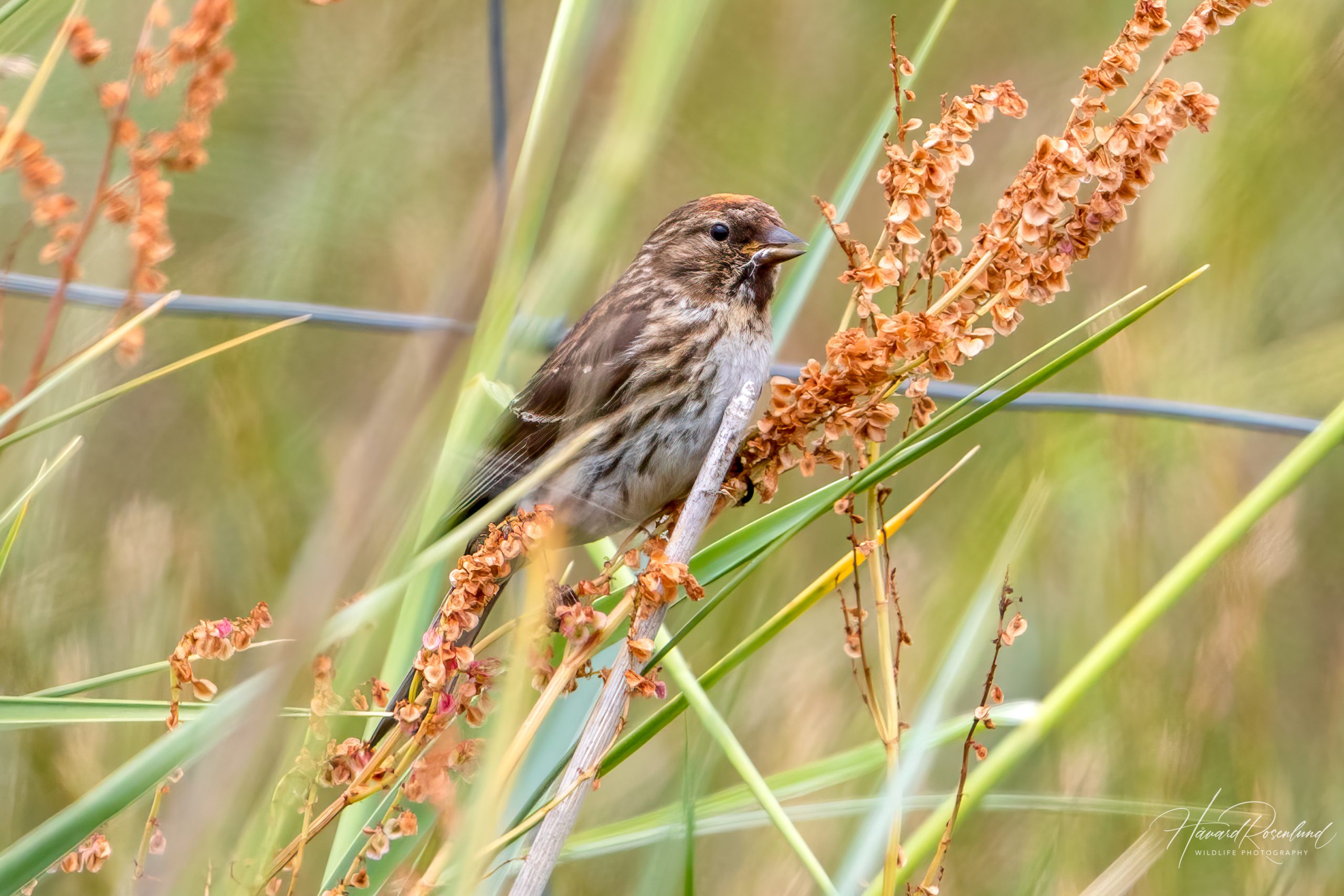
Small seeds dominate the diet. Birch and alder are especially important, with larch and seeds from grasses and other plants also taken. The birds are agile feeders and often hang from thin twigs and catkins while extracting seeds.
Small insects and other invertebrates become more important during the breeding season and are fed to growing young. Outside breeding, local abundance can change rapidly as flocks move in response to seed crops.
Behaviour
Lesser redpolls are active, agile birds that spend much of the day moving through the outer branches of trees and shrubs in search of small seeds. Like other redpolls, they have paired expandable pouches in the oesophagus that can temporarily store seeds. This allows a bird to collect seeds quickly and continue processing them later, including after retreating to shelter.
Calls are given frequently in flight and while feeding and help birds keep contact as they move through patchy seed resources. In the breeding season males also sing and perform fluttering display flights, while much of the conspicuous group activity of the rest of the year disappears as birds pair and nest.
Social behaviour
Outside the breeding season, lesser redpolls are strongly social and commonly feed and travel in mobile flocks. Flock members move together between productive birches, alders and other seed sources, so local groups can appear and disappear rapidly as food supplies change.
Flocking also affects how redpolls divide their attention between food, rivals and danger. A Norwegian field experiment published in 2017 found that wintering redpolls were more aggressive around food than comparable tits and spent less time watching for predators. Living in a flock can partly offset such lapses because other birds may still detect a threat, but competition over food can also make individual redpolls less vigilant.
Migration
The lesser redpoll is a partial migrant and highly mobile outside the breeding season. Movements are strongly influenced by seed crops rather than following one fixed long-distance route. When birch, alder or larch seed is abundant, birds may remain relatively close to their breeding areas; poor crops can trigger much larger movements and conspicuous winter influxes.
British and Irish cabaret are present throughout the year, but BTO data show that substantial numbers can move within or leave the region in winters when seed supplies are poor. This flexible, food-driven behaviour is part of the broader nomadic ecology of redpolls and can make local numbers vary greatly between years.
Breeding
Breeding usually begins in May and can continue into July. The female builds a compact cup nest in a tree or shrub, often among birch, alder or young conifers, using fine twigs, grass and plant material and lining it generously with softer material such as hair, wool, feathers or plant down.
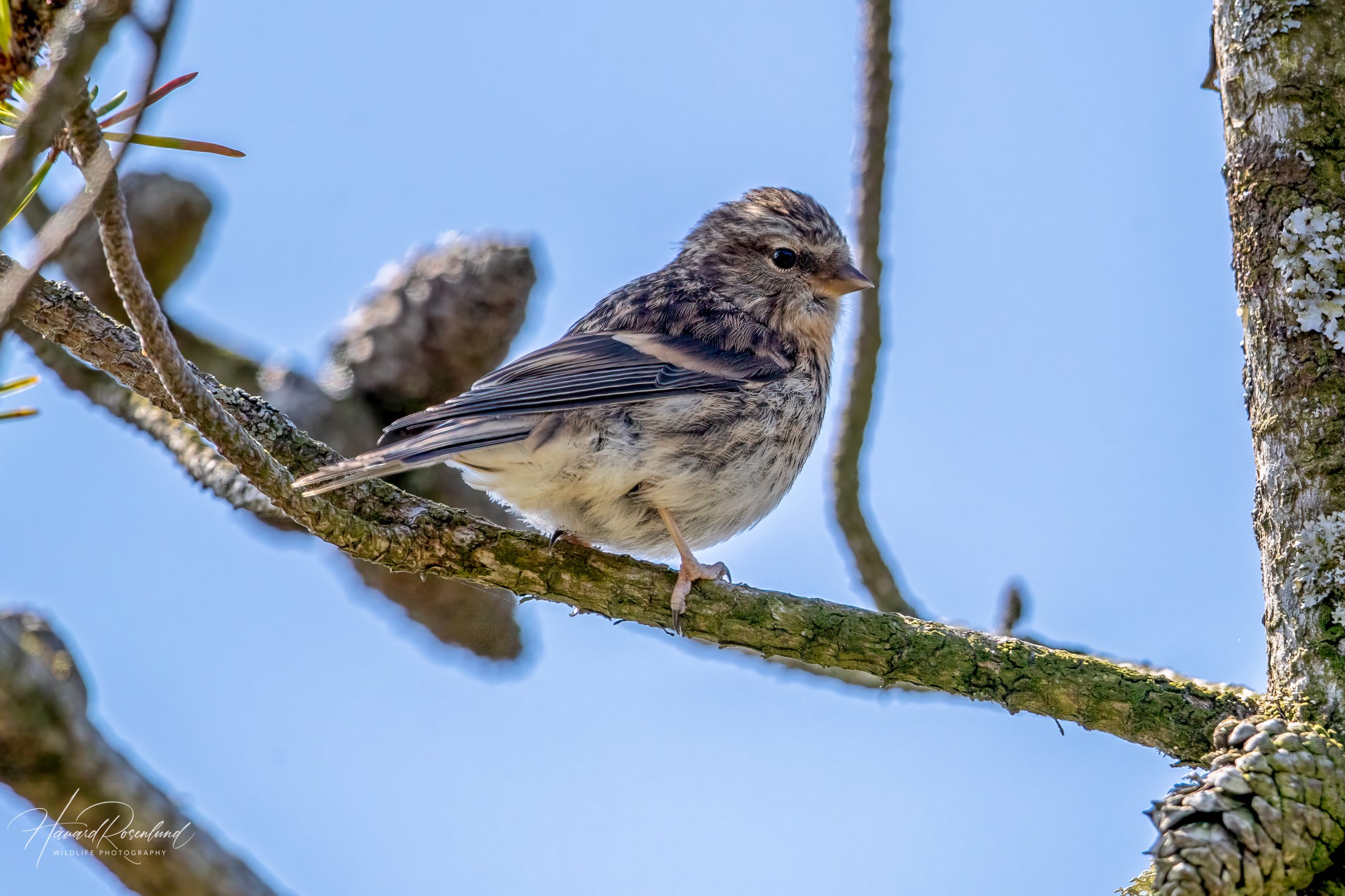
Four to five eggs are typical, although larger and smaller clutches occur. The female performs the incubation, which lasts about 12 days, while the male supplies food. Both parents feed the nestlings, which normally fledge after about 14 days. A second brood may be attempted where conditions are favourable.
Status
The lesser redpoll is no longer assessed by IUCN as a separate species. Its conservation status is included within the redpoll Acanthis flammea, which is listed as least concern on the IUCN Red List.
Regional trends in cabaret remain important despite the change in taxonomic rank. Lesser redpolls underwent a severe decline and major contraction of their breeding range in Britain during the late twentieth century. More recent BTO data show some recovery since the mid-1990s, but the breeding range remains markedly smaller than several decades ago. Changes in young woodland probably contributed to the decline, although BTO research indicates that loss of this habitat alone cannot explain it.
Image gallery
Loading map and observations…
Have you seen this species?
Independent species archive
Did you find this species page useful?
Wildlife Vagabond is independently built and maintained. Voluntary support helps cover hosting, maps, data storage and continued improvements to the species archive.
Support Wildlife VagabondSpecies content will remain freely available.
References
Information about the species’ global distribution and status is based primarily on global Red List data. See the references below for details.
- Artsdatabanken. (n.d.). cabaret (brunsisik). https://artsdatabanken.no/arter/takson/224062
- AviList. (n.d.). Global checklist and redpoll taxonomic treatment. https://www.avilist.org/avilist-published/
- BirdLife International. (n.d.). Redpoll species factsheet. https://datazone.birdlife.org/species/factsheet/redpoll-acanthis-flammea
- British Trust for Ornithology. (n.d.). Redpoll BirdFacts. https://www.bto.org/learn/about-birds/birdfacts/redpoll
- Fisher & Dater. (1961). Esophageal diverticula in the Redpoll, Acanthis flammea. The Auk, 78, 619–626. https://digitalcommons.usf.edu/auk/vol78/iss4/4/
- Funk, E. R., Mason, N. A., Pálsson, S., Albrecht, T., Johnson, J. A., & Taylor, S. A. (2021). A supergene underlies linked variation in color and morphology in a Holarctic songbird. Nature Communications, 12(1), 6833. https://doi.org/10.1038/s41467-021-27173-z
- Hogstad, O. (2017). Are wintering Common Redpolls <i>Carduelis flammea</i> more exposed to avian predators than other small passerines? Ornis Norvegica, 40, 45. https://doi.org/10.15845/on.v40i0.1359
- International Union for Conservation of Nature. (n.d.). Redpoll. The IUCN Red List of Threatened Species. https://www.iucnredlist.org/species/22725044/155292529
- Marthinsen, G., Wennerberg, L., & Lifjeld, J. T. (2008). Low support for separate species within the redpoll complex (Carduelis flammea–hornemanni–cabaret) from analyses of mtDNA and microsatellite markers. Molecular Phylogenetics and Evolution, 47(3), 1005-1017. https://doi.org/10.1016/j.ympev.2008.03.027