Description
The northern pintail (Anas acuta) is a slender, medium-sized dabbling duck with a wide Holarctic distribution. It breeds across large parts of northern Eurasia and North America, from temperate grasslands and wetlands to subarctic tundra regions, and winters farther south in temperate and subtropical areas of Europe, Asia, and North America.
Adults measure approximately 53–74 cm (21–29 in) in length, with males generally larger than females. The species is easily recognized by its elongated body, long neck, narrow wings, and pointed tail, giving it a distinctly streamlined appearance in both flight and at rest.
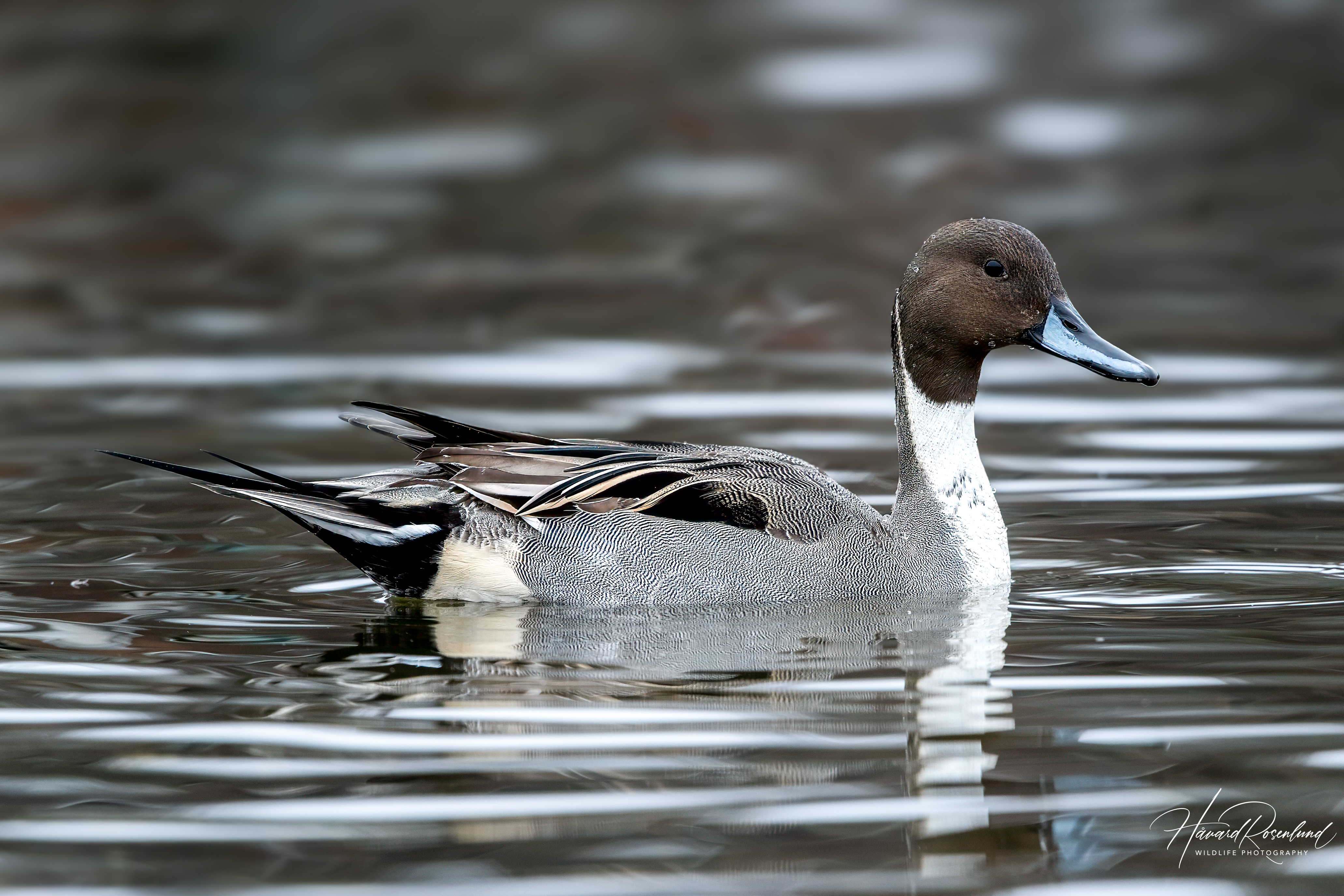
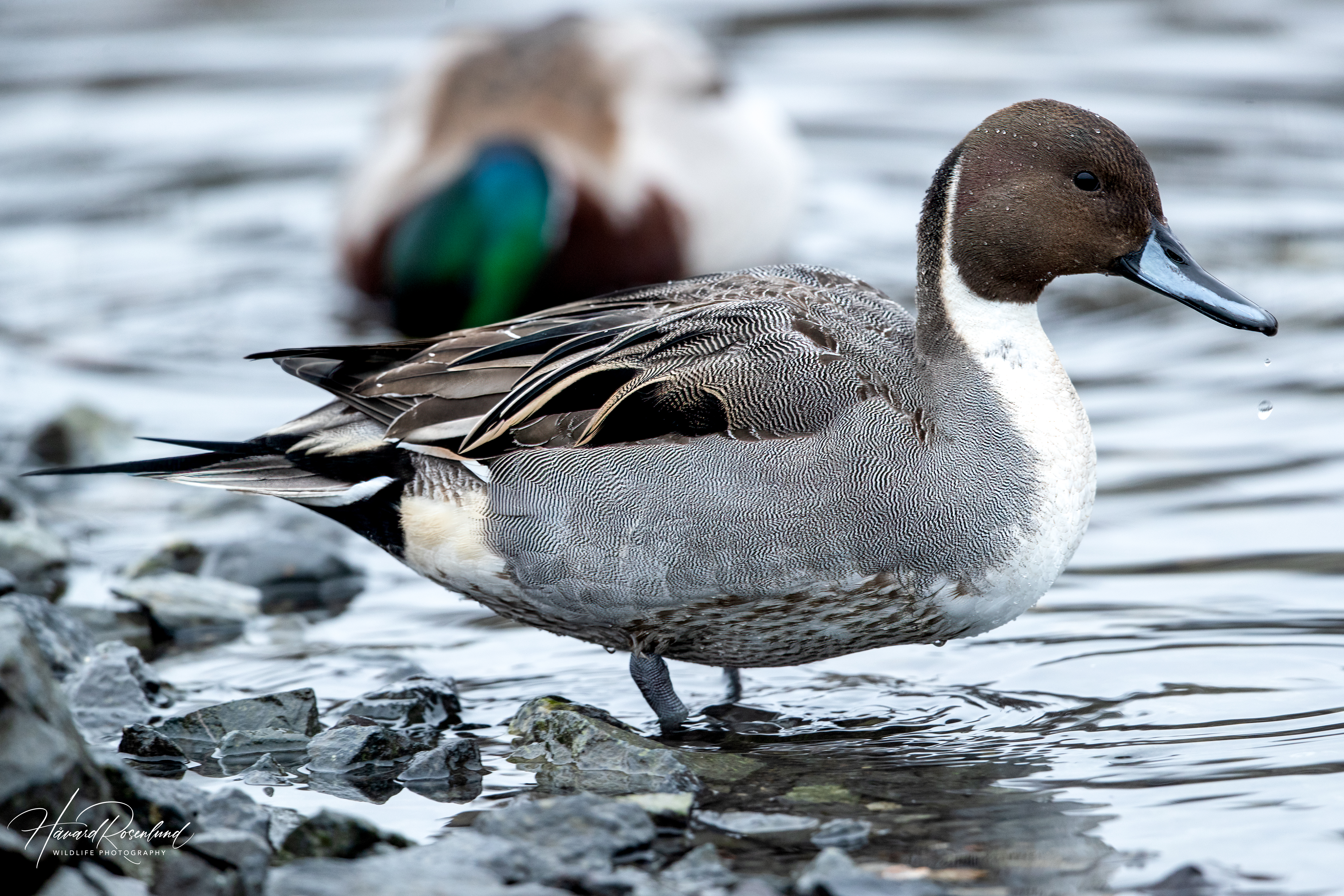
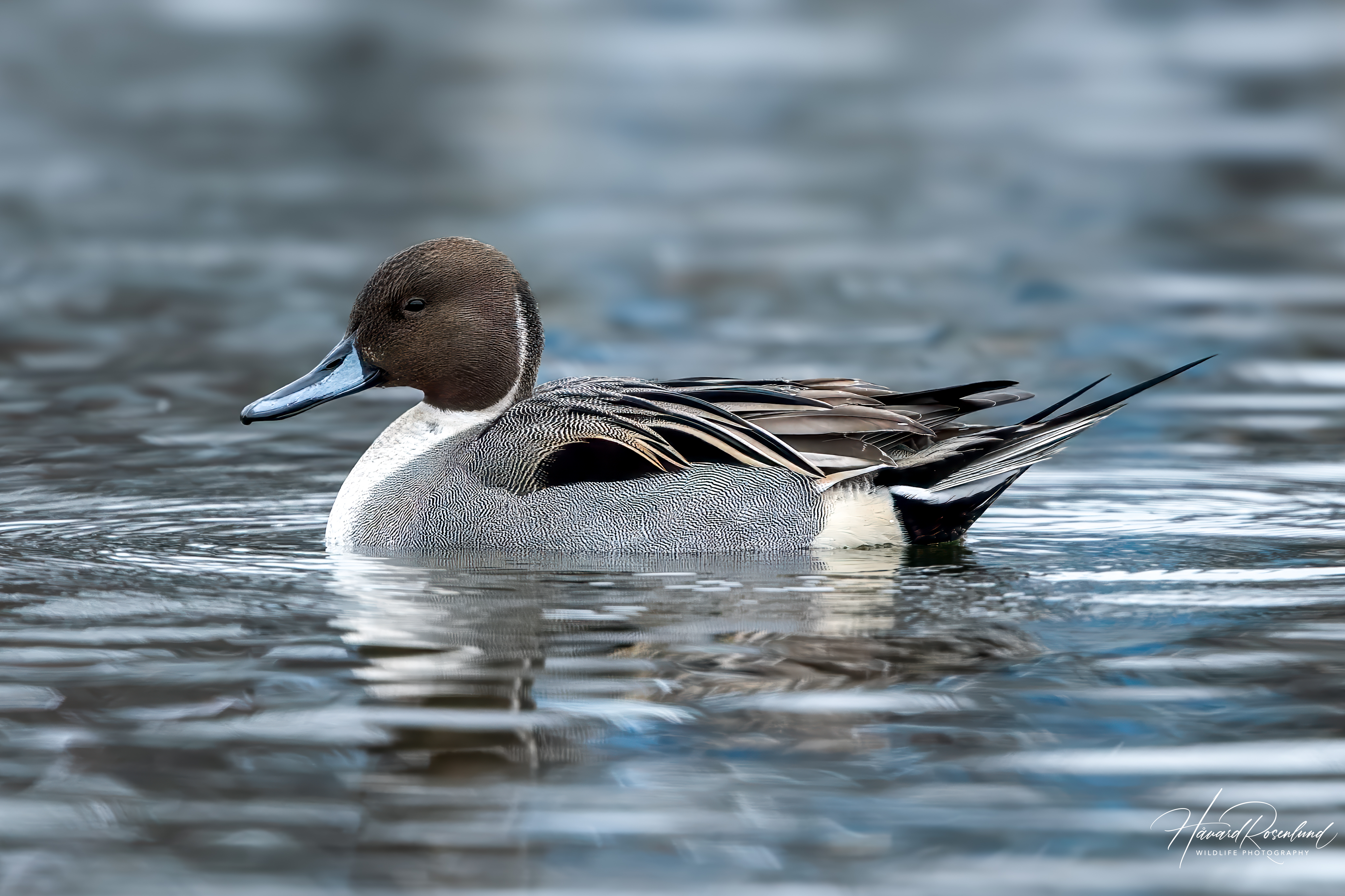
Breeding males are striking, with a dark brown head, bright white breast, and a bold white stripe extending up the side of the neck. The long, pointed central tail feathers—most pronounced in males—give the species its name. Females are more subdued, with mottled brown plumage and a paler face, but retain the characteristic slim shape and long neck.
Diet & habitat
Northern pintails occupy a wide variety of open, shallow wetlands. During the breeding season they are commonly found in marshes, wet grasslands, prairie potholes, tundra-edge wetlands, and flooded meadows. Outside the breeding season they also use lakes, estuaries, coastal lagoons, brackish marshes, and flooded agricultural fields.
Their diet varies seasonally. In autumn and winter, plant material dominates, particularly seeds of grasses, sedges, and aquatic plants, as well as waste grain from farmland. During spring and summer, they consume more animal matter, including aquatic insects, small crustaceans, and mollusks, which are especially important for growing ducklings.
Feeding is primarily done by dabbling at the surface or upending in shallow water, often along wetland edges where food is easily accessible.
Behavior
Northern pintails are generally social, especially outside the breeding season, when they form large flocks on open water and wetlands. In winter they may also forage extensively in nearby fields, often traveling between feeding and roosting sites on a daily basis.
They are strong and agile fliers, frequently associating with other dabbling ducks during migration and winter. Compared to many other duck species, northern pintails tend to be alert and wary, often taking flight readily when disturbed.
Migration
The species is strongly migratory across most of its range. Spring migration typically begins early, with many birds moving north as soon as ice-free conditions appear on breeding grounds. Autumn migration occurs over a longer period, with birds gradually moving south as temperatures drop and wetlands freeze.
Some populations undertake long-distance migrations, including movements between Siberian breeding areas and wintering grounds in North America. Migration often occurs at night, and northern pintails are capable of long, nonstop flights between stopover sites.
Nesting
Pair formation often begins during late winter, and many birds arrive on breeding grounds already paired. Northern pintails are among the earliest nesting ducks, taking advantage of newly thawed wetlands.
Nests are built on the ground, usually concealed in short vegetation and sometimes located far from water compared to other dabbling ducks. The female lays a clutch of typically 7–9 eggs, incubating them for about 22–24 days. Only the female incubates the eggs and cares for the brood.
Ducklings are precocial, leaving the nest shortly after hatching and feeding themselves under the guidance of the female. They fledge after approximately 46–57 days. In the wild, northern pintails can live for more than 20 years, although most individuals have much shorter lifespans.
Status
The northern pintail is currently classified as least concern on the IUCN Red List. Despite its wide distribution and large global population, several regional populations have shown declines, particularly in parts of North America and Europe.
The primary threats are related to wetland loss and degradation, changes in agricultural practices, and reduced nesting success caused by habitat fragmentation and predation. Conservation of breeding and wintering wetlands remains important for maintaining stable populations.
Pictures