
Nyala
Tragelaphus angasii
At a glance
Habitat
- Thicket, riverine woodland and bushland near water
Diet
- Mixed feeder: leaves, shoots, flowers, fruit and grass
Activity
- Mainly active at dawn, dusk and night; rests in the heat
Size
- Length: 135–195 cm Weight: 55–140 kg
Range
- Southeastern Africa, from Malawi to South Africa
Description
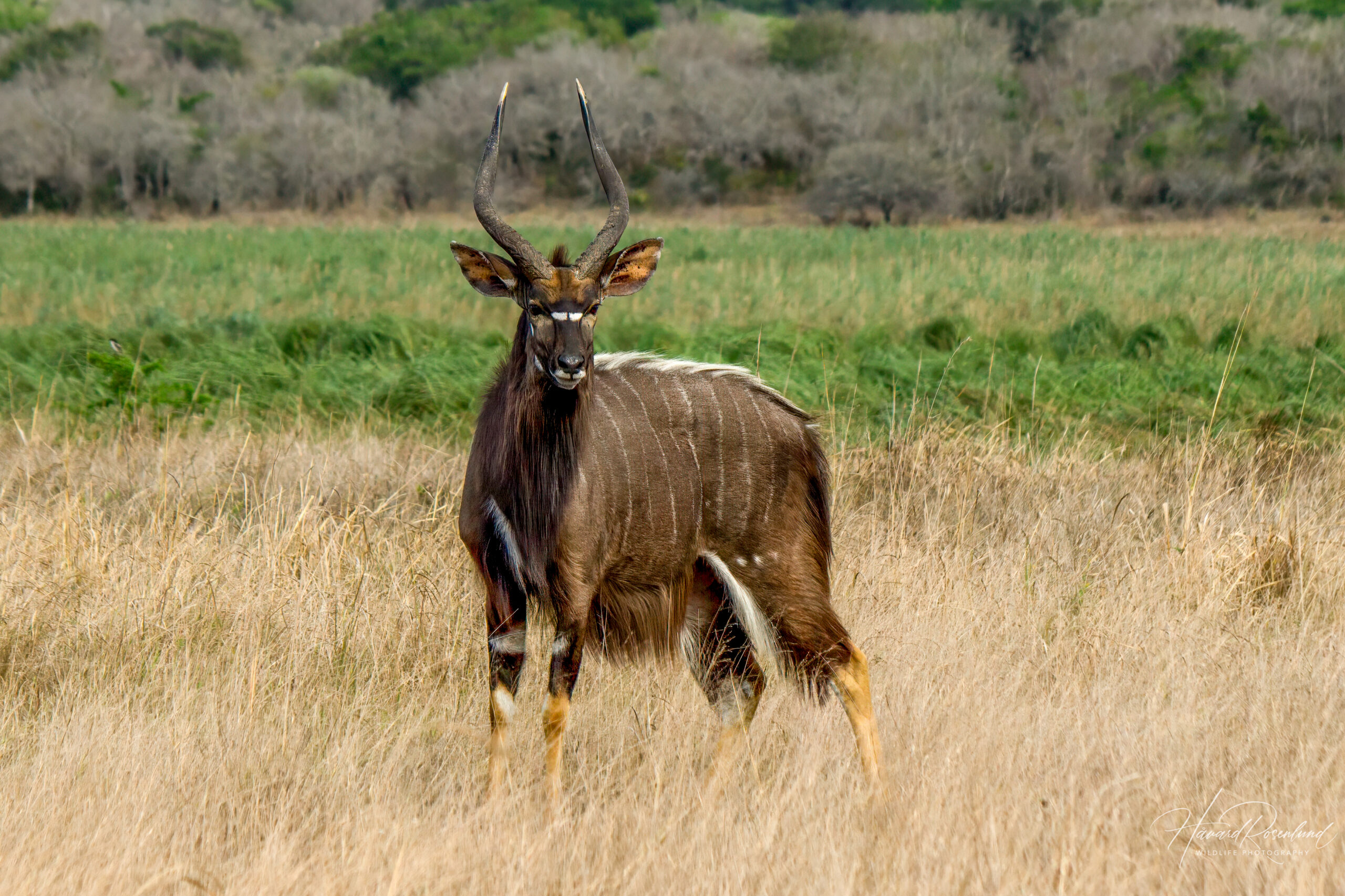
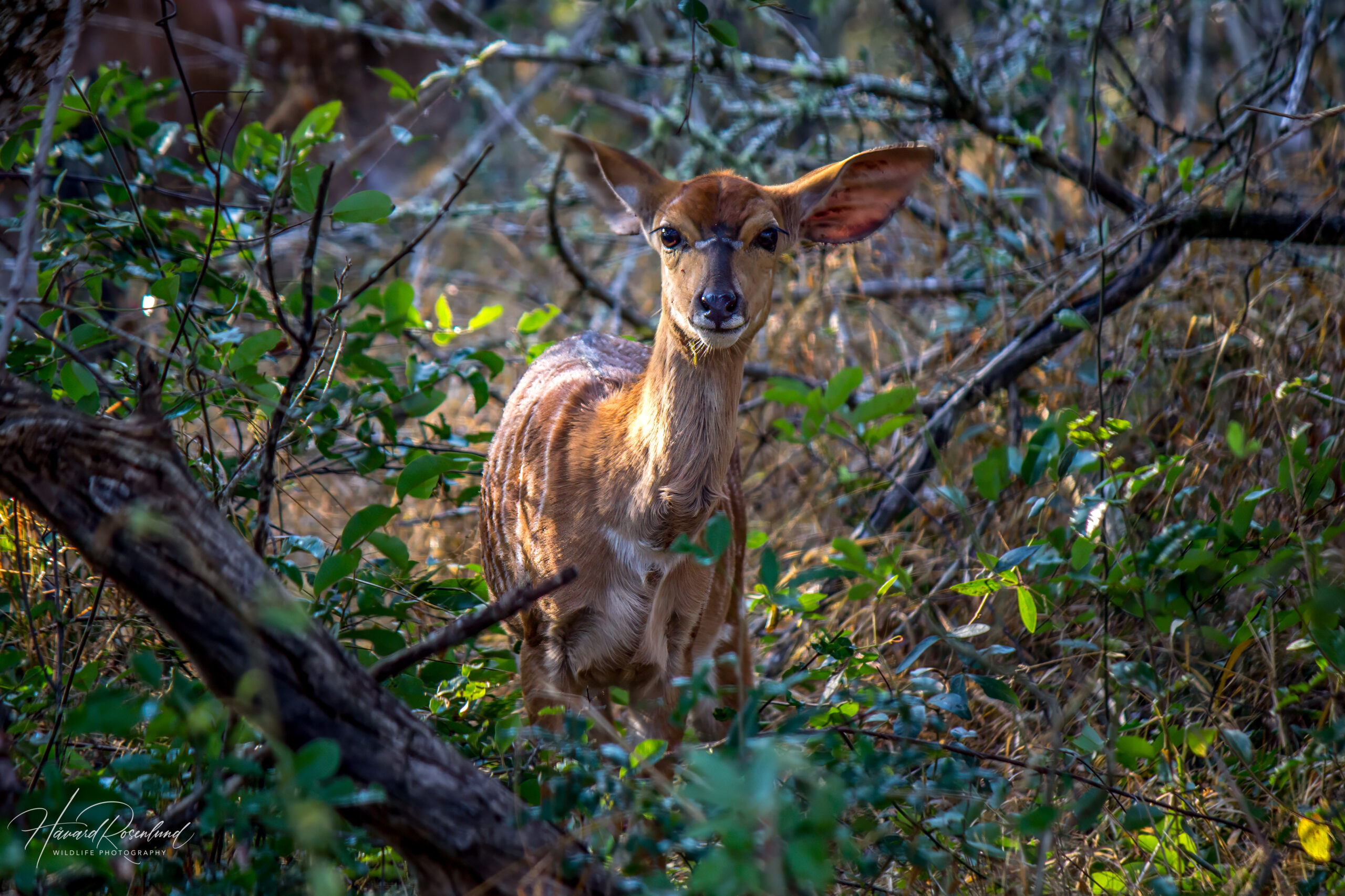
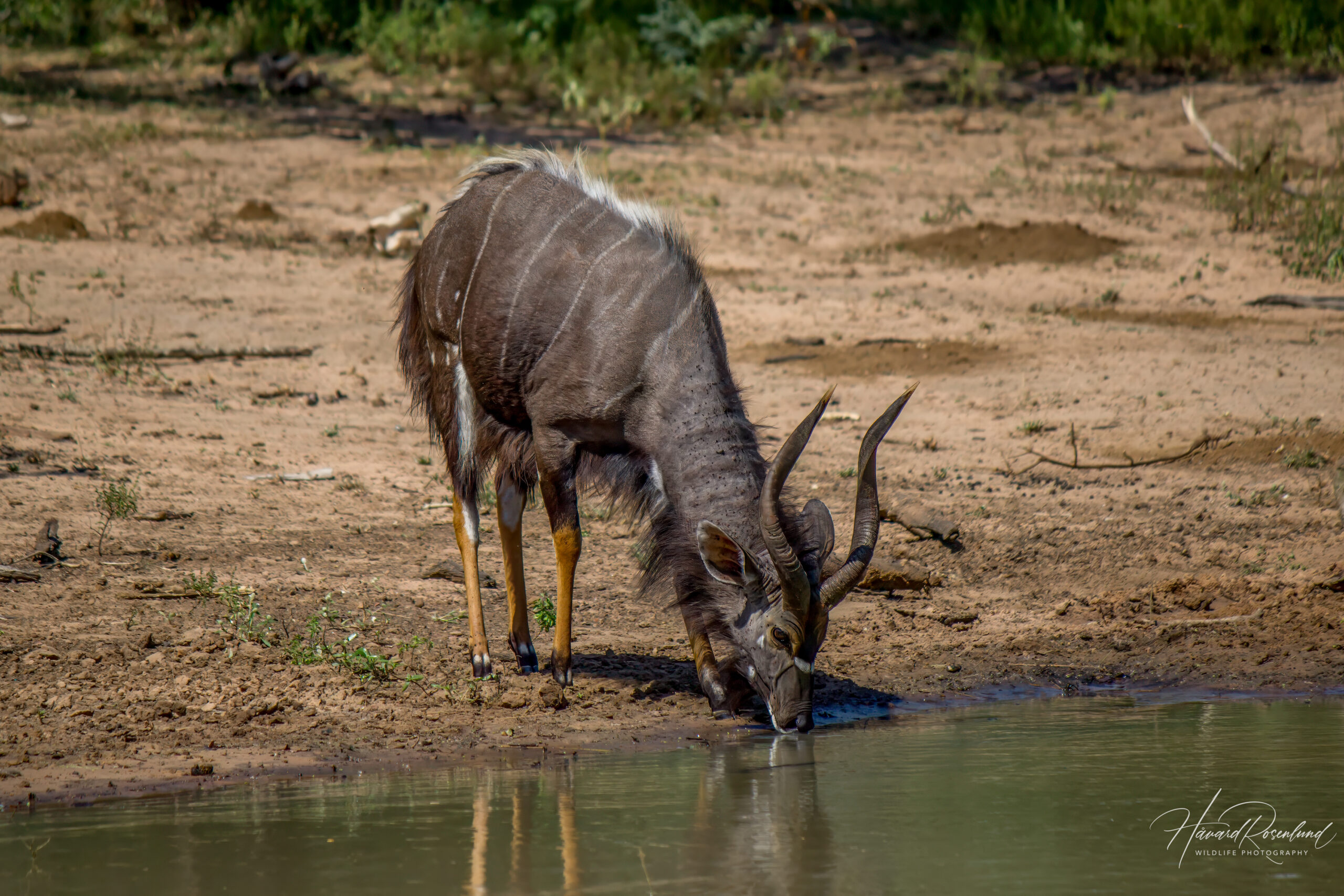
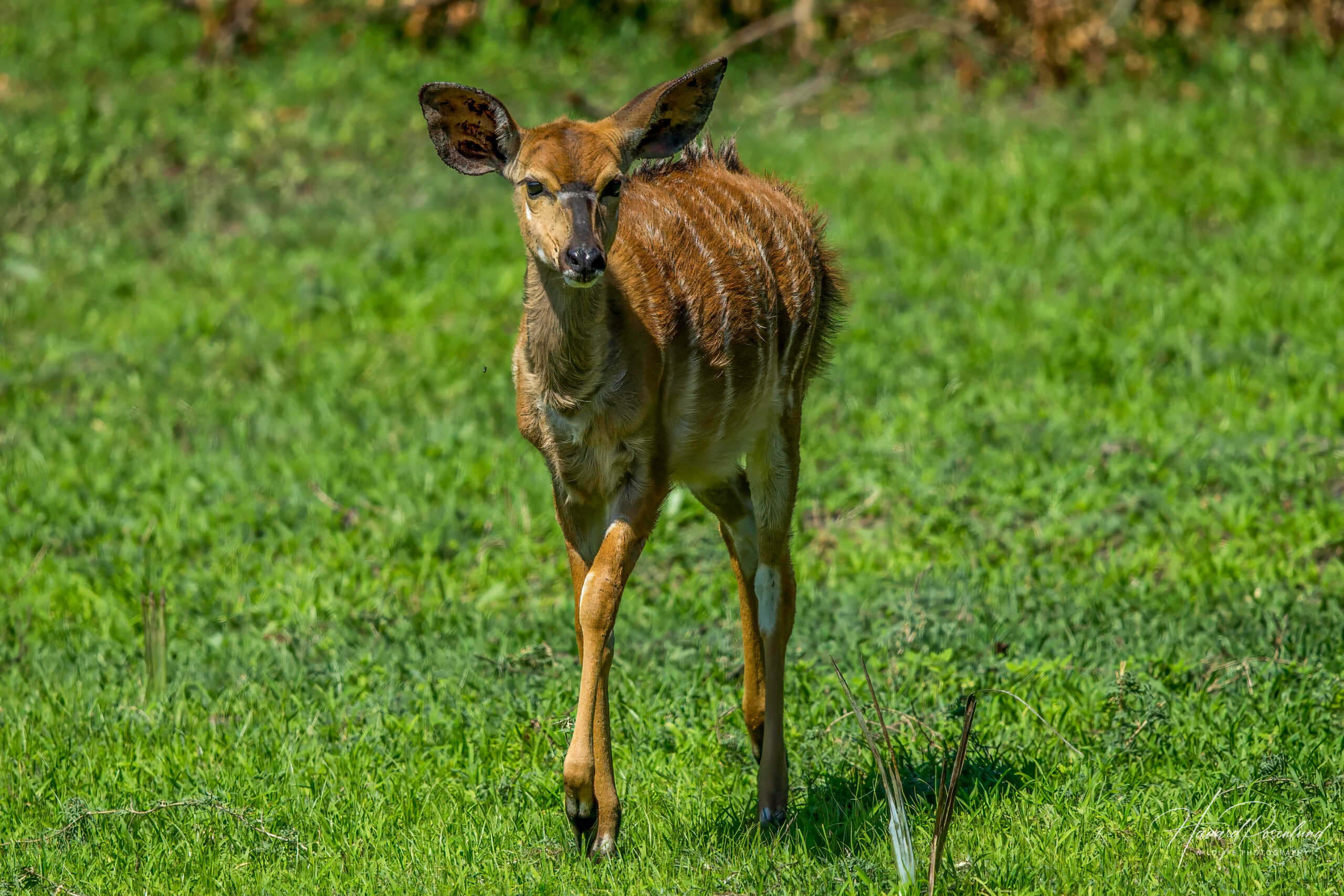
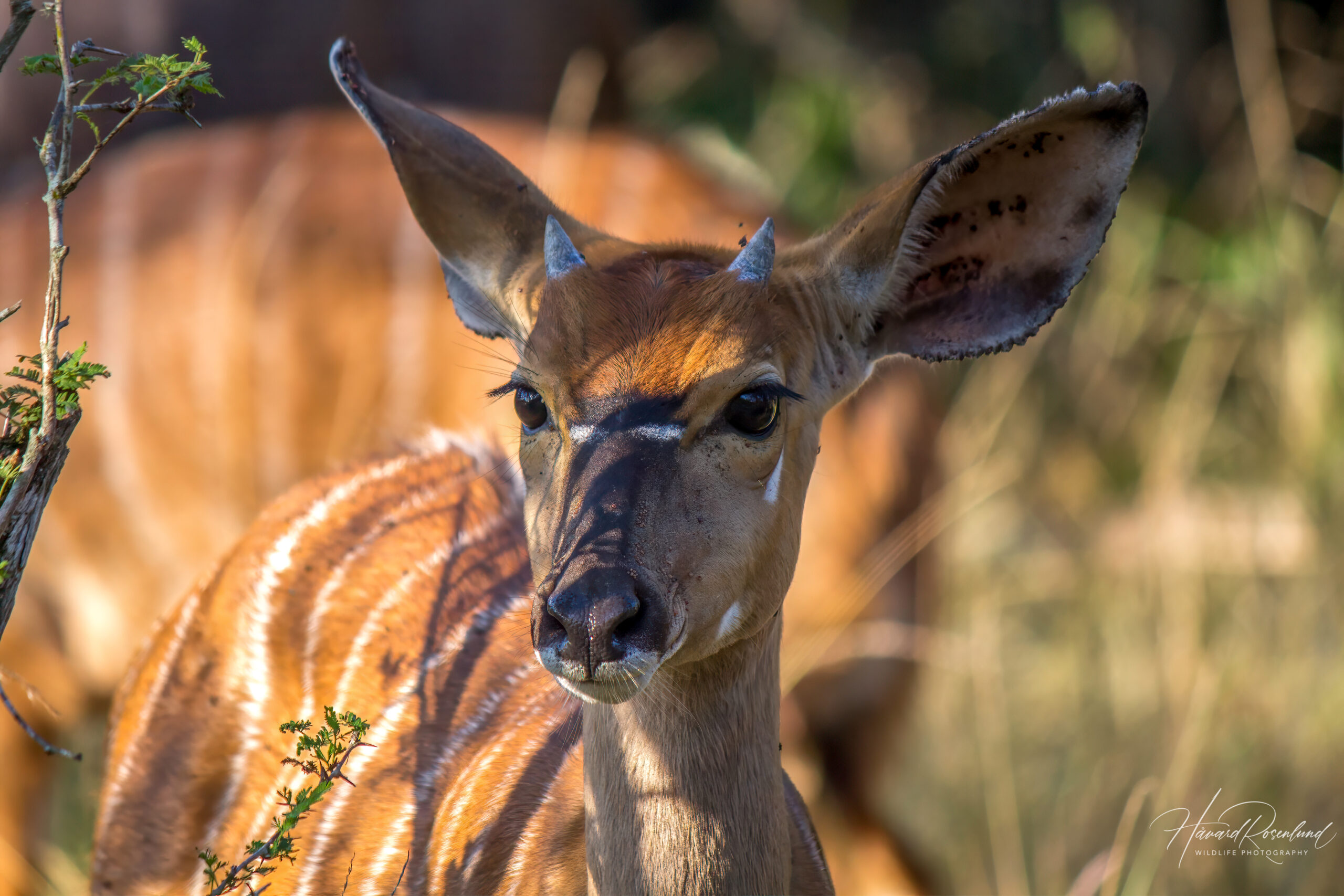
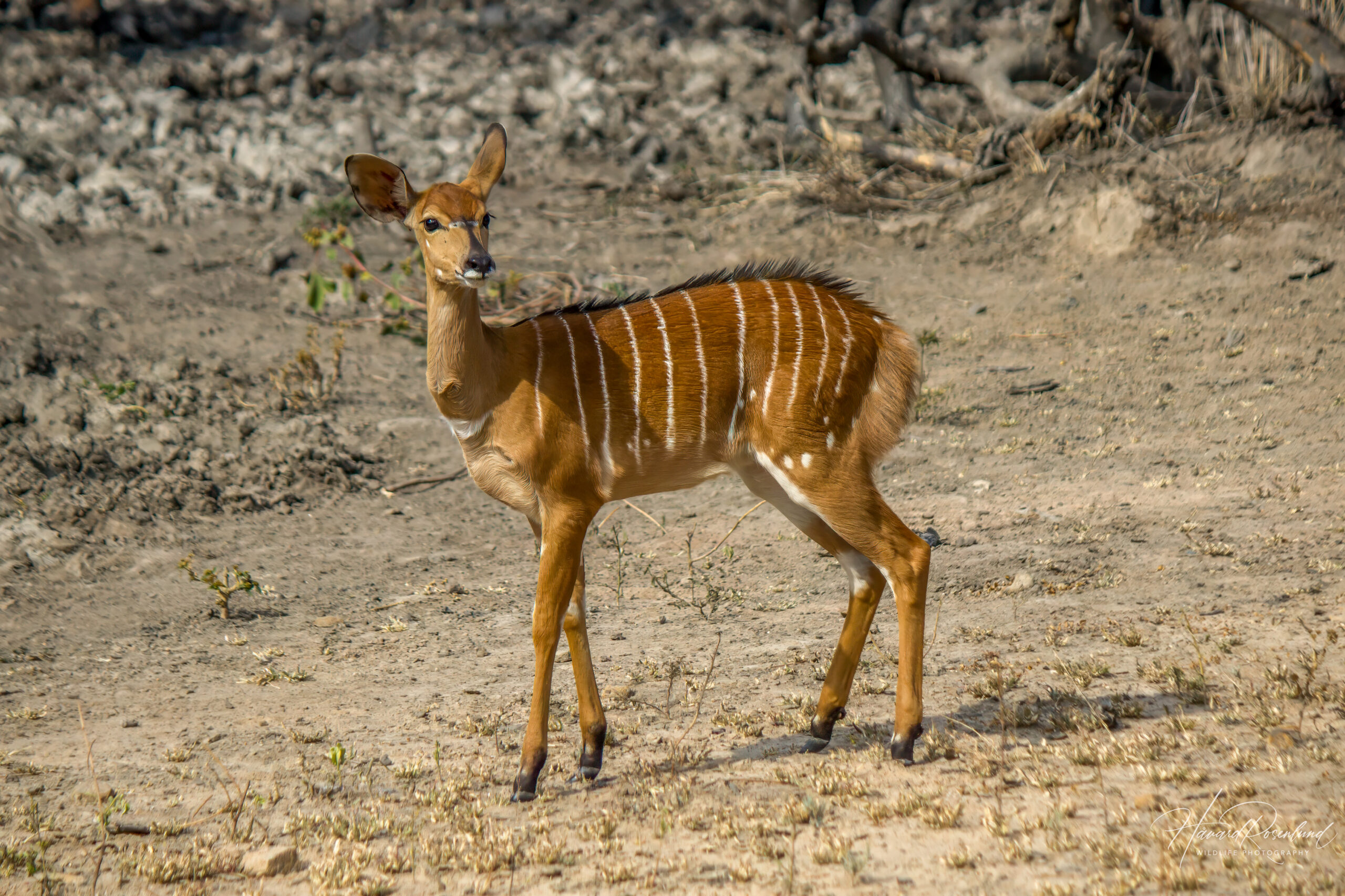
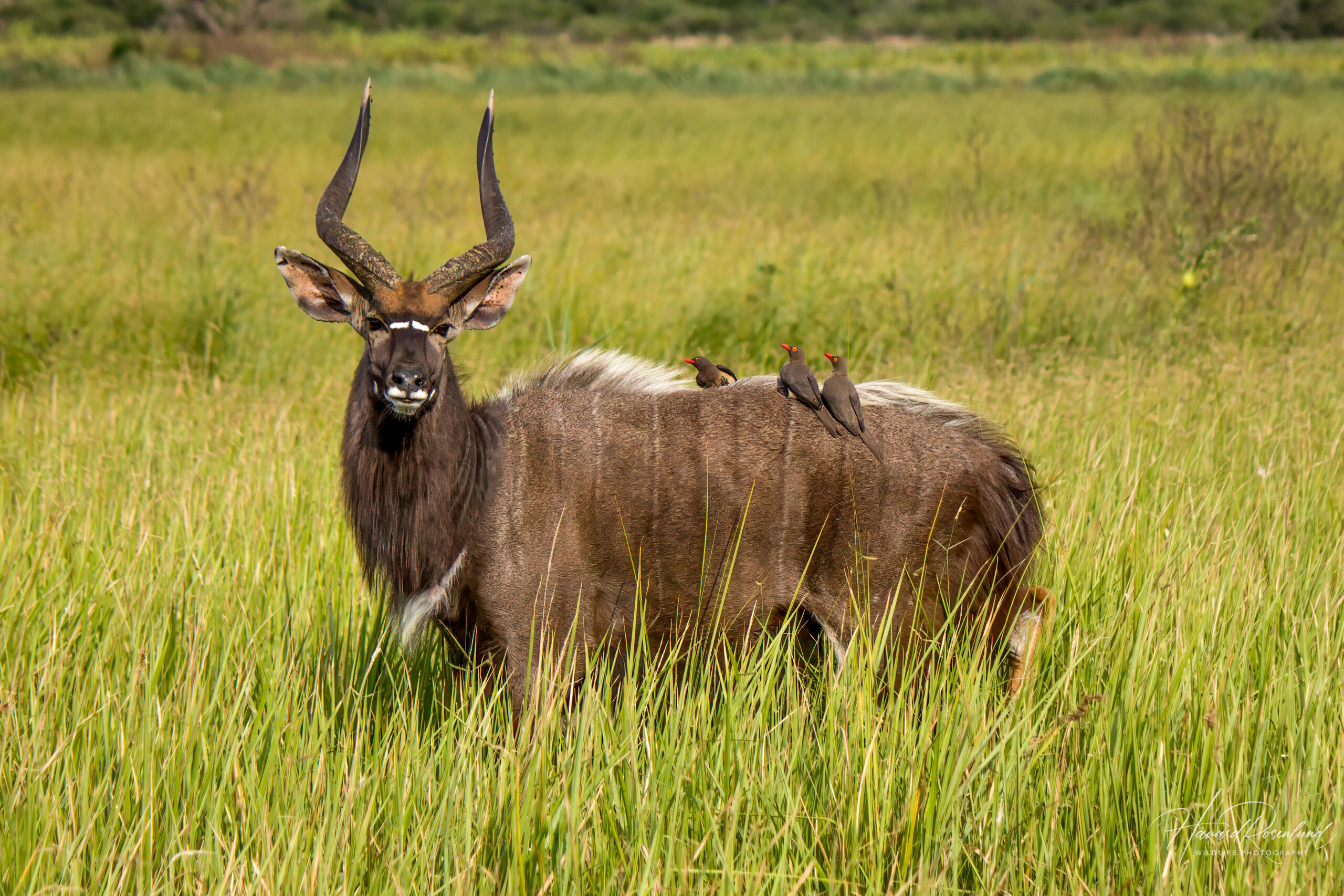
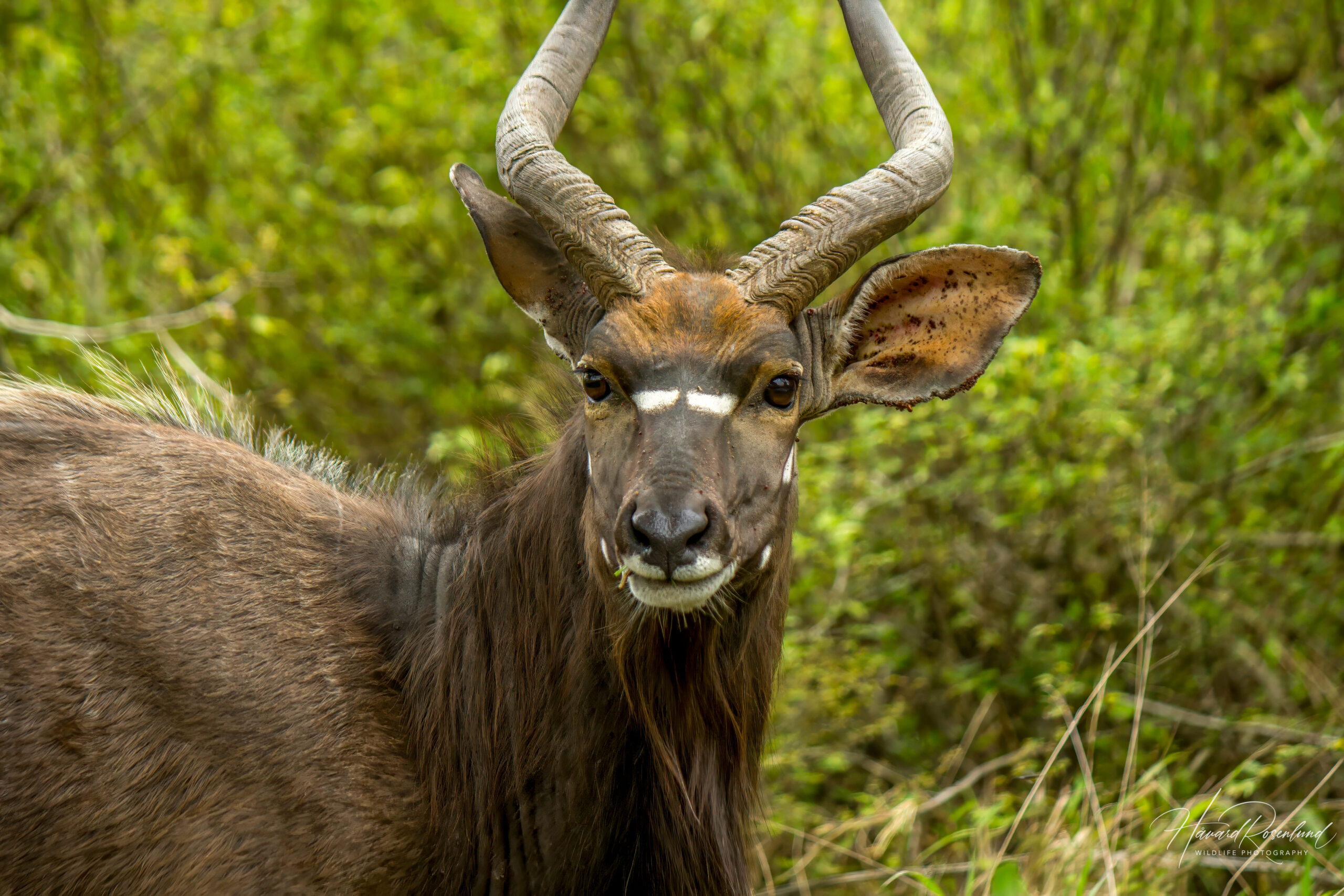
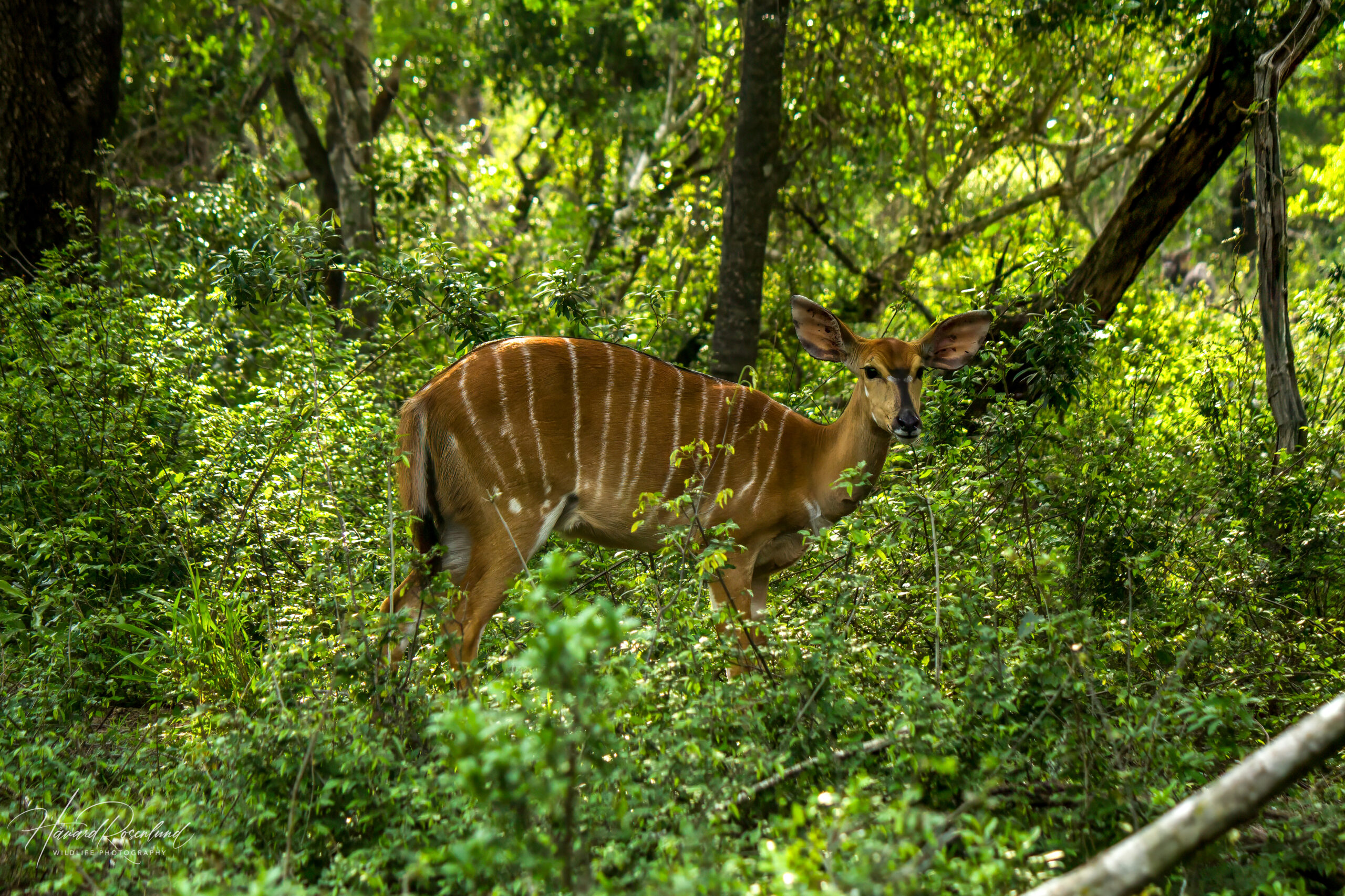
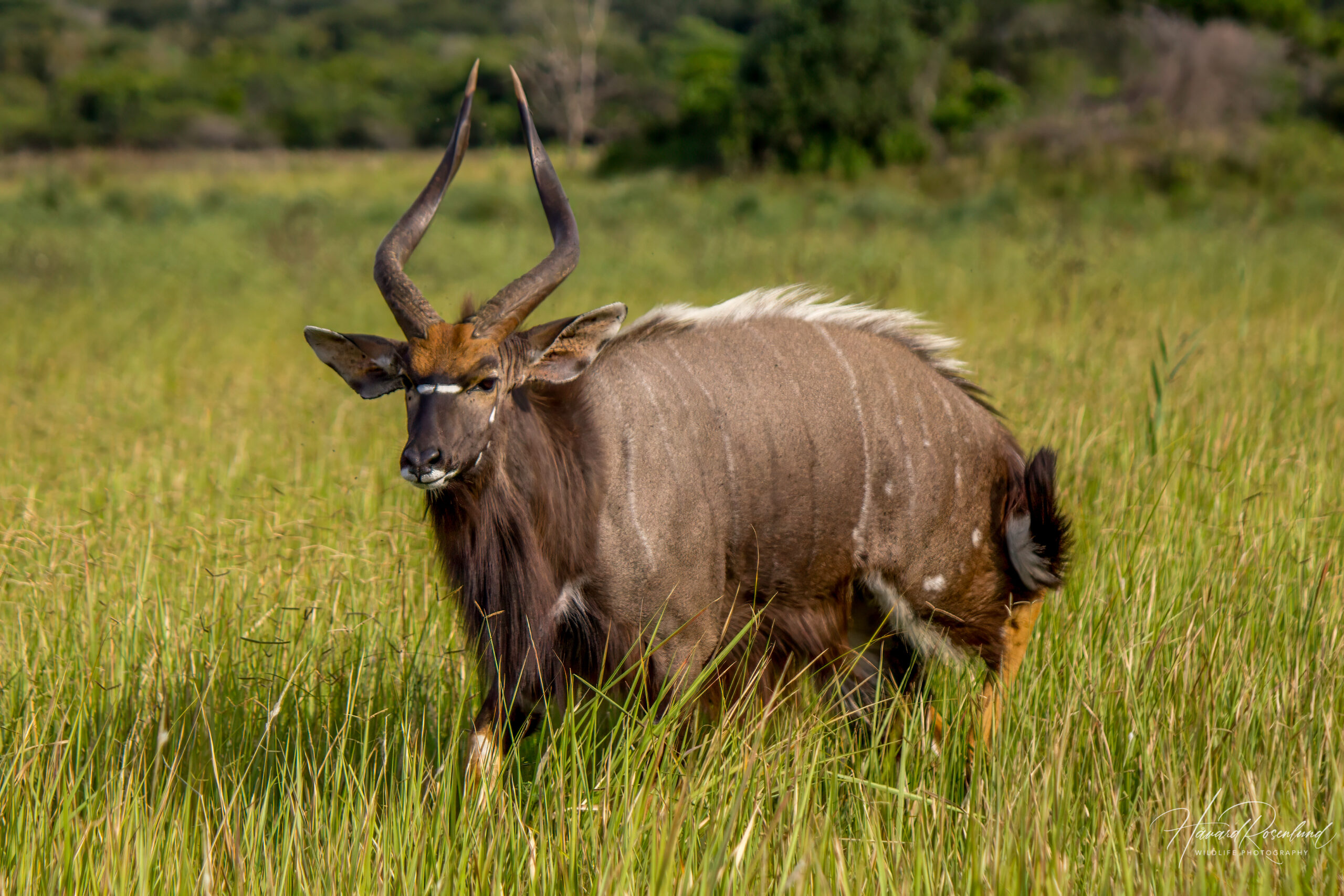
The nyala (Tragelaphus angasii) is a medium-sized spiral-horned antelope of southeastern Africa and one of the most strongly sexually dimorphic antelopes. Females and young males are reddish chestnut with conspicuous white vertical stripes, while mature males become much larger and dark brown to slate grey, with a shaggy coat and a long fringe beneath the body. Both sexes have a dorsal crest running from the back of the head towards the tail, but it is much more conspicuous in adult males. Only males carry horns; these are usually 60–83 cm long, yellow-tipped and form roughly one to one-and-a-half twists.
Head-and-body length is about 135–195 cm. Females commonly weigh 55–68 kg and stand around 90 cm at the shoulder; males usually weigh 98–125 kg, although large individuals can approach 140 kg, and stand around 110 cm tall. The striking difference between the sexes develops gradually as young males darken and become more heavily built with age. Rare adult males that retain the bright chestnut, female-like coat have also been recorded.
Taxonomy
The nyala is currently treated as Tragelaphus angasii, and no subspecies are generally recognised. The older combination Nyala angasii is still encountered in some literature, but the species is now placed in Tragelaphus with the other spiral-horned antelopes.
Despite the similar common name, the mountain nyala (Tragelaphus buxtoni) of Ethiopia is a distinct species. Recent genetic research also shows that there was past gene flow between several spiral-horned antelope lineages. Their evolutionary relationships are therefore more complicated than a simple pattern in which each species split once and then evolved in complete isolation.
Habitat
Nyalas favour thicket, riverine woodland, dense bushland and forest margins, usually where good cover lies close to grassland or water. They spend much of the hotter part of the day inside dense vegetation and emerge more readily into open patches during cooler periods. The historical native range extends from southern Malawi through Mozambique and Zimbabwe to Eswatini and eastern South Africa.
Water is used regularly where available, but nyalas are less tightly bound to permanent water than species such as waterbuck (Kobus ellipsiprymnus). Dense cover is more important: it provides shade, concealment and the sheltered sites used by newborn calves.
Diet
Nyalas are mixed feeders that shift between grass and browse according to season and local food availability. Leaves, shoots, twigs, flowers and fruit remain important through much of the year, while fresh grass is used especially when new growth follows rain. A study in Mkuze and Ndumo in South Africa found a gradual shift from more grass in the wet season towards more browse in the dry season. As browse increased, protein intake rose, although the diet also became more fibrous and harder to digest during July and August.
Body size also appears to influence which parts of woody plants are selected. In Hluhluwe-iMfolozi, South Africa, the much larger males used coarse branch ends more often than females, while season and rainfall affected the balance between grazing and browsing here as well. Nyalas can also exploit food made available by other animals: they sometimes follow feeding baboons and other monkeys and pick up fruit, leaves and other plant material dropped from the canopy.
Behaviour
Activity is usually concentrated around dawn and dusk and during the night, although nyalas can remain active by day in cool conditions. During the hottest hours they commonly rest in thickets or other shade. When alarmed they retreat quickly into dense cover, often flashing the white underside of the tail as they move.
Nyalas use deep barking alarm calls and can also respond to warning calls from other species living in the same habitat. Using information from neighbouring animals is useful in dense vegetation, where a predator may be heard before it is seen.
The area used by an individual can change with rainfall. A radio-tracking study of six adult nyalas in Mun-Ya-Wana in KwaZulu-Natal found an average total home range of about 2.2 km². After wetter periods the animals used smaller home ranges, with a delay of about one month, while their core areas changed much less. Rain therefore affects not only plant growth and surface water, but also how widely the animals need to move.
Social behaviour
Females and young form loose, changing groups, commonly of 2–10 animals but sometimes numbering up to about 30. Female groups can contain related animals across generations. Adult males are often solitary or associate in small, temporary bachelor groups, and mixed groups form around good feeding sites or receptive females. Home ranges overlap extensively and the species is not territorial.
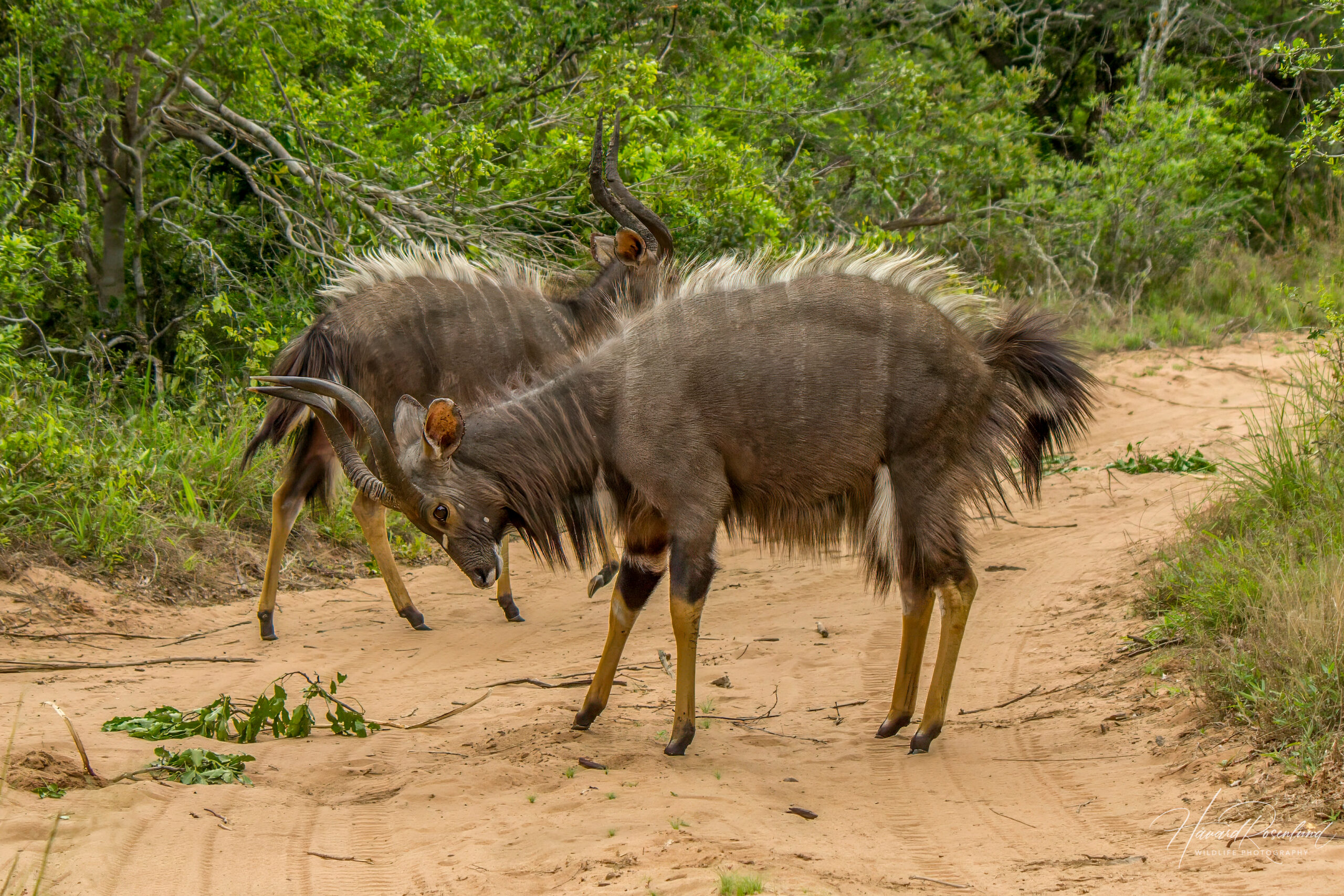
Rival males often avoid immediate physical contests by using an exaggerated lateral display. They stand side-on, raise the white dorsal crest, lift the tail and walk stiffly to emphasise body size. A smaller opponent commonly withdraws, although closely matched males may still fight with their horns. The display makes the size difference between adult bulls particularly important in settling dominance without every encounter escalating to a fight.
Predation
Nyalas are important prey for several large carnivores. In Hluhluwe-iMfolozi Park, nyala and impala together accounted for 77% of the African wild dog (Lycaon pictus) diet, and studies elsewhere in KwaZulu-Natal also place nyala among the most common leopard (Panthera pardus) prey. Lions (Panthera leo) and spotted hyenas (Crocuta crocuta) also take them, especially calves and vulnerable adults.
Dense cover, alarm calls and rapid retreat into thickets are central defences, while newborn calves remain hidden for their first weeks. During my time at Tembe Elephant Park, local field staff often suggested that nyalas might breed more rapidly when predation pressure from lions and leopards increased. The idea fitted local observations of a rapidly growing population despite heavy predation. This meant that the population had to be regularly managed and culled to prevent excessive impacts on the ecosystem.
Reproduction
Nyalas can reproduce throughout the year, but mating activity has two clear peaks, in autumn and spring. Visible signs of oestrus usually last for two to three days, while the female accepts mating only towards the end of this period. In tame animals where mating did not result in conception, intervals of 10–34 days were recorded between oestrous periods, with a mean of 19.4 days. Females can return to oestrus as soon as 2–7 days after giving birth.
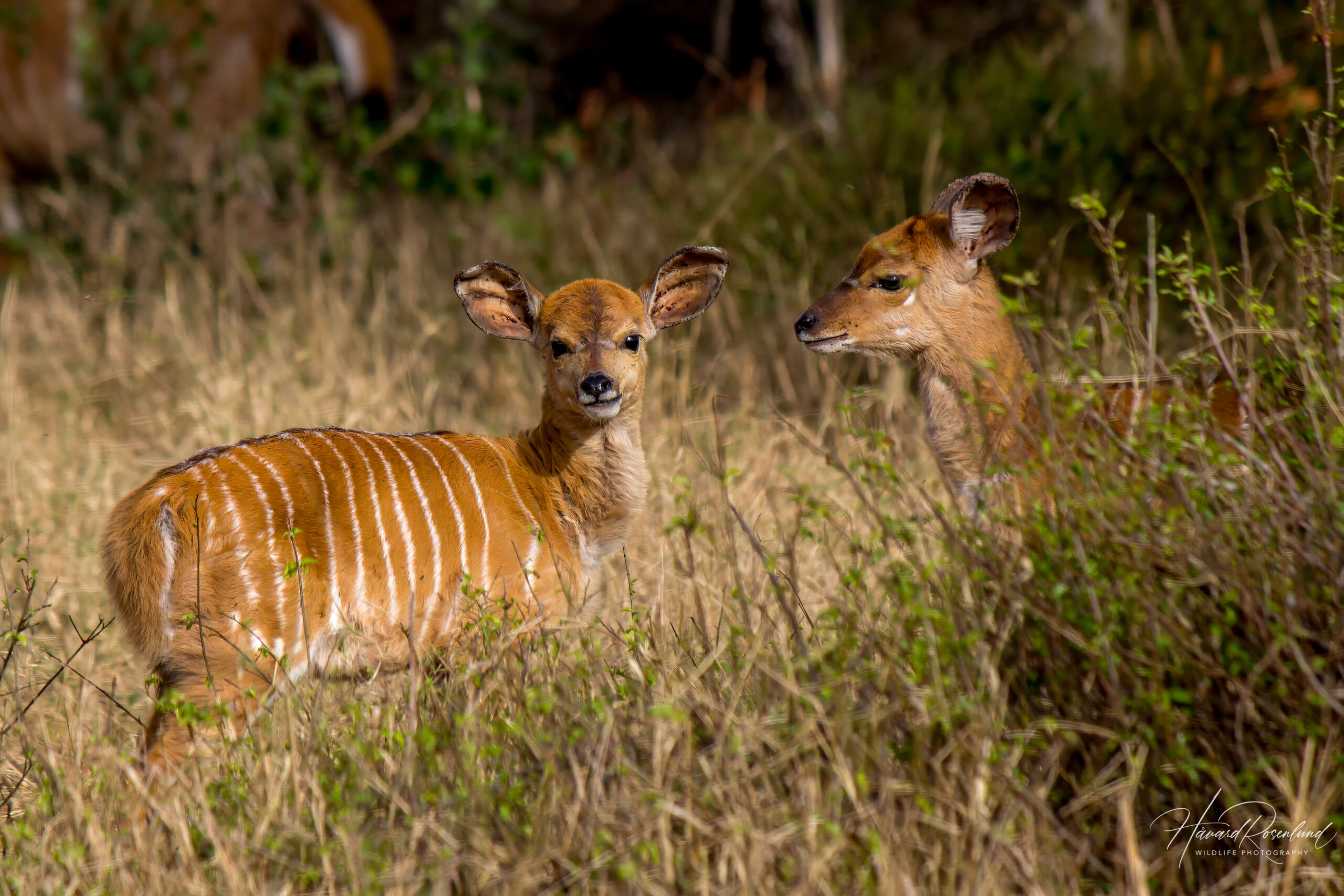
Gestation lasts about seven months, after which the female normally gives birth to one calf weighing roughly 4–5 kg. In the long-term Ndumo study, the mean interval between births was 297 days. The calf remains concealed in dense vegetation for up to about 18 days while the mother returns periodically to nurse and tend it. Females that gave birth during a KwaZulu-Natal tracking study also used much smaller areas around this hiding phase. The calf then begins following its mother and joins female groups. Young males retain the reddish female-like coat for a time before progressively developing the darker adult male appearance.
Relationship with humans
Nyalas have become important animals in southern Africa’s private wildlife sector. Their appearance, adaptability and value for wildlife viewing and regulated hunting have encouraged extensive movement of animals to private reserves and game farms, including many sites outside the historical range. Counts from 2013–2014 placed about 49% of South Africa’s nyalas on private land.
This has helped increase numbers in some regions, but it also means that the modern distribution partly reflects human movement of animals rather than natural expansion. Maps and regional population figures therefore include introduced populations alongside naturally occurring ones.
Status
The nyala is listed as Least Concern on the IUCN Red List. Its historical native range includes southern Malawi, Mozambique, Zimbabwe, Eswatini and eastern South Africa. The original population in Eswatini disappeared by the 1950s, and the animals living there today descend from successful reintroductions. The species has also been introduced to private land outside its historical range, including in Namibia and other parts of South Africa.
The South African regional assessment used counts from 2013–2014 to estimate at least 40,398 nyalas across protected areas and private properties in South Africa, with about another 1,000 in Eswatini, and assessed the regional population as stable or increasing. These figures include many managed and introduced populations, date from 2013–2014 and should not be read as current population totals.
Local populations can still be affected by habitat loss, degradation of thicket and riverine woodland and illegal hunting for meat. High densities and introductions outside the natural range can also alter vegetation and increase competition with native browsers such as Cape bushbuck (Tragelaphus sylvaticus). Nyalas occur in many protected areas, and private reserves also hold large populations.
Image gallery
Loading map and observations…
Have you seen this species?
Independent species archive
Did you find this species page useful?
Wildlife Vagabond is independently built and maintained. Voluntary support helps cover hosting, maps, data storage and continued improvements to the species archive.
Support Wildlife VagabondSpecies content will remain freely available.
References
Information about the species’ global distribution and status is based primarily on global Red List data. See the references below for details.
- Anderson, J. L. (1984). Reproduction in the Nyala (Tragetaphus angasi) (Mammalia: Ungulata). Journal of Zoology, 204(1), 129-142. https://doi.org/10.1111/j.1469-7998.1984.tb02366.x
- Balme, G. A., le Roex, N., Rogan, M. S., & Hunter, L. T. B. (2020). Ecological opportunity drives individual dietary specialization in leopards. Journal of Animal Ecology, 89(2), 589-600. https://doi.org/10.1111/1365-2656.13109
- International Union for Conservation of Nature. (n.d.). SSC Antelope Specialist Group – Tragelaphus angasii. The IUCN Red List of Threatened Species. https://www.iucnredlist.org/species/22052/115165681
- Janse van Rensburg, J., McMillan, M., Giżejewska, A., & Fattebert, J. (2018). Rainfall predicts seasonal home range size variation in nyala. African Journal of Ecology, 56(2), 418-423. https://doi.org/10.1111/aje.12455
- Krüger, S. C., Lawes, M. J., & Maddock, A. H. (1999). Diet choice and capture success of wild dog (Lycaon pictus) in Hluhluwe‐Umfolozi Park, South Africa. Journal of Zoology, 248(4), 543-551. https://doi.org/10.1111/j.1469-7998.1999.tb01054.x
- Mammal Diversity Database. (2026). Tragelaphus angasii. American Society of Mammalogists. https://www.mammaldiversity.org/taxon/1006275/
- O'Kane, C. A. J., Duffy, K. J., Page, B. R., & Macdonald, D. W. (2011). Overlap and seasonal shifts in use of woody plant species amongst a guild of savanna browsers. Journal of Tropical Ecology, 27(3), 249-258. https://doi.org/10.1017/S0266467410000817
- Rakotoarivelo, A. R., Rambuda, T., Taron, U. H., Stalder, G., O’Donoghue, P., Robovský, J., Hartmann, S., Hofreiter, M., & Moodley, Y. (2024). Complex patterns of gene flow and convergence in the evolutionary history of the spiral-horned antelopes (Tragelaphini). Molecular Phylogenetics and Evolution, 198, 108131. https://doi.org/10.1016/j.ympev.2024.108131
- Skinner & Chimimba. (2005). The Mammals of the Southern African Sub-region. https://books.google.com/books?id=I6RhVKyFfjkC
- South African National Biodiversity Institute. (n.d.). SANBI Species Status – Tragelaphus angasii regional assessment. https://speciesstatus.sanbi.org/assessment/last-assessment/2252/
- South African National Parks. (n.d.). SANParks – Nyala. https://www.sanparks.org/conservation/parks/marakele-national-park/primary-consumers-herbivores/nyala
- van Rooyen. (1992). Diets of impala and nyala in two game reserves in Natal, South Africa. https://www.researchgate.net/publication/283826862_Diets_of_impala_and_nyala_in_two_game_reserves_in_Natal_South_Africa