
Arctic Storms Cut Muskox Movement Associated With Foraging by About Two-thirds
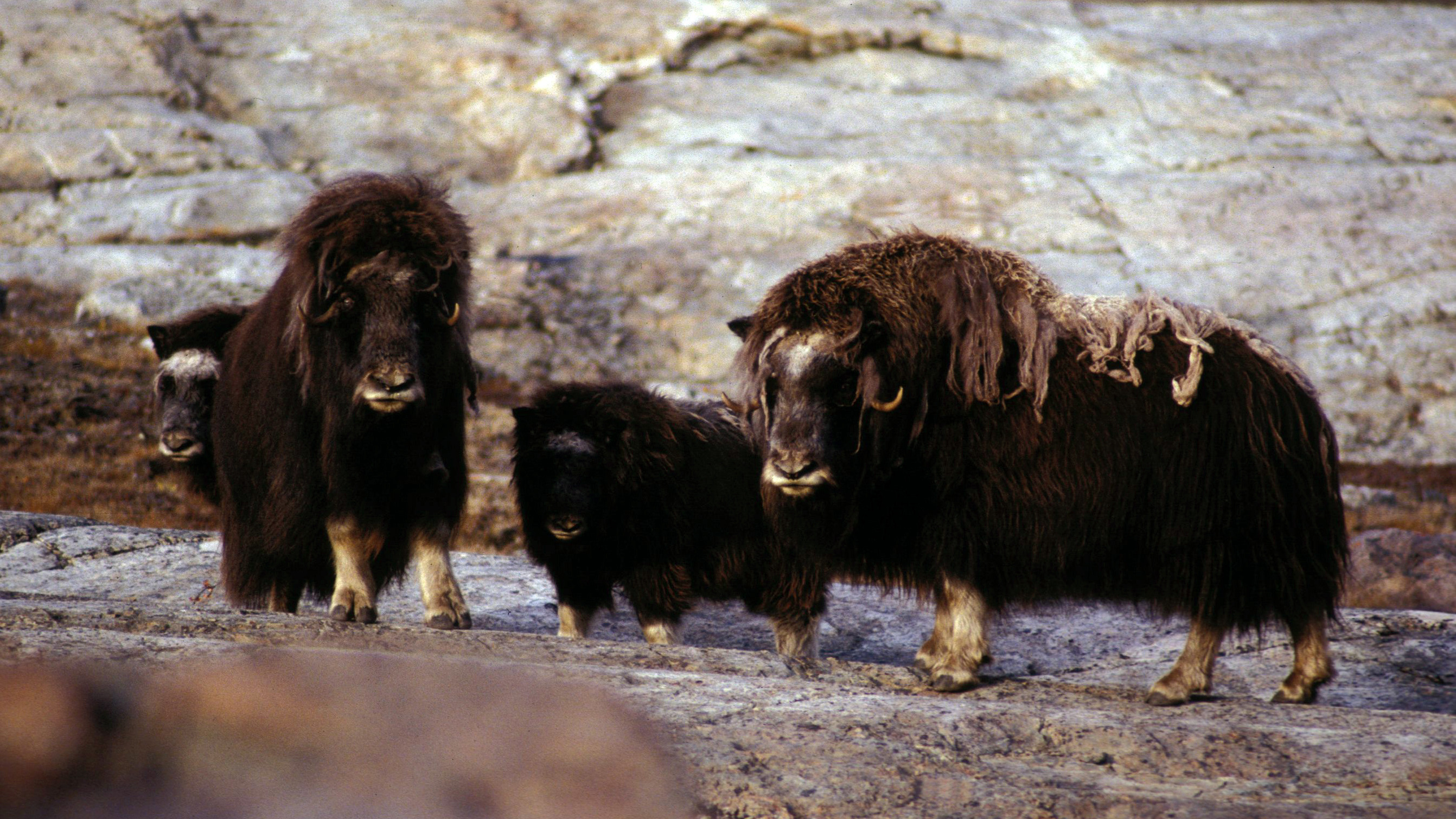
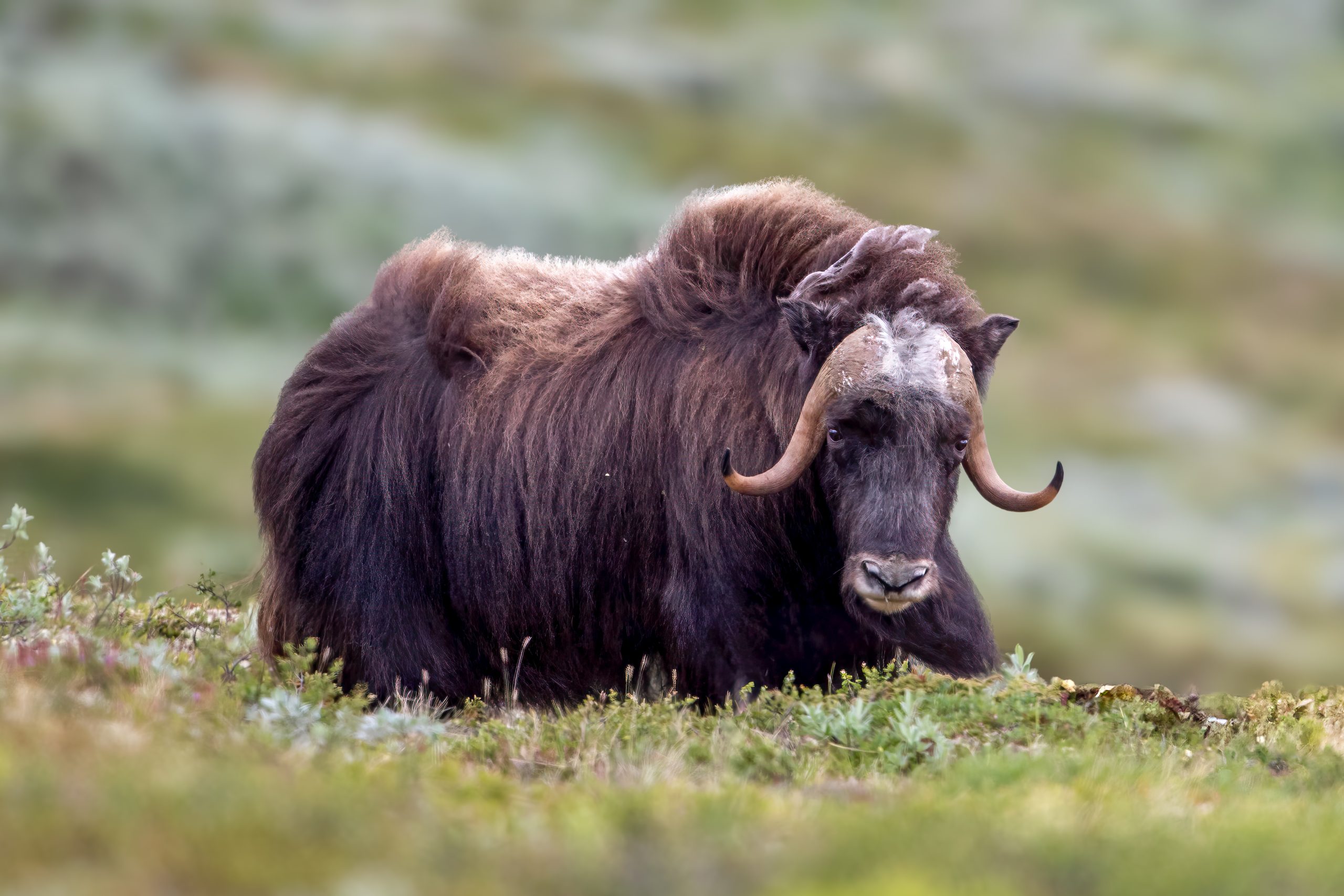
Severe Arctic storms sharply shifted the movement patterns of muskoxen (Ovibos moschatus) in northeast Greenland away from movement associated with foraging and toward movement interpreted as resting. The study, first published on 18 May 2026, analysed 998,388 hourly GPS positions from 61 adult muskoxen tracked in the Zackenberg valley between 2013 and 2024.
GPS movement was divided into three statistical states
The researchers used hidden Markov models to group the GPS data according to how far an animal moved between hourly positions and how strongly its direction changed. The model identified three recurring movement patterns, which the authors interpreted biologically as resting, foraging and relocating.
These labels are interpretations of movement, not direct observations of the animals eating, lying down or travelling. In particular, the intermediate movement pattern was considered consistent with foraging because it involved the kind of shorter, less directional movement expected when an animal searches for and consumes food.
Six storms shifted time strongly toward resting-like movement
The researchers identified six storm events that affected collared muskoxen, all between October and March. The events lasted from 19 to 102 hours, with an average duration of about 48 hours. Storm-level winds of at least 24.5 m/s were rare across the full GPS dataset, showing that these were exceptional conditions rather than normal windy days.
During the storm events, muskoxen spent much more time in the movement state interpreted as resting and much less in the state associated with foraging. Across the storms, time in the foraging-associated state fell by about 67% compared with the days before the storms.
After the storms passed, the distribution of movement states returned to levels similar to those before the events. The study found no evidence that muskoxen immediately compensated for the lost foraging opportunity by spending extra time in the foraging-associated state afterwards.
Dense vegetation was selected more strongly as wind increased
Habitat selection also changed with wind speed. As winds strengthened, muskoxen increasingly selected areas with dense vegetation and avoided barren areas more strongly. At very high wind speeds they also avoided higher elevations and more rugged terrain.
The authors interpret the combined shift toward resting-like movement and stronger use of dense vegetation as an energy-conservation strategy. Bedding down and limiting movement during extreme winds can reduce energetic costs and exposure, while vegetation may provide more favourable conditions than open barren ground. The study did not measure fine-scale shelter such as the leeward side of rocks, so it cannot show exactly how individual animals reduced wind exposure.
The results show that muskoxen can rapidly alter movement and habitat use during severe storms, but the energetic consequences of repeatedly losing foraging time remain unresolved. If high-Arctic storms become more frequent or intense, the cumulative cost of these short interruptions could become increasingly important for a species living with a strongly seasonal food supply.
Behaviour
Related news
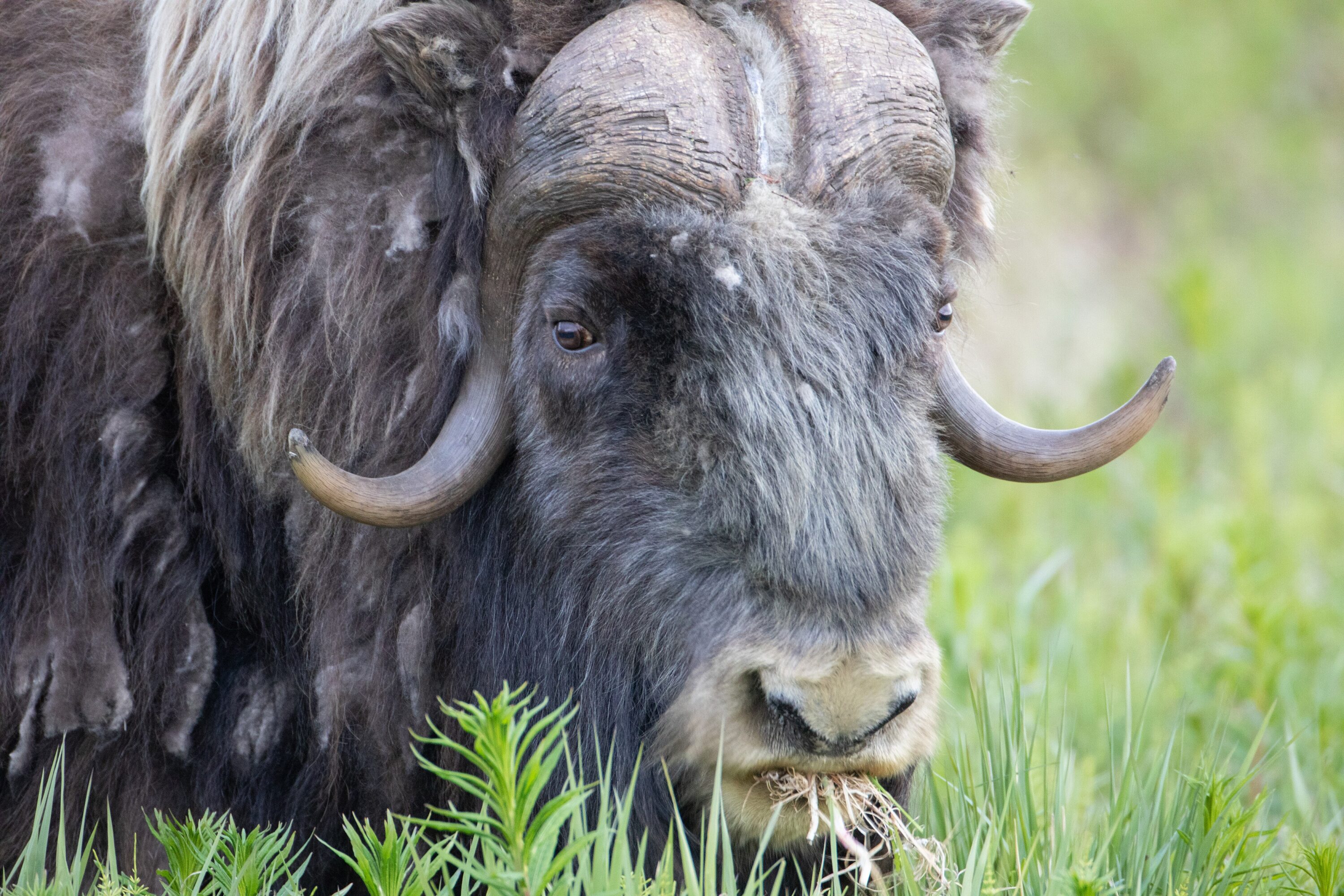
Model Points to Feces and Alternative Hosts in Muskox Bacterial Disease
A 2026 multi-host model of Erysipelothrix rhusiopathiae in Arctic muskoxen found that direct and fecal transmission could sustain…
Read story →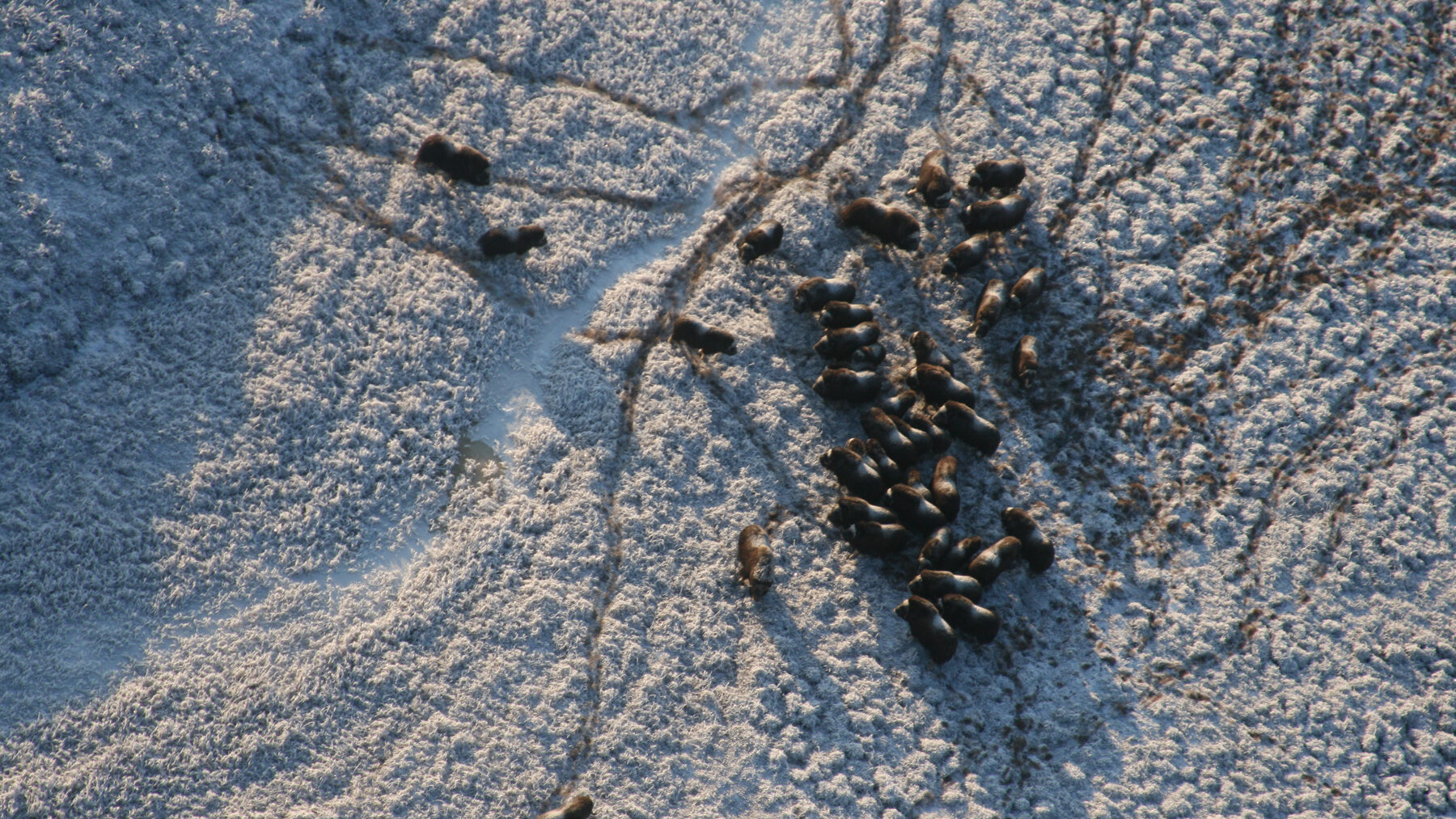
Synthetic Images Helped Train Muskox Detectors When Real Aerial Photos Were Scarce
A 2026 study found that object-detection models trained only on synthetic muskox images could detect more than 80%…
Read story →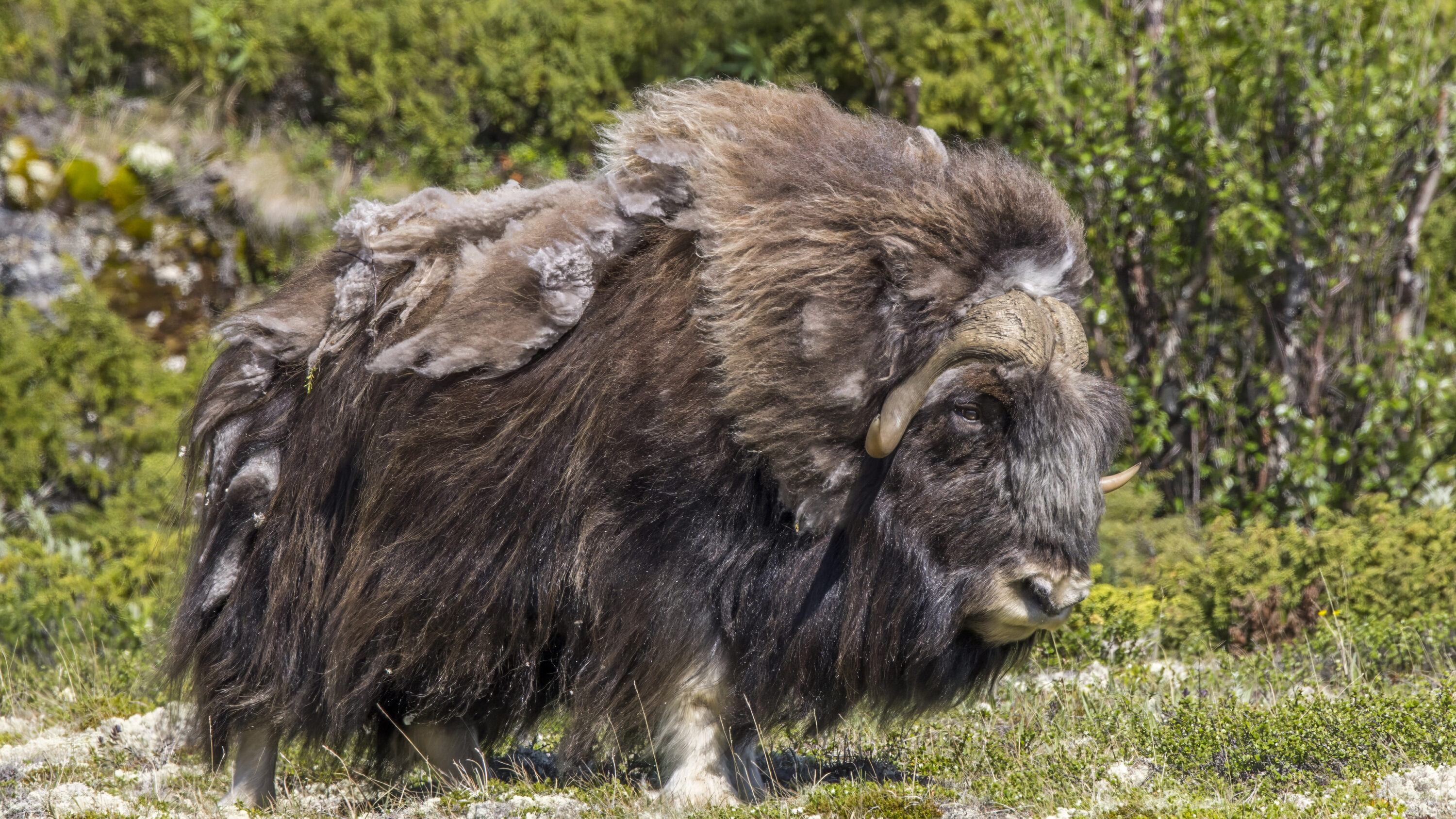
Dovrefjell Winter Count Found 220 Muskoxen, Above the 200-animal Management Target
Norway's 2026 winter count recorded 220 muskoxen on Dovrefjell, including 32 calves. The population has ranged from 200…
Read story →SPECIES IN THIS STORY
Species in this story
Independent research and conservation news archive
Did you find this information useful?
Wildlife Vagabond is independently built and maintained. Voluntary support helps cover source verification, hosting and continued work on research and conservation news.
Support Wildlife VagabondThe news archive will remain freely available.