
Caribou Crossed Elevated Pipelines More Readily but Were Less Likely to Cross Both Roads and Pipelines When Separated
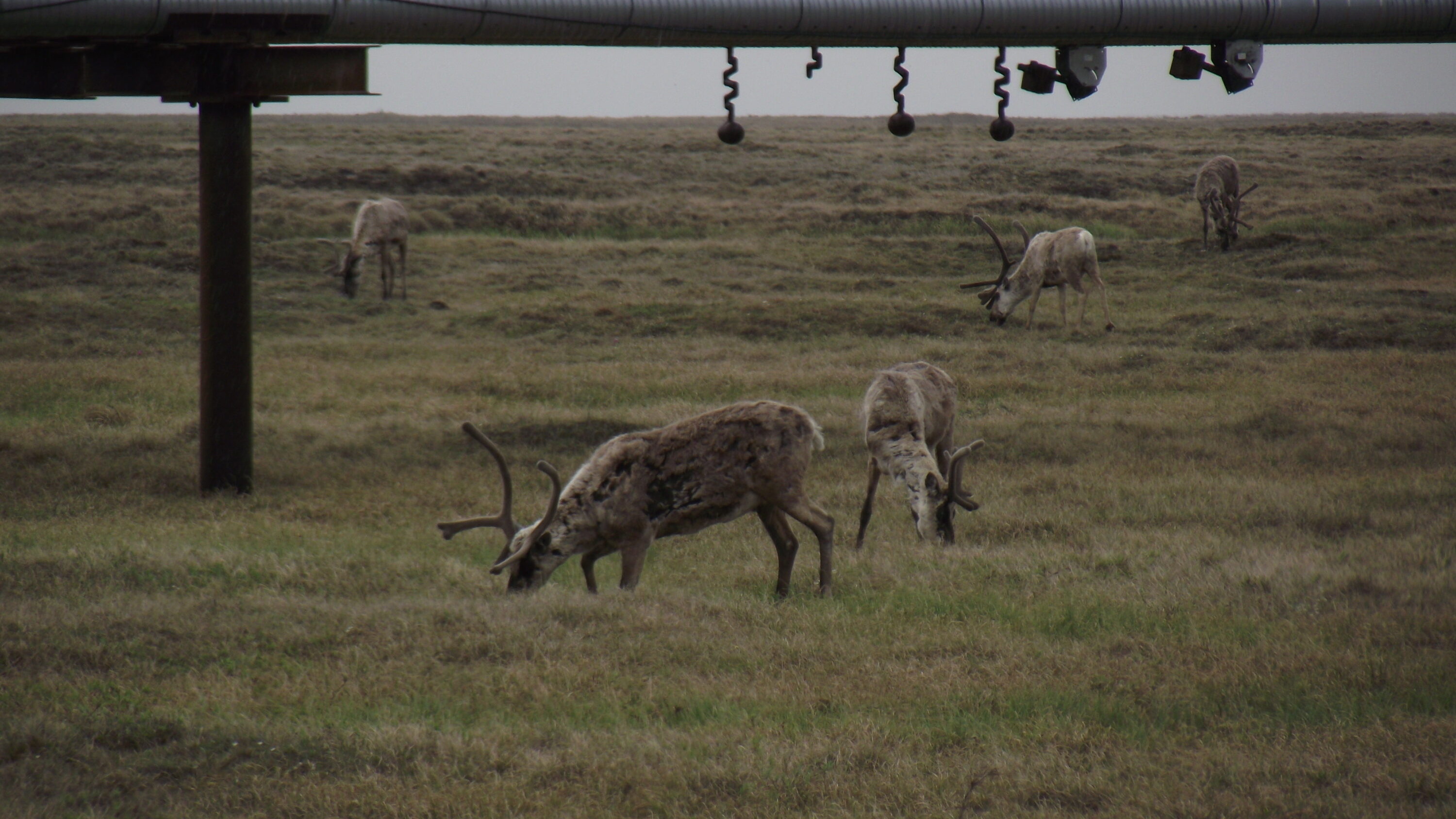
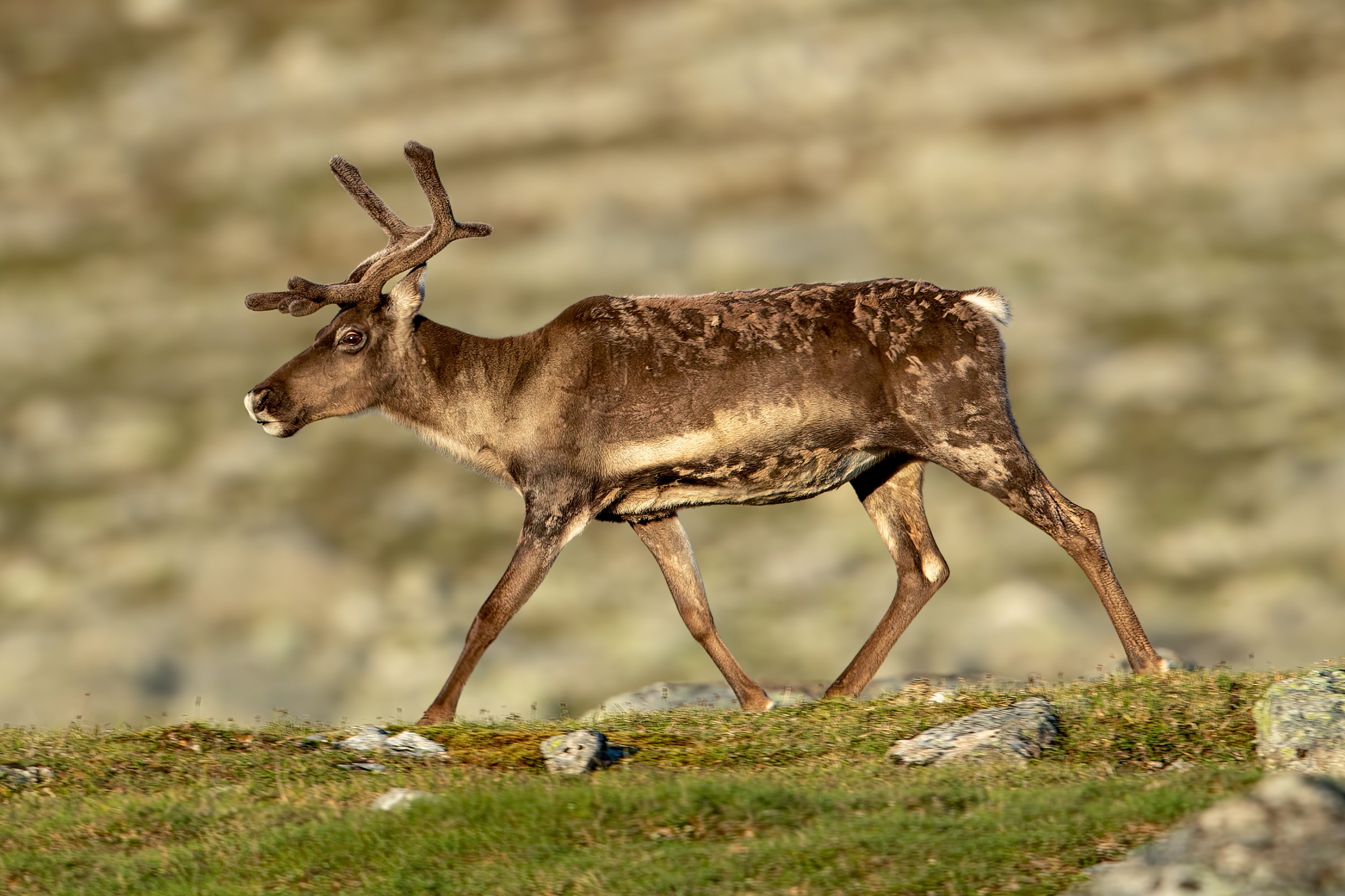
Adult female caribou (Rangifer tarandus) in Alaska, USA’s Central Arctic Herd were more likely to cross oil-field pipelines when the nearest pipeline was elevated at least 1.5 metres above the ground. They were also more likely to cross both a road and a pipeline when the two structures were directly adjacent than when they were separated. The study was published online on 10 July 2026 in Journal of Applied Ecology.
Researchers analysed summer movements from 75 adult females between 2015 and 2020, representing 214 caribou-years of telemetry—annual tracking records in which the same female could contribute in more than one year—together with spatial data from the Prudhoe Bay, Kuparuk and Milne Point oil fields on Alaska’s North Slope. They tested two long-standing mitigation measures intended to make developed landscapes easier for caribou to move through: elevating pipelines and, where feasible, separating roads and pipelines by at least 150 metres.
The pipeline-height result supported the first measure. In the height analysis, which included data from 65 females, crossing probability increased when pipelines were elevated and was relatively consistent once the nearest pipeline was at least 1.5 metres above ground. At about 1.9 metres, the modelled crossing probability was more than twice that for a pipeline near ground level. The authors conclude that raising pipelines helps maintain movement through oil-field infrastructure.
The road–pipeline result ran counter to the second recommendation. When caribou had to cross both structures, crossings were more likely where road and pipeline lay next to each other. The researchers suggest that aligned structures may allow the animals to pass both in a single crossing rather than negotiate two separate barriers. They caution that separating roads and pipelines may therefore make North Slope oil fields harder to navigate during summer, and argue that mitigation measures should be tested rather than assumed to work. The study concerned adult females in summer; responses during other seasons require further study.
Management
Related news
Inuit harvesters help detect an emerging parasitic disease in Arctic caribou
Near Kugluktuk in Nunavut, Inuit harvesters reported unusual tissue changes in caribou. Tests found DNA from two parasitic…
Read story →
Video Collars Showed GPS Methods Were Only About 70% Accurate at Detecting Caribou Calving
Video collars from 160 adult females in the Porcupine and Western Arctic herds showed that two GPS movement…
Read story →
Reindeer and Caribou Showed Broad Genetic Differences Across Russia, Alaska and Canada
Microsatellite data from 1,544 reindeer and caribou in 42 populations showed broad genetic differentiation among Russia, Alaska and…
Read story →SPECIES IN THIS STORY
Species in this story
Independent research and conservation news archive
Did you find this information useful?
Wildlife Vagabond is independently built and maintained. Voluntary support helps cover source verification, hosting and continued work on research and conservation news.
Support Wildlife VagabondThe news archive will remain freely available.