
Common Myna Trapping Reduced Recorded Activity but Did Not Raise Urban Bird Diversity
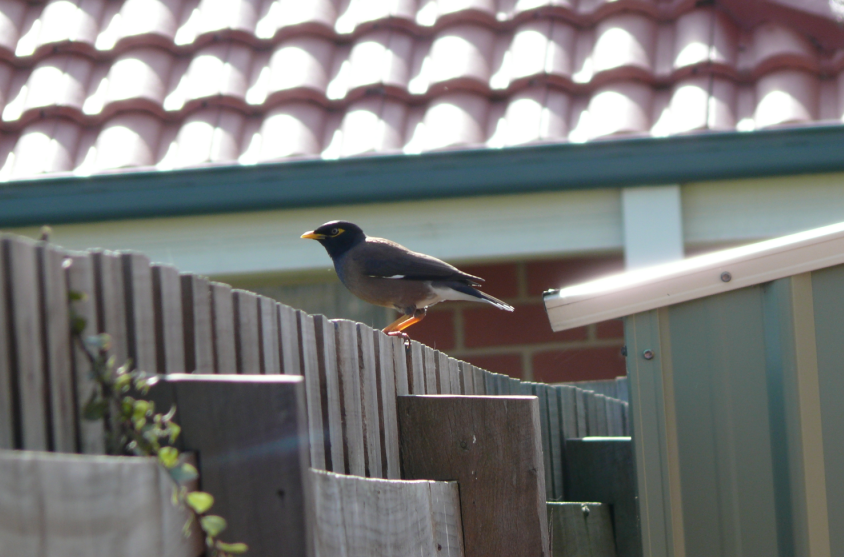
A citizen trapping programme in suburban Melbourne reduced the recorded activity of common mynas, but it did not increase the overall richness or diversity of the local bird community during the study period. Instead, individual species responded differently, and the strongest increase involved another aggressive urban bird. The findings were published in Wildlife Research on 17 February 2026.
A transect is a predefined line or route used to survey an area systematically, with observations, signs or sampling points recorded along it.
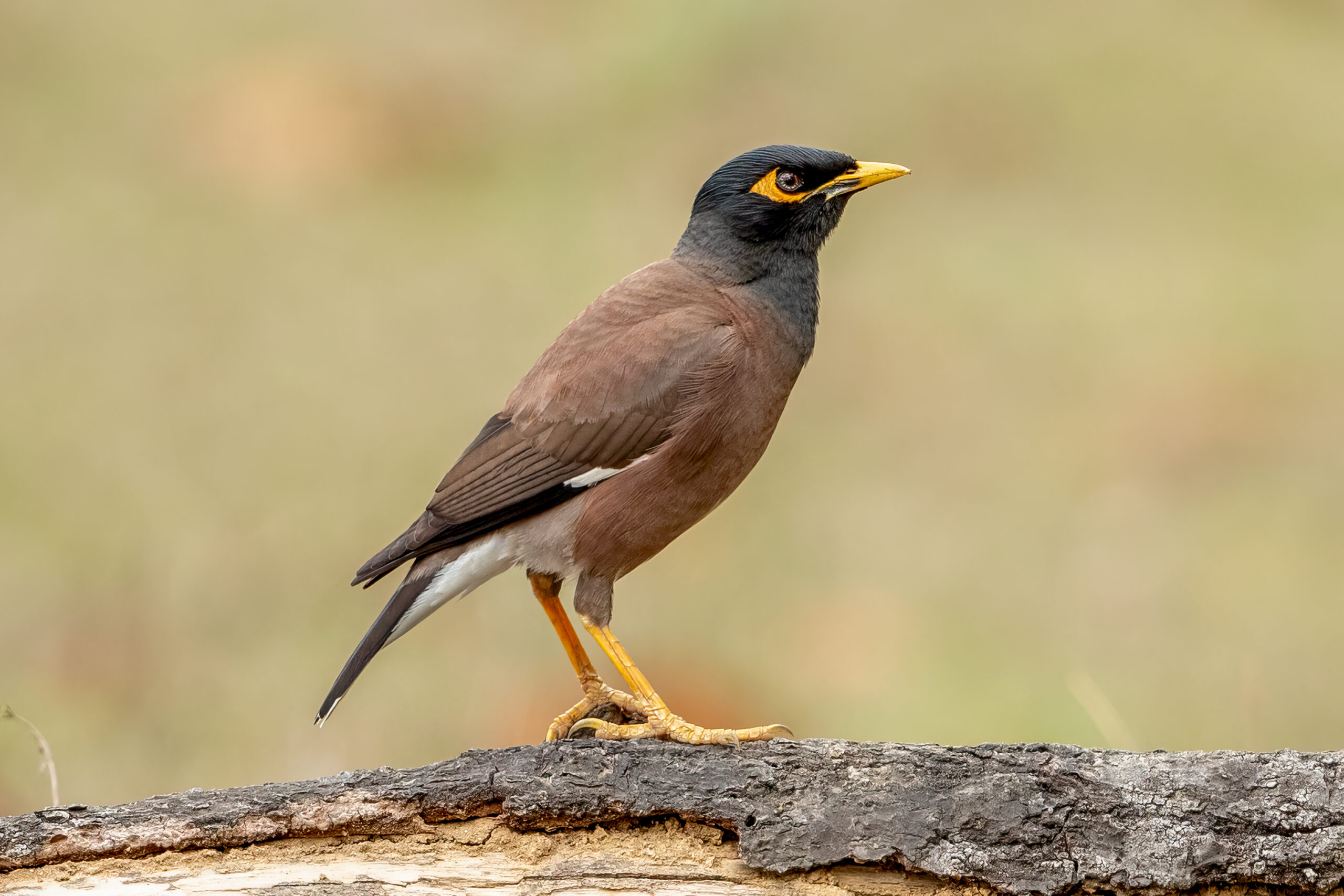
The common myna (Acridotheres tristis) was introduced to Australia in the nineteenth century and is now widespread in much of the east. It competes for nest hollows and food and is often targeted by community control groups. Removing birds on a mainland city, however, differs from eradication on a small island: surrounding populations can continually replace trapped individuals, and the effects on other species may depend on a complicated network of competition and aggression.
Researchers examined a programme run by the Bayside Indian Myna Group and funded by Bayside City Council. The group distributed 256 traps to 302 private residences in the City of Bayside, south-east of Melbourne. During the first year, from April 2015 to March 2016, participants recorded 64,405 trap-days and captured 2,157 common mynas. Non-target birds were released, while trained personnel euthanised the captured mynas under the programme’s procedures.
To measure change, the study compared Bayside with the neighbouring City of Kingston, where no equivalent suppression was known to occur. Fixed one-kilometre transects were surveyed before and during the intervention. Observers recorded all birds seen or heard during 20-minute walks conducted within three hours of sunrise and in suitable weather. Surveys began in November 2014 and continued for 17 months.
The dataset contained 16,637 bird observations from 264 surveys, representing 57 species. Because the urban landscape and access restrictions did not allow a random transect design suitable for estimating absolute density, the researchers treated the counts as an index of relative activity, which they called relative abundance. Their analysis used the change through time in the suppression area and compared it with the simultaneous change in the control area.
Trapping cut recorded myna activity by more than half in Bayside
The intervention achieved a trapping rate of 58.3 common mynas per square kilometre per year — more than twice a previously modelled threshold of 25 birds per square kilometre per year for meaningful population reduction. Average detections along Bayside transects fell from 7.23 before suppression to 3.27 during suppression. In Kingston, the corresponding measure changed much less, from 8.03 to 7.48. The researchers concluded that sufficiently intensive community trapping can suppress common mynas over a small area in the short term.
Bird richness and diversity did not increase
That decline did not produce a general increase in bird diversity. Species richness and diversity measures for native, introduced and total terrestrial birds did not differ in association with the suppression. Among the 13 common species with enough data for species-level modelling, four showed clear changes relative to the control area.
Noisy miners increased as common mynas declined
Common myna and the native red wattlebird declined, while the introduced spotted dove and the native noisy miner increased. The rise in noisy miner was the largest response apart from the decline in the target species. This matters because noisy miner is itself highly aggressive and can exclude smaller native insect-eating birds. The study found no consistent improvement among the small insectivores that researchers had expected might benefit.
The authors describe this as a possible succession among dominant, or “despotic”, urban birds. Removing one aggressive competitor can alter interactions without leaving an empty space that is automatically filled by the conservation targets. A species with overlapping influence may instead become more prominent, creating different winners and losers. The study did not establish the mechanism behind the noisy miner increase, so the interpretation remains a management warning rather than proof of direct replacement.
One programme and 17 months cannot show the long-term community response
Several limitations restrict how widely the result can be applied. The work assessed one programme in two adjacent municipalities, and the authors say more spatial and temporal replication is required. Rarer birds could not be included in the species-level models. Bird assemblages may also not have stabilised during the relatively short sampling period.
The measured decline could partly reflect behaviour as well as abundance. Previous work has shown that common mynas can become less conspicuous under heavy trapping pressure, and the authors could not exclude that possibility. Immigration also makes long-term suppression and elimination difficult on large mainland areas, even when trapping is effective locally.
Management
Related news

Rail Staff Say Two Common Mynas Regularly Ride Sydney Trains
Two common mynas were filmed sitting calmly inside a Sydney train, while a guard said staff know them…
Read story →
Six Cavity-Nesting Bird Species Bred Successfully in Artificial Nests in Punjab
Punjab Agricultural University reported successful breeding in artificial nests by six cavity-nesting species, including Indian roller, spotted owlet…
Read story →
Qatar Captured 12,844 Invasive Common Mynas From January to July
Qatar reported 12,844 common mynas captured from January through July 2026, bringing the project total to 61,999. Control…
Read story →SPECIES IN THIS STORY
Species in this story
Independent research and conservation news archive
Did you find this information useful?
Wildlife Vagabond is independently built and maintained. Voluntary support helps cover source verification, hosting and continued work on research and conservation news.
Support Wildlife VagabondThe news archive will remain freely available.