
Denmark Counted a Record 1,526 Great Egrets in October 2024 as Breeding Population Reached 93 Pairs

The great egret (Ardea alba) has changed from a very rare visitor to a widespread and rapidly increasing bird in Denmark. A national analysis published in June 2026 found that 1,526 individuals were counted across the country in October 2024, the highest Danish total recorded to date, while the breeding population reached 93 pairs in 2025.
The researchers combined several long-running datasets to reconstruct the species’ expansion. Earlier records came from the Danish Rarities Committee and annual bird reports, while the analysis of recent decades drew mainly on observations in BirdLife Denmark’s DOFbasen, coordinated NOVANA waterbird counts, breeding surveys and ringing recoveries.
From 2005 to 2024, the analysis supported increasing great egret occurrence in every region of Denmark. By 2024, the species was recorded during the year in 80–90% of the 10 × 10 km survey squares in eastern parts of the country and in 60–70% of squares across several other regions. Numbers were particularly concentrated in the Wadden Sea region and around Vejlerne in north-western Jutland.
October counts rose to a record 1,526 birds
The coordinated counts show how large the autumn population has become. Denmark held 882 great egrets in October 2022 and 880 in October 2023, before the total rose to 1,526 in October 2024. Midwinter numbers have also increased: 445 birds were counted in January 2022 and 454 in January 2023.
The breeding population reached 93 pairs
Breeding followed the same northward expansion. The first confirmed Danish breeding occurred in 2014 with two pairs. By 2025, 93 pairs were recorded in seven colonies, all in north-western Jutland. Most nests were placed in trees within colonies of grey heron (Ardea cinerea), although some great egrets also nested in reedbeds or smaller tree groups without grey herons.
Ring recoveries provide clues to the origins of birds reaching Denmark. Thirteen great egrets ringed abroad had been recovered in the country by June 2024; twelve of the thirteen originated east of Denmark, from Lithuania, Latvia, Poland, Belarus or Sweden, while one came from the Netherlands.
The authors conclude that the Danish increase forms part of the broader northward and westward expansion of great egret in Europe. The species is now present in Denmark throughout the year, with the largest numbers in autumn, and has become an established breeding bird little more than a decade after its first confirmed nesting. They expect numbers to continue increasing because suitable habitat does not yet appear limiting and milder winters are likely to favour more birds remaining in Denmark, although this is a forward-looking interpretation rather than an observed future trend.
Population & status
Related news
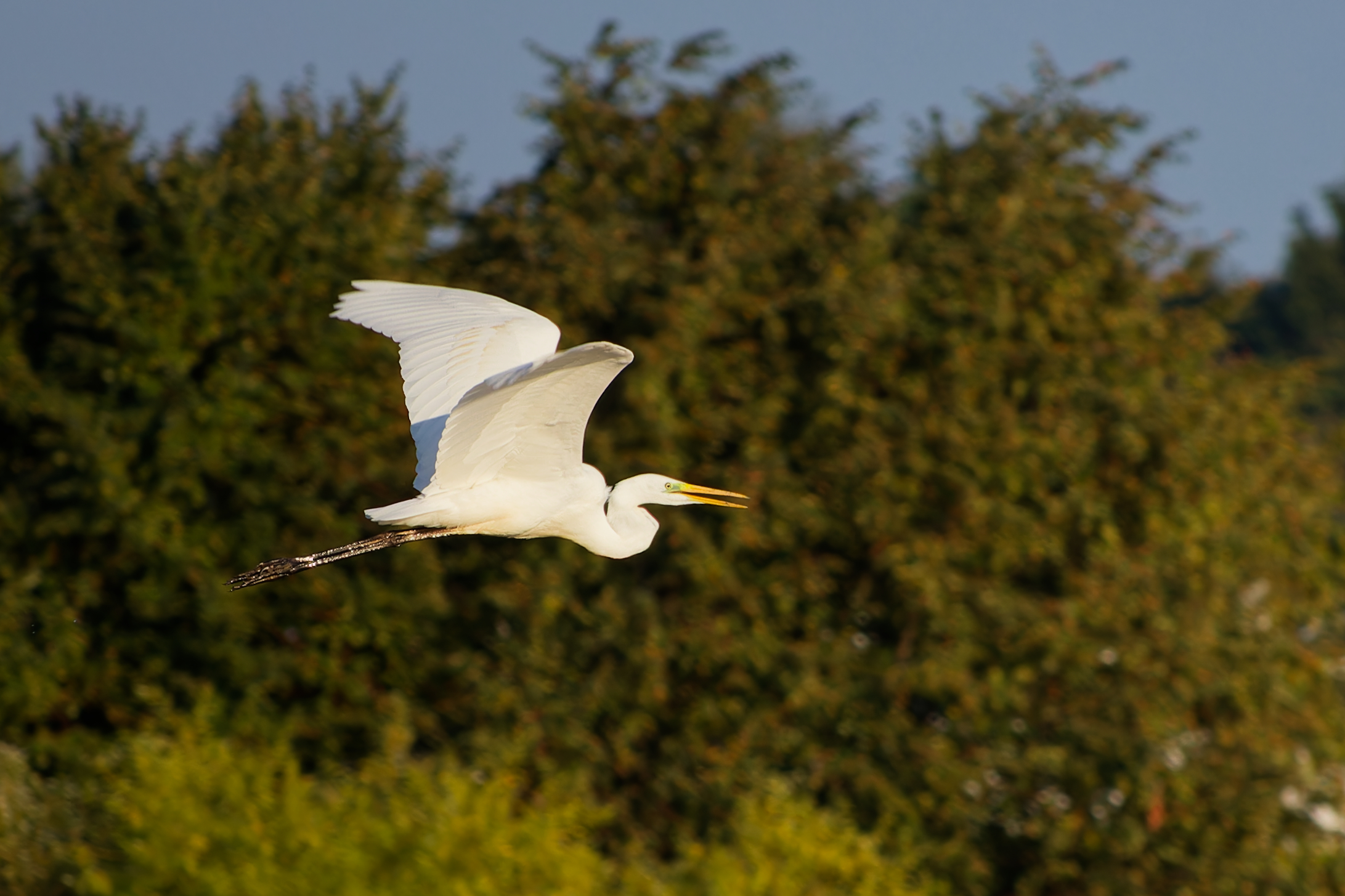
Six of Seven GPS-Tracked Great Egrets Returned to the Same Wintering Grounds
Six of seven great egrets tracked across at least two complete winters returned to the same wintering grounds;…
Read story →
Poland’s Breeding Great Egret Population Reached 1,150–1,250 Pairs
Poland’s breeding great egret population increased by 84% from 2013 to 2025. Breeding was documented at 31 sites,…
Read story →
Bile-Duct Trematodes Found in the Lungs and Body Cavity of a Great Egret
A case report from South Korea found the bile-duct trematode Pegosomum bubulcum on the liver surface, in the…
Read story →SPECIES IN THIS STORY
Species in this story
Independent research and conservation news archive
Did you find this information useful?
Wildlife Vagabond is independently built and maintained. Voluntary support helps cover source verification, hosting and continued work on research and conservation news.
Support Wildlife VagabondThe news archive will remain freely available.