
Great Tits Advanced Egg-Laying by More Than Two Weeks and Kept Breeding Temperatures Stable
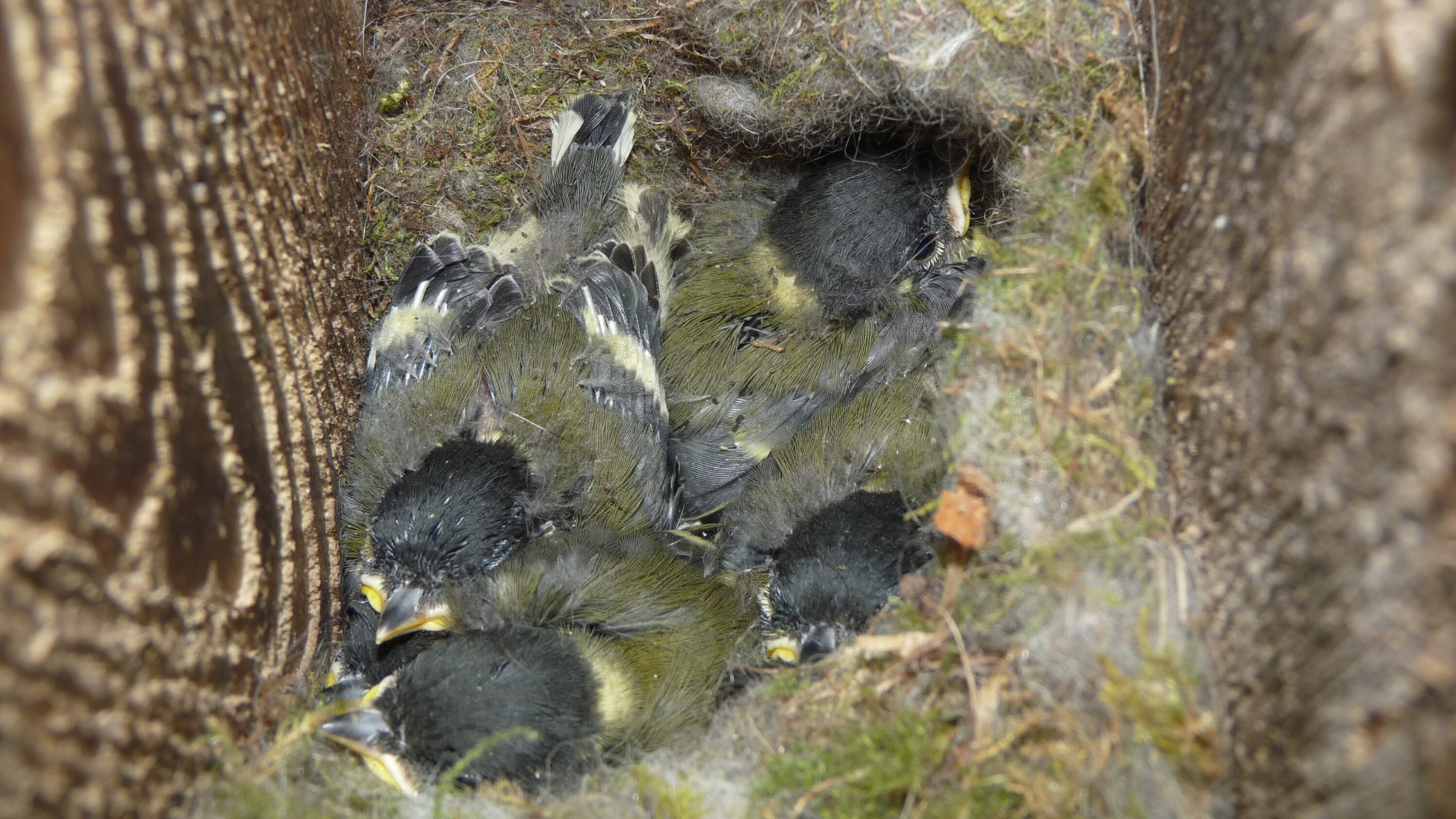
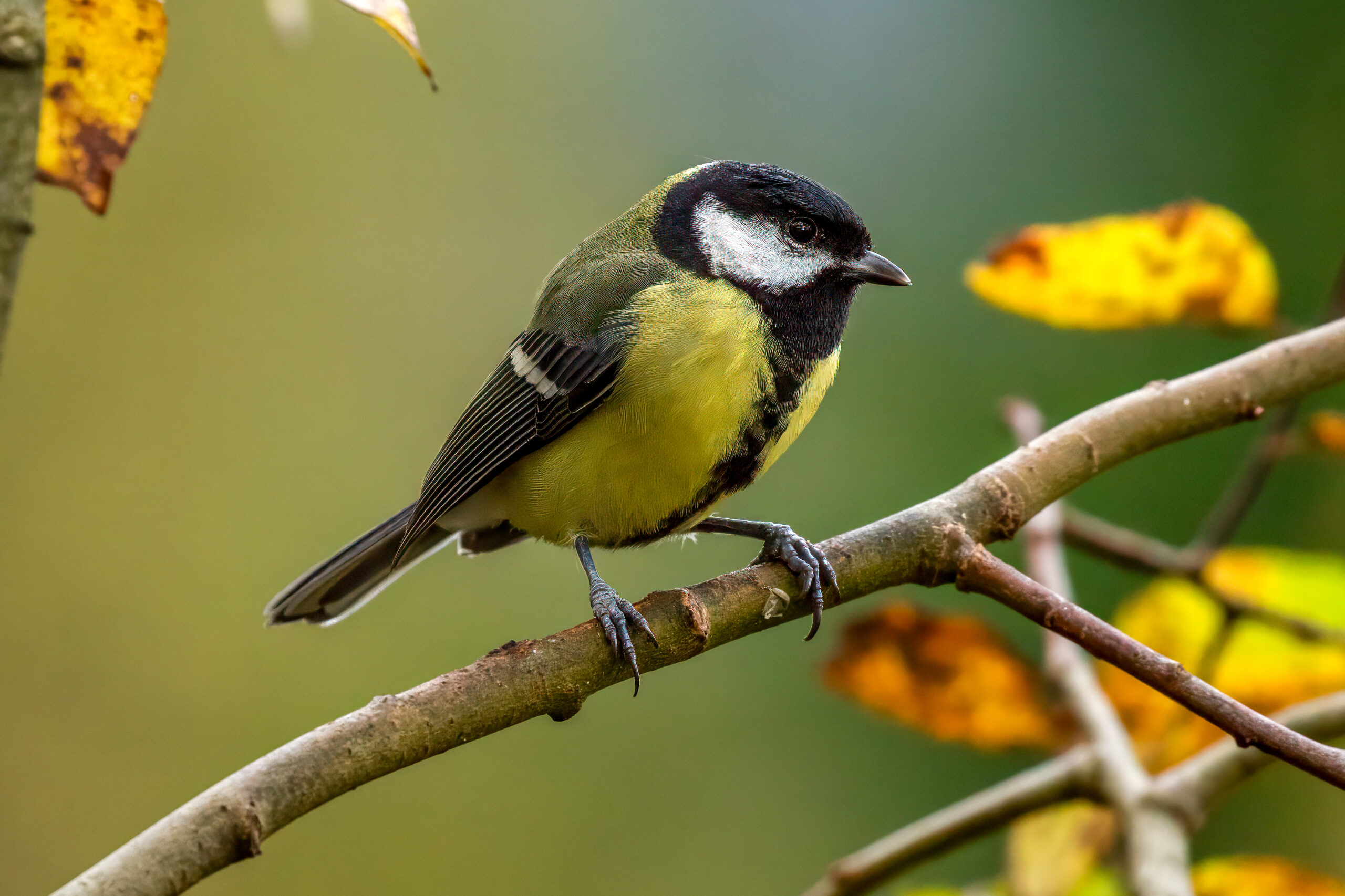
Great tits (Parus major) advanced egg-laying by more than two weeks over six decades and, by doing so, continued to breed under almost the same temperatures despite substantial spring warming. The study, published in Science Advances on 24 April 2026, shows that calendar dates alone can hide how animals experience climate change.
David López-Idiáquez and colleagues analysed more than 12,000 breeding attempts by great tits in Wytham Woods, England, from 1965 to 2023. The researchers compared temperature in two ways. First, they used the same calendar window every year, from 15 February to 5 June, to measure how much spring had warmed overall. They then shifted the temperature window for each breeding attempt so that it followed what each bird was actually doing during five stages of reproduction: egg-laying, incubation, hatching, nestling growth and fledging. This made it possible to ask whether the climate was warming while the birds themselves were still reproducing under similar temperatures.
Egg-laying advanced as spring temperatures rose
Mean temperature between 15 February and 5 June rose by 1.88 degrees Celsius across the study period. Great tit laying dates advanced by more than two weeks, at an estimated rate of about 0.28 days per year. When the researchers shifted the temperature windows to follow the birds’ actual reproductive timing, however, mean conditions remained stable across all five stages.
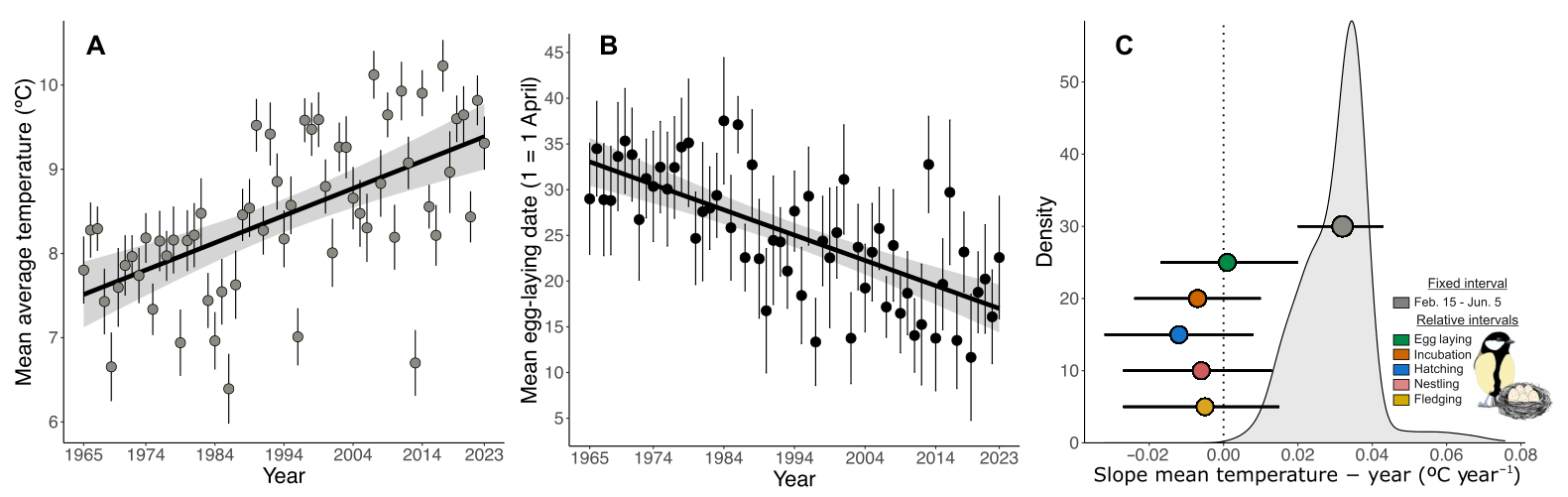
Breeding temperatures remained almost stable
The researchers describe this as thermal homeostasis: despite a warmer spring overall, the birds kept the temperatures they experienced during reproduction close to the same long-term range by breeding earlier. The mechanism is phenological plasticity, meaning that the timing of a seasonal biological event can shift in response to environmental conditions.
The temperatures maintained by this adjustment were also biologically relevant. Reproductive measures—including clutch size, the number of fledglings, fledging success and the number of offspring that later survived to join the breeding population—often showed curved relationships with temperature. Success was highest around intermediate conditions rather than simply increasing as springs became warmer. The stable temperatures experienced by the birds were close to those associated with the best reproductive outcomes.
Food timing may explain the adjustment
Food timing provided an important link. Great tit chicks depend heavily on moth caterpillars, especially winter moth (Operophtera brumata) larvae, during the short period of rapid growth in the nest. The study used 45 years of information on the seasonal caterpillar peak. Earlier breeding helped the birds remain synchronized with this food resource, and some apparent relationships between temperature and breeding success weakened when mismatch with the caterpillar peak was included in the analysis.
Reproduction & development
Related news
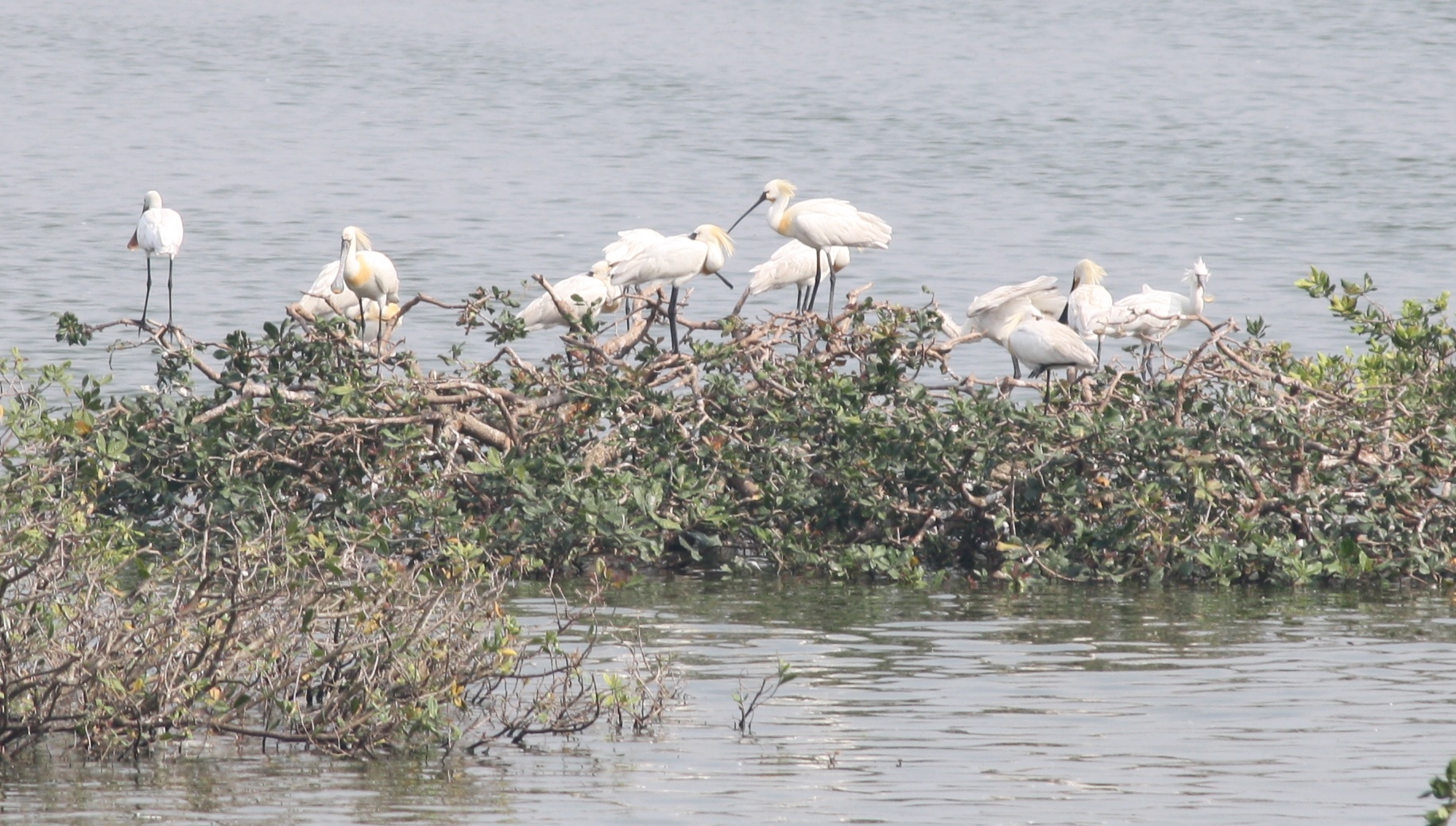
Therthangal Spoonbill Colony Returned to 12 Active Nests After Complete Breeding Failure
Six breeding seasons at Therthangal Bird Sanctuary in Tamil Nadu ranged from 12 active Eurasian Spoonbill nests in…
Read story →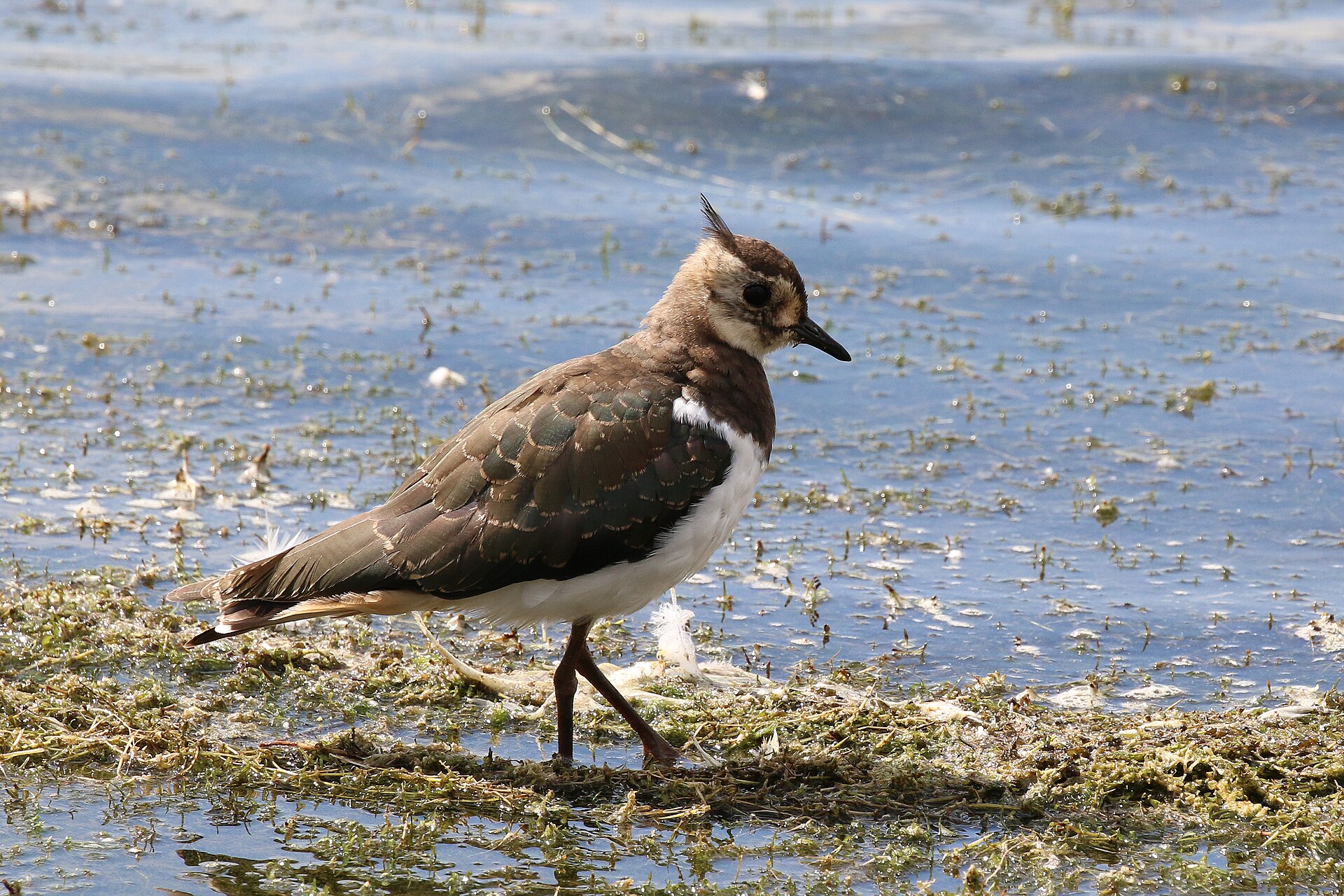
Lapwing and Oystercatcher Nesting Shifted in Opposite Directions With Latitude
Fifty years of UK nest records showed that northern lapwings nested later towards the north while Eurasian oystercatchers…
Read story →
Late Spring Frost Was Linked to About 4% Smaller Pied Flycatcher Eggs
After a severe April frost damaged emerging oak foliage at Valsaín in central Spain, Pied Flycatchers laid eggs…
Read story →SPECIES IN THIS STORY
Species in this story
Independent research and conservation news archive
Did you find this information useful?
Wildlife Vagabond is independently built and maintained. Voluntary support helps cover source verification, hosting and continued work on research and conservation news.
Support Wildlife VagabondThe news archive will remain freely available.