
Homing Pigeons Used Distant Alpine Peaks to Navigate Above Thick Fog
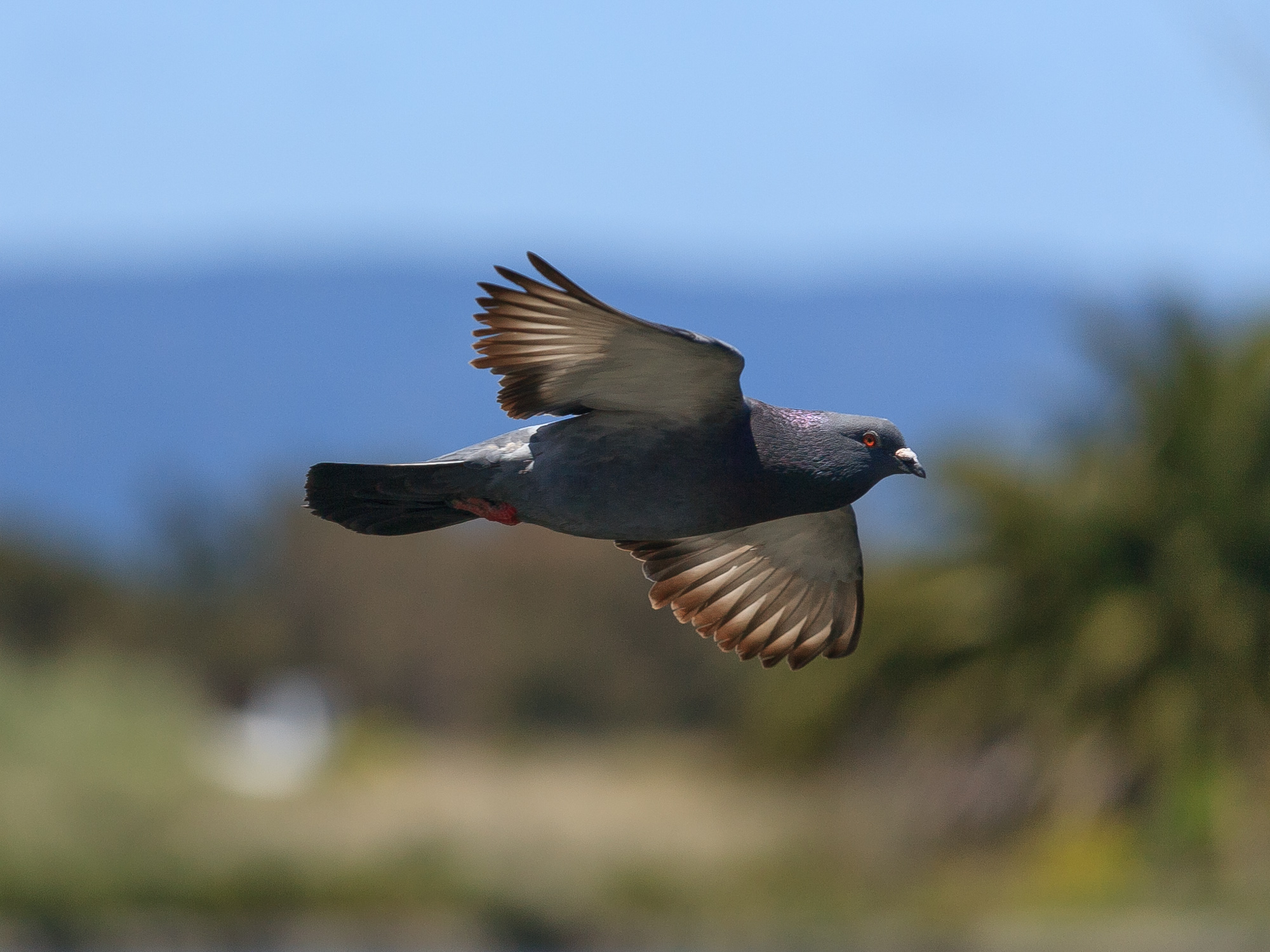
Experienced homing pigeons, the domestic form of rock dove (Columba livia), were able to use distant Alpine mountain peaks as visual landmarks when familiar ground-level cues were hidden beneath thick fog. The study was published in Life on 1 June 2026.
The ten pigeons, housed in Fischbach in southern Germany, were first trained to return individually from two release sites about 15 kilometres from their loft. The researchers then released trained birds from an aircraft roughly 400 metres above the same areas, including trials above a continuous layer of ground fog.
Navigation changed when the mountains disappeared
Above the fog, the pigeons could not see local landscape features or use familiar ground-level odour cues. When the fog also hid the distant mountain skyline, the birds showed poor orientation and followed winding flight paths. Within four minutes they descended through the fog after advancing only about 0.1 kilometres toward home.
All birds later returned to the loft when the sun reappeared and the fog had lifted or disappeared. The researchers interpret this as evidence that the pigeons did not simply replace the missing visual information with an effective magnetic heading in this short-distance situation.
Visible Alpine peaks restored efficient homing
The result changed sharply when distant Alpine peaks remained visible above the fog. Under those conditions, pigeons maintained strong homeward orientation for about 20 minutes and covered 96% of the distance toward their loft. Their performance was similar to ground-level control flights, which lasted about 17 minutes and covered 80% of the homeward distance during the comparable observation period.
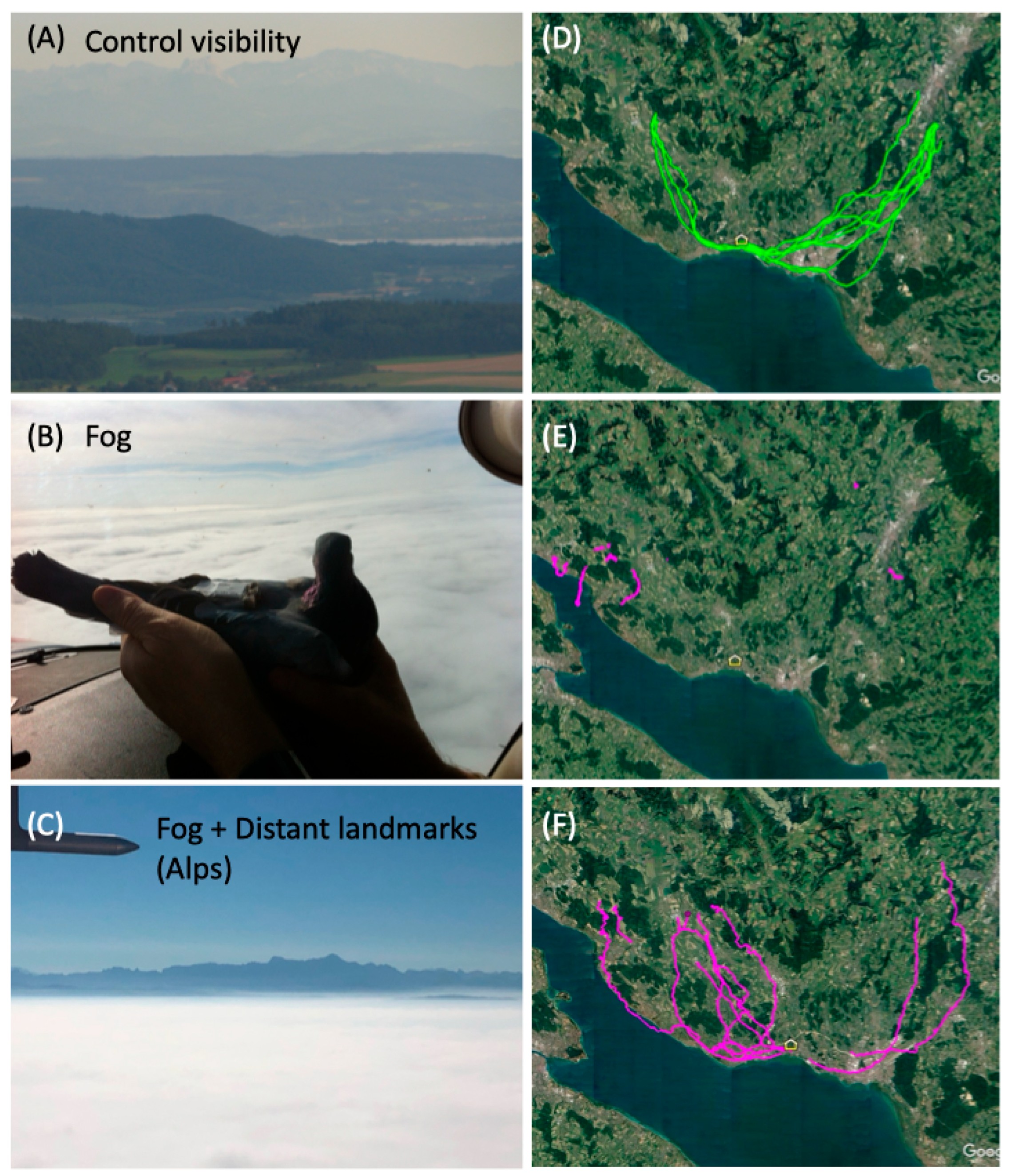
Because the fog removed familiar local visual and olfactory information while the distant mountain skyline remained available in one treatment, the experiment allowed the researchers to isolate the role of large, far-away visual features.
Behaviour
Related news
Rock Doves Preferred Predictive Information Despite a Lower Food Payoff
Seven rock doves preferred an informative option that paid on 20% of trials over a non-informative option that…
Read story →
Rotavirus A Antibodies Were Common in Feral Pigeon Samples but Rare in Wood-Pigeon Samples in Germany
A German study detected rotavirus A-reactive antibodies in 79.2% of free-ranging feral pigeons and 77.0% of domestic pigeons,…
Read story →
New Shiqi Pigeon Genome Placed 97.8% of Its Sequence on 41 Chromosomes
A chromosome-level genome from a female Shiqi pigeon in Zhongshan, China spans about 1.24 billion DNA bases, places…
Read story →SPECIES IN THIS STORY
Species in this story
Independent research and conservation news archive
Did you find this information useful?
Wildlife Vagabond is independently built and maintained. Voluntary support helps cover source verification, hosting and continued work on research and conservation news.
Support Wildlife VagabondThe news archive will remain freely available.