
Inside inspections reveal animals missed at Black Woodpecker cavities
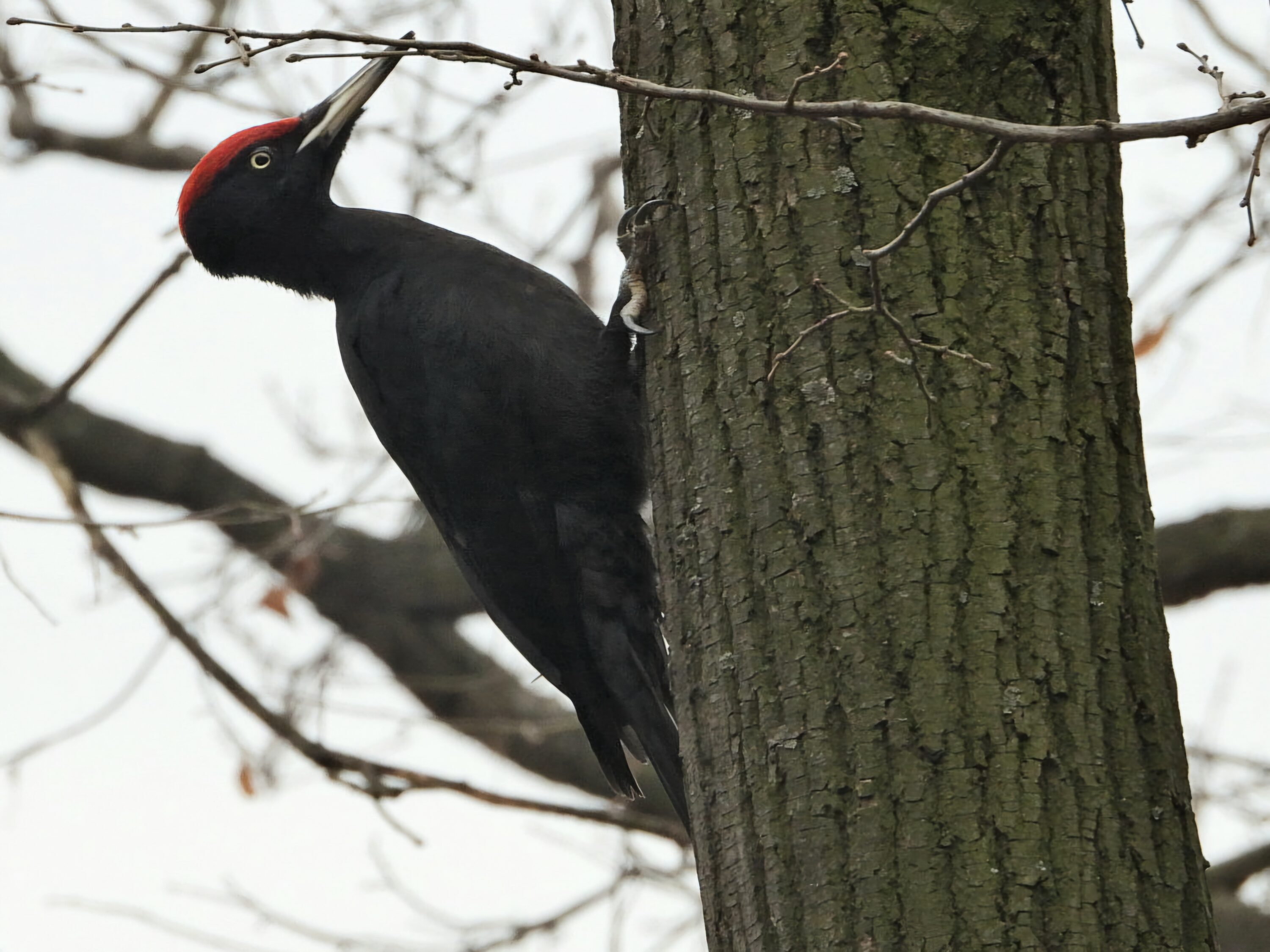
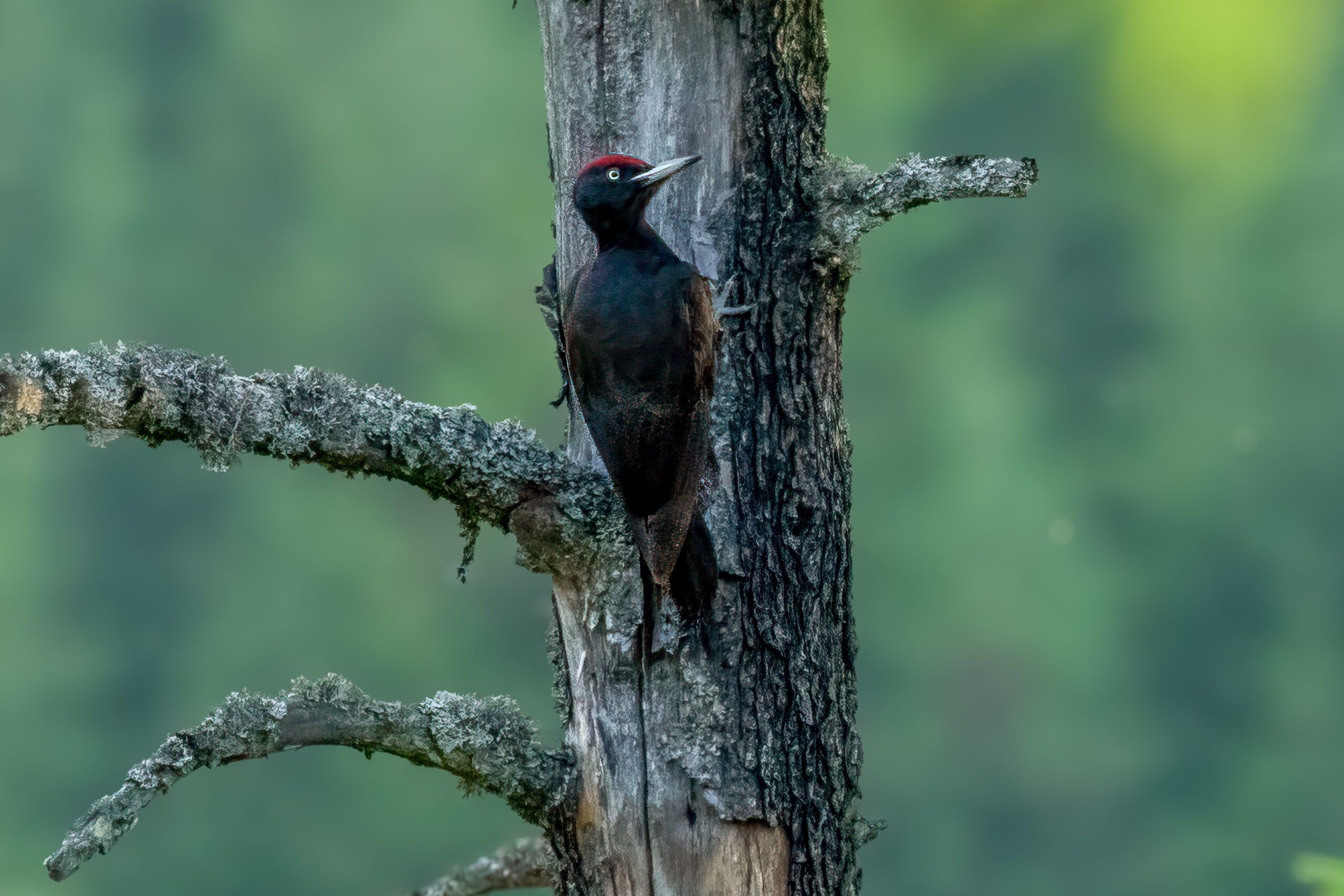
Black Woodpeckers (Dryocopus martius) excavate large tree cavities that can later provide places for other animals to breed, shelter, rest or forage. In the Augustów Forest of northeastern Poland, researchers used cameras at cavity entrances and a camera on a telescopic pole to inspect the interiors. The two methods revealed different parts of the animal community associated with the cavities.
Two ways to monitor cavities
From 2022 to 2024, motion-triggered cameras on 33 cavity trees recorded animals appearing at the entrances. These cameras could monitor activity over time, but an animal filmed at an entrance had not necessarily entered or used the cavity. From 2022 to August 2026, researchers also inspected cavity interiors 681 times with a camera mounted on a telescopic pole. These inspections provided snapshots of what was inside, including nests, young and other signs of breeding.
Different methods revealed different animals
Combining both methods, the researchers recorded 50 animal taxa: 32 bird species, six mammal species and 11 insect taxa. The entrance cameras recorded 34 taxa, mostly birds: 29 bird species, four mammal species and one insect species. Interior inspections recorded at least 33 taxa. Birds made up 52% of the taxa found inside, mammals 15% and invertebrates 33%. By contrast, invertebrates made up only 3% of the entrance-camera records.
Stock Doves were the most frequent occupants inside cavities, with nests in 43% of those inspected. In the entrance-camera records, Black Woodpeckers were the most frequently recorded species; Stock Doves, Great Tits, Eurasian Pygmy Owls and Great Spotted Woodpeckers were also detected at more than 30% of monitored cavities. The study identified cavities as particularly important breeding resources for several species, including Stock Doves, Common Goldeneyes and Eurasian Nuthatches.
The interior inspections documented breeding by at least 19 bird species, four mammal species and four insect species. They also revealed invertebrates, including beetles, ants and arachnids, that entrance cameras largely missed. The entrance cameras, in turn, recorded more bird species associated with the cavities than the interior inspections did. The methods therefore complemented each other: one followed activity at entrances over time, while the other showed what was inside when researchers inspected a cavity.
The study covered one forest area, and the methods differed in duration, number of cavities monitored and what they could detect. The combined records show a diverse range of animals associated with Black Woodpecker cavities, but the two methods do not provide interchangeable measures of cavity use.
Ecology
Related news
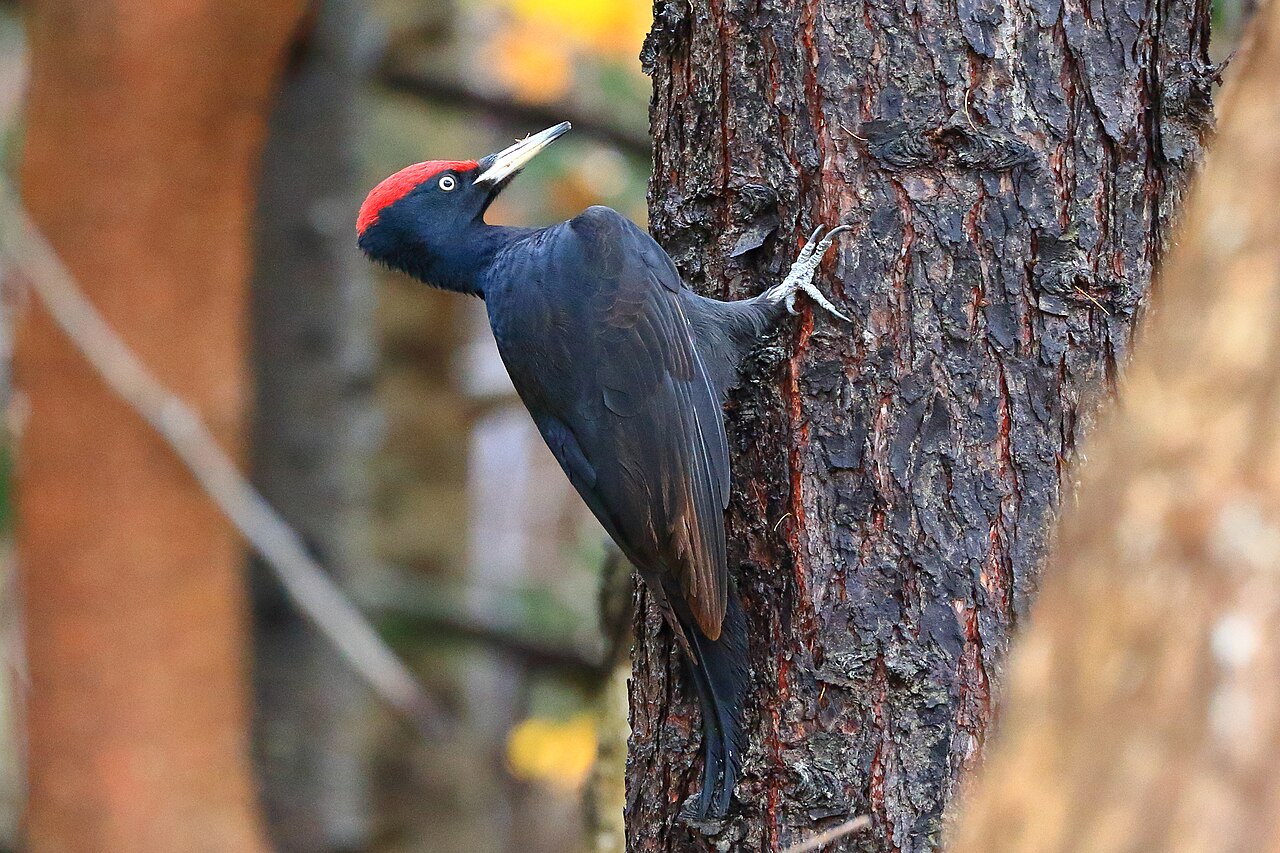
Fresh Black Woodpecker Evidence Found at Mount Moriyoshi, but No Detections in Iwate or Shirakami
A 2026 survey found fresh black-woodpecker evidence at Mount Moriyoshi in Akita, while 169 hours of acoustic monitoring…
Read story →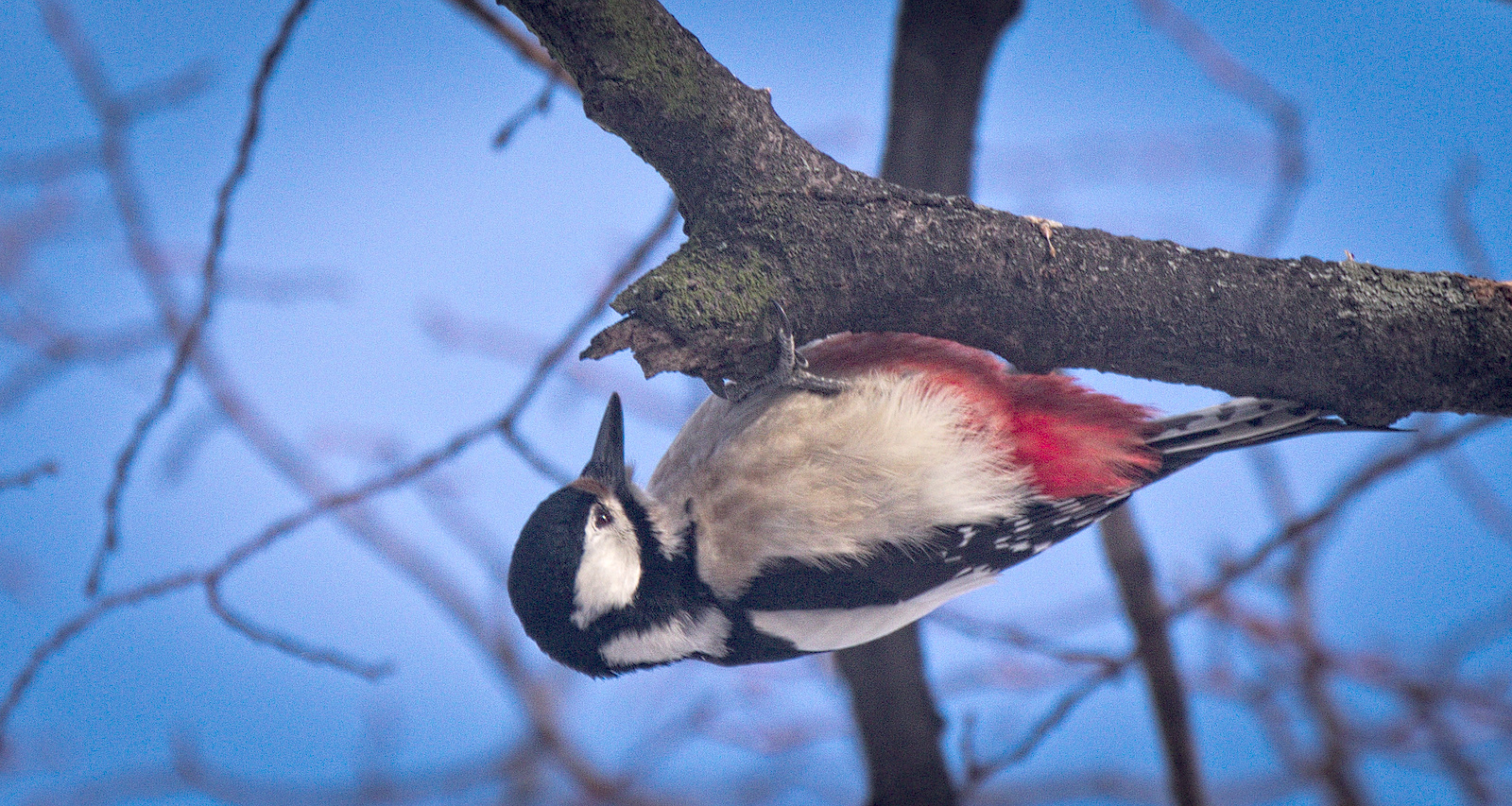
Six European Woodpeckers Shared a Common Eyelid Plan but Showed Microscopic Variation
Microscopic study of 40 woodpeckers from six European species found the same basic eyelid plan, including a fibrous…
Read story →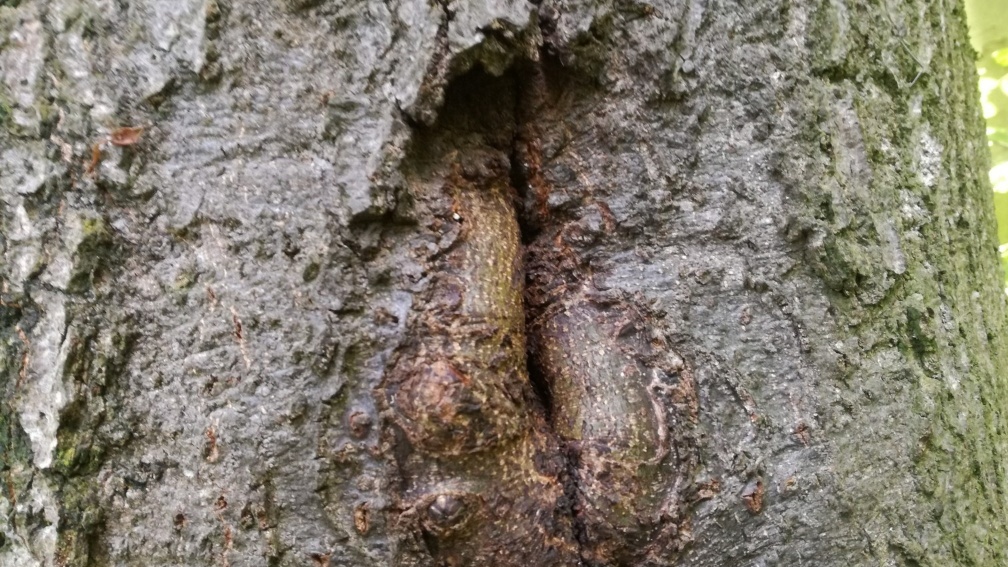
Honeybee Swarms Used Larger Black Woodpecker Cavities
A German study found honeybee swarms used larger black-woodpecker cavities with smaller entrances: median volume was 41.1 litres…
Read story →SPECIES IN THIS STORY
Species in this story
Independent research and conservation news archive
Did you find this information useful?
Wildlife Vagabond is independently built and maintained. Voluntary support helps cover source verification, hosting and continued work on research and conservation news.
Support Wildlife VagabondThe news archive will remain freely available.