
Introduced Grass Snake Ancestry Has Mixed Into Native Berlin Populations
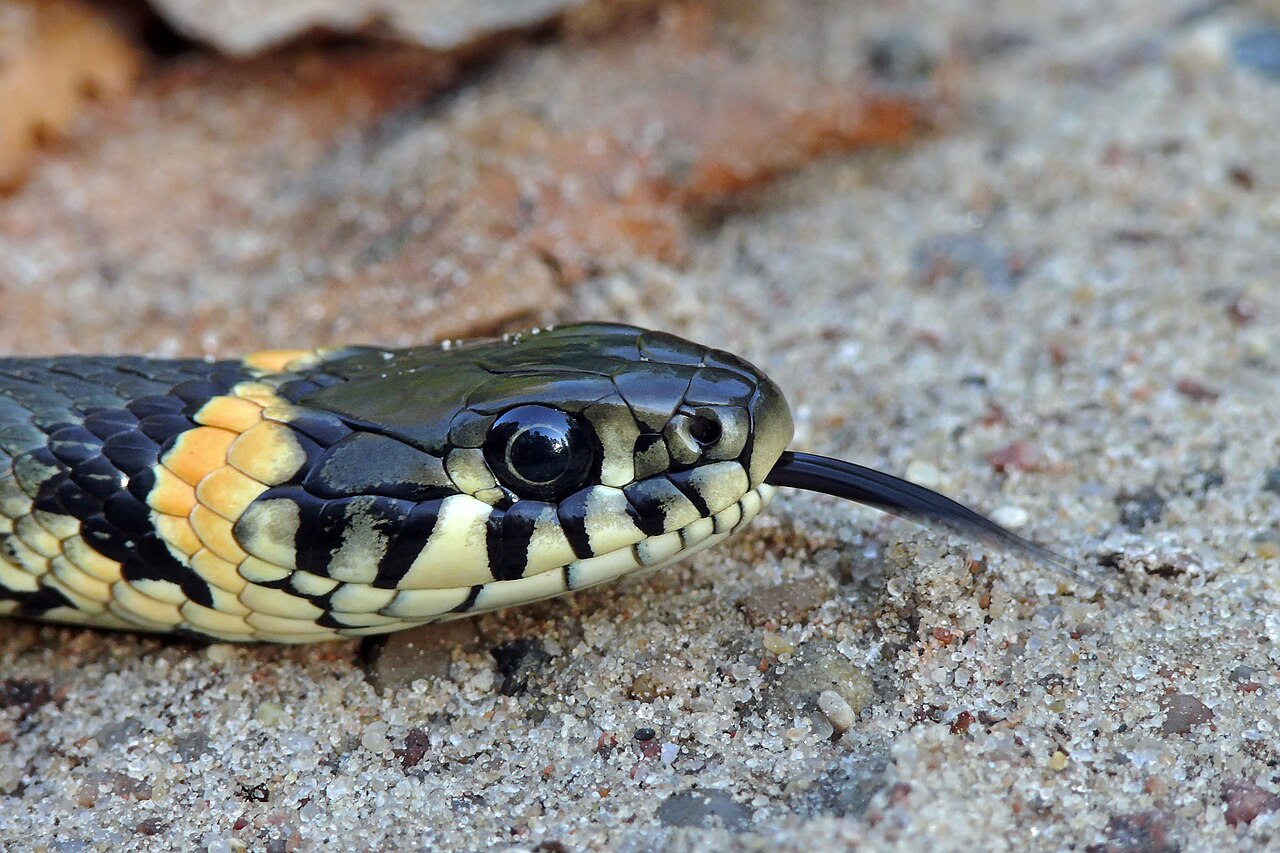
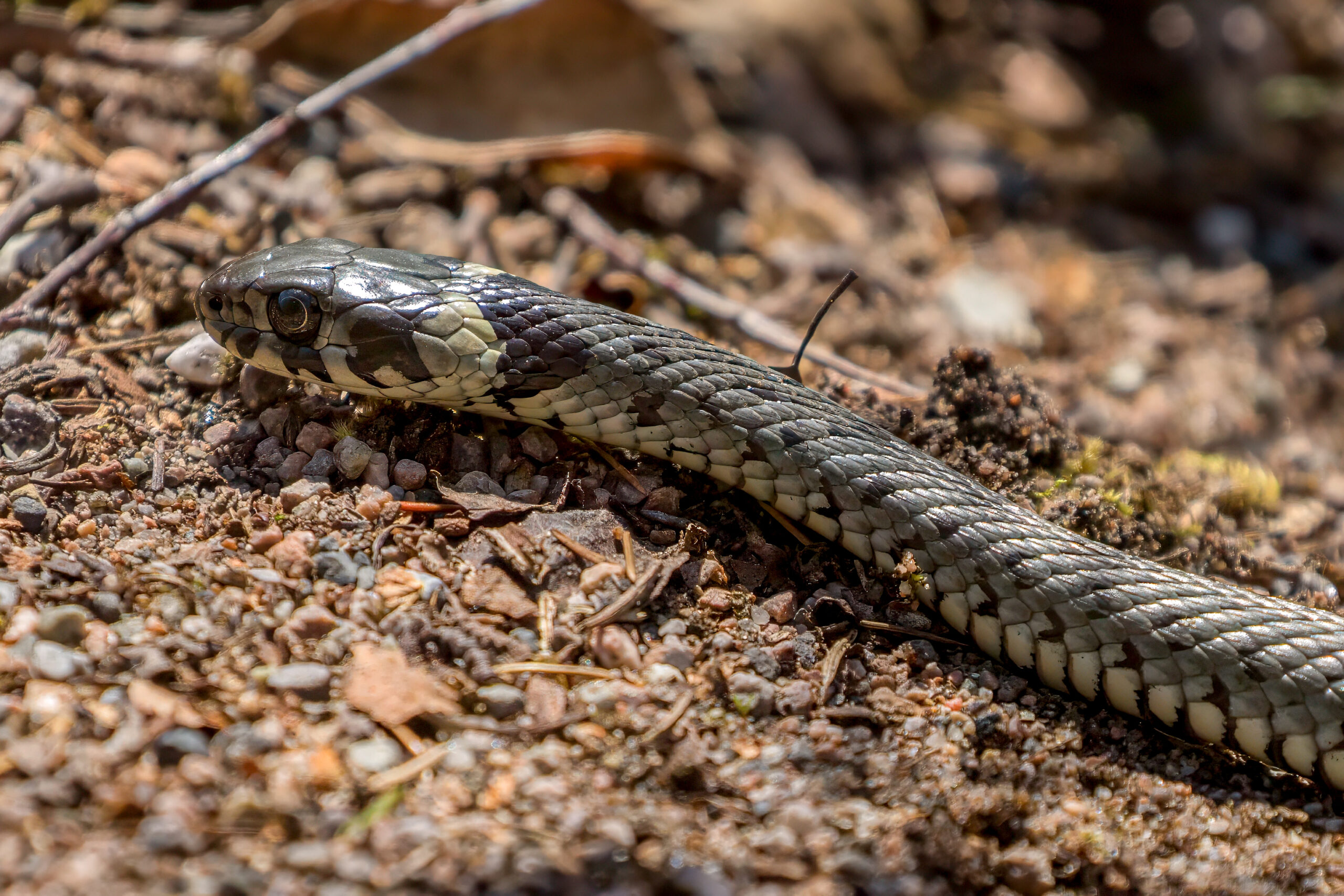
Genetic analyses have provided the first evidence that introduced grass snakes have hybridized with native grass snakes (Natrix natrix) in Berlin, Germany. The study, published on 8 June 2026, identified ancestry from the southern subspecies Natrix natrix moreotica within populations of the native nominate subspecies Natrix natrix natrix.
The researchers combined citizen-science photographs, museum material and field sampling to investigate striped grass snakes reported from several parts of Berlin. They sampled 27 snakes in the city between June 2024 and October 2025 and compared them with reference data from 235 grass snakes across Europe. Mitochondrial DNA was used to trace maternal lineages because it is inherited through the mother, while 13 microsatellite markers in the nuclear genome provided a broader genetic fingerprint inherited from both parents. Comparing the two allowed the researchers to distinguish maternal origin from mixed overall ancestry.
Southern ancestry was present in Berlin snakes
Most of the sampled Berlin snakes genetically matched the native subspecies. However, three striped individuals had high proportions of nuclear ancestry assigned to N. n. moreotica. In practical terms, much of their inherited genetic profile matched this southern subspecies even though the study did not find the mitochondrial haplotypes considered characteristic of N. n. moreotica. This subspecies is native to the southern Balkans and western Asia Minor and has been associated with the European reptile trade.
The researchers also detected genetic signatures of another southern subspecies, Natrix natrix vulgaris, in several snakes. Its presence is harder to interpret because this subspecies is naturally expanding northward. The authors therefore state that the signal could represent either additional introductions or natural range expansion into the region.
Stripes persisted after much of the foreign signal disappeared
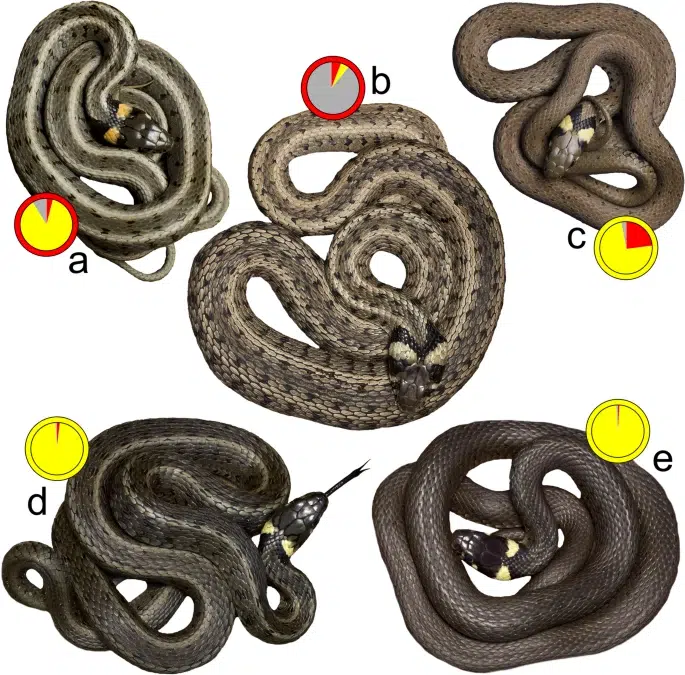
Striped grass snakes have been reported from at least seven separate populations across Berlin. Four sampled snakes that were assigned to the native genetic cluster nevertheless had dorsal stripes. The authors suggest that repeated backcrossing can explain this mismatch: if hybrid descendants repeatedly breed with native snakes, most of their genome can become increasingly native-like while particular introduced variants — such as those contributing to dorsal stripes — persist. The applied markers may then detect little or no foreign ancestry even though the visible trait remains.
One striped snake from Britzer Garten had 85% N. n. moreotica ancestry. Together with the wider pattern of admixed individuals, the researchers conclude that foreign grass snakes have been introduced into Berlin and have bred with the local population.
Hybridization with introduced relatives can spread non-native gene variants through native populations over successive generations, potentially changing or partly replacing the local genetic composition. The long-term fitness effects of the admixed Berlin grass snakes are not yet known, and the authors do not conclude that the hybrids are less viable. They nevertheless regard the spread of foreign ancestry as a conservation concern and recommend continued genetic monitoring, citizen-science surveillance for striped snakes and, where feasible, measures to contain the spread of admixed snakes into neighbouring native populations.
Genetics & genomics
Related news
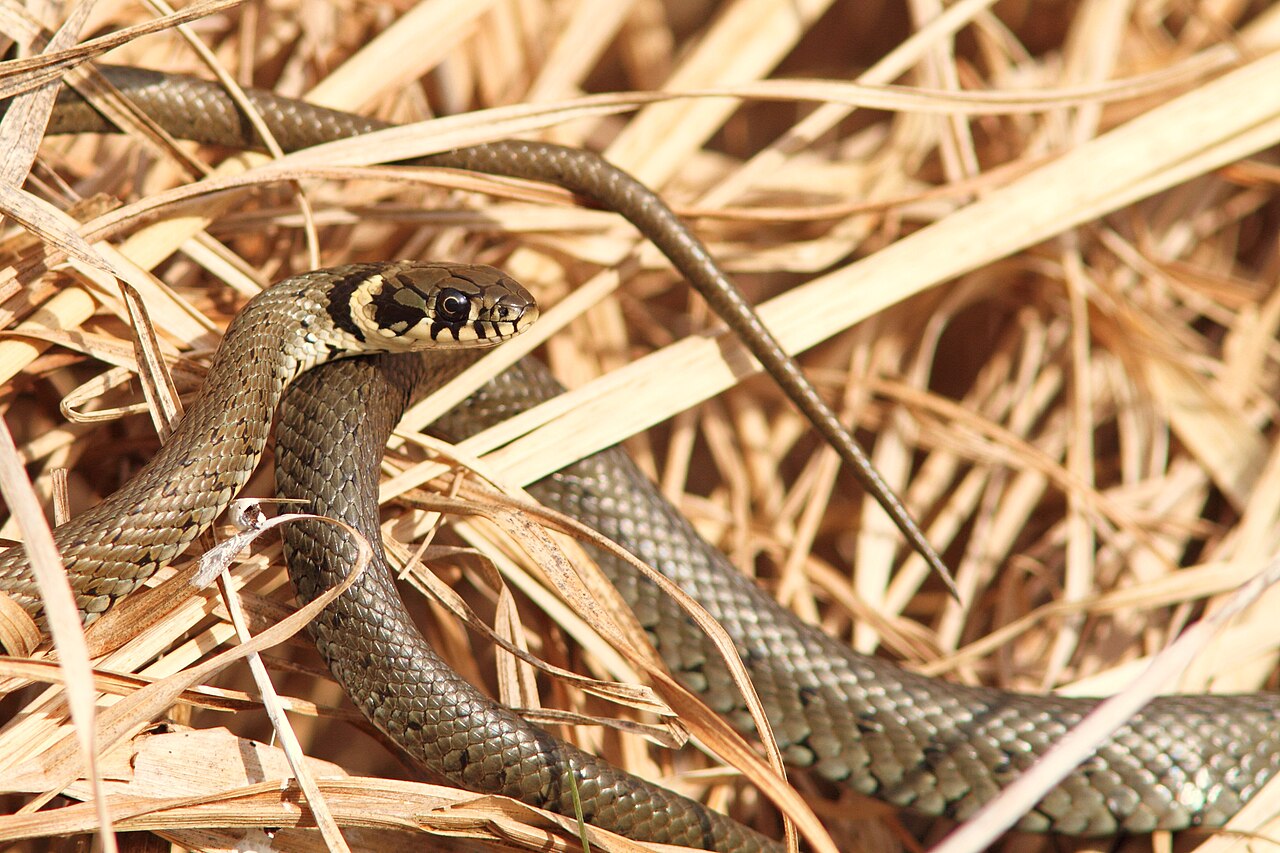
Coiled Grass Snake Models Had Higher Estimated Daily Survival on a Gravel Road
In a Hungarian experiment with 240 plasticine grass snake models, coiled postures had higher estimated daily survival on…
Read story →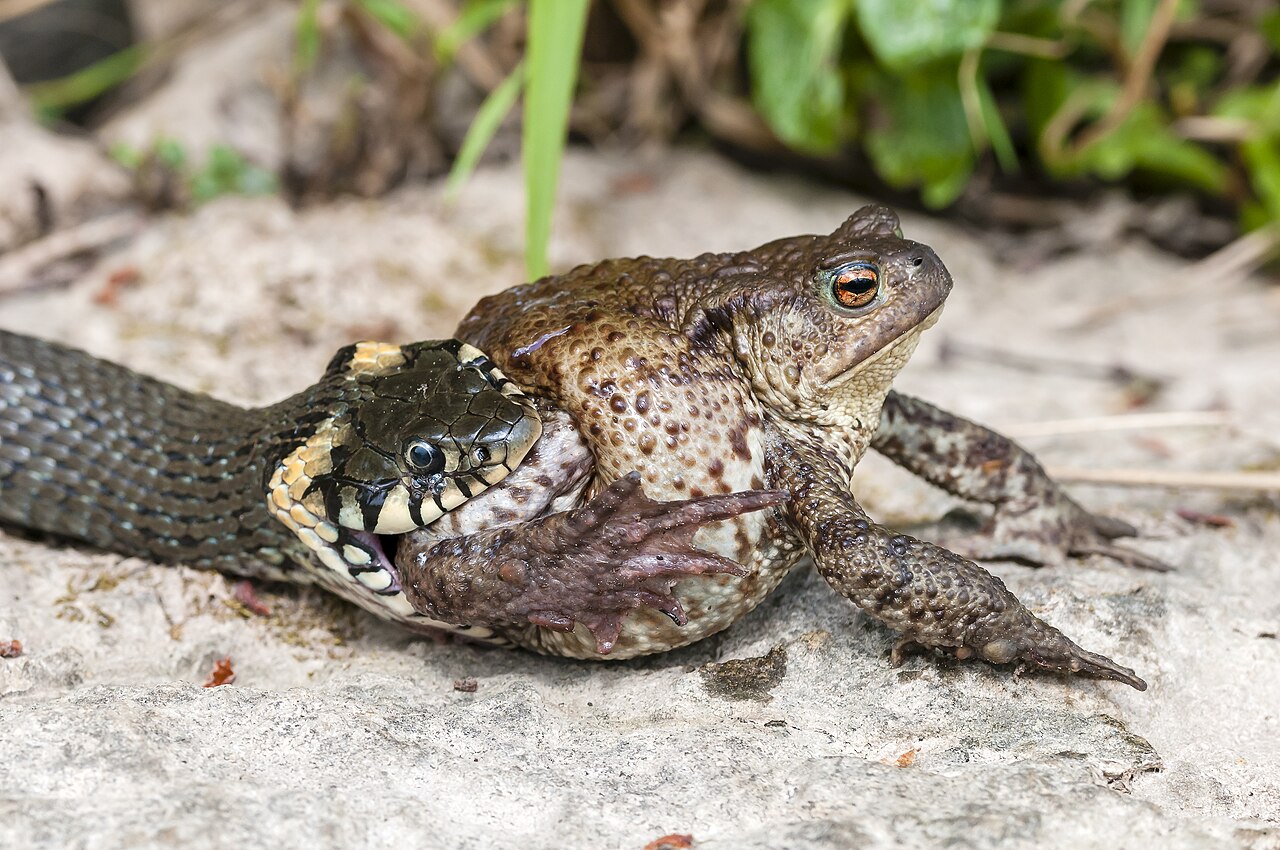
Larger Grass Snakes Took Larger Prey, While Fish Were Proportionally Larger Than Frogs
Among 39 grass snakes from a historical Plovdiv dataset, larger snakes contained larger prey. Frog size tracked snake…
Read story →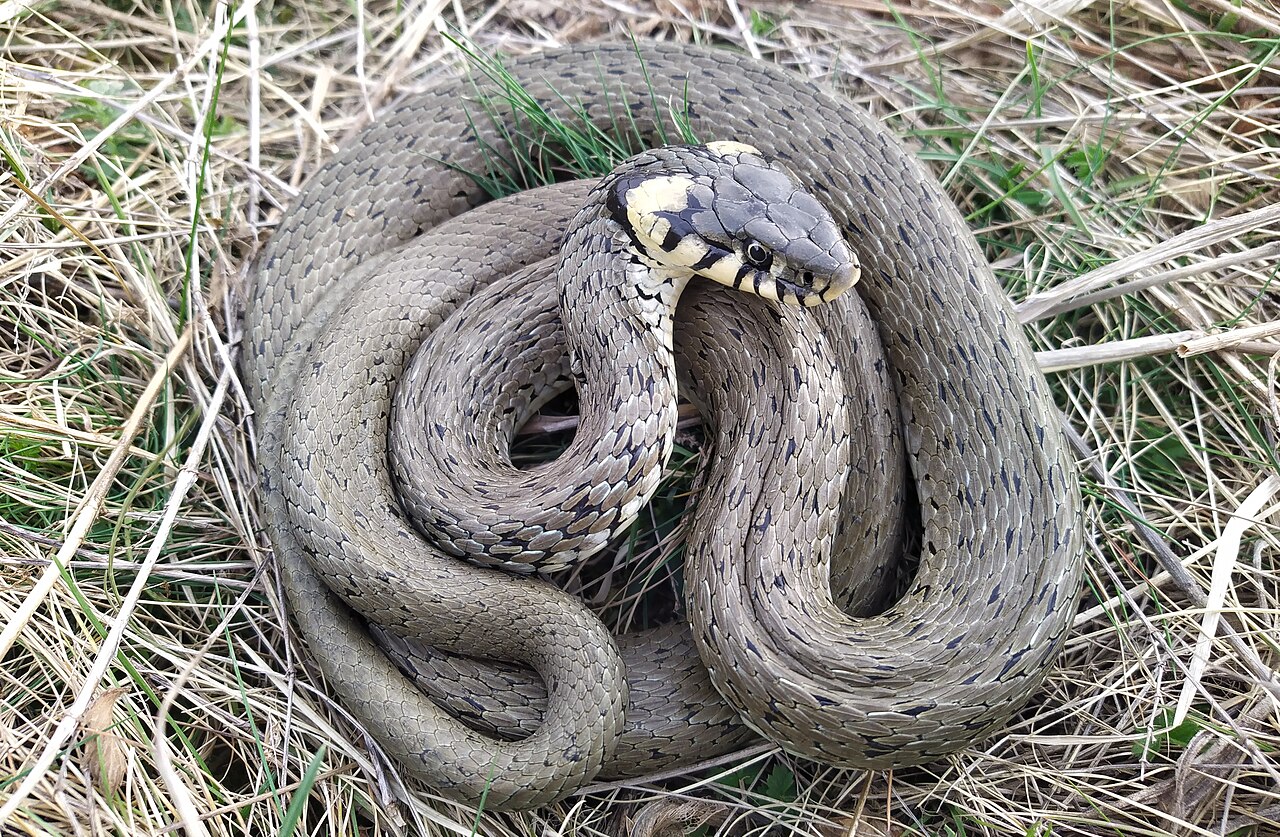
Grass Snakes in Bulgaria Were Recorded Eating at Least 11 Amphibian Species
A 2026 review and field update from Bulgaria compiled published diet records and 17 new observations, showing grass…
Read story →SPECIES IN THIS STORY
Species in this story
Independent research and conservation news archive
Did you find this information useful?
Wildlife Vagabond is independently built and maintained. Voluntary support helps cover source verification, hosting and continued work on research and conservation news.
Support Wildlife VagabondThe news archive will remain freely available.