
Young Moose Survival Was Lower With Greater Use of Recent Cutblocks and Heavy Winter-tick Burdens
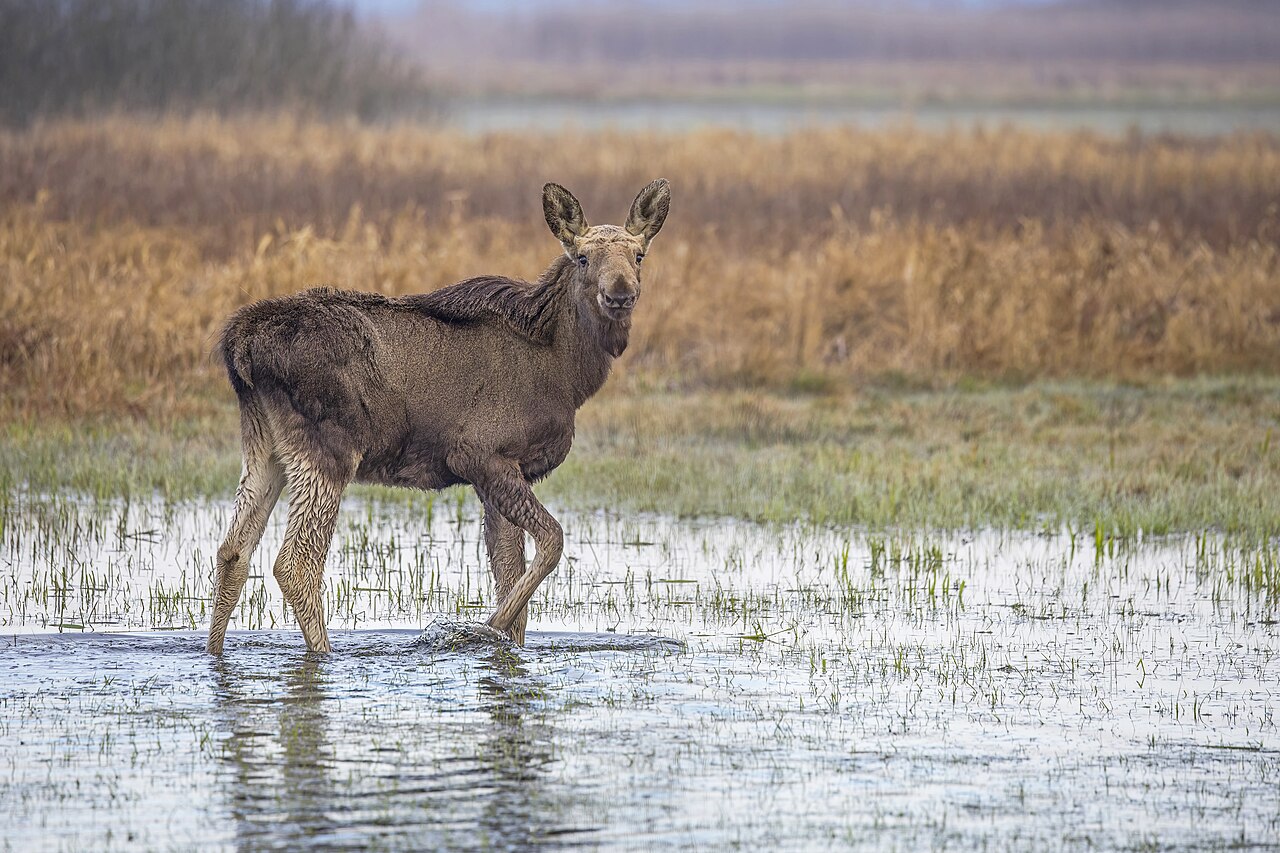
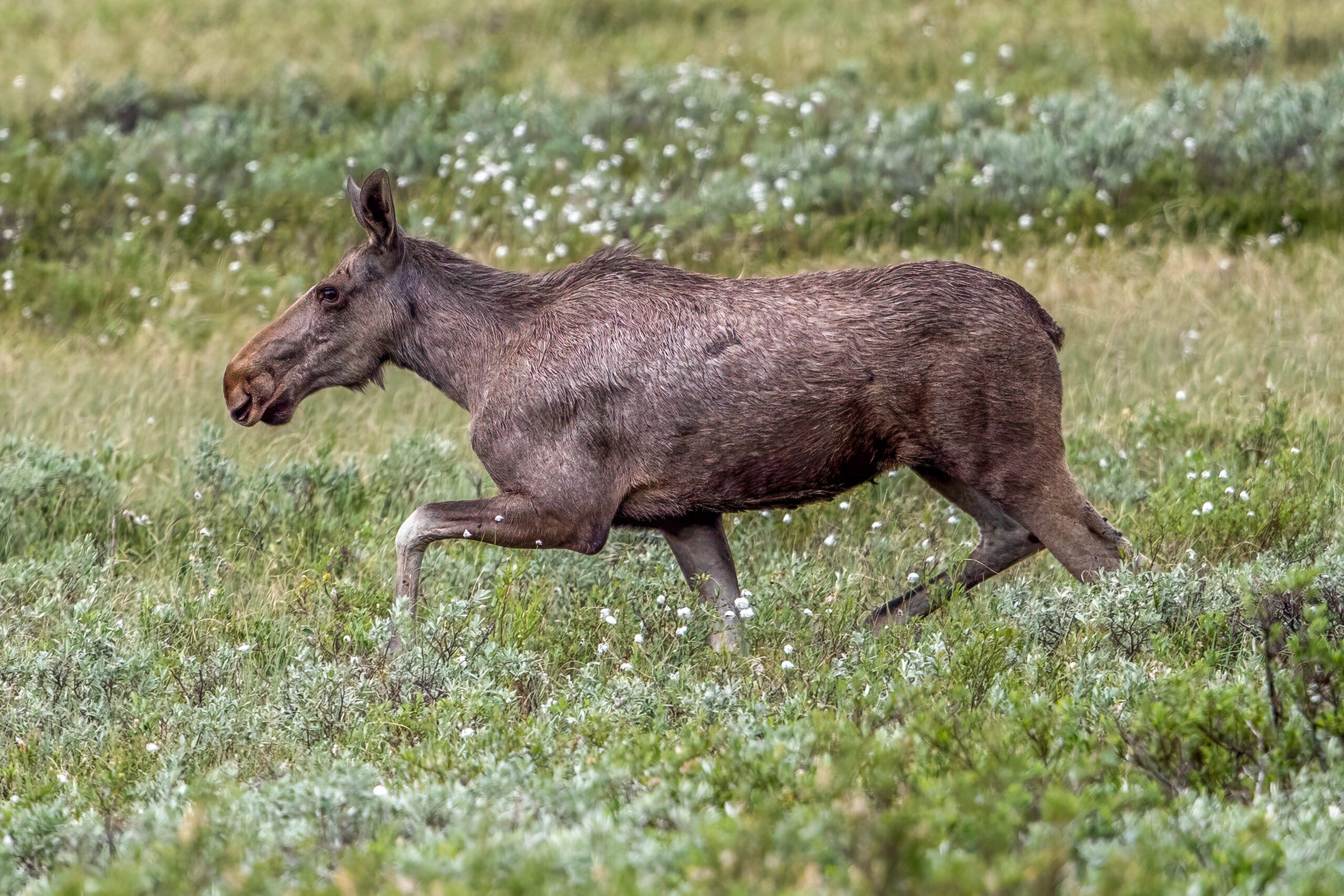
Young moose (Alces alces) face several risks at once between late calfhood and recruitment. A 2026 study in British Columbia, Canada found that use of recent forest-harvest features and road-dense areas was associated with lower survival, while heavy winter-tick burdens and low body mass in yearlings added further risk.
Researchers followed 180 juvenile moose from about seven or eight months of age until roughly 18 months in Prince George South and the Bonaparte Plateau. Both landscapes had experienced extensive salvage logging after mountain pine beetle outbreaks. Overall survival from capture to recruitment was estimated at 59%. Females had higher estimated survival than males, 71% compared with 47%.
Predation was the main direct cause of death. Wolves accounted for 55.1% of recorded mortalities, bears and humans 14.5% each, health-related causes 10.1% and cougars 5.8%.
Mortality risk was higher with more use of recent cutblocks and roads
Moose using more recently harvested cutblocks — areas logged within the previous eight years — had higher mortality risk than animals using less of this habitat. Greater road density was also associated with higher risk, while older cutblocks did not show the same relationship.
Recent cutblocks and roads were still associated with higher mortality risk after the models accounted for estimated wolf and black-bear occurrence, forage availability, weather, juvenile condition and longer-term use of harvested habitat. The authors therefore argue that recent cutblocks and roads can create inherently risky conditions for juveniles, probably in part because open linear features can improve access and search efficiency for predators and hunters.
Winter ticks and low body mass added further risk
Young moose carrying more winter ticks (Dermacentor albipictus) had higher mortality risk, and lighter yearlings were also less likely to survive. The authors interpret both as factors that can leave juveniles more vulnerable to predation.
The study does not show that every recent cutblock is equally dangerous, and the predator-risk analysis used predicted occurrence rather than direct measurements of kill probability. Cougar and grizzly-bear occurrence could not be modelled because comparable data were unavailable. Even with those limits, the study supports the idea that human-created landscape features and natural stressors can act together during a particularly vulnerable life stage.
Ecology
Related news
Inland Mute Swans Had Higher Winter Body Condition Despite Harsher Winters and Supplemental Feeding
A study of 853 mute swans from four Polish wintering regions found higher body condition inland than on…
Read story →
Gut Microbiomes Across Nine Kruger Mammals Clustered More Strongly by Dietary Group Than Species
A study of 89 quality-filtered faecal samples from nine wild mammals in Kruger National Park found that carnivores,…
Read story →
Dunnock Spring Passage Advanced by Up to 8.3 Days Over 61 Years at Hel
Standardised ringing data from northern Poland showed that the first, median and last phases of dunnock spring passage…
Read story →SPECIES IN THIS STORY
Species in this story
Independent research and conservation news archive
Did you find this information useful?
Wildlife Vagabond is independently built and maintained. Voluntary support helps cover source verification, hosting and continued work on research and conservation news.
Support Wildlife VagabondThe news archive will remain freely available.