
Roe Deer Clustered More Strongly Inside a Polish Wind Farm
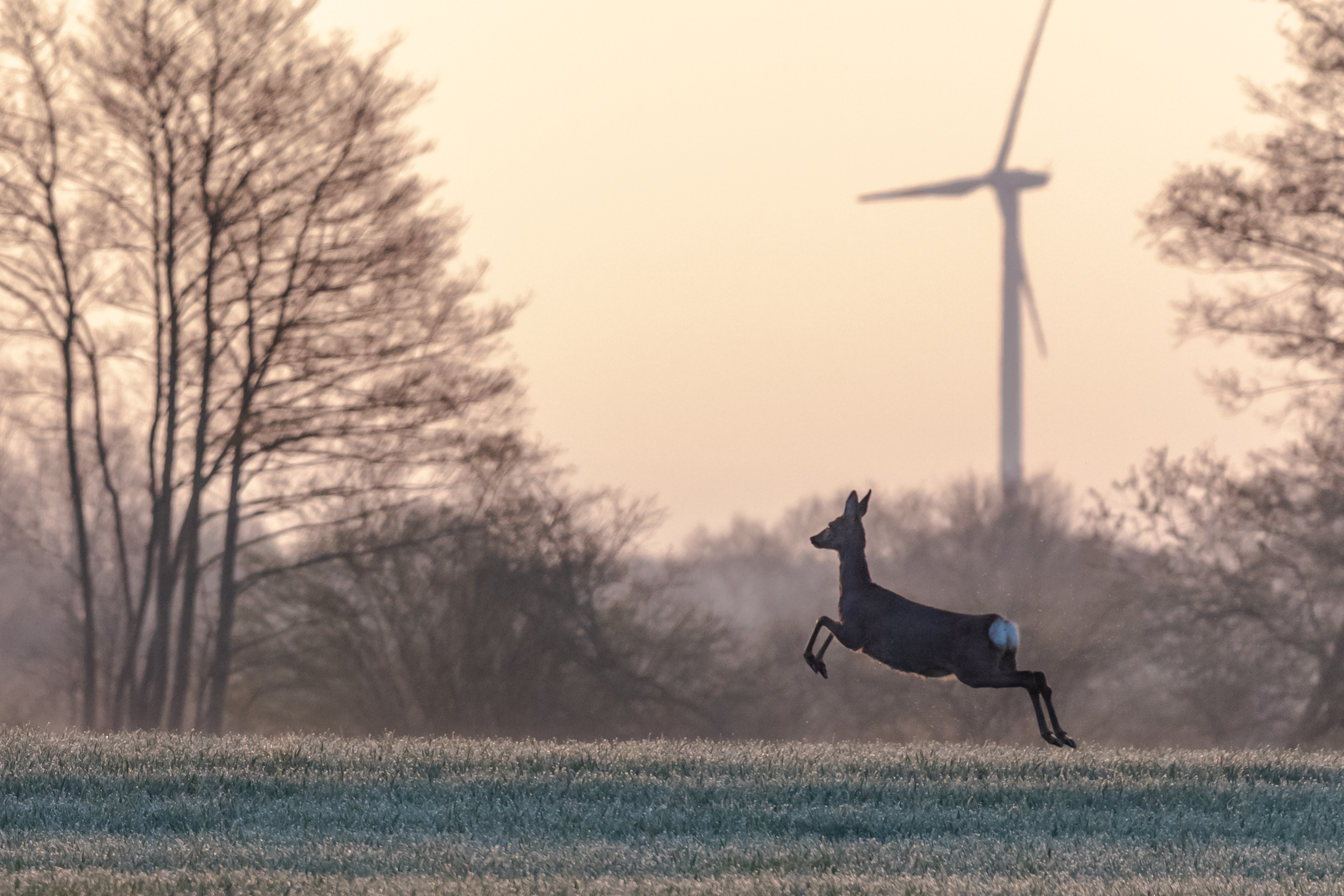
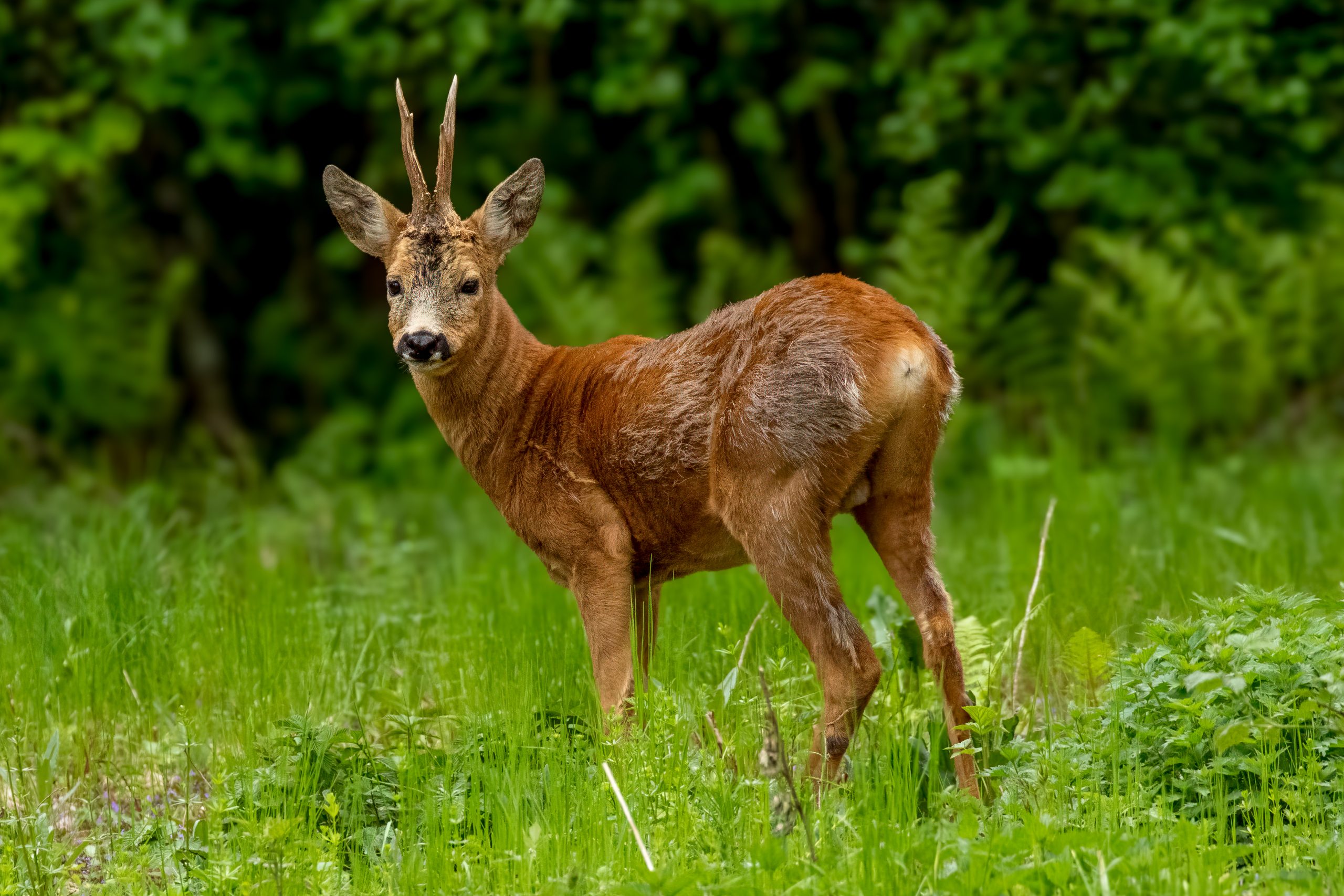
Roe deer (Capreolus capreolus) were more tightly clustered in an operational wind-farm landscape than in a nearby control area in central Poland. The difference was not explained by direct avoidance of the turbines themselves, leading the authors to suggest that the wider wind-farm landscape may influence how the deer distribute themselves.
Researchers carried out eleven evening drone surveys between late May and early July 2025 near Iłża. Thermal imaging was used to locate deer and colour images to confirm species and sex. The study recorded 104 adult roe deer in the wind-farm area and 116 in the control landscape, so the clearest difference was spatial distribution rather than the number of adults detected.
Roe deer occupied a smaller core area at the wind farm
Deer were clustered in both landscapes, but more strongly inside the wind farm. The area containing the central 50% of detections covered about 2.0 km² in the wind-farm landscape and 2.9 km² in the control area. Within the wind farm, detections were concentrated mainly in the southern part of the study area.
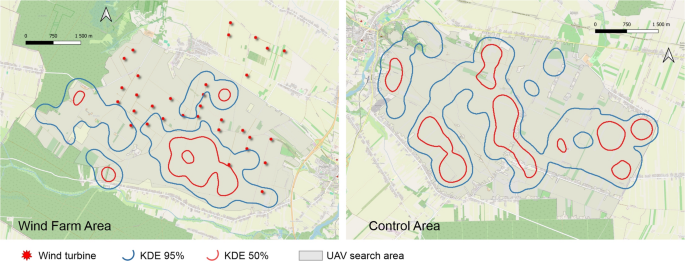
Inside the wind farm, roe deer tended to occur farther from roads and settlements and closer to forests and small patches of natural vegetation. The same overall set of landscape relationships was not detected in the control area, where only distance from roads showed a clear relationship with deer locations.
The turbines themselves were not clearly avoided
Distance to wind turbines did not explain where the deer were found. The authors therefore did not find evidence that roe deer were directly avoiding the turbines. Instead, they suggest that the stronger spatial compression could reflect indirect effects of the wind-farm landscape, including associated roads, human activity or turbine noise.
These mechanisms were not measured directly. The authors also note that the study compared only one wind farm with one control landscape, and call for similar work at more sites to test whether the same pattern occurs elsewhere.
Ecology
Related news
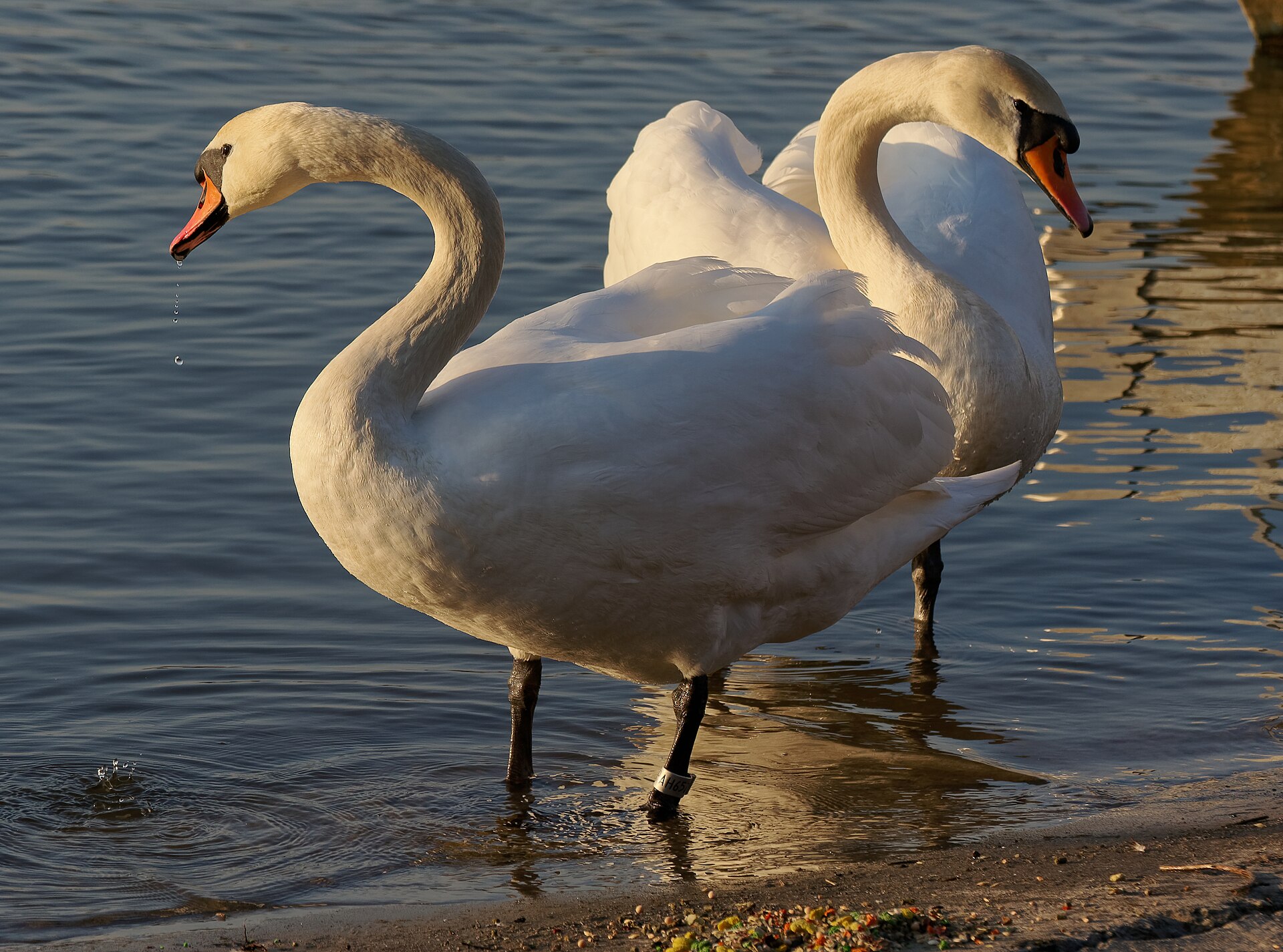
Inland Mute Swans Had Higher Winter Body Condition Despite Harsher Winters and Supplemental Feeding
A study of 853 mute swans from four Polish wintering regions found higher body condition inland than on…
Read story →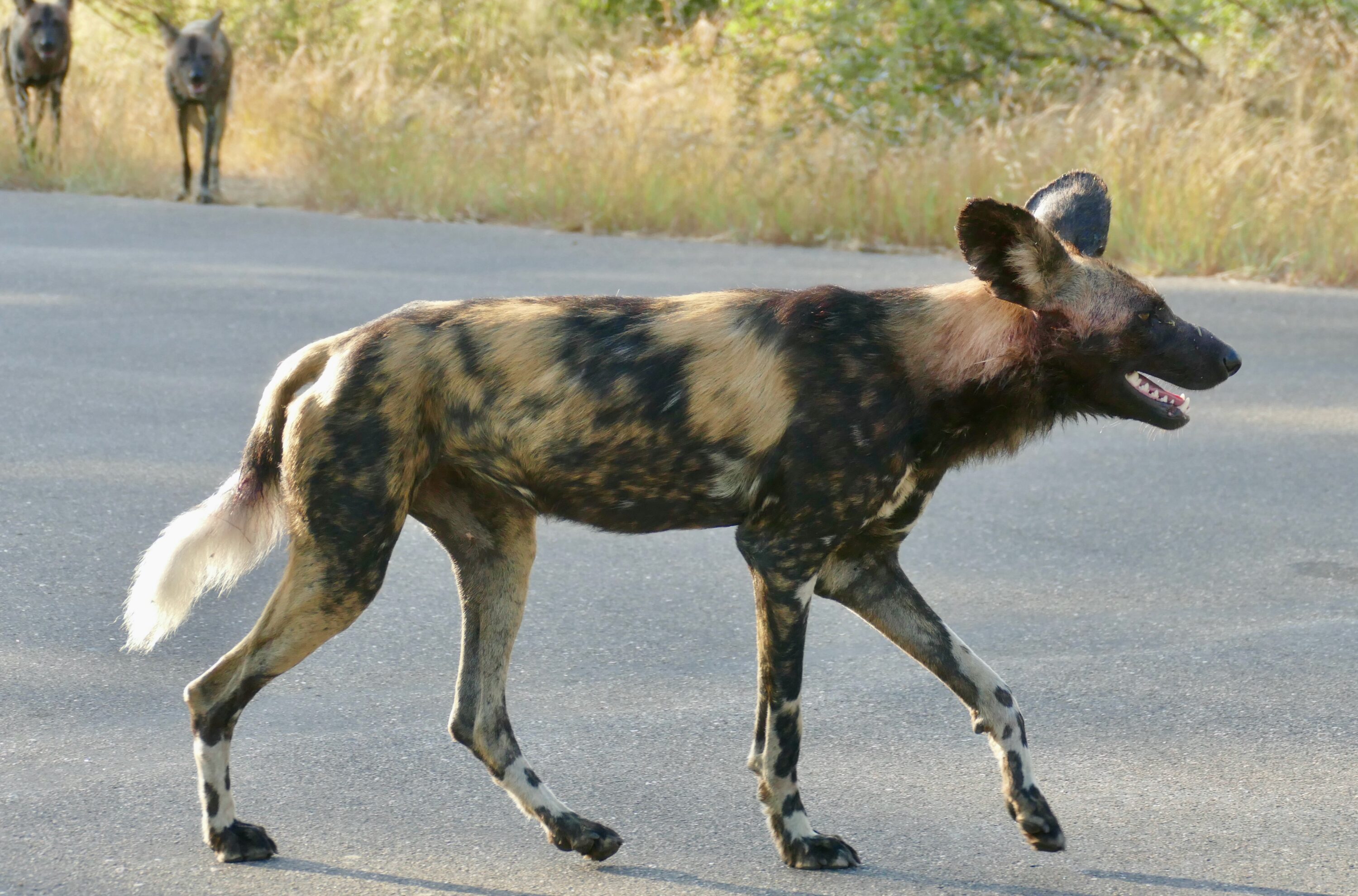
Gut Microbiomes Across Nine Kruger Mammals Clustered More Strongly by Dietary Group Than Species
A study of 89 quality-filtered faecal samples from nine wild mammals in Kruger National Park found that carnivores,…
Read story →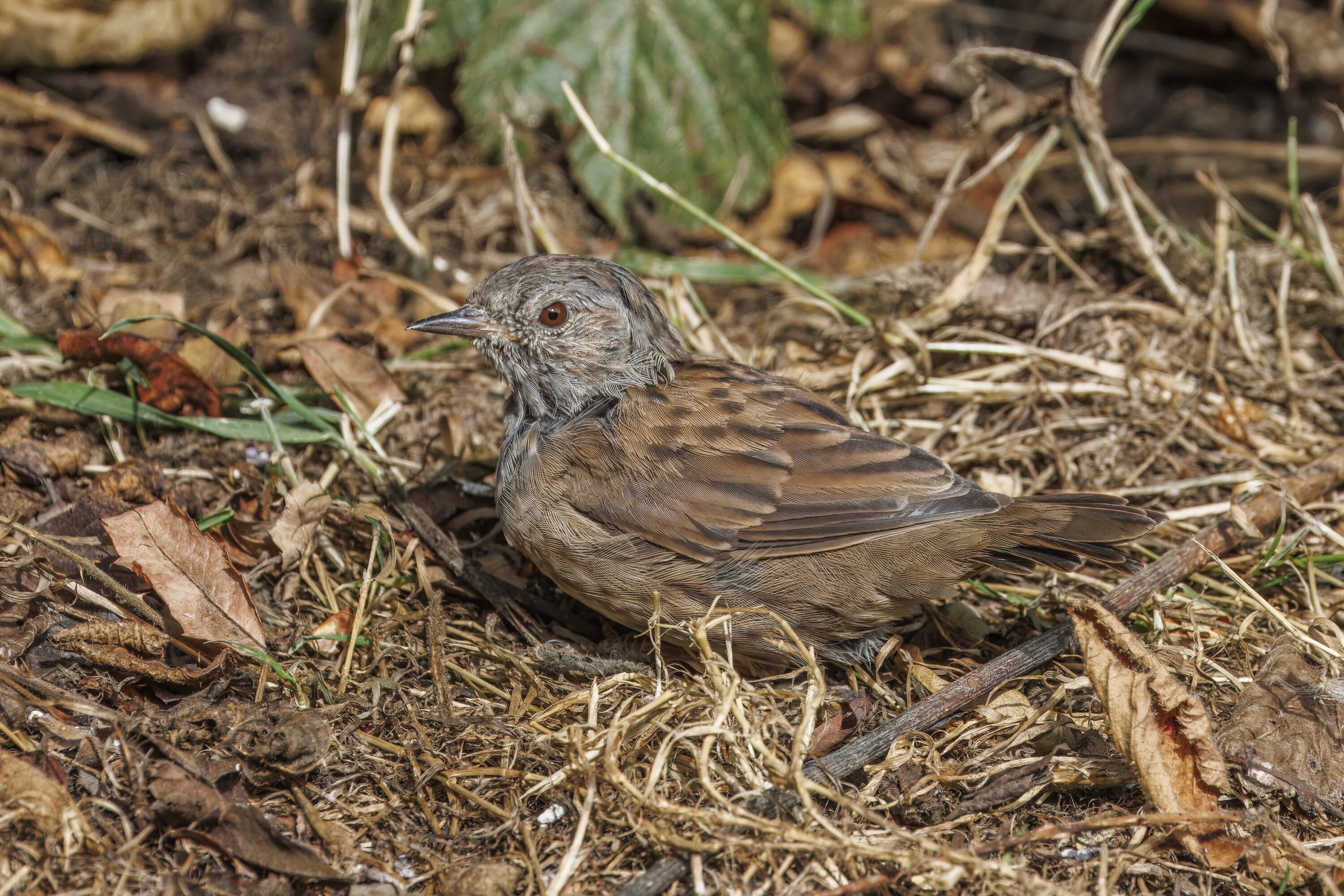
Dunnock Spring Passage Advanced by Up to 8.3 Days Over 61 Years at Hel
Standardised ringing data from northern Poland showed that the first, median and last phases of dunnock spring passage…
Read story →SPECIES IN THIS STORY
Species in this story
Independent research and conservation news archive
Did you find this information useful?
Wildlife Vagabond is independently built and maintained. Voluntary support helps cover source verification, hosting and continued work on research and conservation news.
Support Wildlife VagabondThe news archive will remain freely available.