
Three Rwandan Forest Fragments Held Distinct Amphibian and Reptile Communities
A survey of three remnant forests in Rwanda found markedly different amphibian and reptile communities despite the small size and fragmented condition of the sites. Researchers recorded 17 amphibian species and 13 reptile species in Nyagasenyi, Sanza and Ibanda-Makera. The study was published on 20 July 2026 in Discover Environment.
Fieldwork took place during the short rainy period from 19 to 30 January 2026. The researchers established 18 sampling points in each forest and used visual encounters and active searches for reptiles, together with visual, acoustic and dip-net surveys for amphibians. Animals were identified in the field and released.
Different communities across the forest fragments
Nyagasenyi had the highest observed amphibian richness with 12 species, while Ibanda-Makera had the highest reptile richness with 11. The analysis did not support a clear difference among the three forests in the simple number of amphibian or reptile species, but their community composition did differ clearly: the forests tended to hold different sets of species rather than the same community at different richness levels. Only the frog Ptychadena nilotica was recorded in all three forests, while most species occurred at only one site.
Endemic and potentially new records
Several records were especially notable. The amphibians Arthroleptis schubotzi, Leptopelis kivuensis and Hyperolius rwandae are endemic to the Albertine Rift. The survey also recorded the Near Threatened African rock python (Python sebae), a potentially undescribed Sclerophrys toad, and an incompletely identified Trachylepis cf. quinquetaeniata that could represent a new record for Rwanda. Here, “cf.” means that the specimen resembles T. quinquetaeniata but was not identified with full certainty.
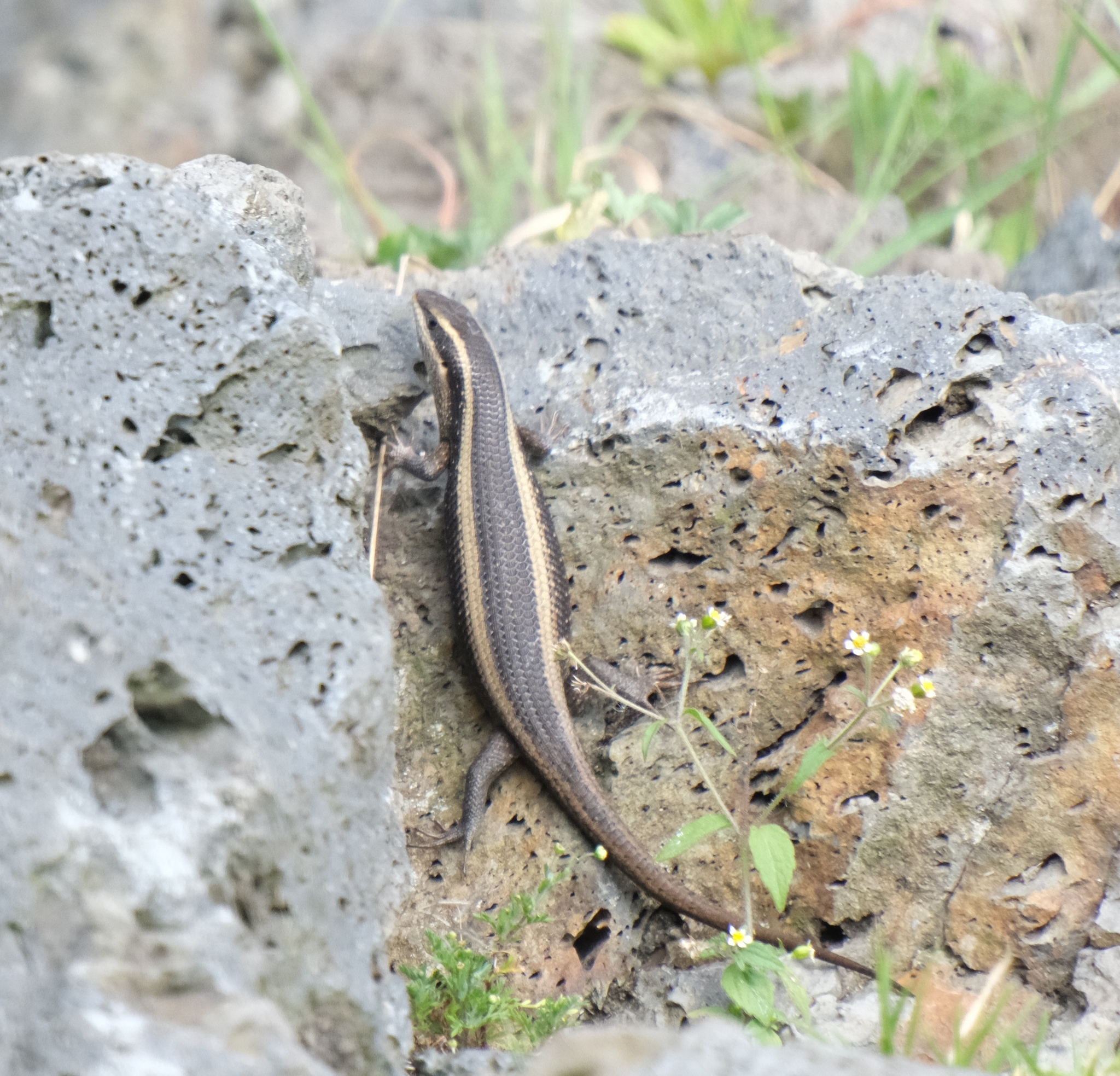
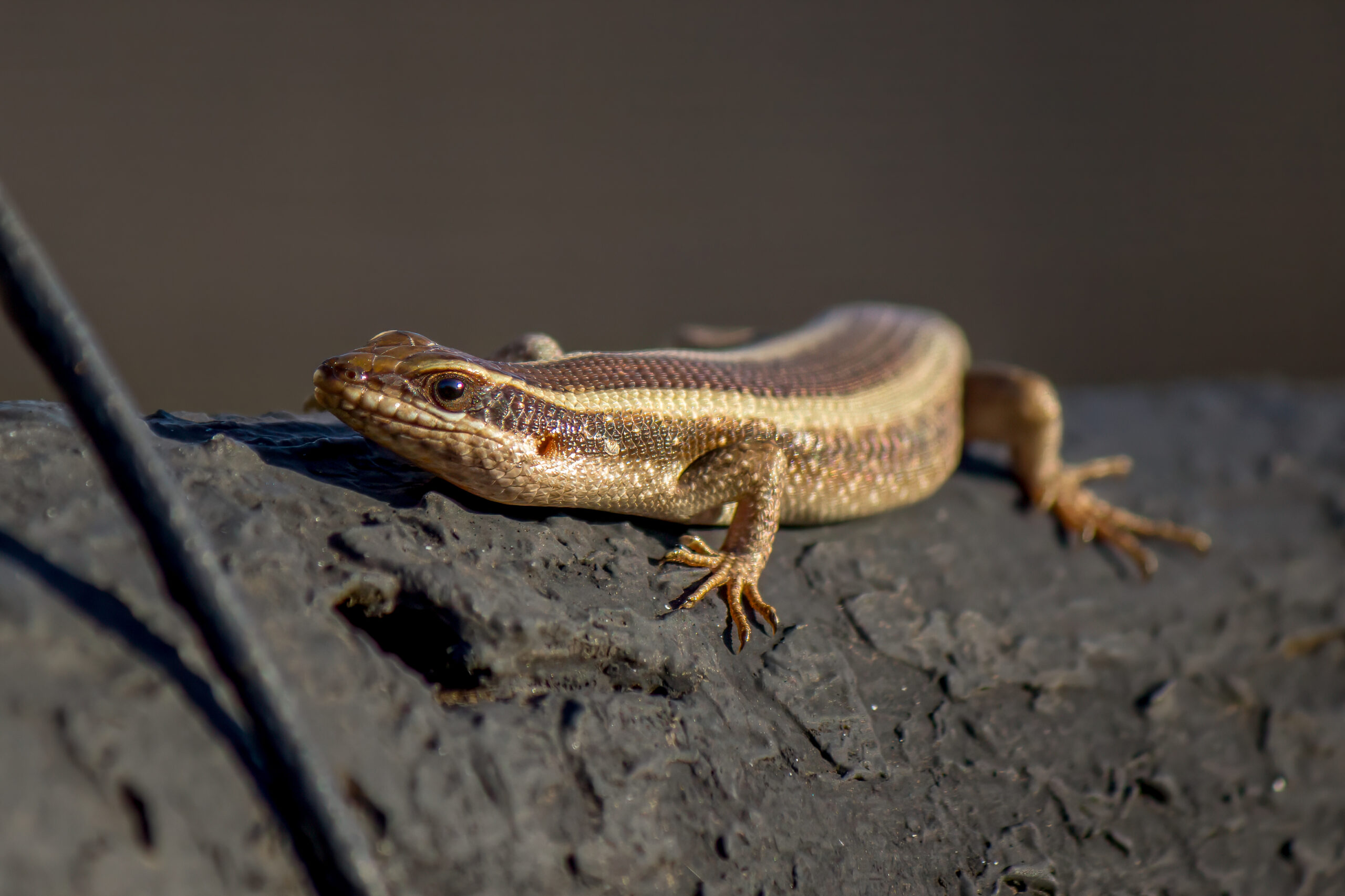
African striped skink (Trachylepis striata) was particularly prominent at Ibanda-Makera, where it accounted for 52.8% of reptile records. The speckle-lipped skink (Trachylepis maculilabris) was the next most frequently recorded reptile there at 11.1%. This local dominance is one part of a broader pattern in which different reptile and amphibian species were associated with different microhabitats, including forest edges, swamps, pools, shrubs, rocky areas and fallen logs.
The short survey almost certainly missed additional species
The authors stress that the inventory is a baseline rather than a complete species list. Each forest was surveyed for only three to five days during one rainy-season period. As sampling accumulated, the number of reptile species detected was still rising in all three forests, and amphibian detections at Sanza had not levelled off either. Additional species were therefore likely to remain undetected. They therefore argue that conservation of these forest remnants should retain their varied microhabitats and ecological structure, not focus only on total forest area.
Ecology
Related news
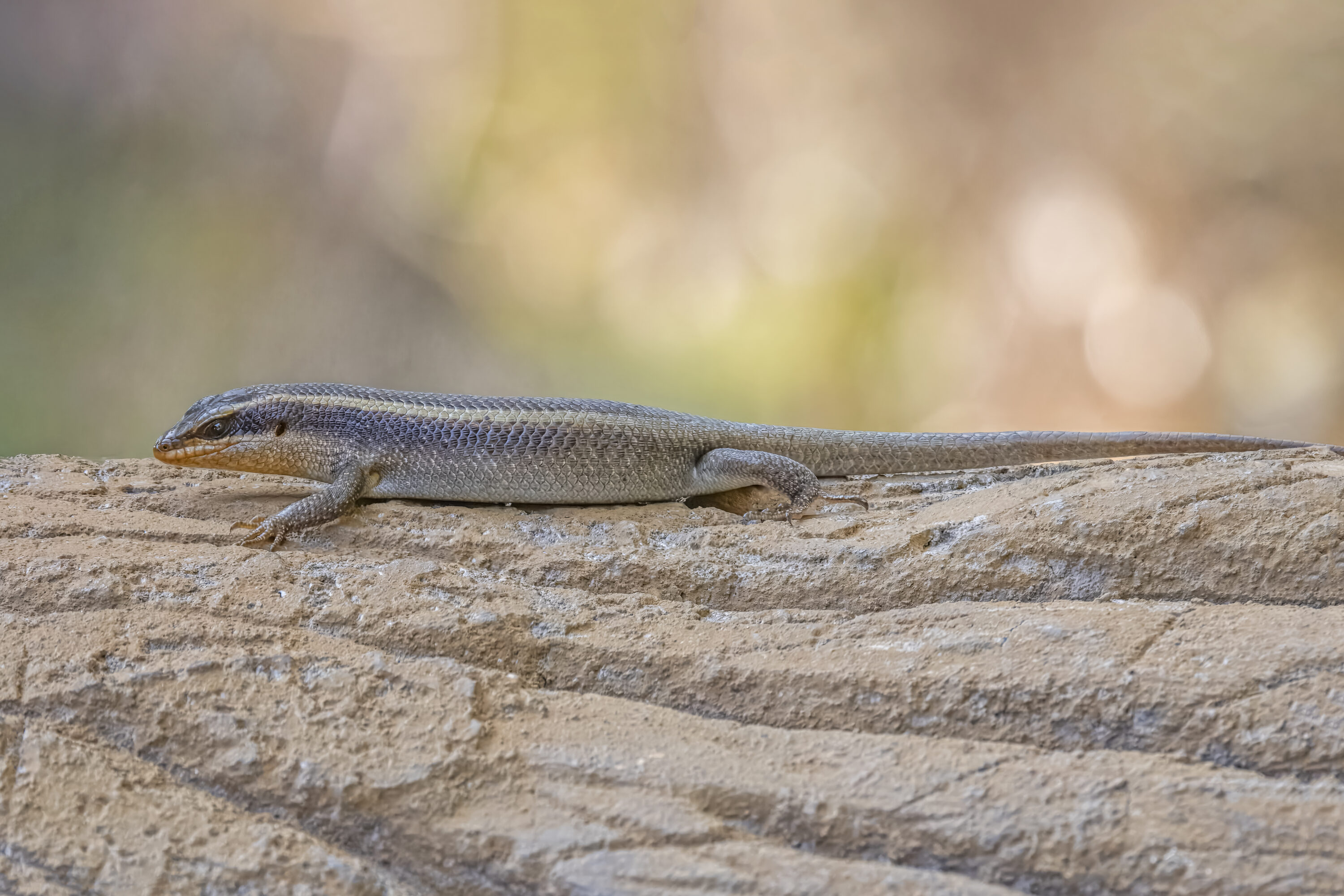
African Striped Skink Had the Third-Highest Estimated Density in an Ethiopian Reptile Survey
A western Ethiopian survey gave African striped skink the third-highest overall density estimate among 12 reptile species. The…
Read story →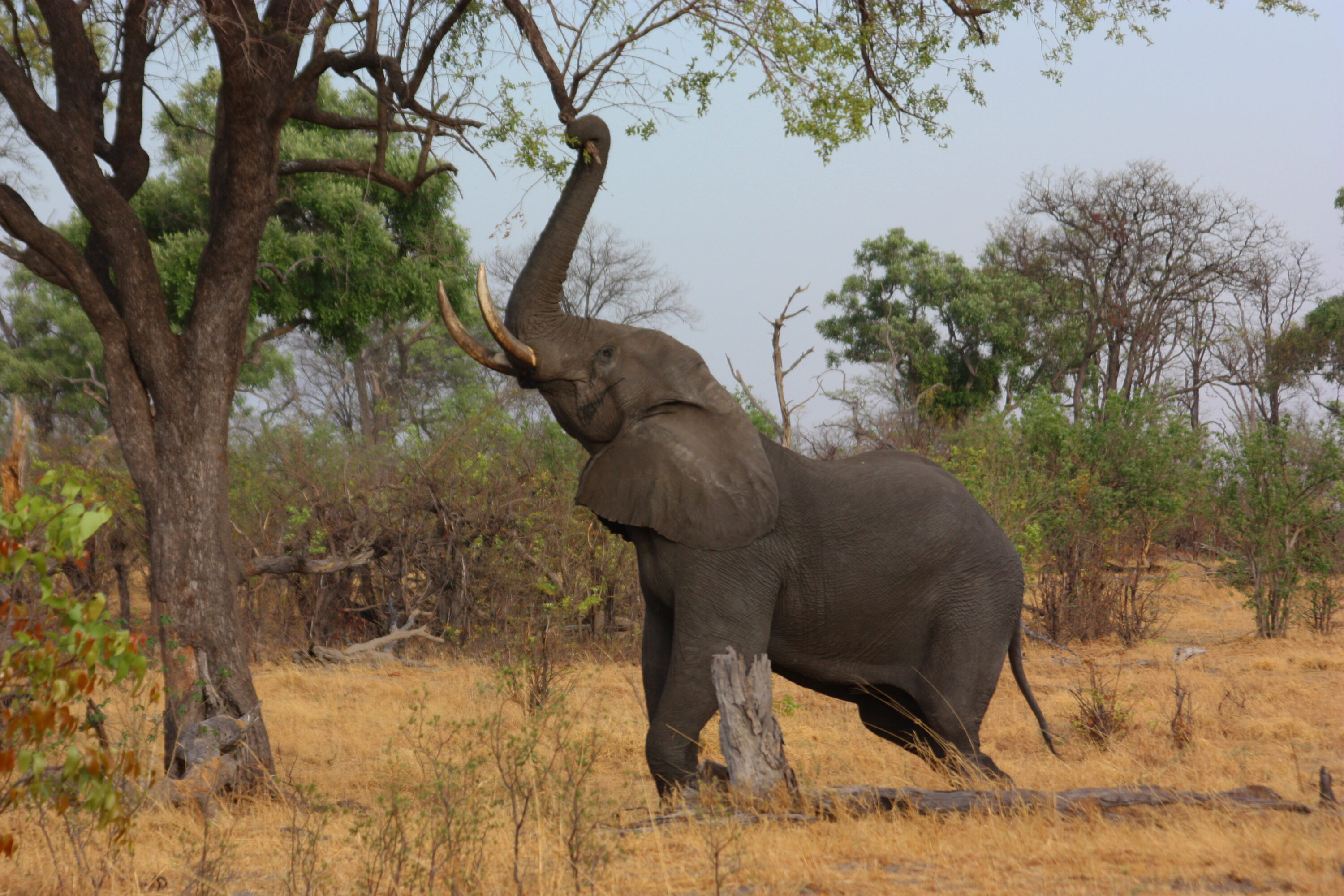
African Bush Elephants Distinguished Artificial Food-Quantity Patterns at Close Range
In experiments in South Africa, four semi-tame elephants chose between visual patterns representing canopy size and leaf density.…
Read story →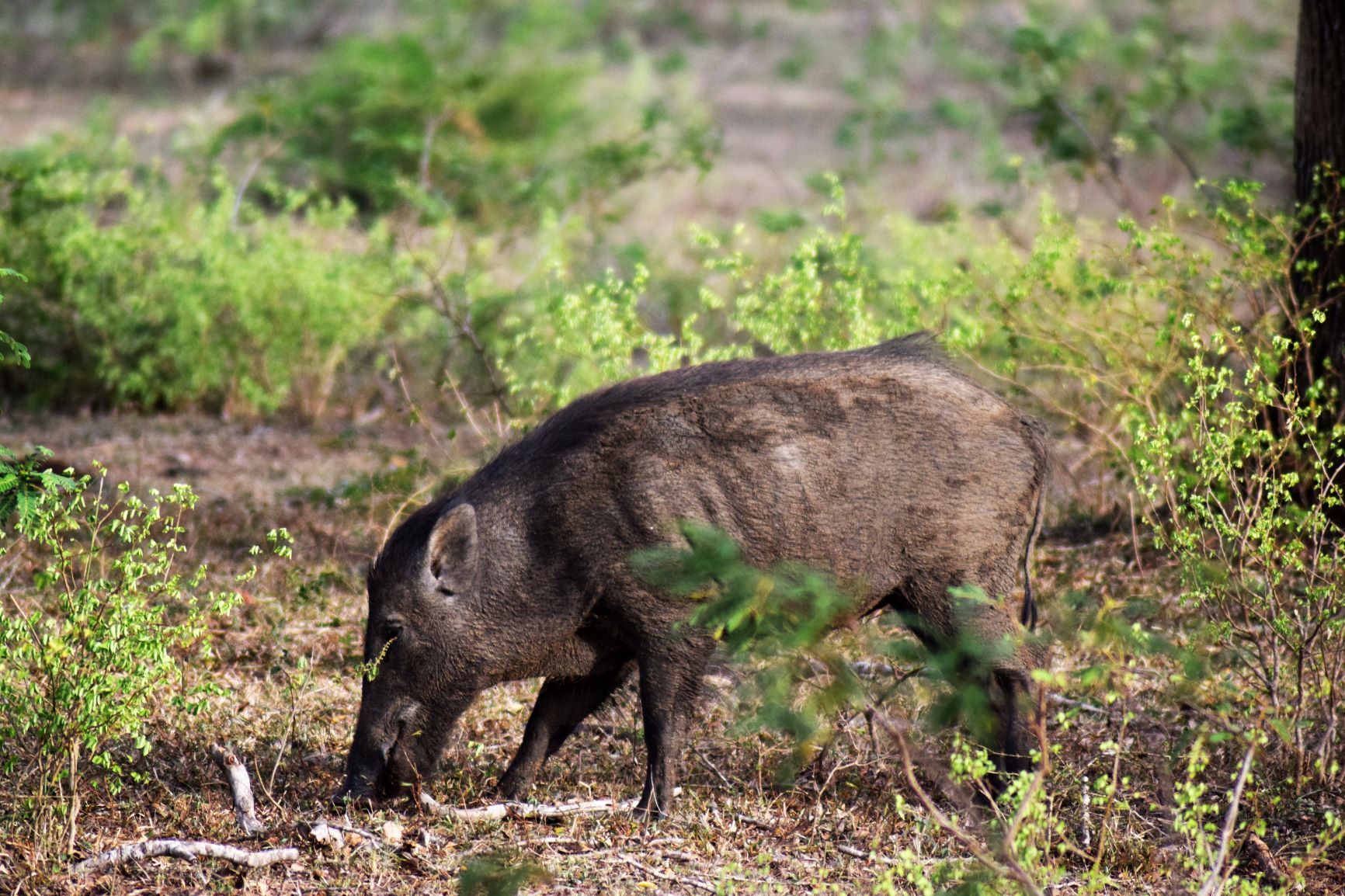
Maps Show Where Wild Boar Could Thrive and Spread on Jeju Island
Researchers mapped potentially suitable wild-boar habitat across roughly 36% of Jeju Island and identified eight possible corridors linking…
Read story →SPECIES IN THIS STORY
Species in this story
Independent research and conservation news archive
Did you find this information useful?
Wildlife Vagabond is independently built and maintained. Voluntary support helps cover source verification, hosting and continued work on research and conservation news.
Support Wildlife VagabondThe news archive will remain freely available.