
African Bush Elephants use visual food cues at close range
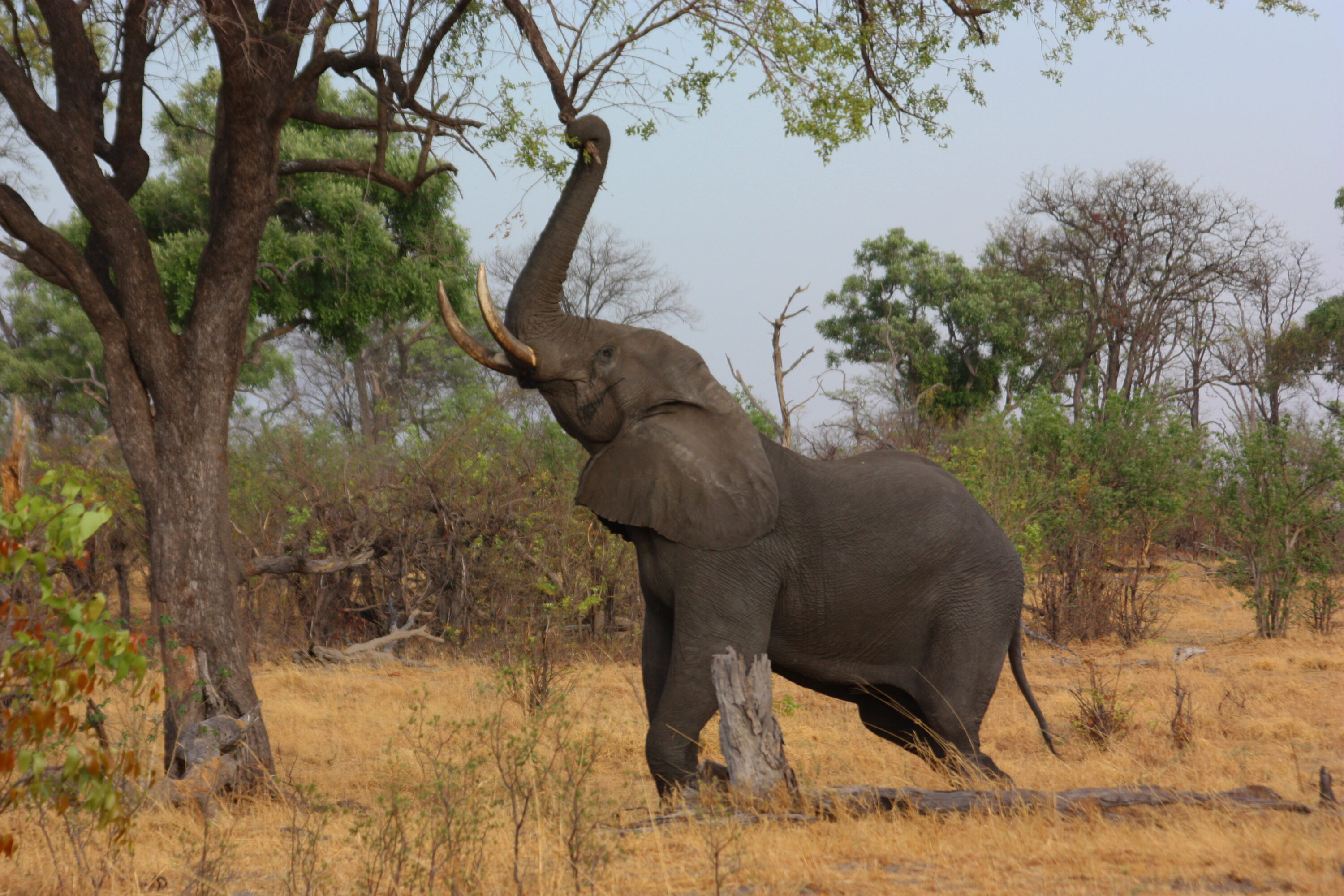
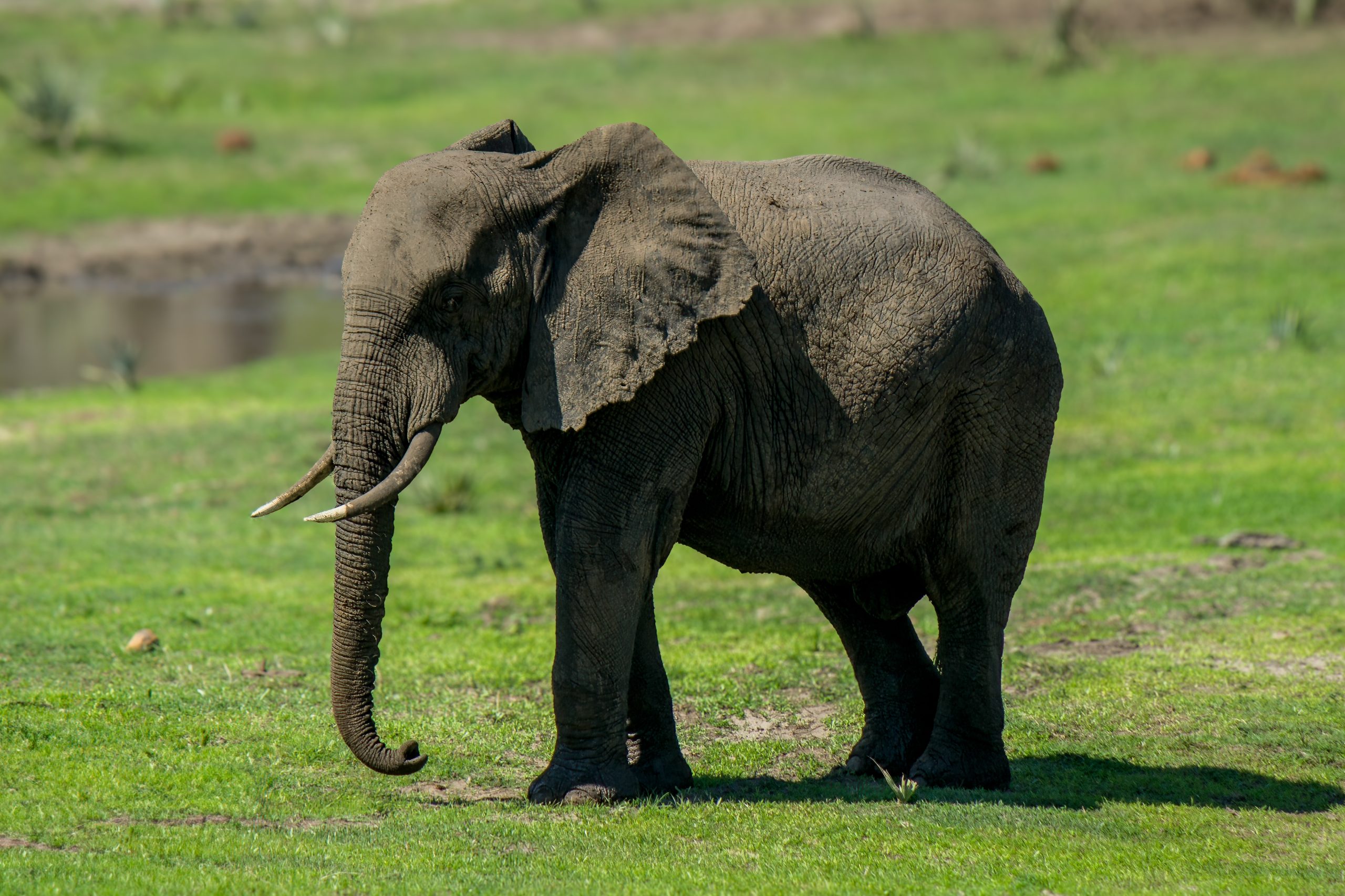
When deciding where to feed, elephants may be able to use what they see to compare how much food is available. Researchers tested this idea with four adult African Bush Elephants (Loxodonta africana) at Adventures with Elephants in Bela Bela, South Africa. The elephants were semi-tame, and the experiments used artificial visual patterns rather than real trees, leaves or food.
Visual choices were clearer nearby
The elephants were trained to choose between pairs of black-and-white circles shown on canvases. To represent canopy size, the researchers compared circles measuring 1 metre and 0.7 metres across. To represent relative leaf density, they showed equal-sized circles shaded to 25%, 50% or 100%. The elephants made choices from distances of 3, 5, 10, 20, 40 and 80 metres.
There were four elephants—one male and three females, aged 22–30. They chose the larger circle more often than chance at 3 and 5 metres. At distances from 10 to 80 metres, their choices did not reliably differ from chance.
Responses to the density patterns were more varied. Across the results, choices at 3 and 5 metres generally supported selecting the denser pattern, but the elephants did not reliably distinguish 25% from 50% at any tested distance. They distinguished 50% from 100% only at 3 metres, and chose 100% rather than 25% at 3 and 5 metres, but not reliably at greater distances. Some longer-distance results did not follow a simple pattern: at 40 metres, the elephants appeared to choose 100% over 50%, while some comparisons at 80 metres favoured the less dense pattern. The authors noted that the small sample may help explain these unexpected results.
The findings suggest that visual cues such as canopy size and leaf density may help African Bush Elephants make close-range choices between feeding options within a food patch. The authors suggest that elephants may rely more on smell when choosing between more distant patches, but these experiments did not test smell. Because only four semi-tame elephants were tested using artificial patterns, the results do not establish a fixed distance beyond which wild elephants stop using visual information. They do, however, offer a way to investigate how elephants might compare food options using sight.
Behaviour
Related news
An ancient viral gene may have been repurposed in elephant placenta
An ancient viral gene that appears to have been inherited for at least 79 million years is strongly…
Read story →
Three ways of analysing elephant calls tell different stories
Recordings from a semi-free herd in South Africa show how the method used to classify call timing can…
Read story →
Elephant Rumble Choruses Carried Context and Sometimes Converged During Coordination
Recordings from wild African bush elephants in Amboseli showed that behavioural context remained detectable in overlapping rumble choruses.…
Read story →SPECIES IN THIS STORY
Species in this story
Independent research and conservation news archive
Did you find this information useful?
Wildlife Vagabond is independently built and maintained. Voluntary support helps cover source verification, hosting and continued work on research and conservation news.
Support Wildlife VagabondThe news archive will remain freely available.