
Sequencing Reveals Frequent Filarial Infections in Wild Alaska Moose
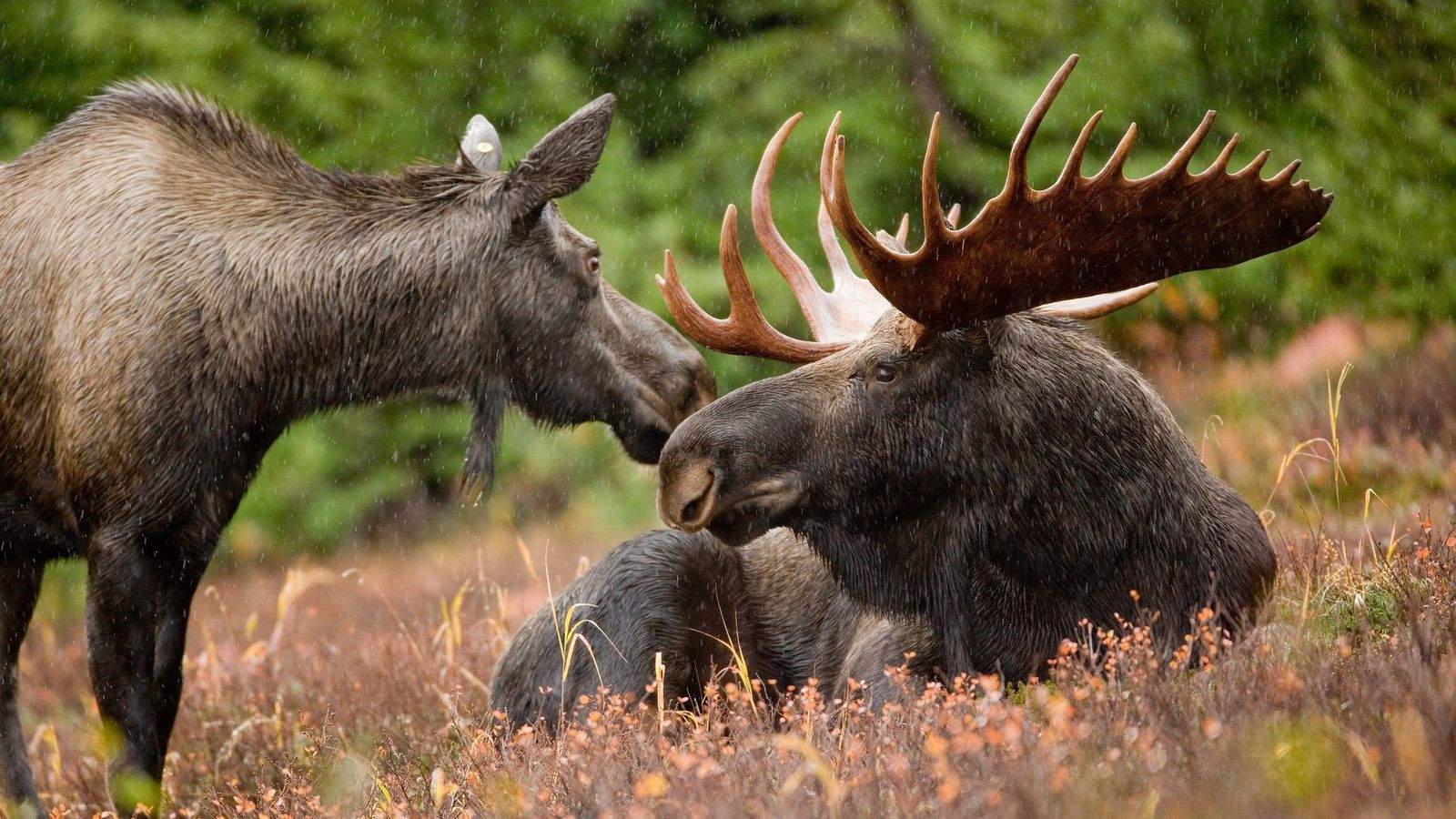
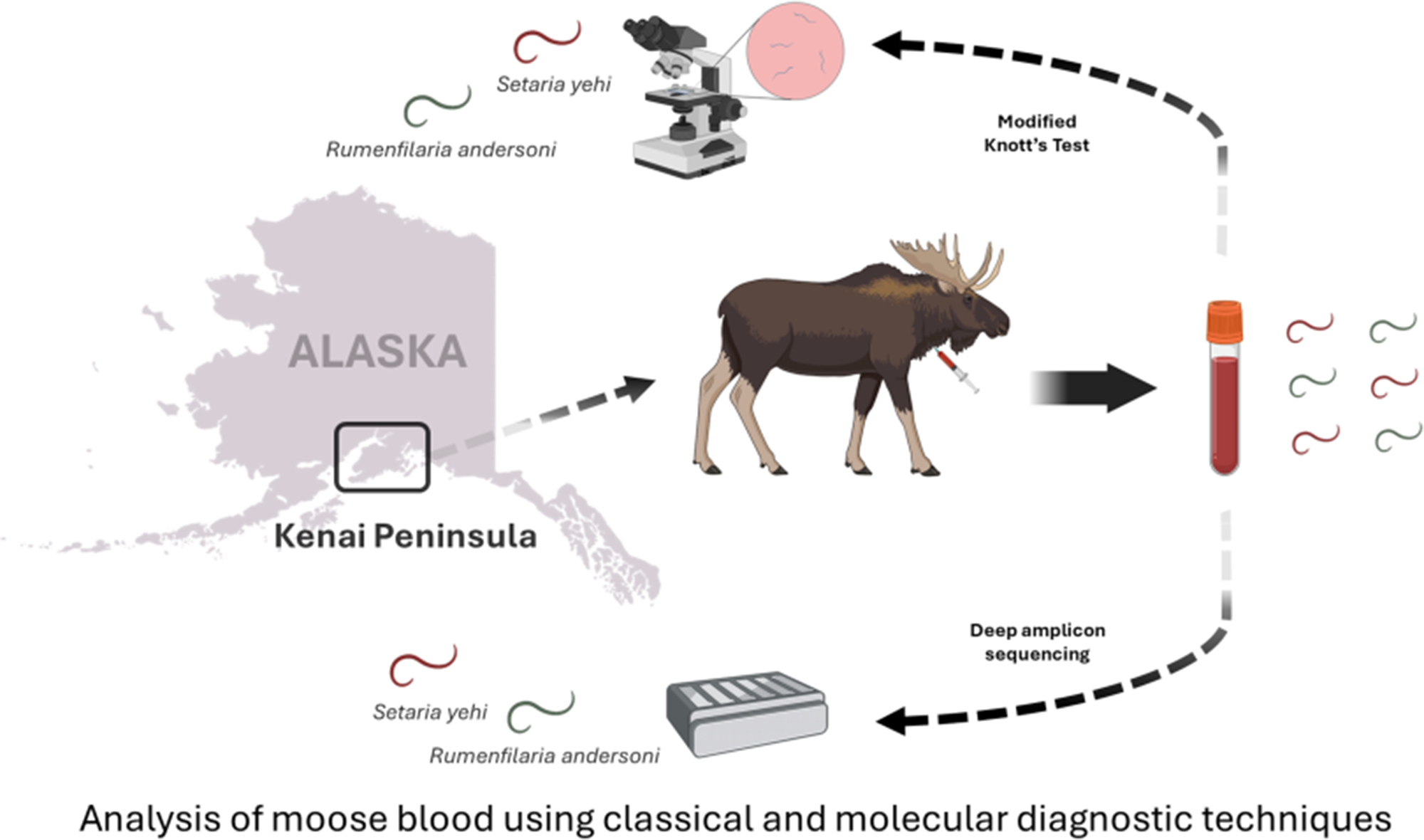
Filarial nematode DNA was detected in just over half of 190 blood samples from free-ranging Alaskan moose (Alces alces gigas) on Alaska, USA’s Kenai Peninsula, according to a new study. The researchers identified two parasite species and found that a deep-sequencing method was better than a traditional microscopy-based test at revealing when both species infected the same animal. The open-access study was published online in Parasitology on 20 April 2026.
Filarial nematodes are slender roundworms transmitted between hosts by blood-feeding arthropods. Two species known from moose, Setaria yehi and Rumenfilaria andersoni, can affect animal health. S. yehi has been associated with inflammation of the abdominal lining, or peritonitis. Knowledge of the distribution, diversity and life cycles of these parasites in Alaskan moose has nevertheless remained limited.
190 blood samples came from three Kenai management subunits
Matthew R. Kulpa and colleagues analysed archived blood collected from wild moose in three management subunits on the western Kenai Peninsula between 2015 and 2022. The dataset contained samples from adult females and ten-month-old calves. The animals had been temporarily immobilised by aerial darting as part of fieldwork, and blood was collected from the jugular vein before being frozen for later analysis.
The team used deep amplicon sequencing. The method first makes many copies of a short DNA marker from the parasites and then sequences those copies in depth. Differences in the marker can reveal which parasite species contributed DNA to the same blood sample, making mixed infections easier to separate than by appearance alone.
Sequencing separated mixed infections more often than microscopy
Filarial DNA occurred in 98 of the 190 samples, a detection rate of 51.6 percent. The sequencing method detected R. andersoni in 64 samples and S. yehi in 52, including both single and mixed infections. Eighteen samples contained DNA from both species. The researchers also found three closely related genetic variants of S. yehi. None showed a clear separation by year, season, region or host age.
At the species level, however, an age pattern emerged: S. yehi occurred predominantly in calves, while R. andersoni was more associated with adults. The authors suggest that developing immunity could contribute to the Setaria pattern in young animals, whereas repeated exposure to vectors over time could help explain the greater importance of R. andersoni in adults. These mechanisms were not tested directly.
A subset of 138 samples collected from 2019 to 2022 was examined with both deep amplicon sequencing and the Modified Knott’s Test. The latter concentrates microfilariae—larval stages of filarial worms that circulate in the blood—so they can be identified under a microscope. The conventional test returned a slightly higher overall detection rate, 57.3% compared with 50.7% for sequencing, but sequencing separated more mixed infections: 18 samples contained both parasite species by sequencing, compared with 12 by microscopy.
Where both methods detected filarial worms, they generally agreed on which parasite species made up most of the infection. The two approaches therefore complement rather than replace one another: microscopy gave slightly more positive samples overall, while sequencing was better at separating two parasite species present in the same blood sample and also retained genetic information about them.
Detection did not measure disease severity
The authors describe this as a foundation for surveillance rather than a direct measure of disease severity. Detection of parasite DNA shows that genetic material from filarial worms was present in the blood and is consistent with infection, but it does not by itself show how many worms were present or whether the moose was clinically ill. Linking the molecular results to metadata such as year, season, location and age could help researchers study transmission, geographic patterns and changes through time.
Such monitoring may become increasingly important because filarial parasites depend on arthropod vectors. The paper notes that outbreaks of Setaria-associated peritonitis have been linked to warmer and longer summers, which can extend the period of vector exposure. The authors argue that improved surveillance can support understanding of parasite ecology in an animal with major ecological, cultural and economic importance in Alaska.
Disease, parasites & microbiology
Related news
Arctic Moose Follow the River Valleys
GPS tracking in Alaska showed that half of 24 female moose migrated between summer and winter ranges. Migrants…
Read story →
Thermal Drones Found Nearly All Moose in Favourable Winter Weather
Swedish trials found detection close to 100% in cold, overcast winter conditions, but the survey effort needed for…
Read story →
Even Adirondack Park’s Densest Moose Area Was Too Sparse for Precise Aerial Estimates
Helicopter surveys estimated about 92 moose in the Adirondack core in 2024 and 112 in 2025, but broad…
Read story →SPECIES IN THIS STORY
Species in this story
Independent research and conservation news archive
Did you find this information useful?
Wildlife Vagabond is independently built and maintained. Voluntary support helps cover source verification, hosting and continued work on research and conservation news.
Support Wildlife VagabondThe news archive will remain freely available.