
Task Uncertainty Increased Interference From Irrelevant Visual Information in Rhesus Macaque Decisions
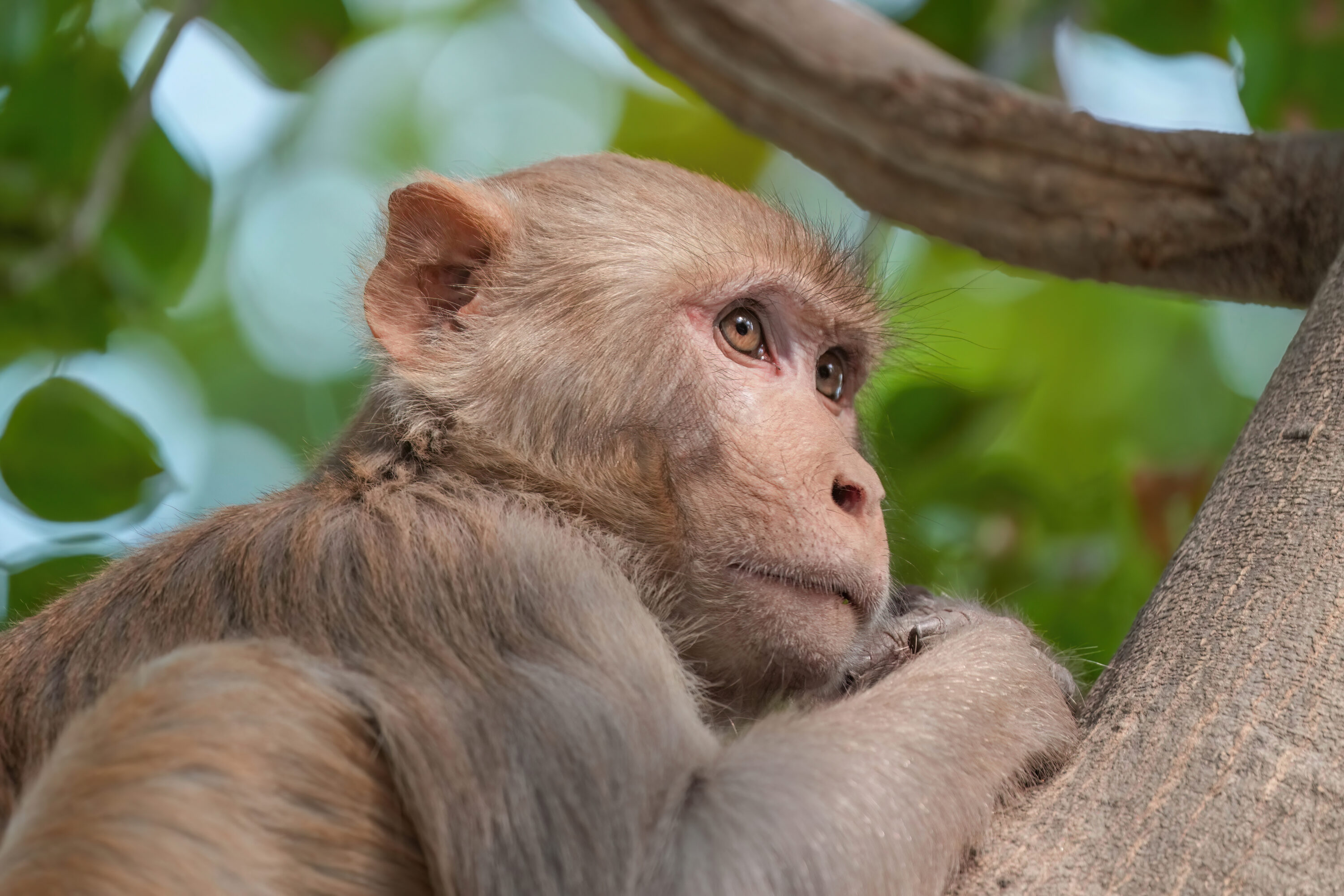
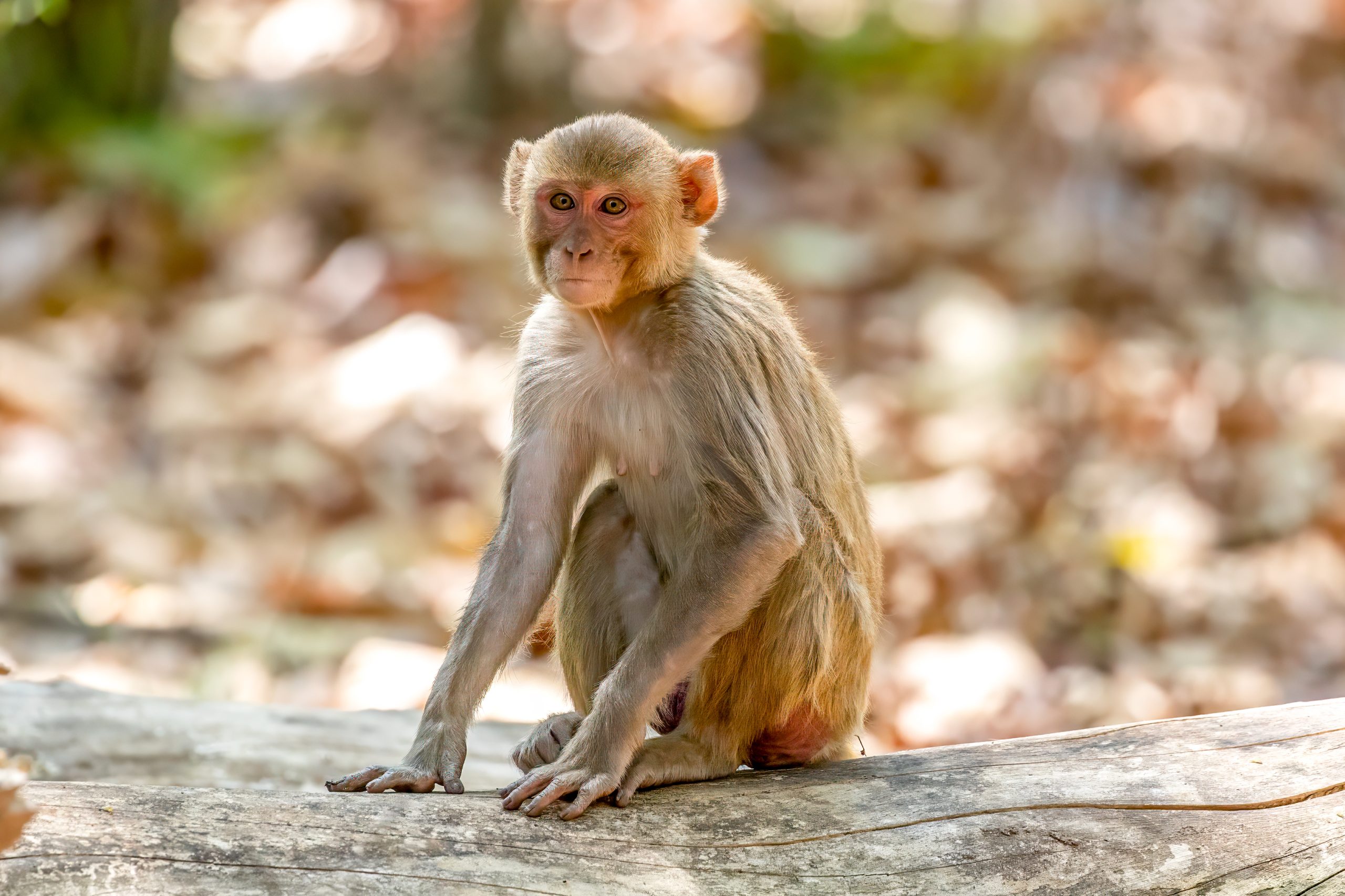
Two male rhesus macaques (Macaca mulatta) made less accurate visual decisions when they were uncertain about which feature of a stimulus was currently relevant. The animals compared two Gabor stimuli — striped patterns widely used in vision research — and had to judge either a change in spatial location or a change in spatial frequency, meaning how closely spaced the stripes were.
Uncertainty came from an uncued task switch
Both visual features changed on every trial, but only one determined reward. The relevant task switched without a cue on 2.5% of trials, so the monkeys had to infer the current rule from their recent choices and feedback. A rewarded trial strongly indicated that the same task remained relevant. After an unrewarded trial, however, the animals could not know whether they had made a perceptual error, chosen the wrong task, or both. Their task certainty was therefore lower after non-reward.
Under this uncertainty, the feature that should have been irrelevant influenced perceptual choices more strongly. The authors call this feature interference. Importantly, the problem was not simply that irrelevant information remained represented: recurrent neural networks trained to make correct choices also represented the irrelevant feature more strongly under uncertainty without suffering the same loss of accuracy.
The crucial difference was neural entanglement
In a network trained to reproduce the monkeys’ choices, representations of location and spatial frequency became more entangled when task certainty was low. These feature representations can be pictured as directions in a multidimensional neural activity space. When the directions are close to orthogonal, information about one feature can vary without strongly contaminating the other. When they become less orthogonal, irrelevant location information can leak into a judgement about spatial frequency, or vice versa.
Recordings from the monkeys’ primary visual cortex (V1), an early cortical stage of visual processing, showed the same pattern. Under lower task certainty, location and spatial-frequency representations were more entangled, and trial-to-trial fluctuations along their encoding axes were more correlated. The interference was therefore already detectable in a sensory cortical area that represents the visual features being judged.
Microstimulation tested the mechanism causally
The researchers then used electrical microstimulation in V1 to bias the perceived location of the second stimulus. If location and spatial frequency were represented independently, this location perturbation should have had little effect while the monkey judged spatial frequency. Instead, microstimulation altered spatial-frequency judgements more strongly when task certainty was low than when it was high, providing causal evidence that information about the irrelevant feature could spill into the current decision.
Parallel experiments in humans showed a similar behavioural cost of task uncertainty, while the artificial-network comparisons helped identify the mechanism to test in the brain. The monkey experiments involved two intensively studied males, so the species-level generality of the detailed neural pattern rests on a small number of animals. Together, however, the behavioural, physiological and causal results support the idea that the cost of cognitive flexibility is not merely failure to suppress irrelevant information: errors arise when irrelevant and relevant neural representations become less independent.
Behaviour
Related news
Female Rhesus Macaques That Watched Unfamiliar Female Faces Longer Were More Likely to Have Offspring the Following Year
At a semi-free-ranging population in Puerto Rico, females that spent longer looking at an unfamiliar female’s neutral face…
Read story →
Human Activity and Large Wildlife Overlapped Most in Chitwan’s Buffer Zone
Camera traps across Chitwan National Park and surrounding forests showed the greatest overlap of human activity with large…
Read story →
Aging rhesus macaques show broader protein changes in blood than in brain fluid
A study of 66 rhesus macaques found age-related differences in many more measured proteins in plasma than in…
Read story →SPECIES IN THIS STORY
Species in this story
Independent research and conservation news archive
Did you find this information useful?
Wildlife Vagabond is independently built and maintained. Voluntary support helps cover source verification, hosting and continued work on research and conservation news.
Support Wildlife VagabondThe news archive will remain freely available.