
White Rhinos Avoided Camps and the Boundary Fence While Tracking Seasonal Resources in Hluhluwe-iMfolozi
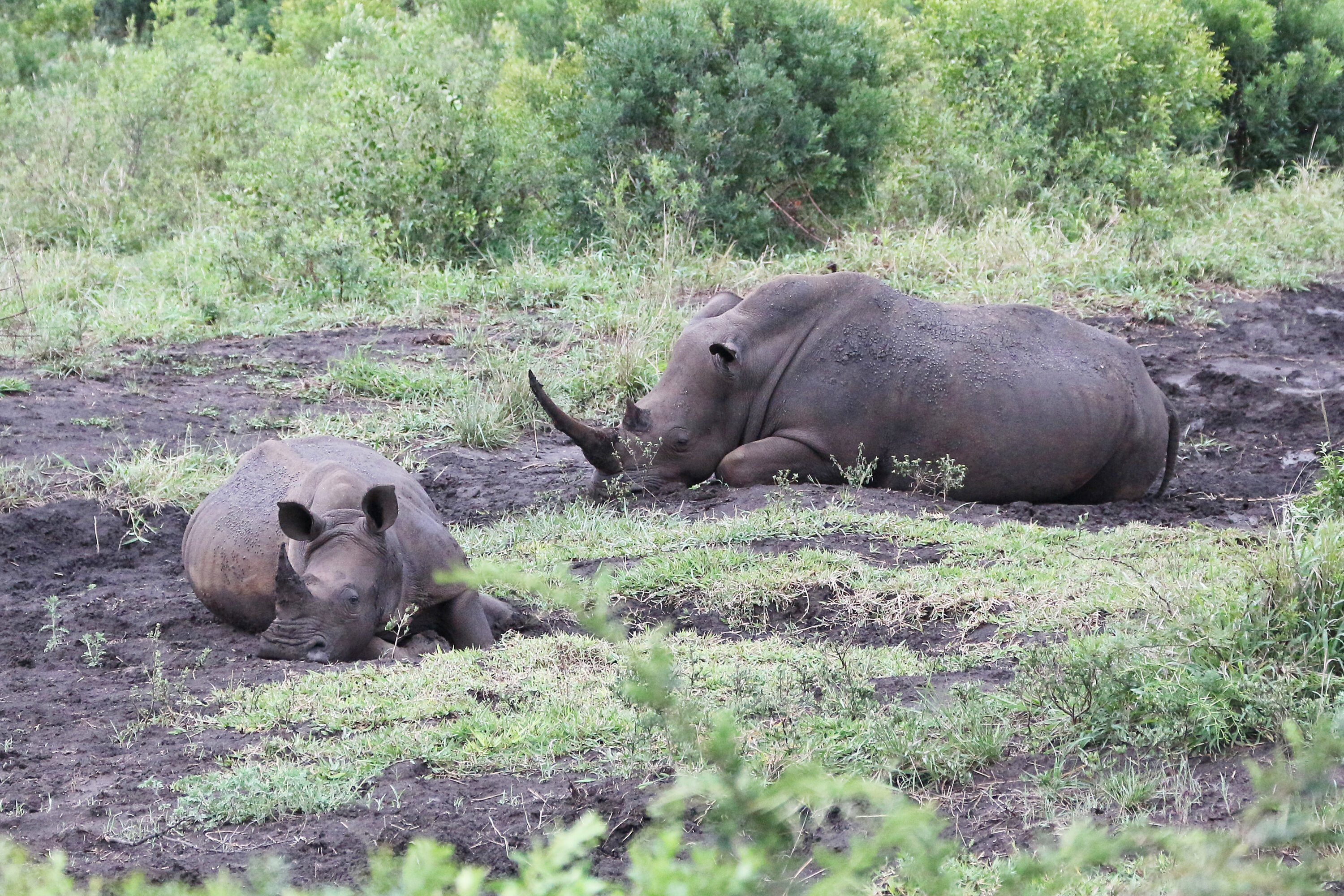
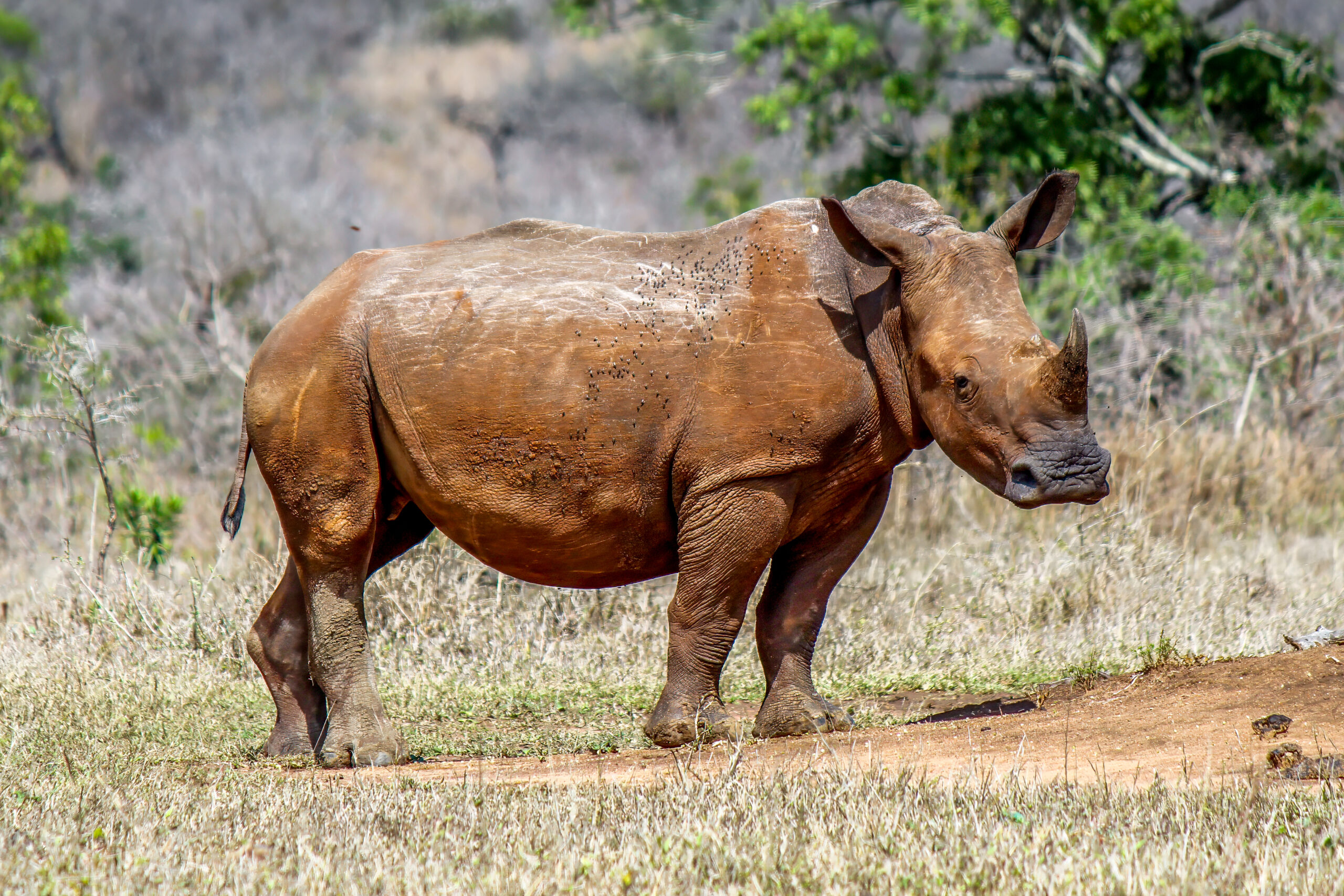
White rhinoceros (Ceratotherium simum) in Hluhluwe-iMfolozi Park, South Africa used flatter, low-lying parts of the landscape most strongly, but their distribution also shifted with season and human infrastructure. They occurred less often near staff and tourist camps and near the park boundary fence.
The researchers analysed 6,632 rhino observations from aerial surveys between 2012 and 2023. They compared the recorded locations with randomly available locations across the study area, using resource-related factors such as terrain, rainfall and fire together with human-related factors including camps, roads, the boundary fence and poaching intensity. Because the comparison used random available locations rather than true absences, the models describe relative likelihood of occurrence rather than an absolute probability of finding a rhino.
Terrain and seasonal resources strongly shaped where rhinos occurred
Rhinos occurred most often in low-lying basin habitat and became much less likely as terrain grew more rugged. Their use of the landscape also changed seasonally: midland and upland areas were used more during the dry season, while the low-lying basin was used more strongly during the wet season. Rainfall modified this pattern, particularly the use of uplands.
Fire also mattered, but not in one simple direction. Recently burned areas had higher rhino occurrence during dry seasons with low rainfall, while during wet seasons with high rainfall rhinos occurred more often in areas burned during the previous dry season. These patterns are consistent with rhinos tracking changes in grass resources through the year.
Rhinos used areas near camps and the boundary fence less
The relative likelihood of rhino occurrence increased with distance from camps and from the boundary fence. Evidence for lower occurrence near public tourist roads was weaker, while management tracks showed the opposite pattern, with higher rhino occurrence nearby.
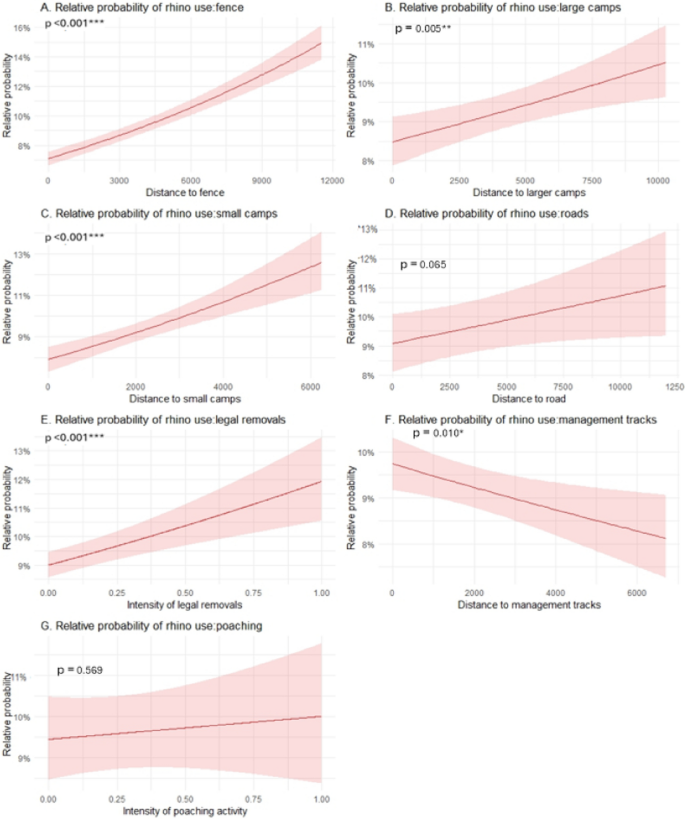
Across the variables tested, terrain ruggedness explained the most variation in rhino distribution, followed by distance from the boundary fence and landscape position. A model that included both resources and human-related risk explained more variation than a model based on resources alone.
Poaching hotspots did not predict where rhinos occurred
Spatial poaching intensity did not explain rhino occurrence, and the same broad result held when years with lower and higher poaching activity were analysed separately. The authors suggest that poaching may provide few predictable sensory cues that surviving rhinos can use to avoid particular areas, unlike camps and other regularly noisy infrastructure.
The models still left substantial variation unexplained, and the authors note that several effects were small. The study therefore supports a role for both resources and human disturbance without implying that these factors fully determine where rhinos occur.
The authors argue that avoidance of human infrastructure can effectively reduce the amount of protected habitat available to white rhinos. More broadly, the results challenge the idea that adult megaherbivores are shaped mainly by resources because they face little non-human predation risk.
Ecology
Related news
Inland Mute Swans Had Higher Winter Body Condition Despite Harsher Winters and Supplemental Feeding
A study of 853 mute swans from four Polish wintering regions found higher body condition inland than on…
Read story →
Gut Microbiomes Across Nine Kruger Mammals Clustered More Strongly by Dietary Group Than Species
A study of 89 quality-filtered faecal samples from nine wild mammals in Kruger National Park found that carnivores,…
Read story →
Dunnock Spring Passage Advanced by Up to 8.3 Days Over 61 Years at Hel
Standardised ringing data from northern Poland showed that the first, median and last phases of dunnock spring passage…
Read story →SPECIES IN THIS STORY
Species in this story
Independent research and conservation news archive
Did you find this information useful?
Wildlife Vagabond is independently built and maintained. Voluntary support helps cover source verification, hosting and continued work on research and conservation news.
Support Wildlife VagabondThe news archive will remain freely available.