
Forty-two of 379 Common Kestrel Breeding Attempts Were Second Broods in a Vole-rich Hungarian Year
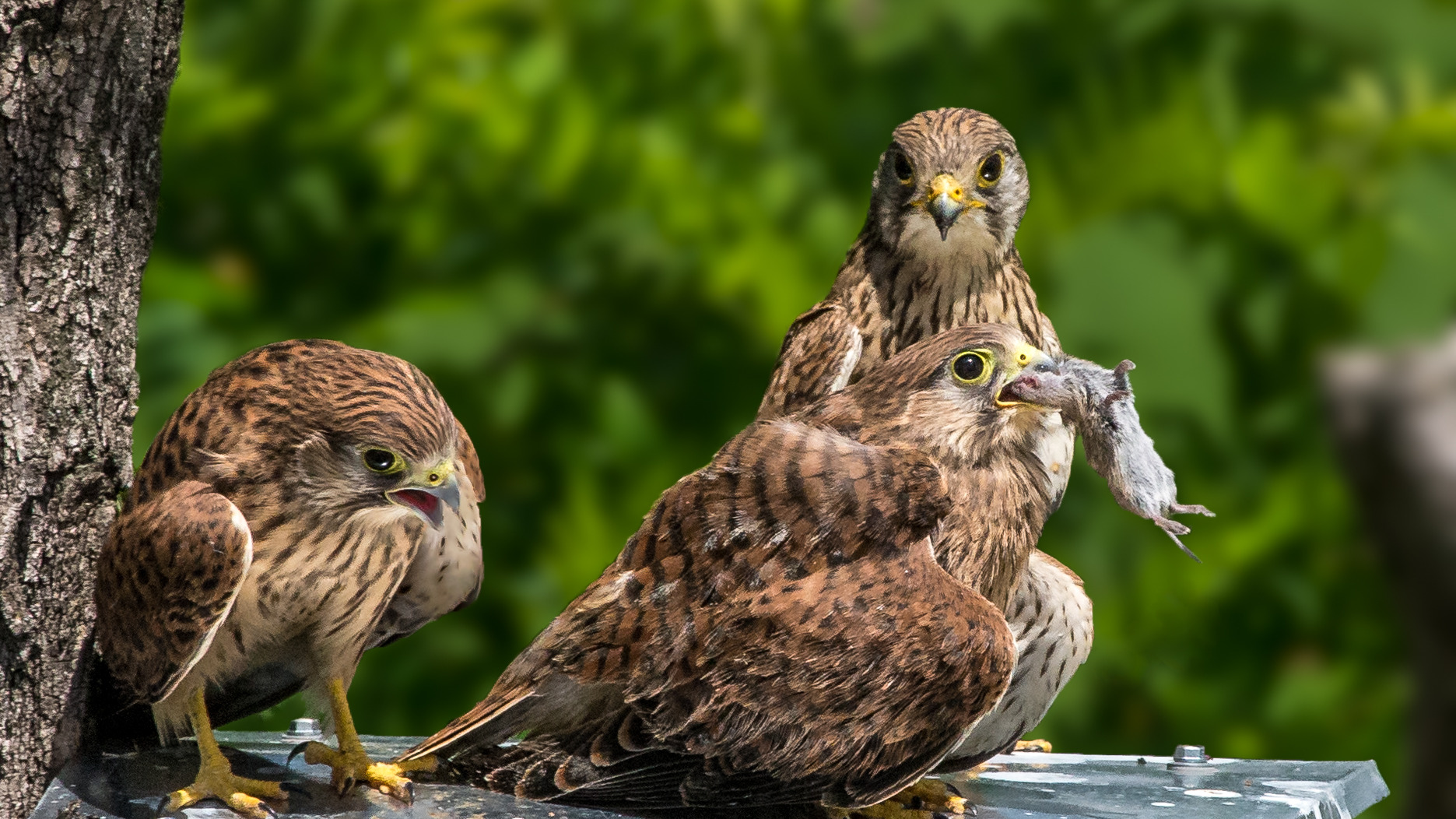
Long-term monitoring of common kestrels (Falco tinnunculus) in Hungary documented an unusually large number of pairs attempting a second brood within the same breeding season. The study was published on 6 June 2026 in Ornis Hungarica.
True second broods followed successful first broods
The researchers analysed monitoring data from 1995 to 2024. Nesting sites were inspected systematically through the breeding season, and individual colour ringing and direct observations helped distinguish repeated breeding by the same birds. A clutch counted as a true second brood only when the pair had already fledged at least one chick from its first brood; a new clutch after a failed first attempt was classified separately as a replacement brood.
In 2023, after a mild winter and during an exceptionally strong outbreak of common voles (Microtus arvalis), the kestrels also had abundant insect prey. Researchers followed 325 occupied nests: 271 were classed as single broods, 12 as replacement broods and 42 as confirmed second broods. Counting the additional replacement and second clutches produced 379 breeding attempts in total. Among nests where the first brood had successfully fledged at least one chick, 16.6% went on to produce a second brood.
The second broods occurred both at artificial colonies and solitary sites. Most were in nest boxes designed for kestrels, but three occurred in natural nests. Birds that produced a second brood reused the same nest as for their first brood in every documented case. The pairs attempting second broods were also among the earliest breeders in the first part of the season.
Early breeders gained a second reproductive opportunity
In 29 of the 42 second-brooding pairs (69%), egg laying for the second clutch began before the young from the first brood had fledged. On average, the second clutch was initiated two days before the last chick of the first brood left the nest, so parental care for the first brood overlapped with the start of the second attempt.
The reproductive gain was substantial. Across the season, pairs with second broods fledged an average of about 6.3 young in total, compared with about 3.7 among pairs with a single brood. The authors therefore interpret second brooding as a way of increasing annual reproductive output when conditions are especially favourable, rather than as compensation for a failed or poorly performing first clutch. Common voles are the kestrel’s main prey in the study system, and the authors link the exceptional 2023 pattern to a mild winter, unusually abundant vole and insect prey, and the fact that second-brooding pairs had started their first clutch especially early.
Reproduction & development
Related news
Kestrels Had More Densely Packed Mucous Glands Than Storks
A small study in Türkiye found roughly twice the density of mucus-producing glands in common kestrels’ windpipes as…
Read story →
No Common Kestrels Were Recorded at Rani for Three Consecutive Winters
Fourteen winters of surveys at Rani in Assam produced 422 common kestrel records, but sightings declined after 2020…
Read story →
Winter Surveys Estimated 5.59 Common Kestrels and 2.61 Common Buzzards per km² in Parma Farmland
Roadside distance sampling in northern Italy estimated 5.59 common kestrels and 2.61 common buzzards per km², while the…
Read story →SPECIES IN THIS STORY
Species in this story
Independent research and conservation news archive
Did you find this information useful?
Wildlife Vagabond is independently built and maintained. Voluntary support helps cover source verification, hosting and continued work on research and conservation news.
Support Wildlife VagabondThe news archive will remain freely available.