
Higher Temperature and Humidity Reshaped Microbial Communities in Eurasian Blue Tit Nests
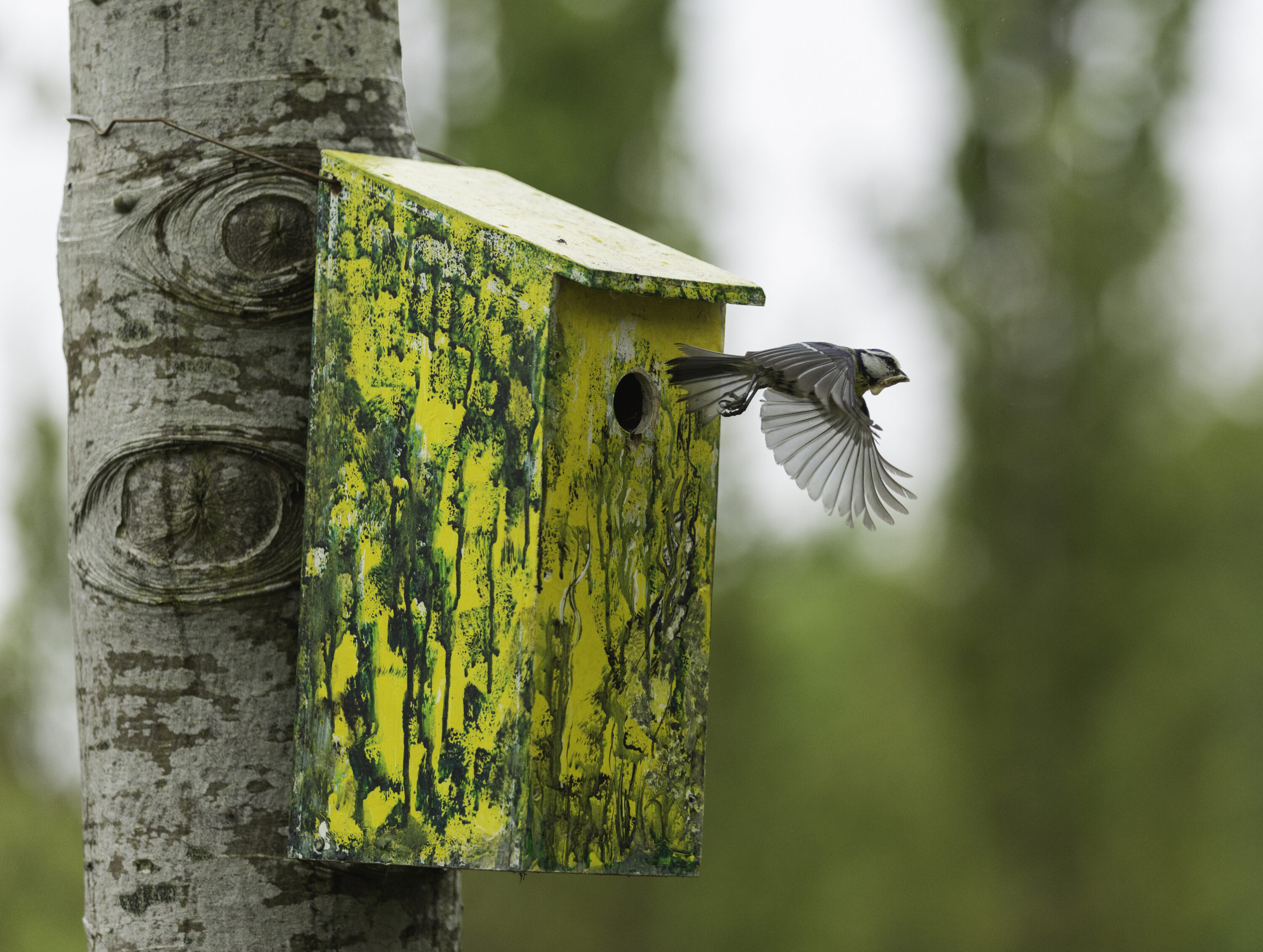
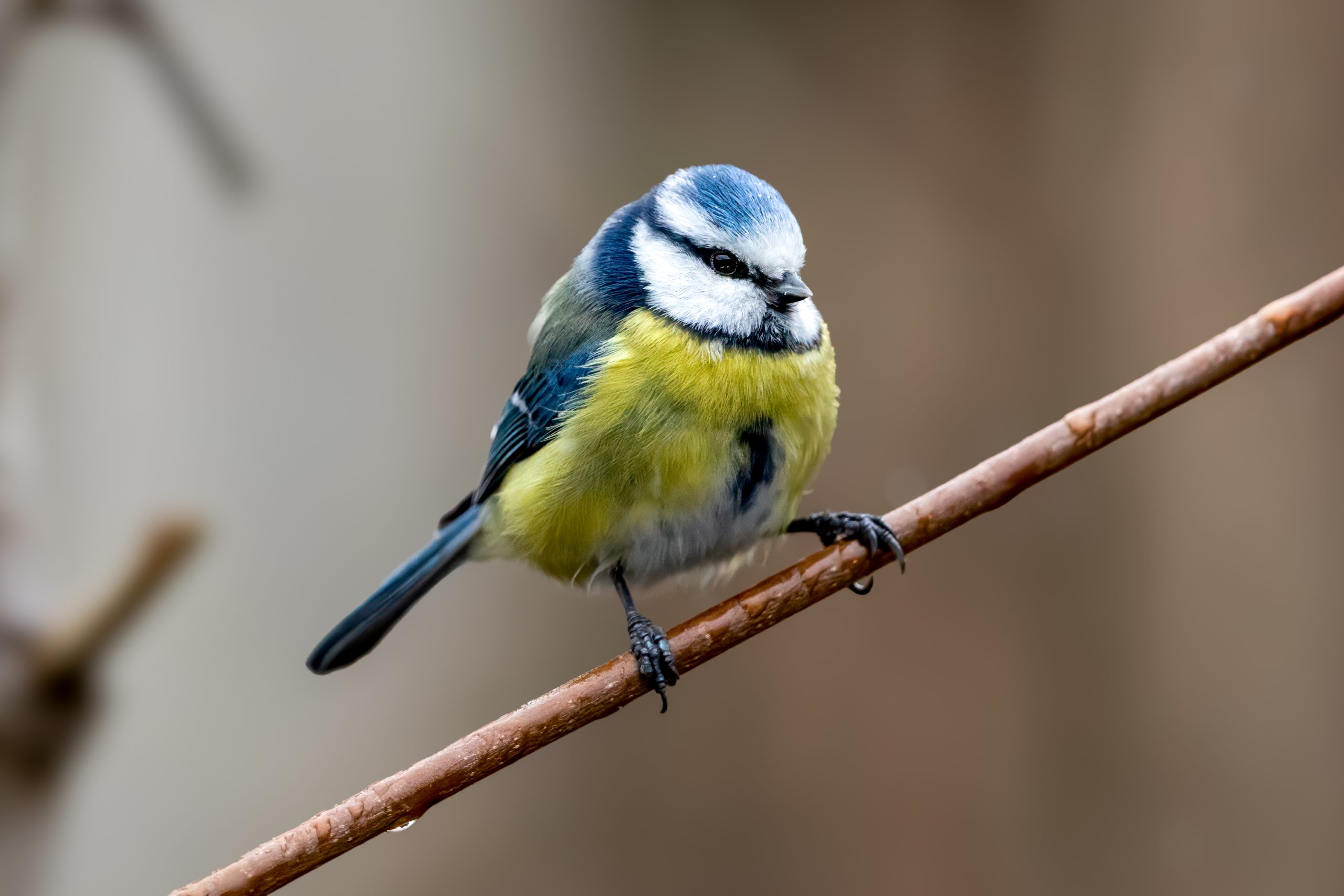
An experiment in Eurasian blue tit (Cyanistes caeruleus) nest boxes in Valsaín, central Spain, found that experimentally increased temperature and humidity changed the microbial communities living in the nests. Bacterial community composition shifted, while fungi responded more strongly: both fungal richness and community composition changed, and potentially pathogenic fungi were more abundant in humidified nests.
The microbiome analysis was part of a larger 2021 nest-box experiment. The full experiment involved 47 nests assigned to heated, humidified or control treatments. For the microbiome study, the researchers randomly selected nine of those nests — three from each treatment — and swabbed the nest cup on days 4 and 13 after hatching. The analysis therefore comprised 18 microbial samples from nine nests.
The experiment changed the nest microclimate for two weeks
The treatments ran from day 3 to day 17 after hatching. Heated nests contained a small heating mat below the nest material, while humidified nests received water and a moisture-preserving gel. Control nests received the same grids and handling but no heat or added moisture.
Across the full 47-box experiment, mean temperature was 21.34°C in heated nests and 19.48°C in controls. Mean relative humidity was 76.2% in humidified nests, compared with 60.5% in controls. The researchers then used DNA metabarcoding to describe the nest microbiome. This method reads standard genetic markers from many microorganisms in the same sample: 16S rRNA for bacteria and ITS2 for fungi.
Bacterial composition changed more than bacterial richness
The analysis did not support a clear difference among treatments in the number of bacterial taxa detected. Community composition did, however, particularly between humidified and control nests. This means that added humidity changed which bacteria were present in relative terms without producing a clear increase or decrease in overall bacterial richness.
The relative abundance of several bacterial groups also varied among treatments, although the authors describe the bacterial community as comparatively resilient to the experimental changes.
Fungi responded more strongly
Fungal communities were more sensitive to the altered microclimate. Both increased temperature and increased humidity were associated with higher fungal richness and with changes in fungal community composition. The treatment differences were also more pronounced for the relative abundance of fungal groups than for bacteria.
The analysis did not support a clear treatment effect on potentially pathogenic bacteria. Potentially pathogenic fungi were different: they were more abundant in humidified nests. These included dermatophytes, fungi adapted to grow on keratin-rich material such as skin, feathers and hair.
Links with ectoparasites and nestling condition were complex
The wider experiment had already shown that humidified nests contained fewer mites and that both heated and humidified nests contained fewer blowfly larvae than controls. Nestlings also had poorer body condition in humidified nests and slightly poorer condition in heated nests. The microbiome study examined how those patterns related to bacterial and fungal communities.
Several microbial groups were associated with ectoparasites and nestling condition, but the relationships did not point in one simple direction. The authors suggest that the greater abundance of potentially pathogenic fungi in humidified nests could have contributed to poorer nestling condition, but the study cannot establish that those fungi caused the change.
Nine nests make the microbiome results preliminary
The authors highlight several limitations. The microbiome analysis was based on only nine nests, each sampled twice, so the study had limited ability to distinguish robust patterns and to generalise them beyond this sample. Several secondary analyses were therefore treated as exploratory rather than definitive.
The humidity treatment also used a gel containing microcellulose and monopotassium phosphate. Because the gel introduced nutrients as well as moisture, the authors cannot exclude the possibility that it directly influenced microbial growth.
Finally, the direction of cause and effect among microclimate, microbes, ectoparasites and nestling condition remains unresolved. The experiment shows that changing temperature and humidity can reorganise the nest microbiome, especially its fungal component, but separate manipulation of microbial communities or parasite loads would be needed to determine which biological links drive the observed associations.
Disease, parasites & microbiology
Related news
Urban Bird Diversity Was More Strongly Linked to Forest Structure Than the Surrounding City
Across 12 urban forests in three Italian cities, researchers recorded 2,035 birds from 52 species. Local forest structure…
Read story →
Record May Heatwave Reduced Breeding Success and Nestling Mass in Great Tits and Eurasian Blue Tits
Compared with equivalent parts of the breeding season in 1978–2025, fledgling number declined by 4.5 nestlings in 2026…
Read story →
Autumn Movement Timing Stayed Stable as Wings Became Rounder in Great and Eurasian Blue Tits
Hungarian ringing data from 2004–2024 found stable autumn movement timing in great and Eurasian blue tits, while body…
Read story →SPECIES IN THIS STORY
Species in this story
Independent research and conservation news archive
Did you find this information useful?
Wildlife Vagabond is independently built and maintained. Voluntary support helps cover source verification, hosting and continued work on research and conservation news.
Support Wildlife VagabondThe news archive will remain freely available.