
Breeding Pied Avocets Continued to Decline in the Wadden Sea
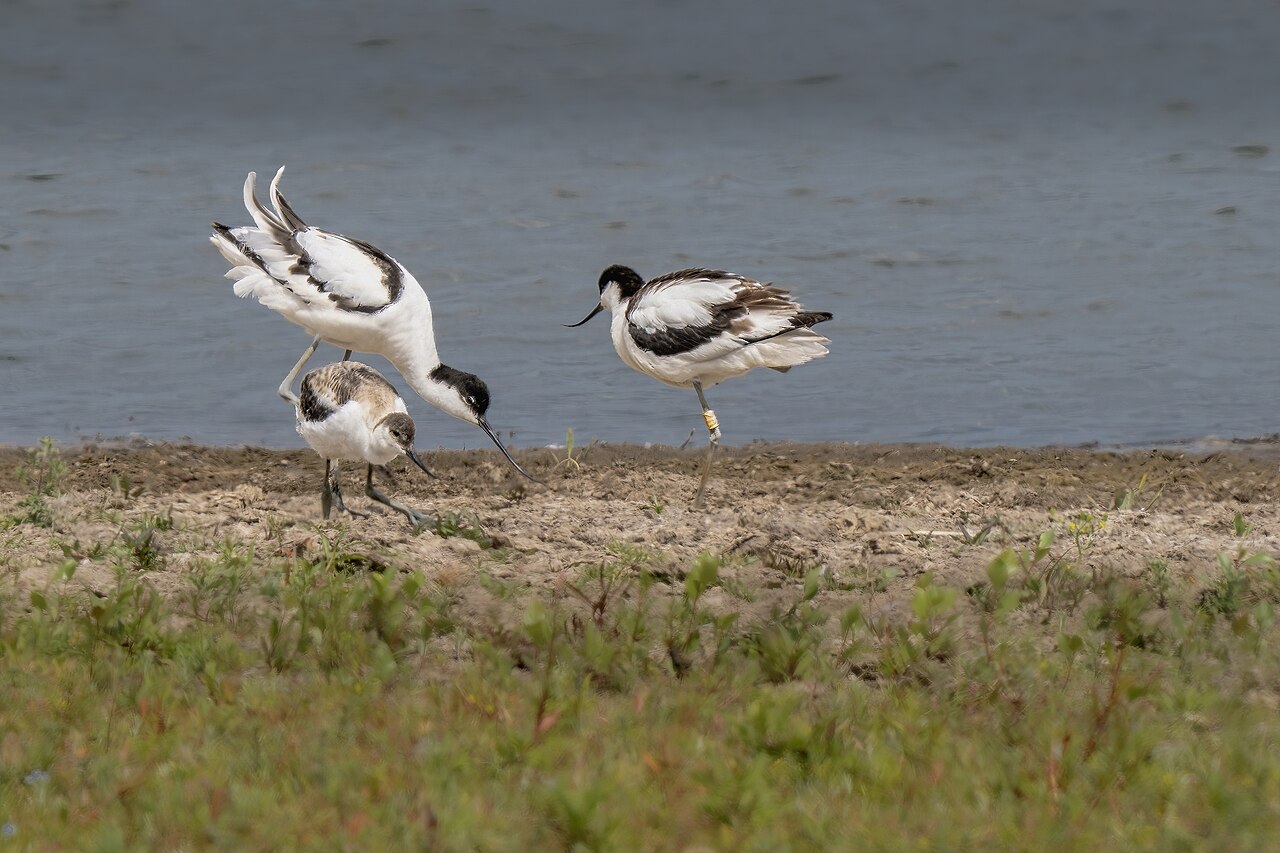
Breeding pied avocets (Recurvirostra avosetta) continued to decline across the Wadden Sea, according to a new trilateral monitoring report. The authors classified the overall trend as a moderate decrease both over the full 1991–2023 period and during the more recent 2012–2023 period.
The latest complete count found 6,700 breeding pairs
The report brings together monitoring from Denmark, Germany and the Netherlands. Annual data were used to calculate long- and short-term trends, while coordinated total counts provided periodic estimates of breeding-pair numbers. The most recent complete count in the report found 6,700 pairs in 2018, down from 7,179 in 2012 and 12,389 in 2001.
Long-term declines were recorded in all four reporting regions: Denmark, Schleswig-Holstein, Lower Saxony and Hamburg, and the Netherlands. The report says declines have also persisted during the recent decade, except for a stabilisation in the Netherlands. At the Wadden Sea level, however, the latest twelve-year assessment remained negative.
Persistently low breeding success is the leading explanation
The authors identify persistently low breeding success across the Wadden Sea as a likely main driver of the decline. Pied avocets often nest along the mainland coast on silty mudflats, where mammalian predators can cause heavy losses. Larger groups also breed in coastal wetlands, and some sites are protected with electric fencing. Flooding and cold or stormy weather during chick rearing in May and June are listed as other possible causes of failure.
The report is an assessment of monitoring patterns rather than a test of what caused the decline. Its latest complete population count dates from 2018, although the trend series extends through 2023, and the detailed analysis of breeding-success data is still being prepared. Predation, flooding and adverse weather are therefore presented as possible causes associated with nest and chick losses, not as quantified contributions to the overall decline.
Population & status
Related news
Ringed Pied Avocet Set a UK Longevity Record at 36 Years
A Pied Avocet ringed as a nestling at Titchwell Marsh on 2 July 1990 was identified alive at…
Read story →
Fungal Communities Differed Across Pied Avocet Breeding Substrates
Around ten Pied Avocet nest sites in China's Yellow River Delta, researchers detected 9,980 fungal DNA variants but…
Read story →
Female Pied Avocets Migrated Farther Than Males
The standardized migration-distance measure averaged 1,928 kilometres for GPS-tracked female pied avocets and 1,277 for males; females also…
Read story →SPECIES IN THIS STORY
Species in this story
Independent research and conservation news archive
Did you find this information useful?
Wildlife Vagabond is independently built and maintained. Voluntary support helps cover source verification, hosting and continued work on research and conservation news.
Support Wildlife VagabondThe news archive will remain freely available.