
Female Pied Avocets Migrated Farther Than Males
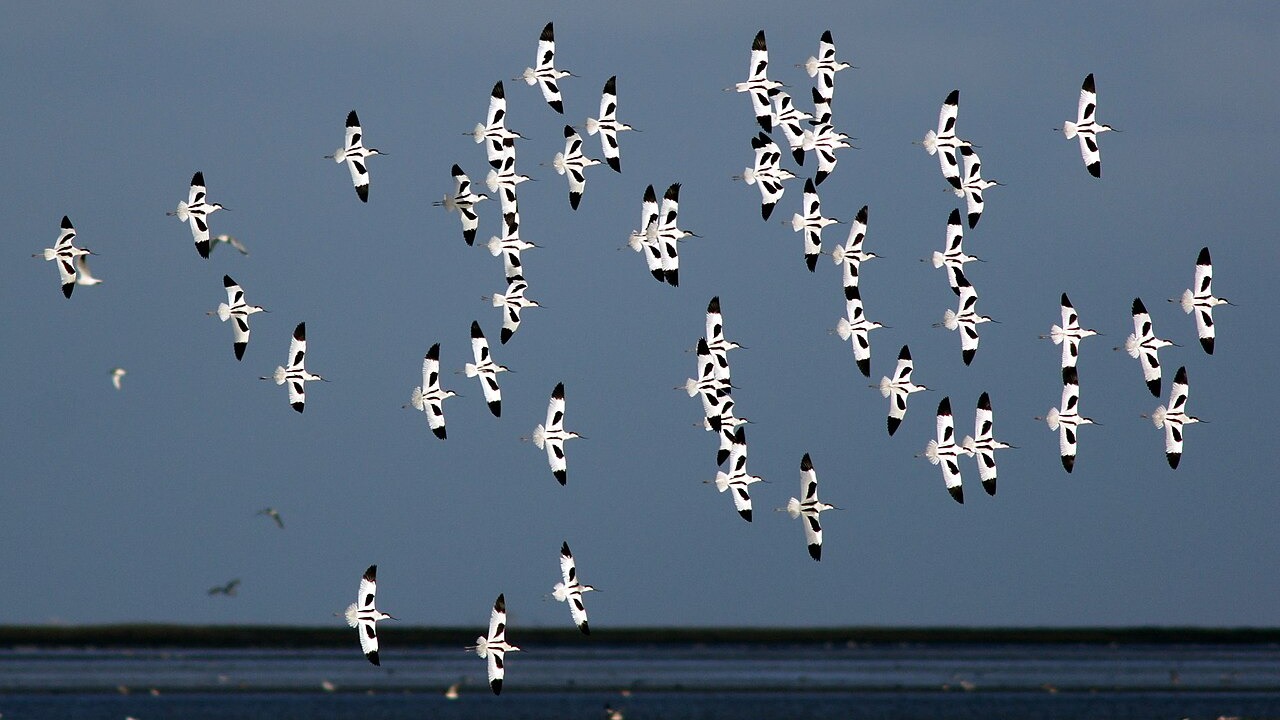
Female pied avocets (Recurvirostra avosetta) migrated substantially farther south than males in a GPS study of birds breeding in northern Europe. The study’s standardized migration-distance measure averaged 1,928 kilometres for females and 1,277 kilometres for males, and females used wintering sites at more southerly latitudes. These values are straight-line great-circle distances used for comparison, not the total length of the birds’ actual GPS flight paths.
Researchers fitted 122 adults with solar-powered GPS loggers weighing six to nine grams. The birds were caught at nine breeding colonies in Germany, the Netherlands and Poland. Complete tracks and individual variables were not available for every bird; the sex comparison for migration distance used 43 females and 51 males. A stopover was defined as an interruption of migratory flight lasting more than one hour at one site.
For a standardized comparison, migration distance was calculated as the great-circle distance rather than the actual path flown. The first movement of Polish breeders from their colonies to the Wadden Sea was excluded from several migration calculations because the Wadden Sea was used as the common migration starting point. The tracking data were then used to compare timing, standardized distance, migration speed and stopovers between sexes, seasons and breeding regions.
Most birds followed the East Atlantic Flyway. The Tejo Estuary in Portugal was the most frequently used wintering site, receiving 19 tracked individuals, while 87 per cent wintered in the United Kingdom, France, Spain or Portugal. Four birds crossed the Alps on their way to northern Italy, documenting a less common inland route.
Females left the Wadden Sea earlier in autumn and arrived at their wintering sites earlier than males. Males remained in the Wadden Sea longer after breeding. In spring, females left their wintering grounds earlier, but the sexes did not differ significantly in arrival time at the Wadden Sea or the breeding colonies. Spring migration was faster and included more, shorter stopovers than the slower autumn journey.
The Wadden Sea was a key fuelling hub
The authors identify the Wadden Sea as a central fuelling hub, including for most birds breeding at Poland’s Szczecin Lagoon before they continued south. They caution that the Polish sample was relatively small and lacked spring tracks, and that the first flight from Polish colonies to the Wadden Sea was excluded from several migration calculations.
One possible explanation for the sex difference is lower wing loading in females: less body mass relative to wing size can improve flight economy over long distances. Because wing area was not measured, the study used body mass divided by wing length as a proxy rather than measuring true wing loading directly. Females had a lower value, which is consistent with — but does not prove — greater flight efficiency. Other explanations, including differences in cold tolerance and winter competition, also remain hypotheses.
Behaviour
Related news
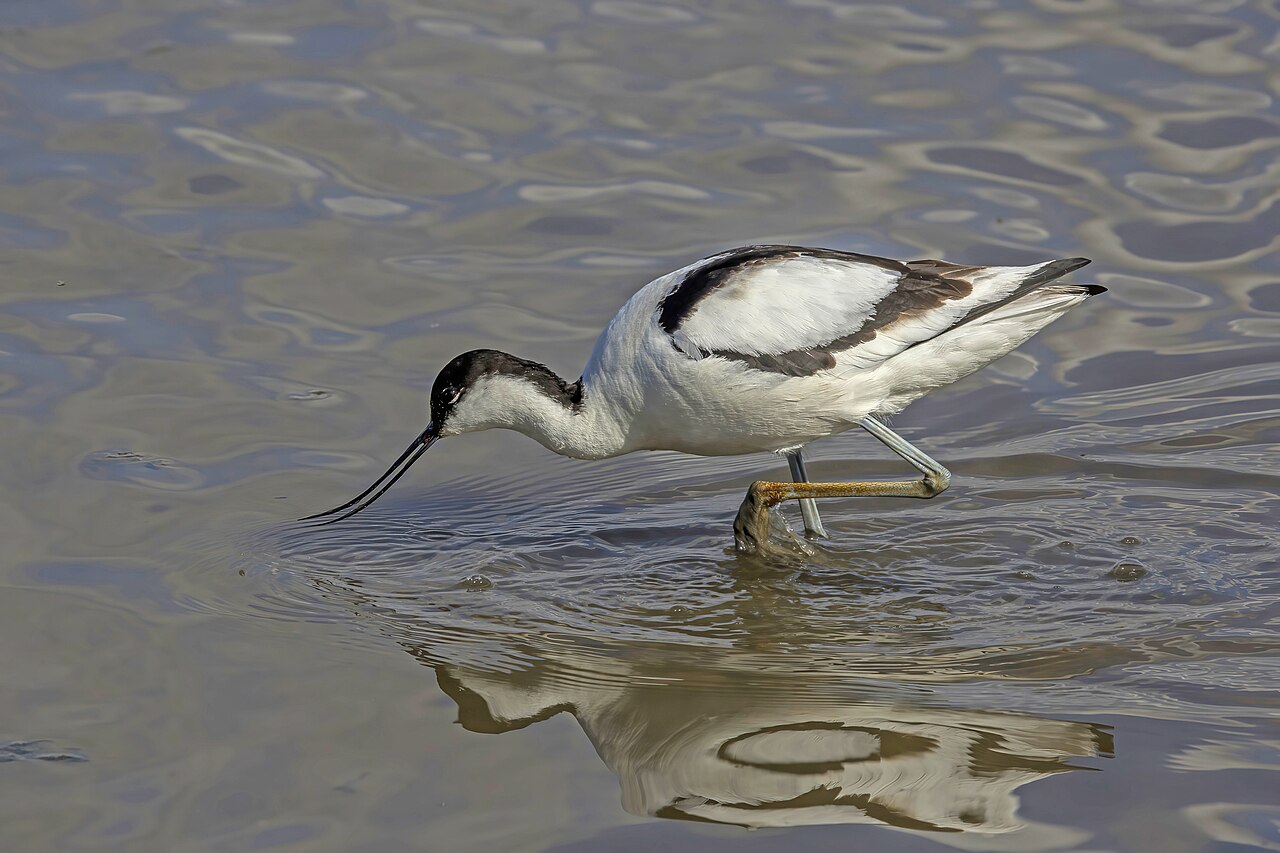
Ringed Pied Avocet Set a UK Longevity Record at 36 Years
A Pied Avocet ringed as a nestling at Titchwell Marsh on 2 July 1990 was identified alive at…
Read story →
Fungal Communities Differed Across Pied Avocet Breeding Substrates
Around ten Pied Avocet nest sites in China's Yellow River Delta, researchers detected 9,980 fungal DNA variants but…
Read story →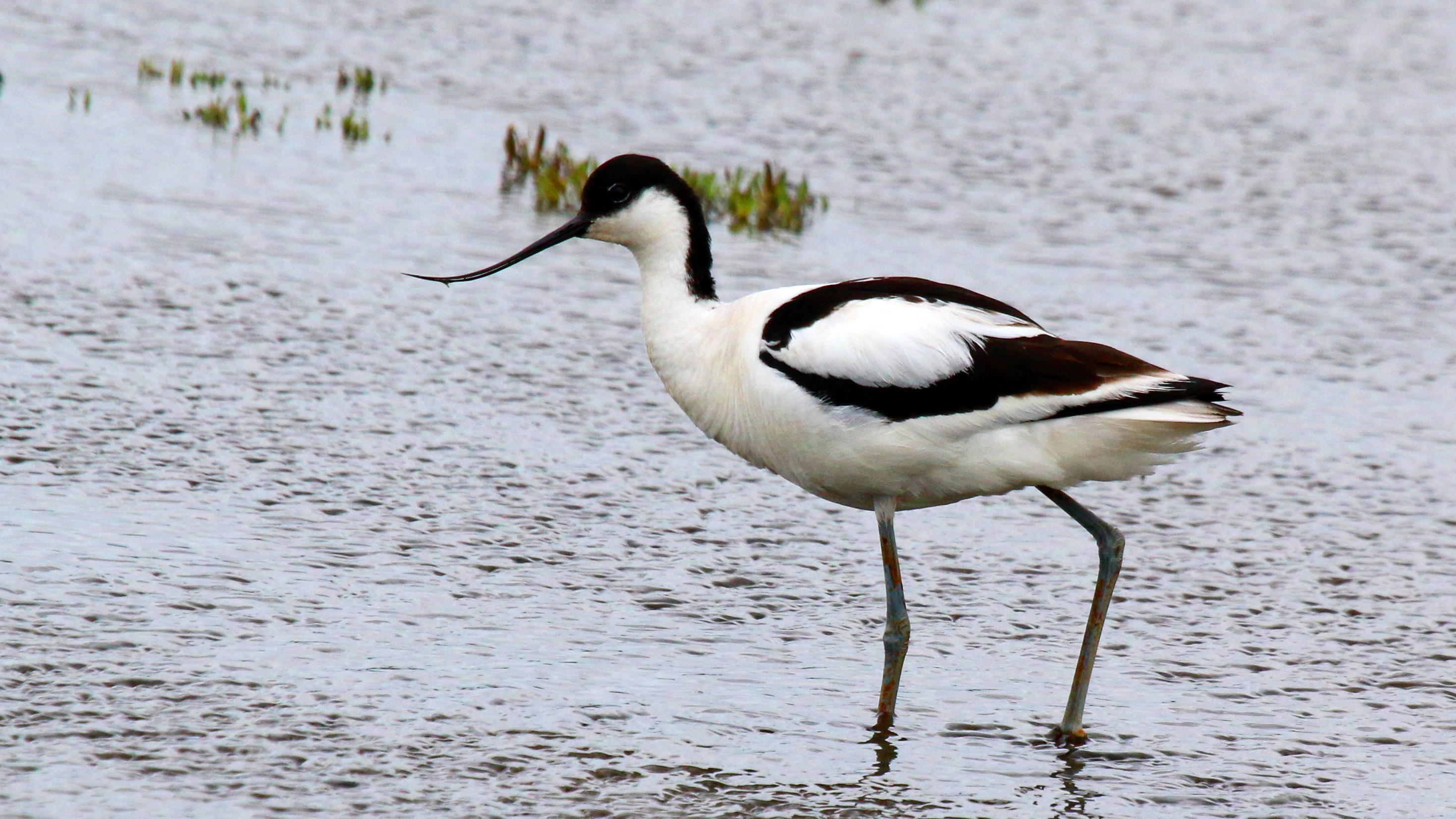
Pied avocet calls became a test for counting birds by sound
BioDCASE 2026 made pied avocet an optional target for estimating known aviary populations from hundreds of thousands of…
Read story →SPECIES IN THIS STORY
Species in this story

Independent research and conservation news archive
Did you find this information useful?
Wildlife Vagabond is independently built and maintained. Voluntary support helps cover source verification, hosting and continued work on research and conservation news.
Support Wildlife VagabondThe news archive will remain freely available.