
Helmeted Guineafowl Had Denser Support Tissue Along the Wing’s Leading Edge Than Domestic Chickens
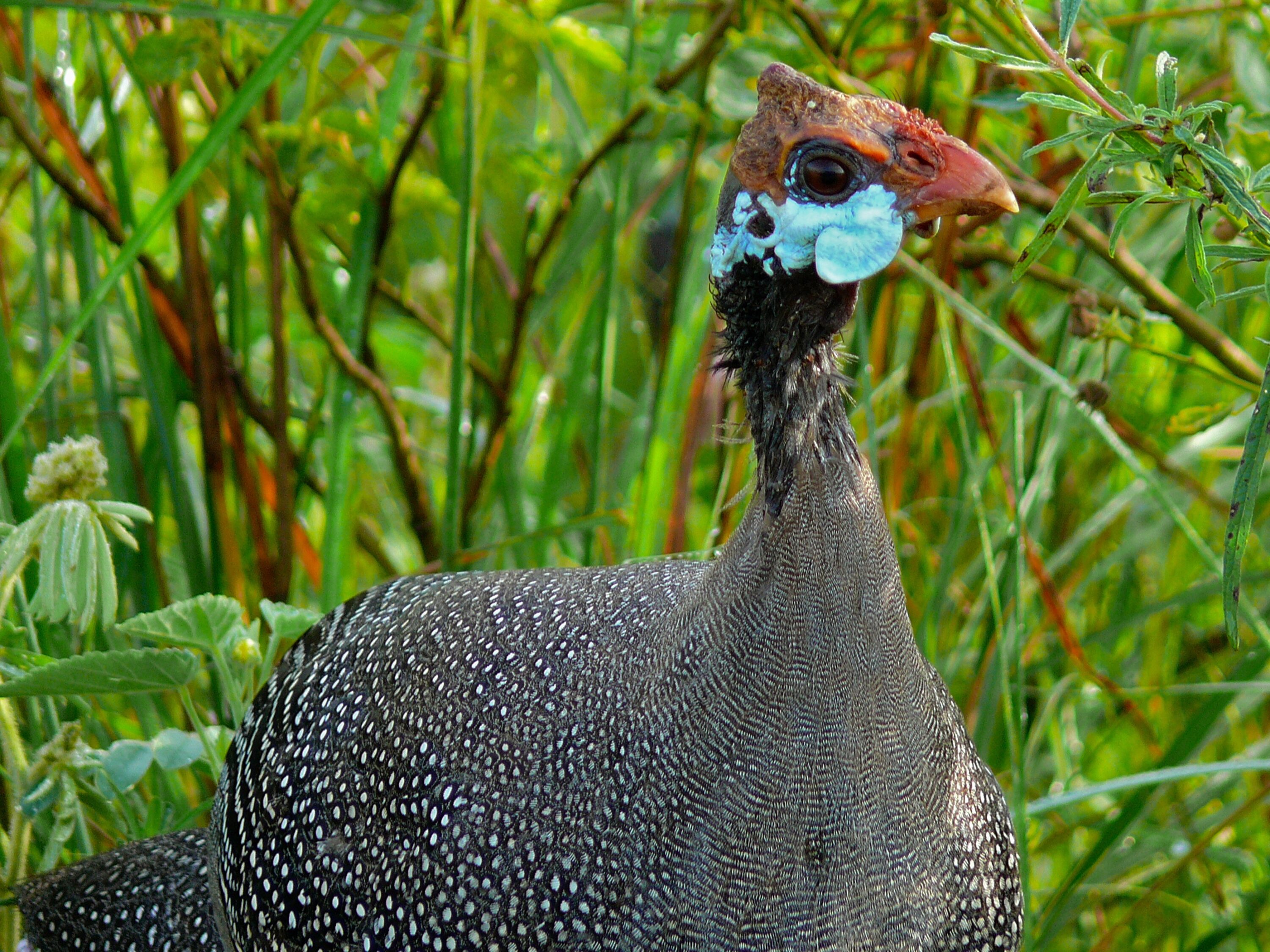
A comparative anatomy study published on 17 July 2026 found structural differences in the wing patagia of helmeted guineafowl (Numida meleagris) and domestic chickens (Gallus gallus domesticus). The researchers examined 15 guineafowl and 14 chickens, all 6–7 months old and domestically reared under the same husbandry and diet. The patagia are folds of skin forming parts of the wing membrane; the propatagium lies along the leading edge between the upper arm and forearm and helps maintain the wing’s shape during flight.
The rearward metapatagium, between the body and upper arm, also differed between the species. Chickens had two muscles supporting this region, whereas guineafowl had only one of them.
The clearest differences were in the propatagium. Guineafowl had markedly denser connective tissue, making the boundary of one supporting ligament difficult to separate reliably during gross dissection. The propatagial ligament itself was shorter in absolute terms, although its length remained proportionally similar relative to the major wing bones in both species. At full extension, its distal insertion averaged 3.15 mm thick in guineafowl and 2.44 mm in chickens.
The authors interpret the denser connective tissue and thicker distal attachment as structural reinforcement of the wing’s leading edge consistent with the greater mechanical demands of flight in guineafowl. The study did not, however, measure physical activity, flight frequency or mechanical loading directly, and both groups were domestically reared. The authors therefore note that the observed differences could reflect developmental plasticity—anatomical traits shaped during development by the conditions an animal experiences—genetic divergence or a combination of the two.
Anatomy & morphology
Related news

Immature Helmeted Guineafowl Consumed More Animal Food in Nigerian Savanna
A study of 67 wild helmeted guineafowl in Nigeria identified 42 types of food and found that immature…
Read story →
CT Reveals the Organs and Blood Vessels Inside a White-backed Vulture
A contrast-enhanced CT scan of one adult male white-backed vulture revealed major organs and vessels, while also showing…
Read story →
Kestrels Had More Densely Packed Mucous Glands Than Storks
A small study in Türkiye found roughly twice the density of mucus-producing glands in common kestrels’ windpipes as…
Read story →SPECIES IN THIS STORY
Species in this story
Independent research and conservation news archive
Did you find this information useful?
Wildlife Vagabond is independently built and maintained. Voluntary support helps cover source verification, hosting and continued work on research and conservation news.
Support Wildlife VagabondThe news archive will remain freely available.