
Lutein Added a Pigmentary Component to Peafowl Iridescent Coloration
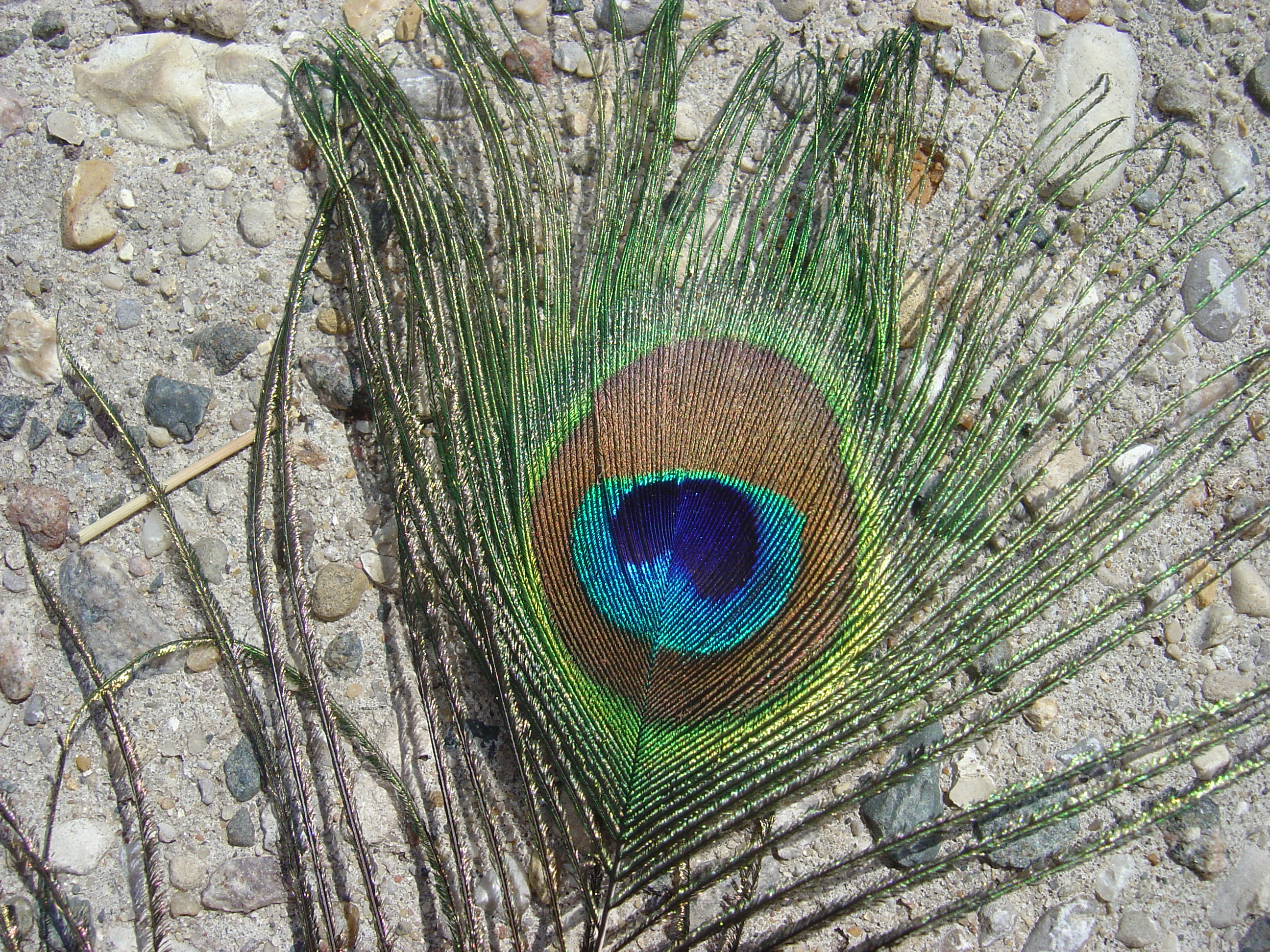
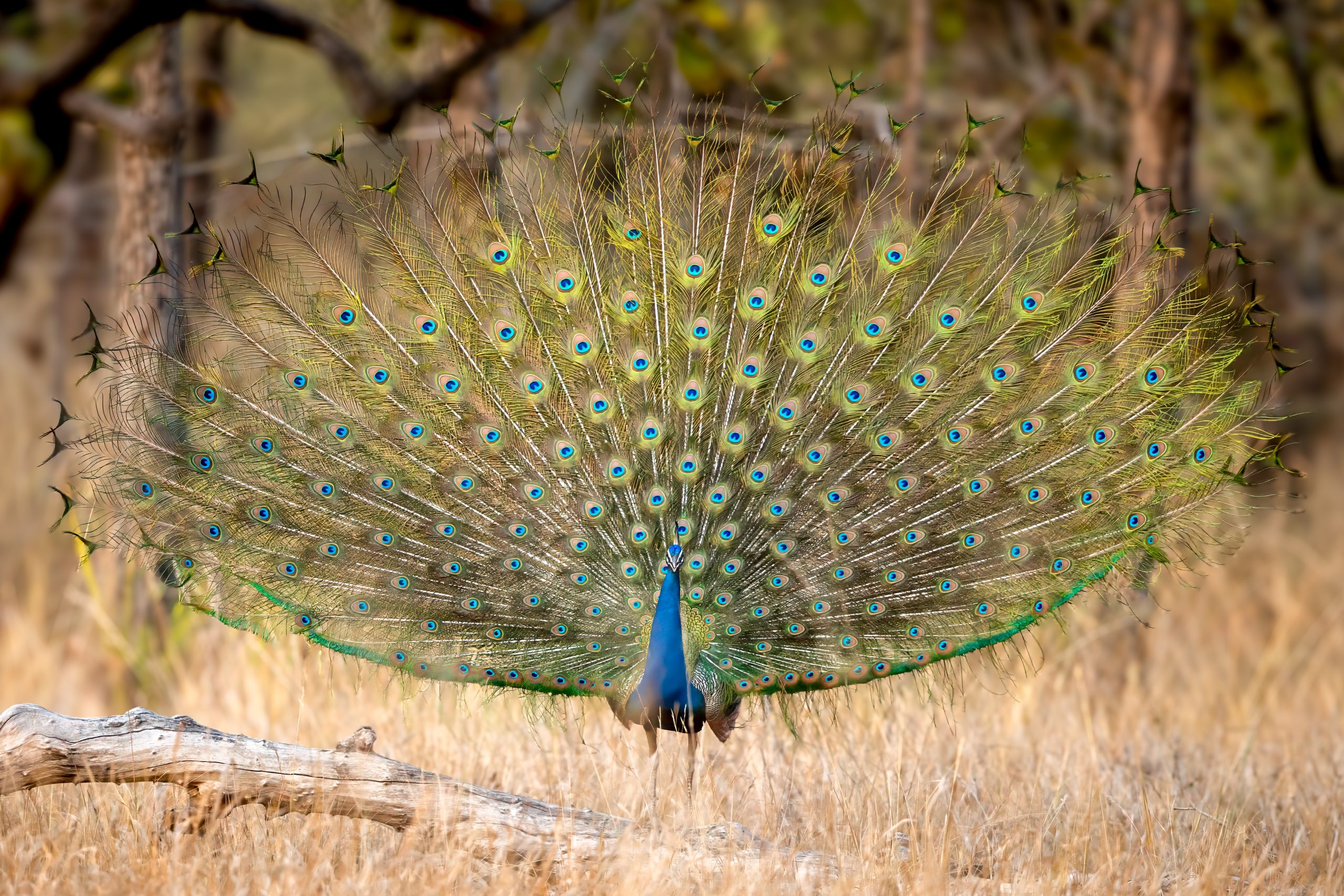
A biochemical and transcriptomic study of male Indian peafowl (Pavo cristatus) and green peafowl (Pavo muticus) found that their iridescent feather colors are not produced by structural coloration alone. Structural color arises when microscopic arrangements of melanin, keratin and air alter how light is reflected, rather than from pigment alone. The researchers detected the xanthophyll carotenoid lutein in all analysed feather samples and found differences in the expression of genes associated with melanin and carotenoid deposition between iridescent and non-iridescent feather follicles.
Feathers and feather follicles were sampled from three adult males of each species. Indian peafowl came from Beijing Agricultural College and green peafowl from Qinhuangdao Wildlife Park. Samples were collected from the rump, mantle and breast, while the eyespots of train feathers were further separated into green, brown, blue and purple regions.
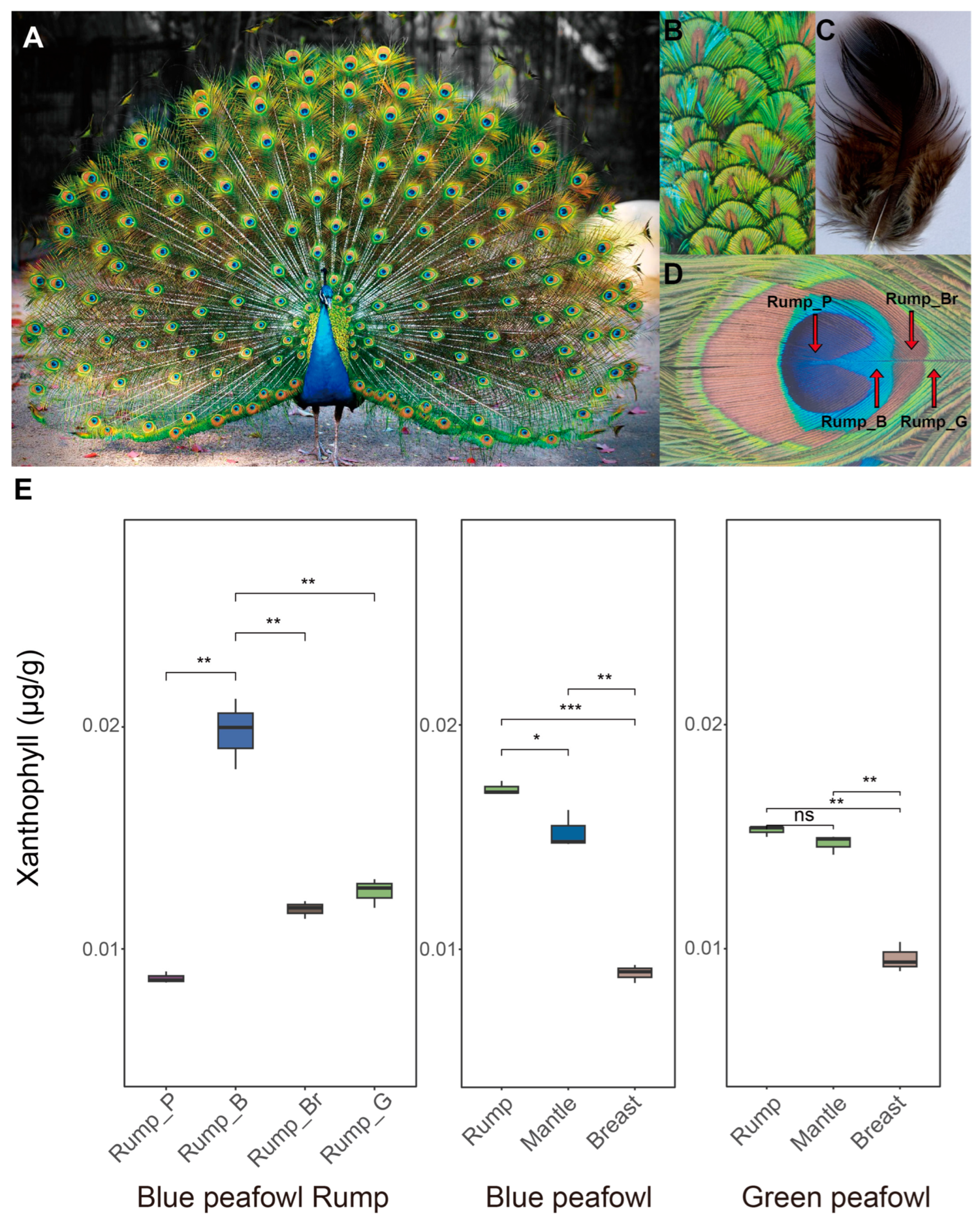
Colored feathers contained more lutein than breast feathers
Lutein concentrations ranged from 0.0082 to 0.021 µg/g. In both species, colored rump and mantle feathers contained significantly more lutein than non-iridescent breast feathers. In Indian peafowl, train feathers had about twice the lutein concentration of breast feathers, and the blue region of the eyespot contained the highest concentration among the four eyespot colors.
ASIP and GSTA2 expression differed between iridescent and breast follicles
Transcriptome analysis — a comparison of which genes were active in the feather follicles — showed markedly lower expression of the melanin-regulating gene ASIP in rump follicles than in breast follicles. ASIP expression in rump follicles was less than one-thirtieth of the breast level in Indian peafowl and less than one-twelfth in green peafowl, a pattern consistent with greater eumelanin deposition in the iridescent regions. The carotenoid-deposition-related gene GSTA2 was expressed more strongly in rump follicles; in green peafowl, expression was about three times the breast level. The authors interpret the results as evidence that ordered melanin-based nanostructures provide the physical foundation for iridescence, while lutein acts as a pigmentary filter that absorbs particular wavelengths and helps fine-tune the final hue.
Molecular biology & biochemistry
Related news
Similar Peafowl Eyespot Colors Came From Different Feather Nanostructures
Indian and green peafowl produced similar iridescent eyespot colors through different nanoscale feather architectures, while neck, back and…
Read story →
Monocrotophos Poisoning Killed 121 Indian Peafowl Across Eight Tamil Nadu Incidents
Eight mass-mortality incidents in Tamil Nadu between 2019 and 2021 killed 121 Indian peafowl. Toxicological testing of 41…
Read story →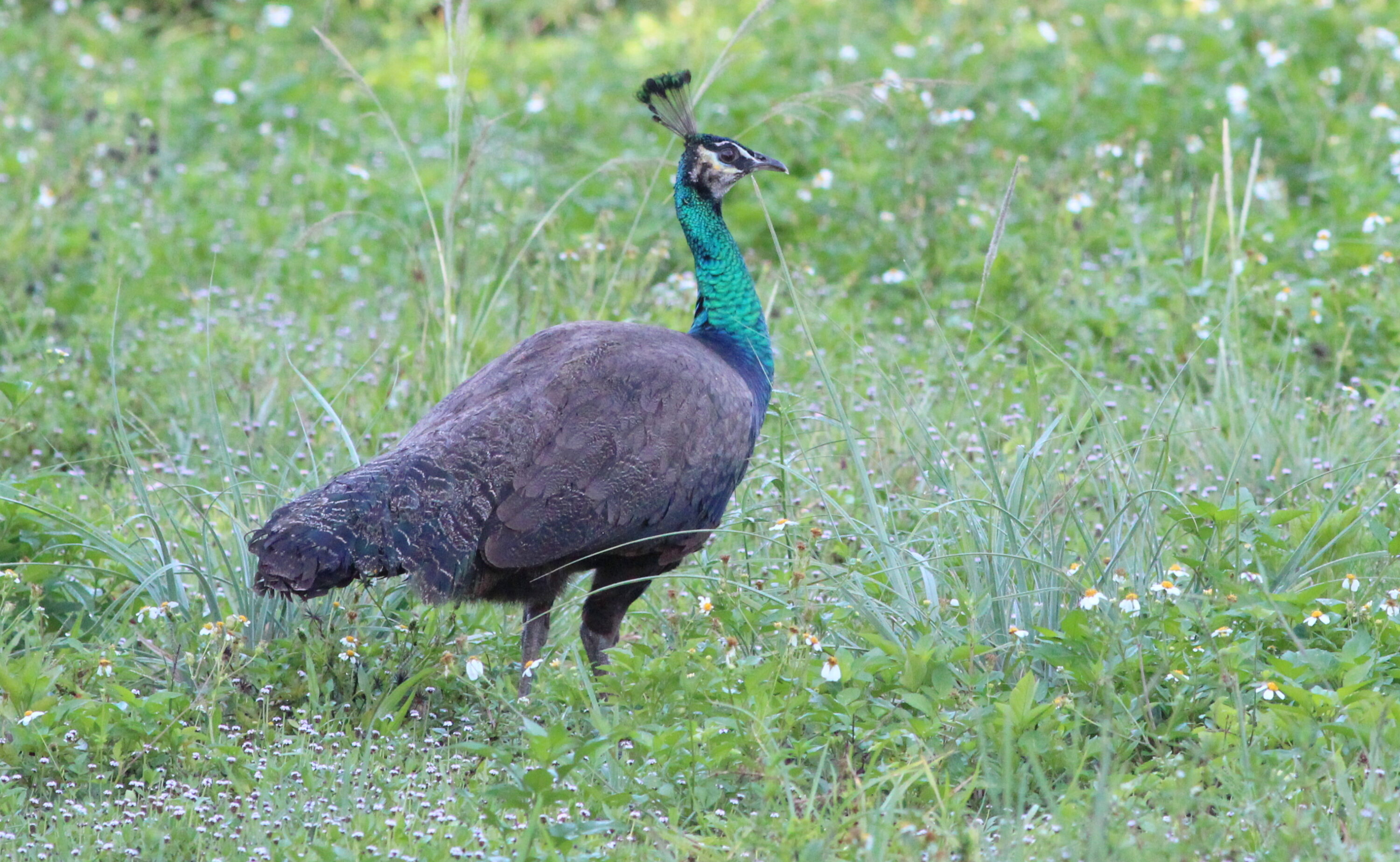
Indian Peafowl and Sri Lankan Junglefowl Allopreening Was Documented in the Wild in South Asia for the First Time
A female Indian peafowl and a male Sri Lankan junglefowl were observed preening each other for about 10…
Read story →SPECIES IN THIS STORY
Species in this story
Independent research and conservation news archive
Did you find this information useful?
Wildlife Vagabond is independently built and maintained. Voluntary support helps cover source verification, hosting and continued work on research and conservation news.
Support Wildlife VagabondThe news archive will remain freely available.