
Malabar Pied Hornbill Encounter Rates Were Lower Where Forest Basal Area Was Higher in Kali Tiger Reserve
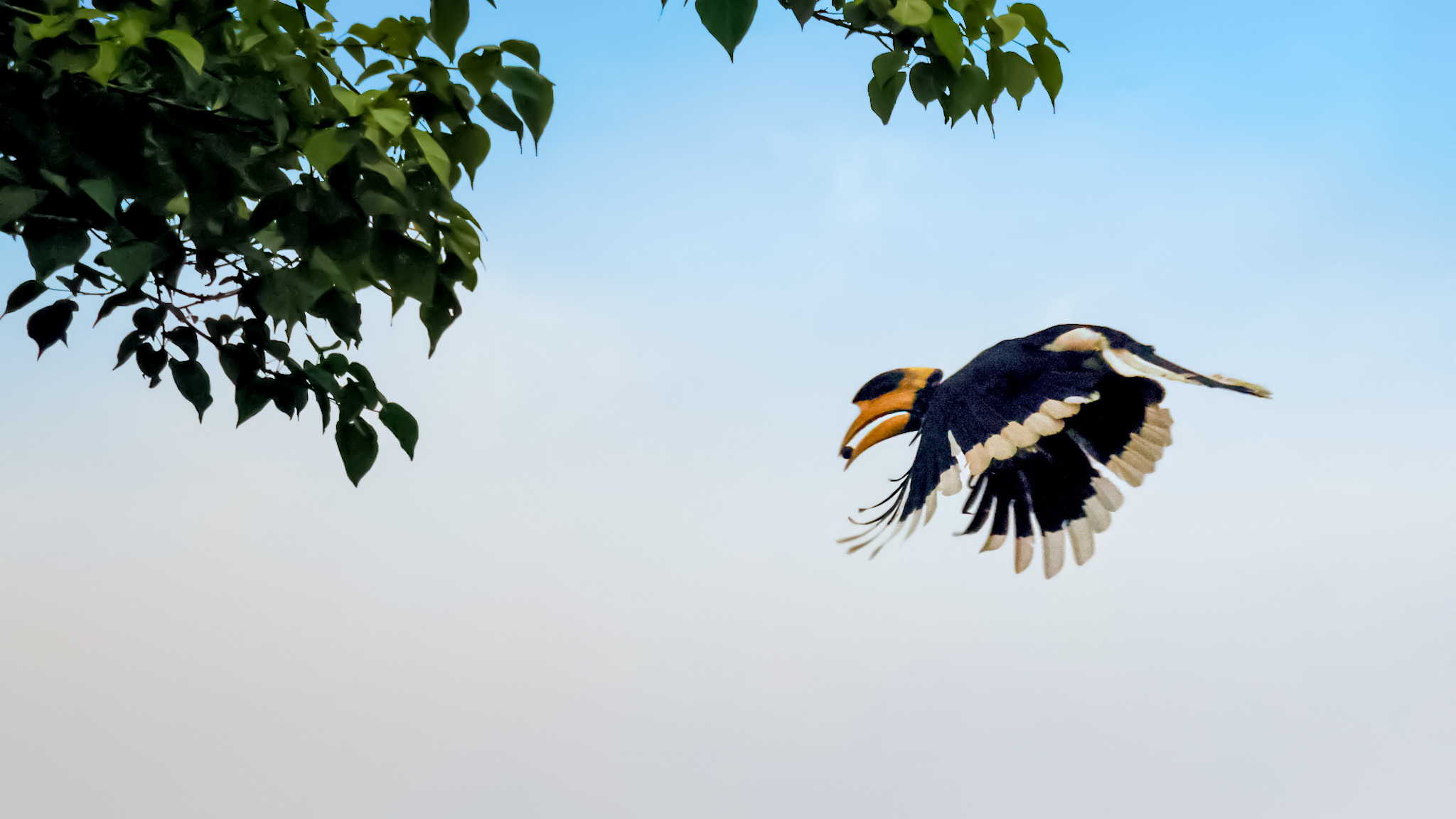
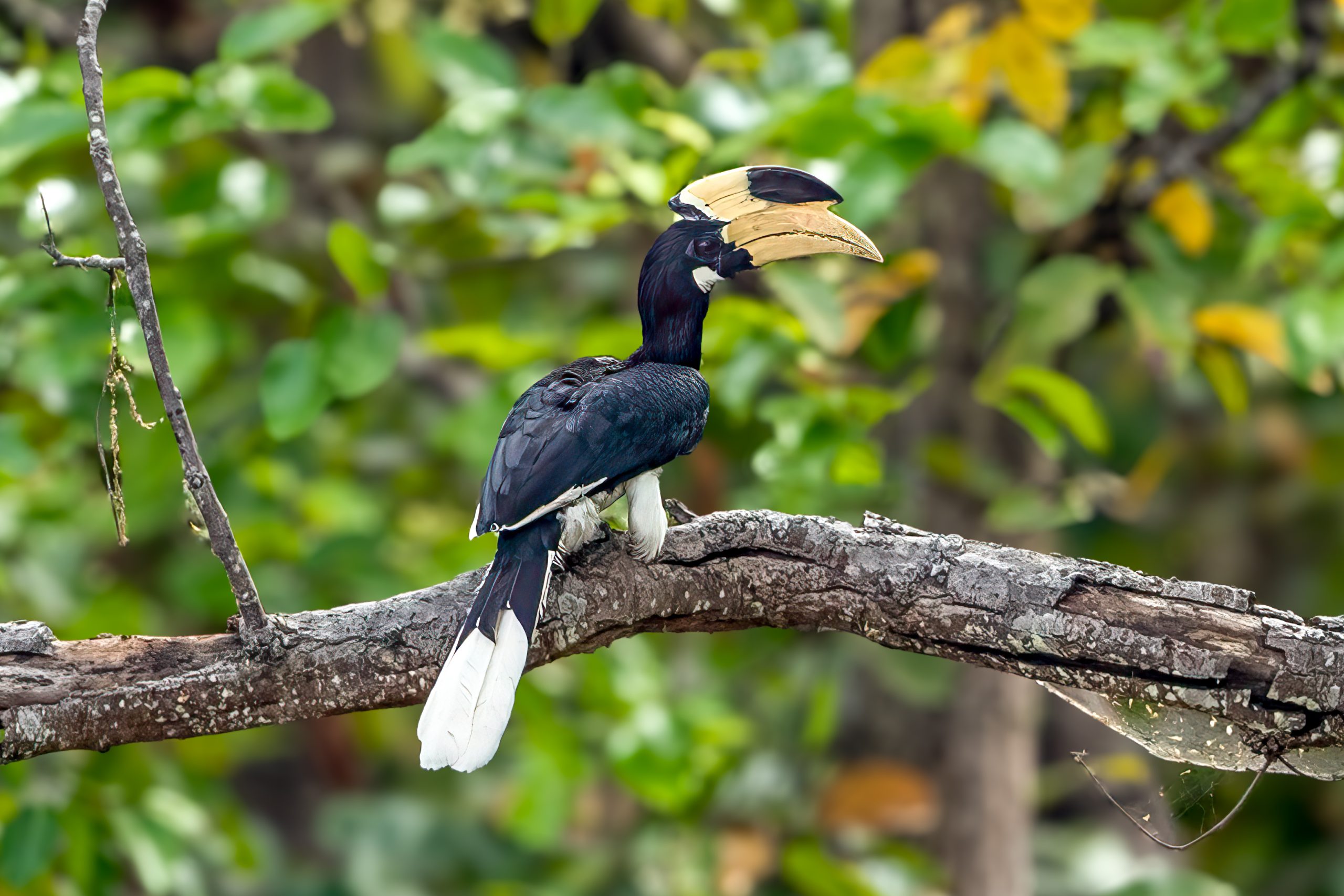
A 2026 preprint from Kali Tiger Reserve in Karnataka, India, reports how three hornbill species were distributed across the reserve during the breeding season. Researchers surveyed Malabar grey hornbill (Ocyceros griseus), Malabar pied hornbill (Anthracoceros coronatus) and great hornbill (Buceros bicornis) along transects in seven management ranges and also recorded opportunistic detections. A transect is a fixed survey route that observers follow while recording birds, allowing encounter rates to be compared in a standardized way. Here, the rate describes how many hornbill flocks were detected per kilometre walked; it is not a direct estimate of population density.
Malabar pied hornbills were relatively scarce along the transects, with an overall encounter rate of 0.1 flocks per kilometre. Gund, Kadra and Phansoli had the highest range-wise encounter rates, at 0.3 flocks per kilometre, while Anshi, Castlerock and Kulgi were at 0.1 and none were recorded on transects in Kumbarwada. The researchers recorded 115 detections in total, of which 13 came from transect surveys and 102 were opportunistic. The encounter-rate calculations used the systematic transect detections; the opportunistic records helped map where the species occurred but were not additional birds in the rate calculation.
Encounter rates were lower where forest basal area was higher
Across the seven ranges, Malabar pied hornbill encounter rates were negatively correlated with forest basal area. Basal area sums the cross-sectional area of all tree trunks in a stand, usually measured at chest height, per unit of land. In practical terms, a higher value generally means that more of the stand is occupied by tree stems because there are more trees, larger trunks or both; it is a structural measure of the forest rather than a direct measure of canopy cover. The relationship was strong in the seven-range comparison, but it was based on only seven range-level data points and comes from a preprint that has not yet been peer reviewed, so it should be treated as preliminary. The authors interpret the pattern in light of the species’ association with moist deciduous and riverine habitats, where basal area can be lower than in evergreen forest. No significant relationship was found with stem density, canopy height or density of known hornbill food trees.
Breeding-season behaviour may have reduced detections
The survey was carried out during the March–May breeding season, when females may remain inside nest cavities and vocal activity can be low. The authors therefore note that the low encounter rate for Malabar pied hornbills should be viewed in that seasonal context. They present the work as a baseline for repeated hornbill monitoring in the reserve using transects already established for wildlife surveys.
Ecology
Related news
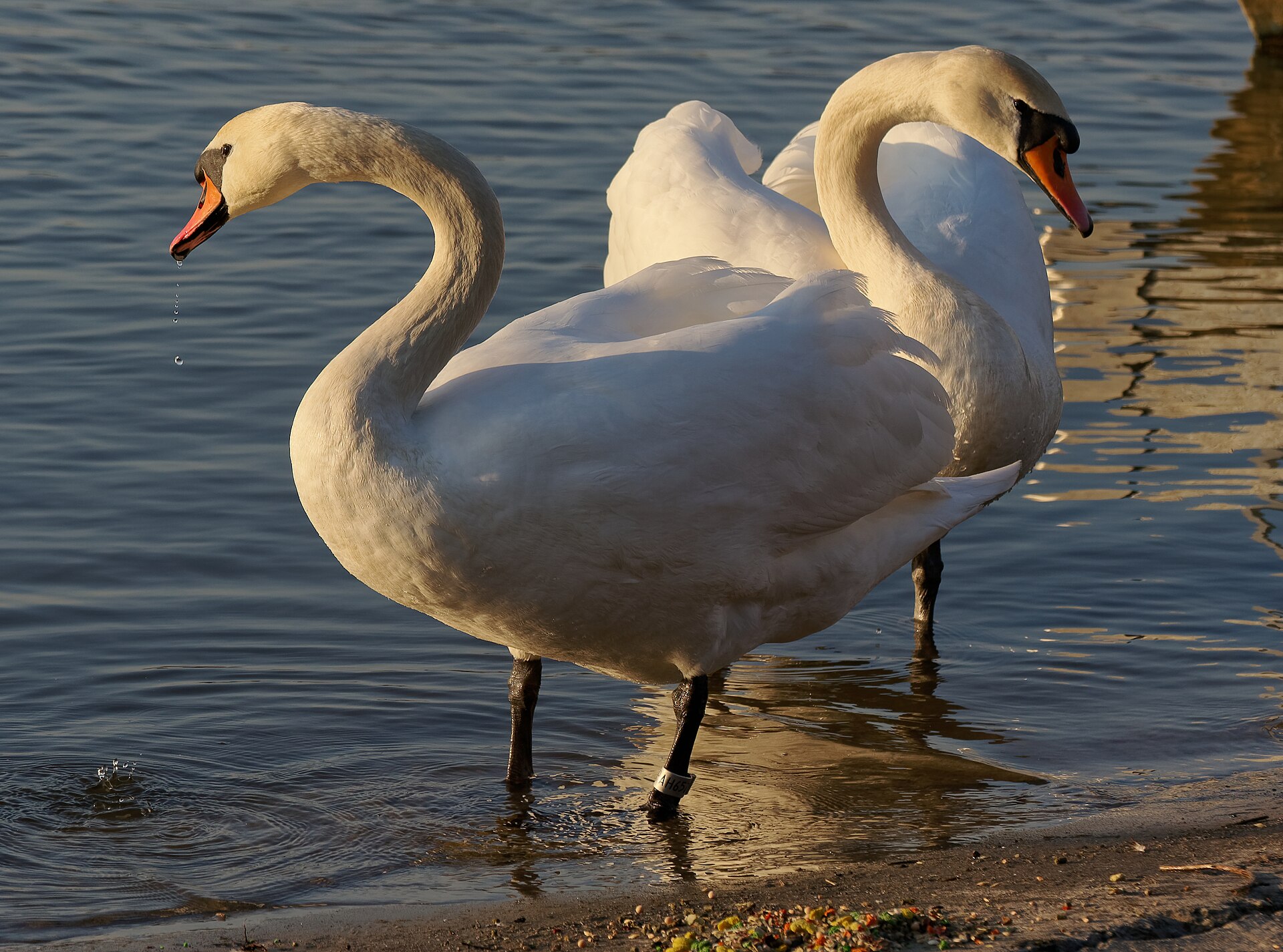
Inland Mute Swans Had Higher Winter Body Condition Despite Harsher Winters and Supplemental Feeding
A study of 853 mute swans from four Polish wintering regions found higher body condition inland than on…
Read story →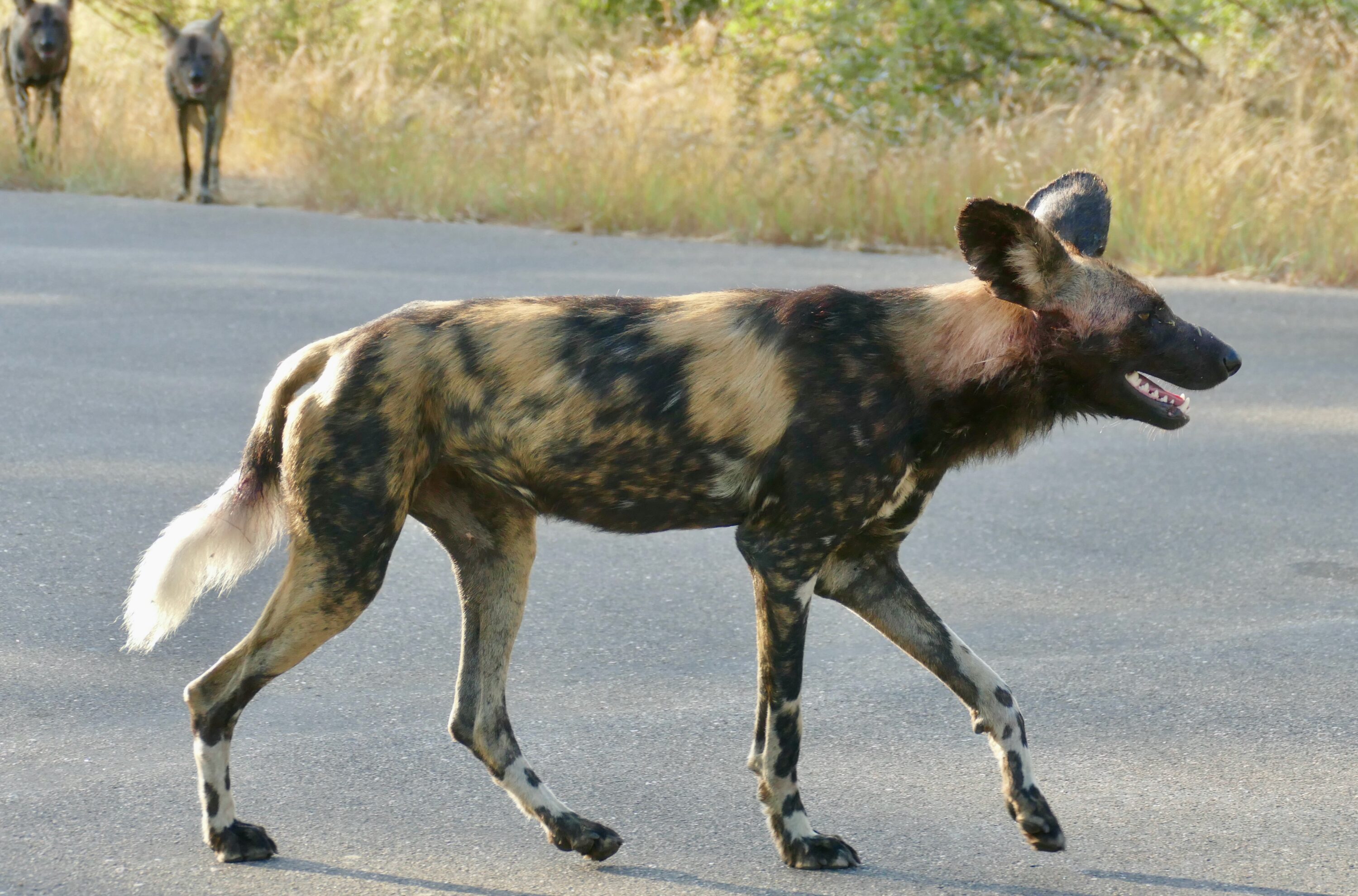
Gut Microbiomes Across Nine Kruger Mammals Clustered More Strongly by Dietary Group Than Species
A study of 89 quality-filtered faecal samples from nine wild mammals in Kruger National Park found that carnivores,…
Read story →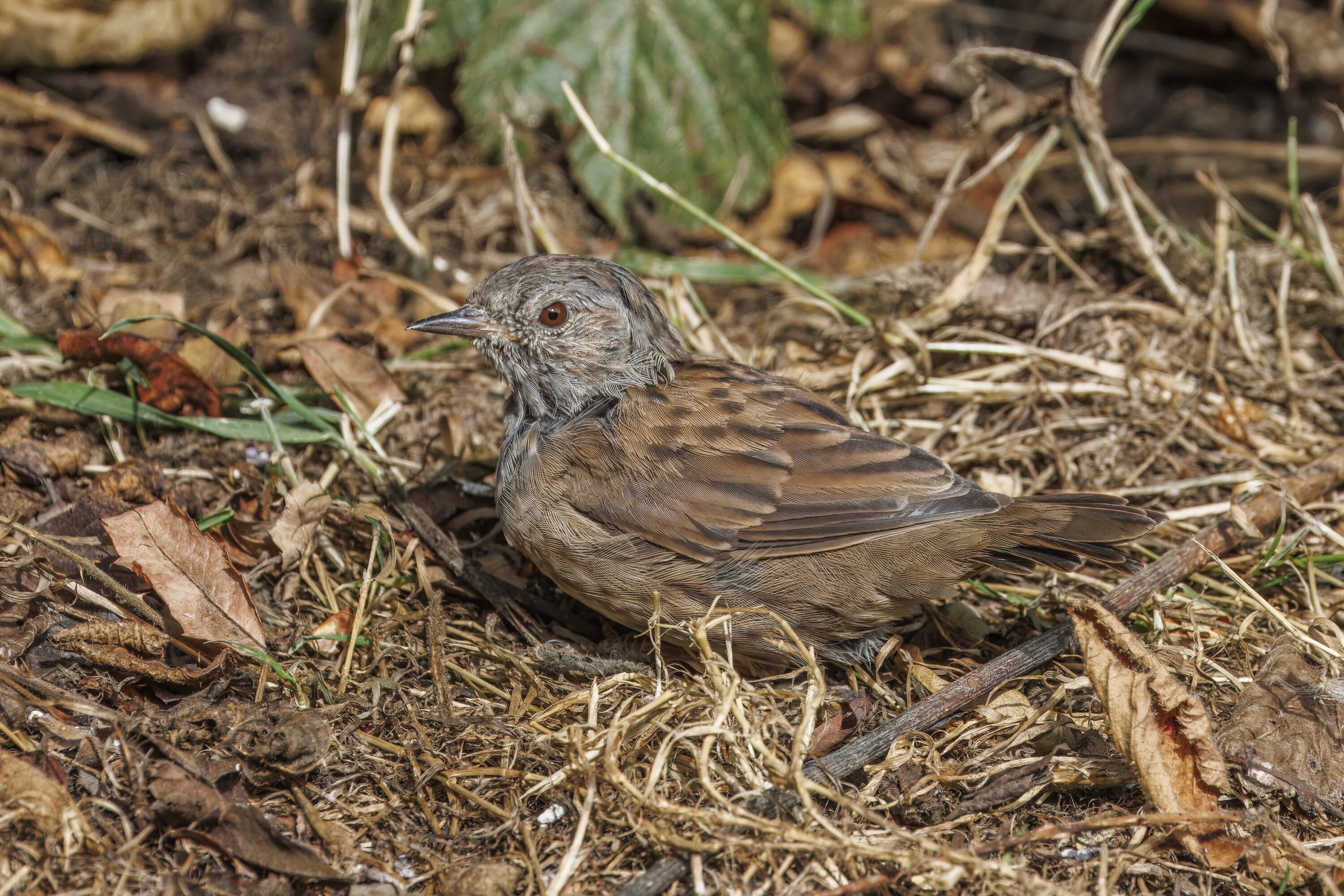
Dunnock Spring Passage Advanced by Up to 8.3 Days Over 61 Years at Hel
Standardised ringing data from northern Poland showed that the first, median and last phases of dunnock spring passage…
Read story →SPECIES IN THIS STORY
Species in this story
Independent research and conservation news archive
Did you find this information useful?
Wildlife Vagabond is independently built and maintained. Voluntary support helps cover source verification, hosting and continued work on research and conservation news.
Support Wildlife VagabondThe news archive will remain freely available.