
Connected Lion Core Habitat Was 55% Smaller in the Okavango Maximum-Flood Model
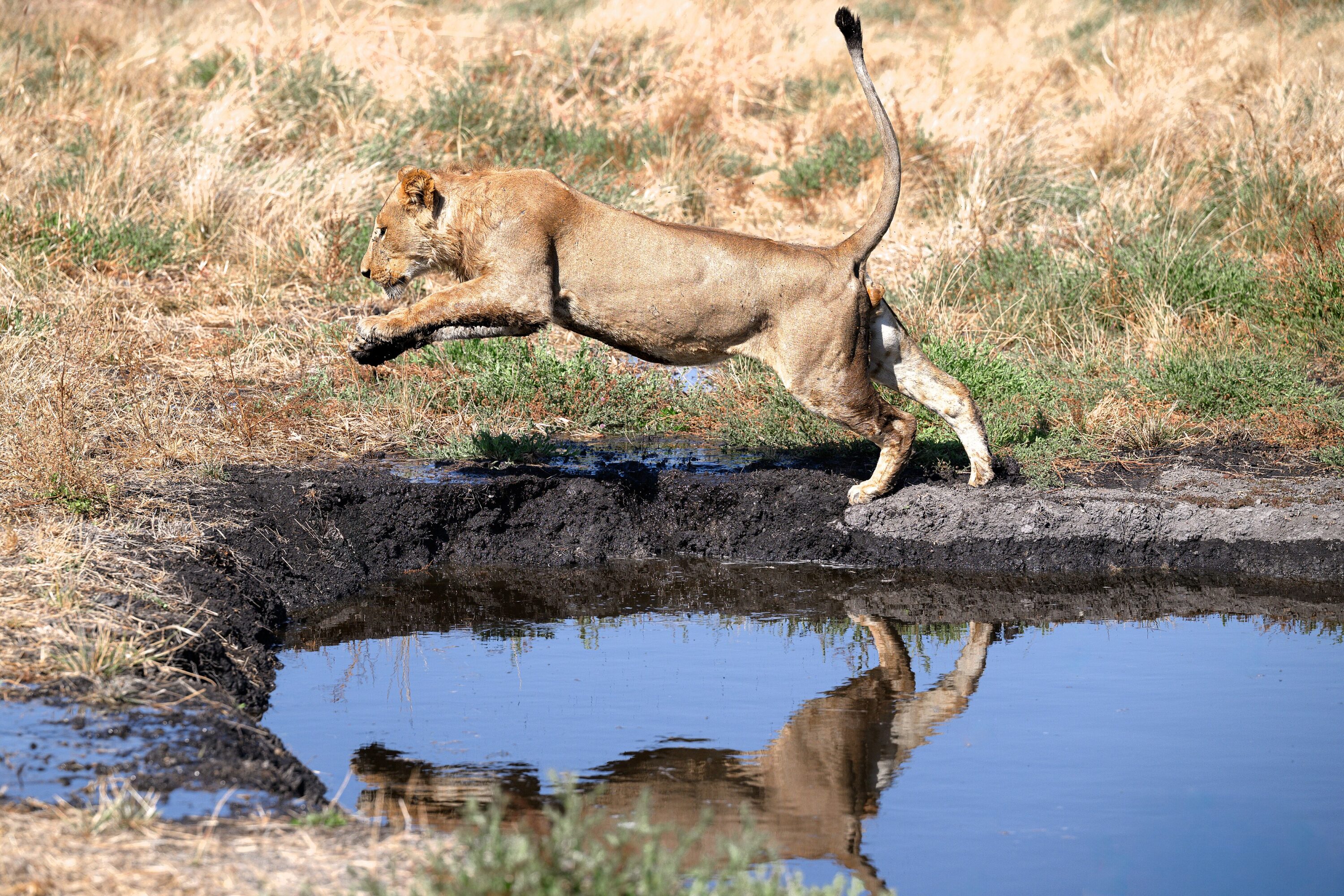
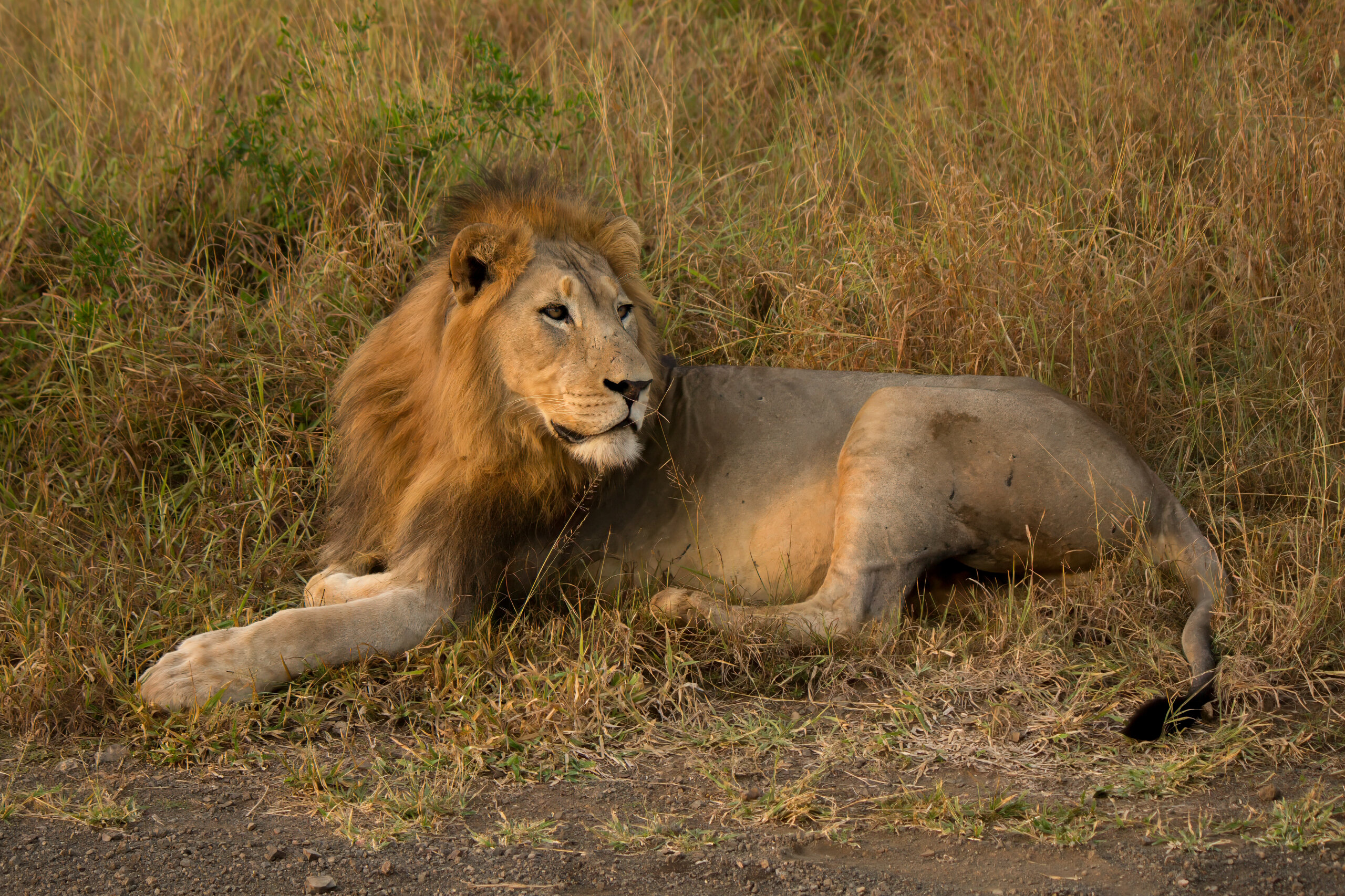
Seasonal flooding sharply changed the amount and connectivity of modelled lion (Panthera leo) core habitat in Botswana’s Okavango Delta. Under maximum-flood conditions, highly connected core habitat was 55% smaller than under minimum flood, and the western core disappeared from the model.
GPS data were converted into a map of movement resistance
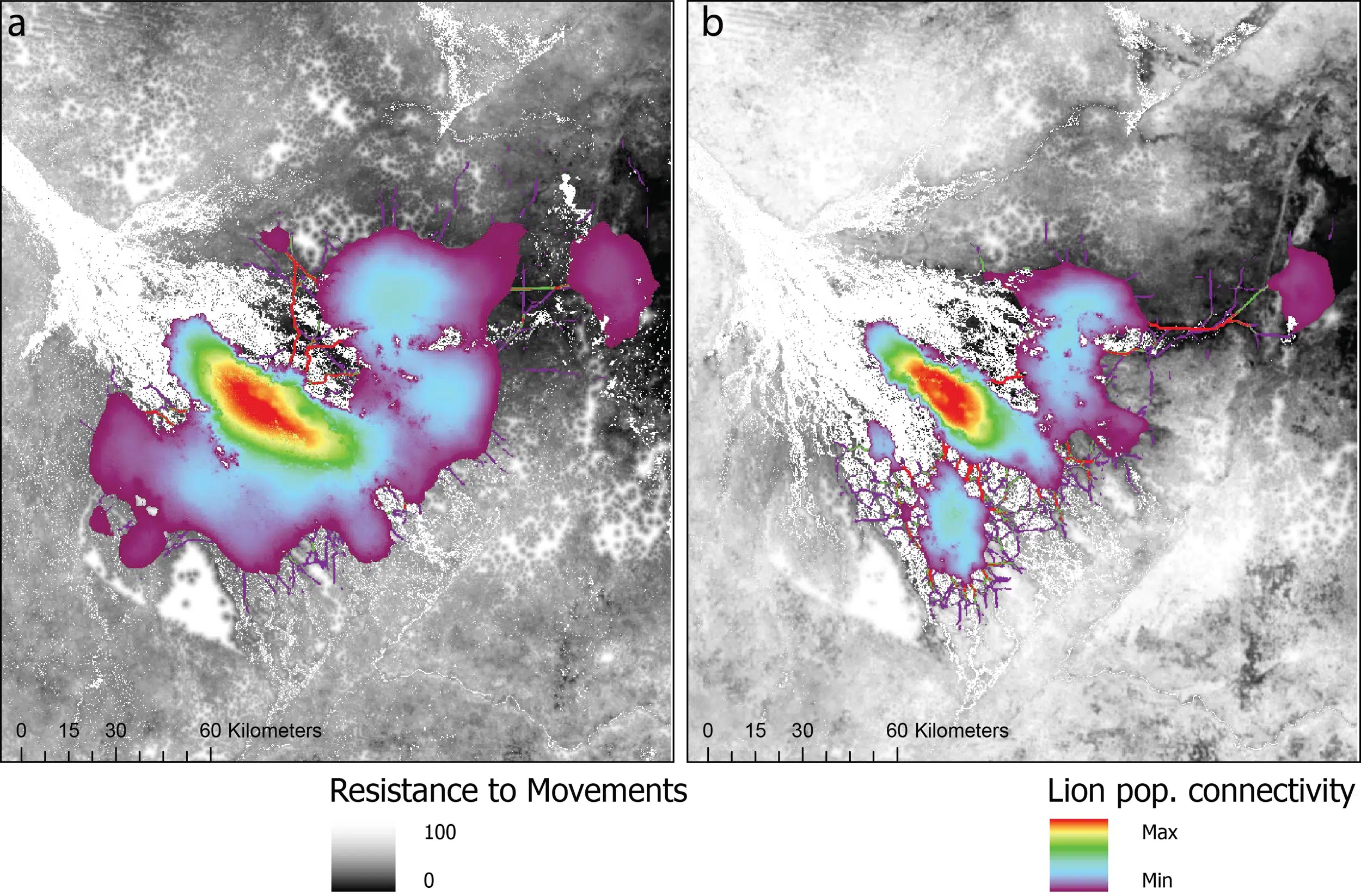
The study used GPS locations from 18 adult resident lions — eight females and ten males from nine prides — monitored between 2013 and 2016. For each flood season, researchers compared places the lions used with places that were available inside their movement ranges. Vegetation, flooding, distance to water, settlements and other landscape variables were then used to estimate where lions were more or less likely to move.
These resource-selection maps were converted into resistance surfaces. In practical terms, low resistance means the landscape was modelled as easier for lions to use and move through; high resistance means less suitable or more difficult movement conditions. Connectivity analyses then identified areas with concentrated low-resistance movement and the most favourable routes linking them. The resulting “core habitat” is therefore modelled highly connected lion-use space, not a direct map of every pride’s territory.
Highly connected core habitat fell from 8,936 to 4,038 km²
During minimum flood, defined as March–May, the model identified about 38,293 km² as suitable for lion use in and around the delta. About 8,936 km² of this formed highly connected core habitat, with relatively extensive links among central, western, southern and eastern parts of the system.
During maximum flood in June–August, modelled suitable area fell to about 24,634 km² and highly connected core habitat fell by 55% to about 4,038 km². The western core disappeared, and several corridors narrowed or were lost. When both seasonal maps were overlaid, only about 3,802 km² remained classified as core habitat under both flood conditions.
Lions strongly avoided areas near human settlements in both seasons. Riparian woodland remained important, while selection for open woodland changed with flood conditions.
High flood could concentrate pressure along the delta’s edges
At the western and southern edges, several modelled movement routes became narrow and terminated near the veterinary buffalo fence or areas with higher human density. The authors argue that when flooding makes more of the interior temporarily inaccessible, lions on the periphery may be pushed closer to livestock and people, increasing the potential for conflict and other human-caused mortality. This is a risk inferred from the movement models and existing edge pressures, not a measured increase in conflict during this study.
The researchers also used minimum- and maximum-flood seasons as proxies for the conditions that can dominate during longer multi-year or multi-decadal low- and high-flood phases. They suggest that prolonged high-flood periods could further weaken connections among lion groups and reinforce genetic isolation already documented in the region. The GPS study itself, however, covered 2013–2016 rather than following such long flood cycles directly.
A further limitation is that almost all tracked animals were resident adults; only one collared male was of dispersal age. Young dispersing lions can move through landscapes differently, so the authors note that the corridor estimates may be conservative. The main conservation message is therefore temporal: in a strongly seasonal wetland, the locations and strengths of lion cores and corridors should not be treated as fixed through time.
Ecology
Related news
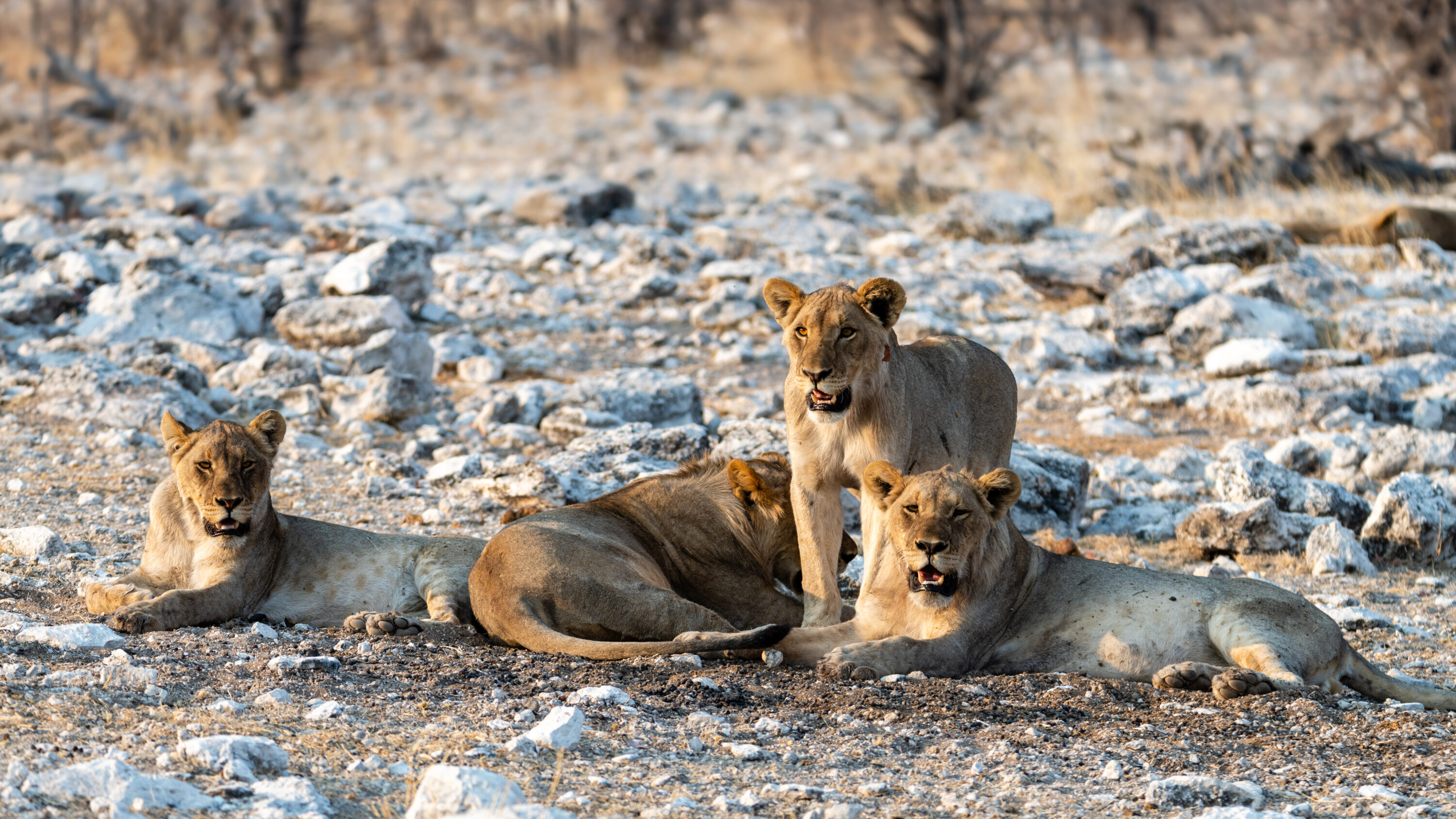
A Little-Known Microbial World Inside Lions’ Guts
Faecal samples from wild lions in Namibia gave researchers a much clearer picture of their gut bacteria. Microbial…
Read story →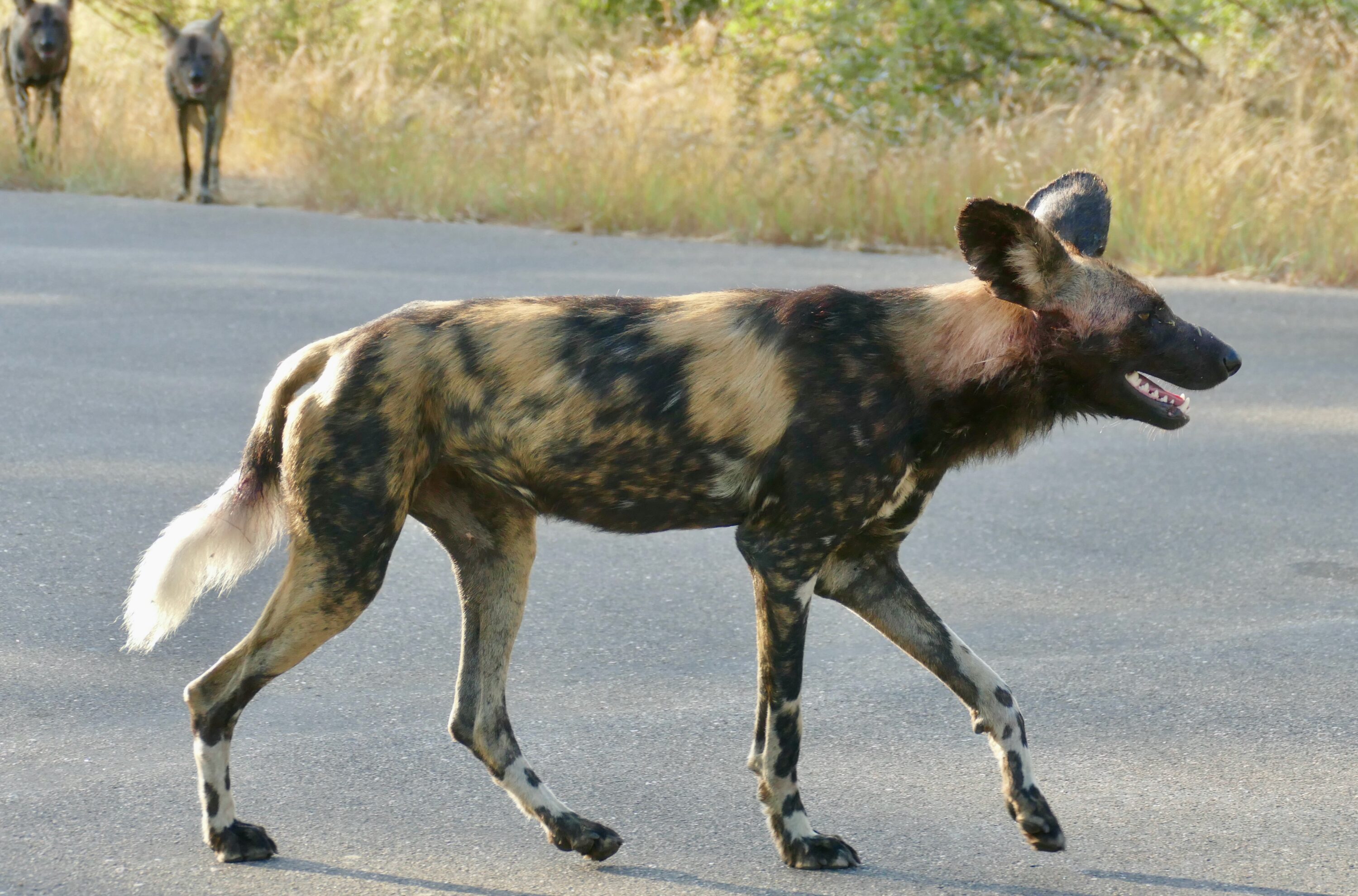
Food Leaves Its Mark on the Gut Bacteria of Kruger’s Wildlife
Gut bacteria in nine mammal species from Kruger National Park followed clear patterns linked to food and digestion.…
Read story →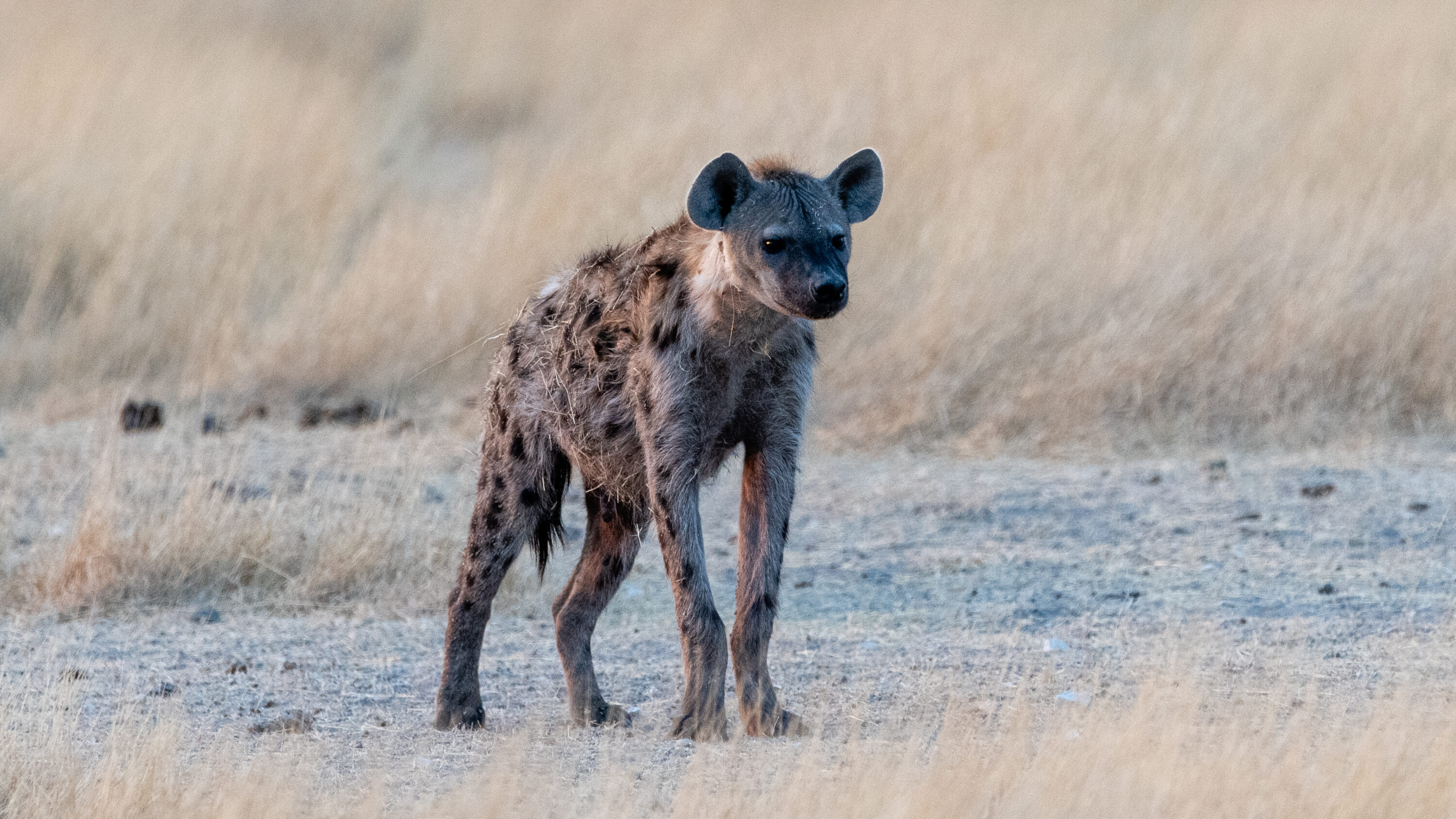
Spotted Hyenas Repeatedly Moved Away From Lions in Five-Minute GPS Data
High-frequency GPS data from Namibia and Botswana showed a robust retreat bias in spotted hyenas around lions, while…
Read story →SPECIES IN THIS STORY
Species in this story
Independent research and conservation news archive
Did you find this information useful?
Wildlife Vagabond is independently built and maintained. Voluntary support helps cover source verification, hosting and continued work on research and conservation news.
Support Wildlife VagabondThe news archive will remain freely available.