
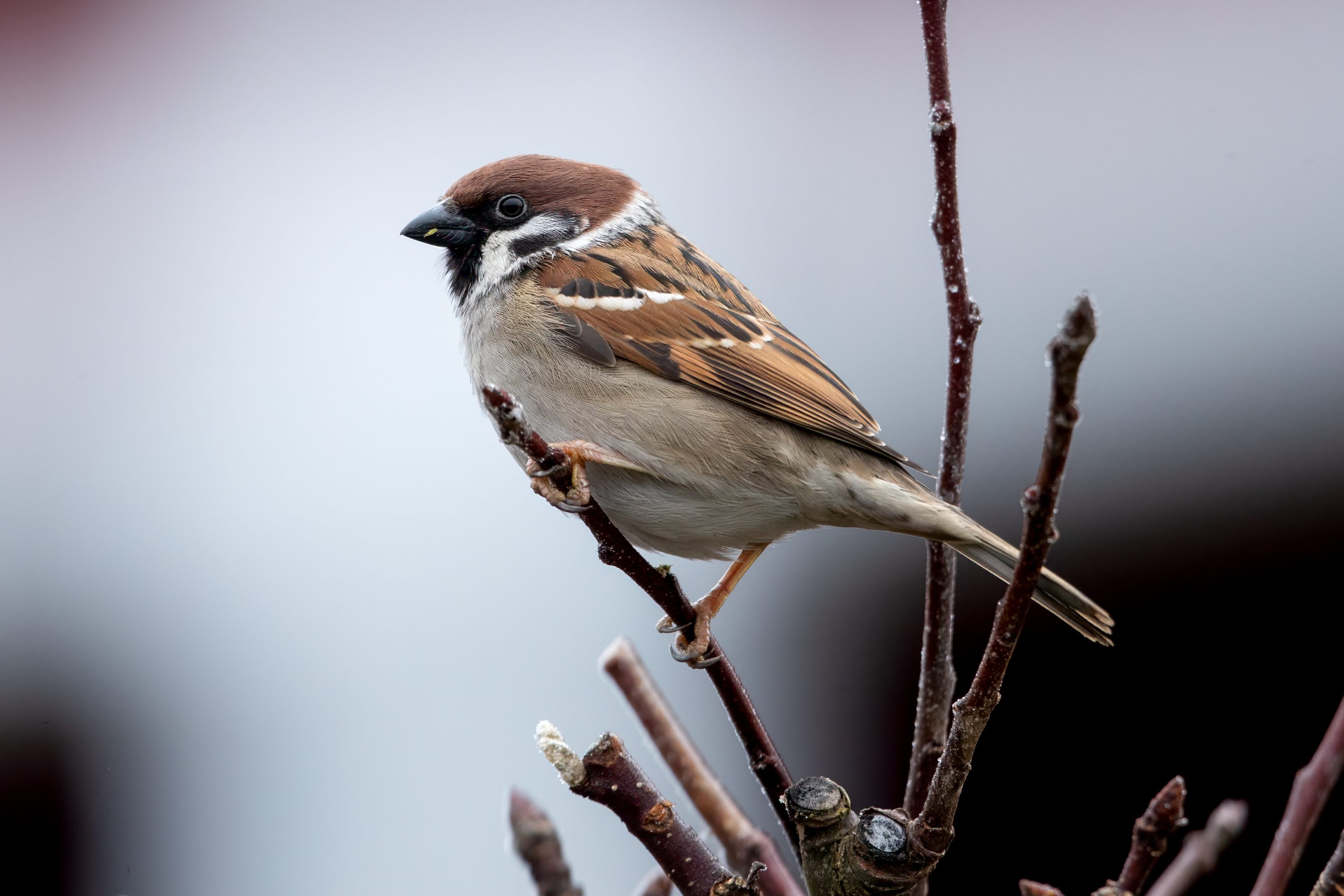
Plastic in Nests Killed and Injured Eurasian Tree Sparrows
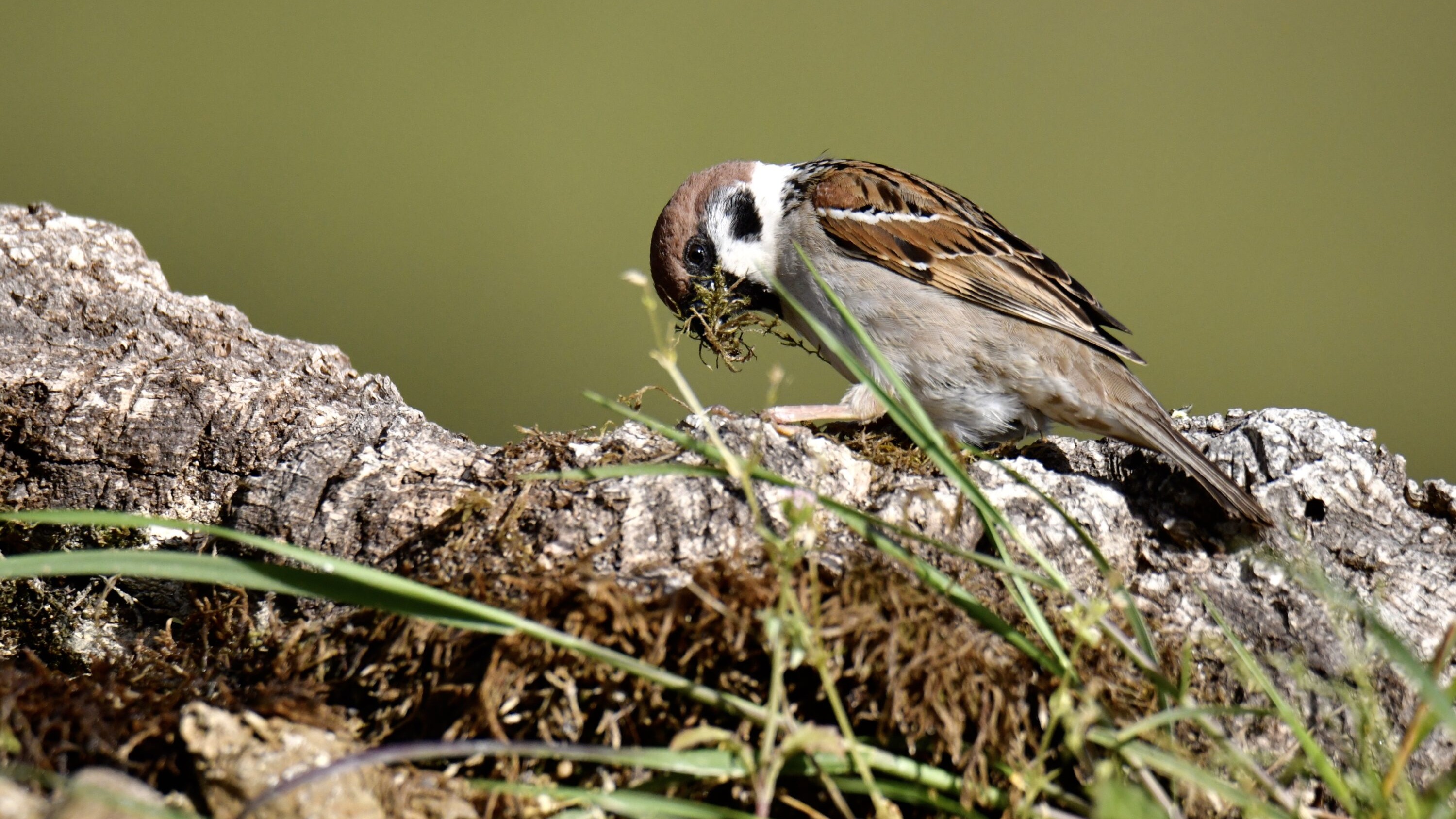
Discarded plastic can become part of a bird’s home long before it becomes an obvious trap. A field study from South Korea has documented Eurasian tree sparrows using human-made debris in every nest examined—and found birds dead or injured after becoming entangled in the material.
The researchers inspected 38 nests of the Eurasian tree sparrow (Passer montanus) in tiled roofs on 11 houses near Gwangju. They separated natural nest material from objects made or altered by people and recorded where different materials occurred in the nest. On average, anthropogenic material accounted for 13.6% of the nests’ dry weight, equivalent to 6.51 grams per nest. Plastic was especially prominent among the long, flexible strands woven into the outer parts of the nests.
Entanglement inside the nest
The consequences were not merely hypothetical. The researchers found seven dead juvenile or adult sparrows and three living nestlings entangled in artificial material. Legs, wings and necks were among the body parts caught. The living nestlings had injuries, but were freed by the researchers and subsequently fledged. The carcasses showed that the same hazard can be fatal when no intervention occurs.
Because a cavity nest is hidden beneath tiles, a trapped bird may be difficult for people to notice. The material is also incorporated deliberately: flexible strips can resemble grasses, roots or fibres that birds normally use to construct and line a nest. What appears useful during nest-building may therefore function as a snare once adults and rapidly growing chicks move through the confined space.
More debris in more urban surroundings
The amount of anthropogenic material increased with the researchers’ urbanisation score. Nests in more urbanised surroundings contained a greater proportion of human-made material by dry weight. This links the nest hazard to the availability of debris in the surrounding landscape, although the study did not test which individual waste sources contributed most.
The authors describe the widespread use of linear plastic debris as nesting material as a severe ecological trap — material that appears useful for nest building but creates hidden costs through injury and death. Artificial fibres can be incorporated into nests but may entangle both adults and young; the researchers therefore call for greater conservation attention to this risk in common, urban-adapted terrestrial birds.
Threats
Related news
Ground Beetles Dominated the Diet of Eurasian Tree Sparrow Chicks
DNA metabarcoding of 59 faecal samples from Eurasian tree sparrow chicks at three sites in southern England detected…
Read story →
2023 Survey Found Eurasian Tree Sparrows in 7.8% of a Beijing Swift Tower’s Usable Boxes
A 2023 breeding-season survey found Eurasian tree sparrows in 137 of 1,763 usable boxes in a Beijing tower…
Read story →
Tree and House Sparrows Divided Assam’s Urban Landscape
Surveys across five towns found tree sparrows most strongly associated with green suburban zones, while house sparrows concentrated…
Read story →SPECIES IN THIS STORY
Species in this story
Independent research and conservation news archive
Did you find this information useful?
Wildlife Vagabond is independently built and maintained. Voluntary support helps cover source verification, hosting and continued work on research and conservation news.
Support Wildlife VagabondThe news archive will remain freely available.