
Literature-Based Models Mapped Extensive Potential Golden Jackal Habitat in Switzerland
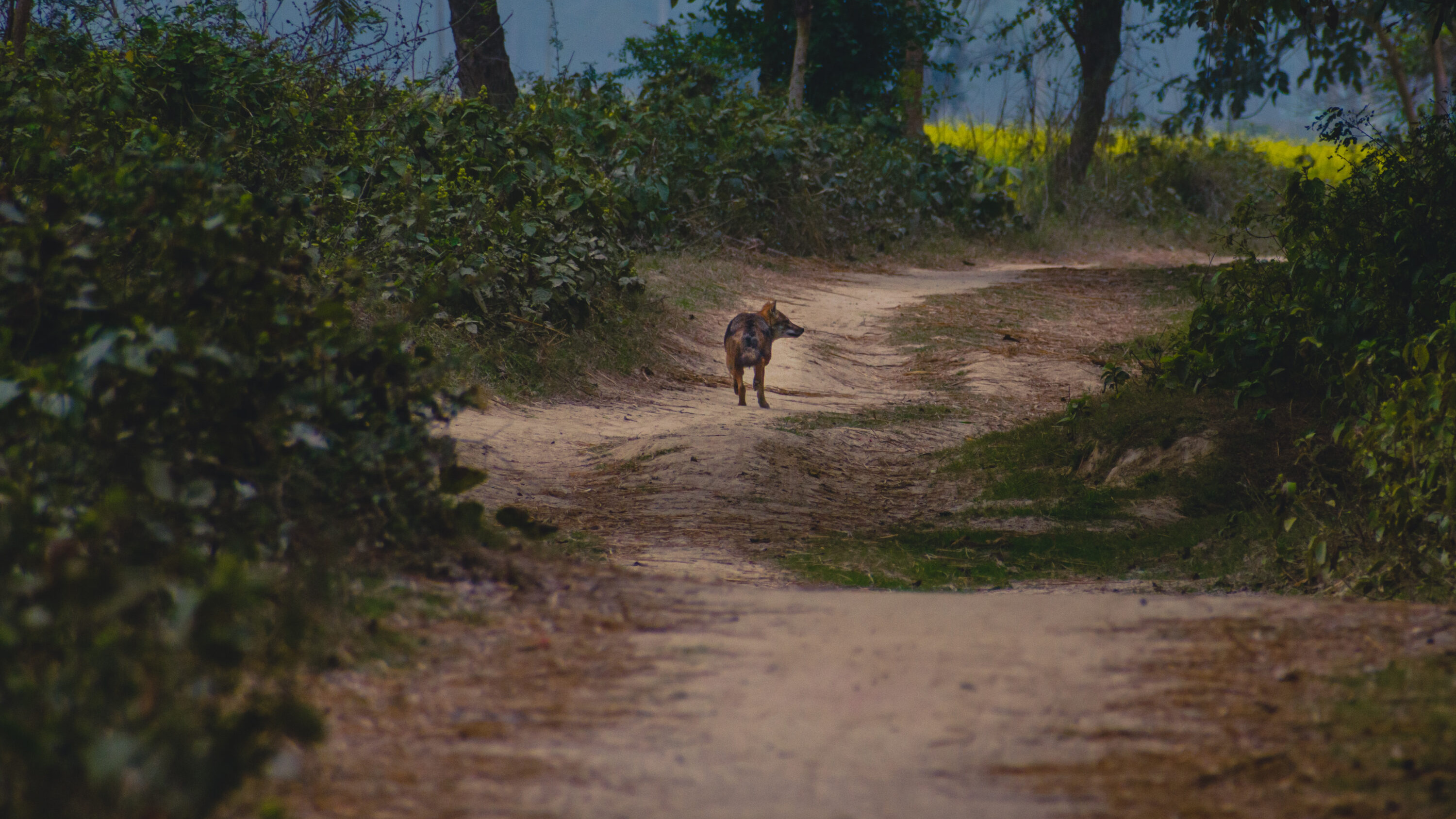
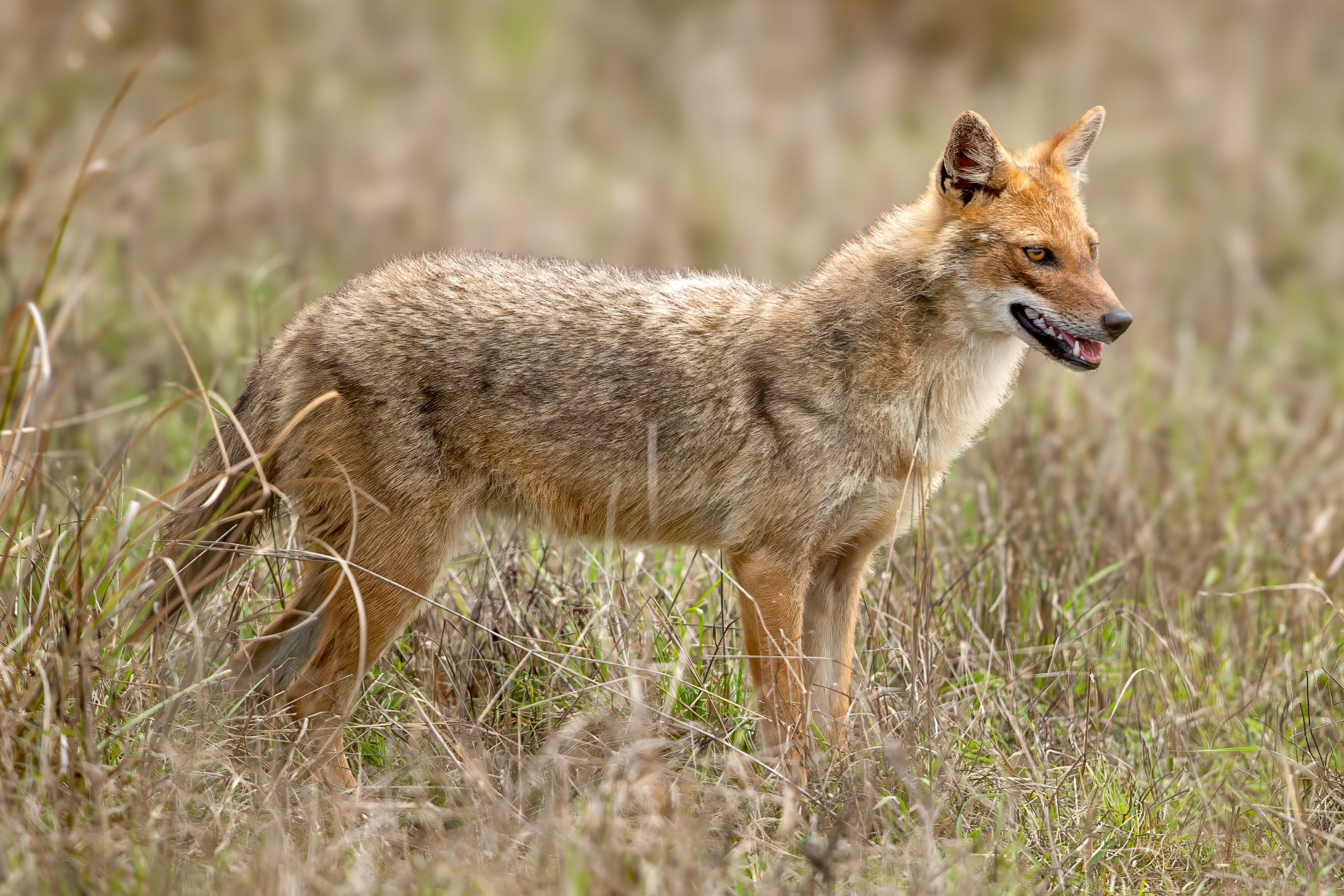
Large parts of Switzerland could provide suitable habitat for future settlement by golden jackals (Canis aureus), according to a modelling study published on 16 June 2026. The researchers combined a review of European golden jackal ecology with Swiss landscape data to build spatial habitat-suitability maps. These maps rank how well local landscape conditions match ecological patterns reported from established populations elsewhere in Europe; they do not directly predict the probability that a breeding group will establish at a given location.
The literature search initially identified 233 publications, of which 44 were relevant: 23 addressed habitat use or distribution and 21 diet and foraging. Diet was not included in the Swiss suitability maps because the authors considered food unlikely to limit initial colonisation in a resource-rich landscape such as Switzerland. The maps instead used five recurring habitat factors: land cover, landscape mosaicity, proximity to perennial water, duration of snow cover and grey-wolf (Canis lupus) presence. Landscape mosaicity describes how patchy and heterogeneous an area is — for example, a mixture of forest, farmland and pasture rather than one uniform land-cover type.
The Swiss Plateau and northern Jura stood out
The team produced four weighted scenarios: one gave all five factors equal importance, one emphasised snow cover and water, one emphasised landscape structure, and one gave the strongest weight to avoidance of wolf-core areas. In every scenario, suitability was expressed on a 0–1 scale, from unsuitable to highly suitable. All four maps identified extensive potentially suitable habitat, with the Swiss Plateau and northern Jura Mountains consistently containing the largest areas of high suitability.
These regions combine heterogeneous landscapes, agricultural land and forest edges with access to water, relatively low elevation and shorter periods of snow cover. Much of the highest-scoring habitat also lies outside the modelled core areas of wolf territories. The wolf layer should be interpreted more cautiously than a fixed biological barrier: the authors note that evidence for wolf–jackal competition varies among regions, and the Swiss wolf distribution is itself changing.
Confirmed records fell disproportionately in suitable areas
To test the models, the researchers used 129 confirmed golden jackal records from Switzerland between 2011 and 2025. These records represent clear evidence such as carcasses, photographs, videos, live captures or genetic detections and mainly involve dispersing animals rather than established family groups.
Across all four scenarios, the 129 confirmed detections had higher suitability scores than sets of randomly generated locations. This validates one narrower point: dispersing jackals in Switzerland have been detected disproportionately in landscapes the literature-based maps rank as suitable. It does not yet validate habitat use by resident, territorial family groups, because no resident Swiss population was available for that test.
Switzerland has recorded golden jackals with increasing frequency since the first confirmed detections in 2011, but the study states that no resident population had yet been documented. Mapping likely settlement areas before a population establishes could help concentrate monitoring, public information and measures intended to reduce future conflicts.
The authors also stress an important limitation: the models are based on habitat preferences derived from established populations elsewhere in Europe and were validated with dispersing animals in Switzerland. Dispersing jackals may use landscapes differently from resident territorial family groups, so the model can be tested more fully after a breeding population becomes established.
Ecology
Related news
Similar Mammal Diversity, Different Activity Patterns in Grazed and Ungrazed Areas
Camera traps in four northern Israeli reserves found similar numbers of mammal species with and without livestock grazing.…
Read story →
Climate Best Explained Fine-Scale Genetic Connectivity in Expanding Golden Jackals
A Eurasian landscape-genomics study of 363 golden jackals found that geography dominated genetic structure at continental scale, while…
Read story →
Most New Golden Jackal Samples Around the Adriatic Matched the Pannonian Genetic Cluster
Microsatellite analysis of 27 new golden jackal samples from Croatia, Italy, Austria and Greece assigned most animals to…
Read story →SPECIES IN THIS STORY
Species in this story
Independent research and conservation news archive
Did you find this information useful?
Wildlife Vagabond is independently built and maintained. Voluntary support helps cover source verification, hosting and continued work on research and conservation news.
Support Wildlife VagabondThe news archive will remain freely available.