
Trail-only Cameras Underrepresented Female Felids and Biased Density Estimates in Bhutan
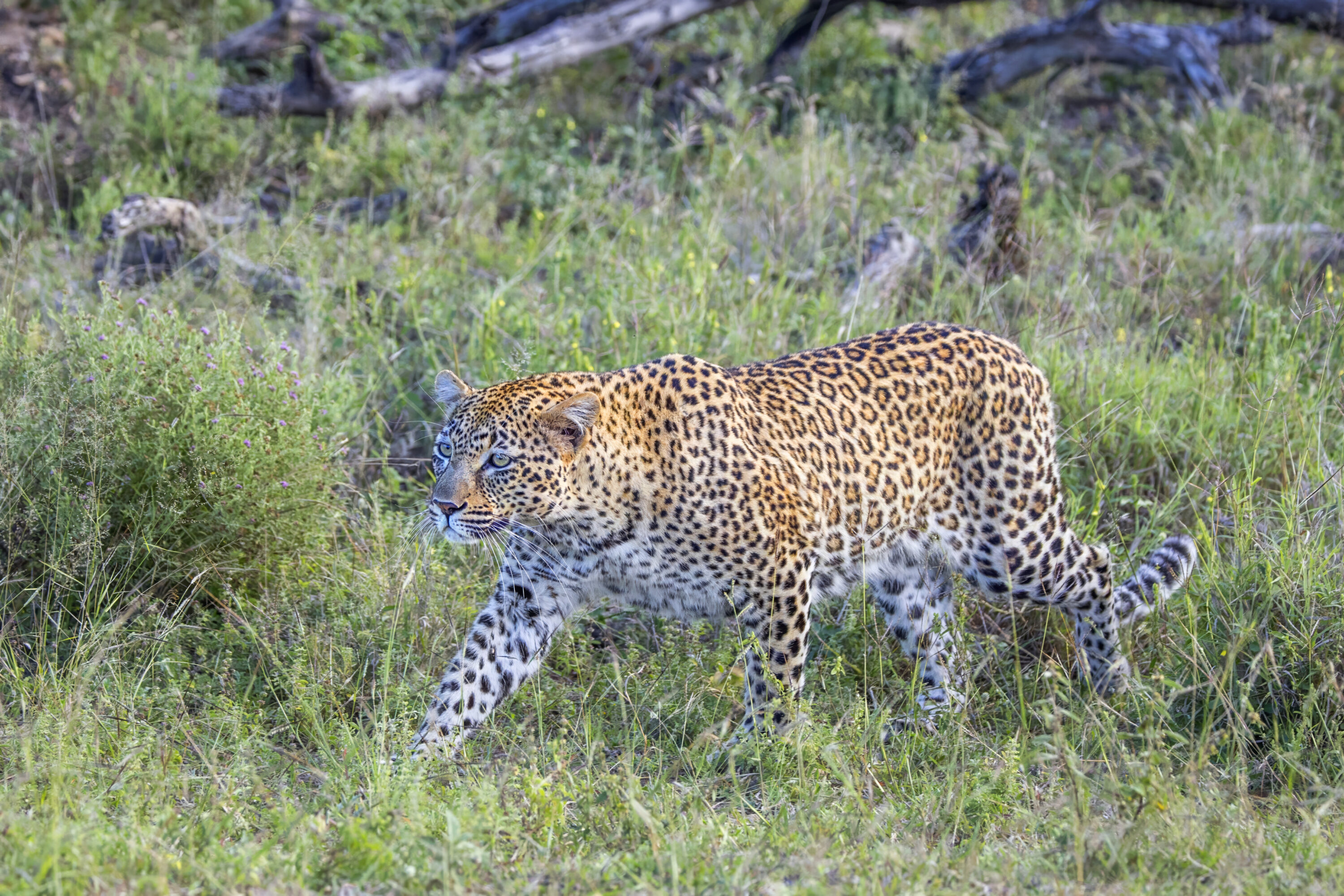
Where camera traps are placed can change which individual cats are photographed and, in turn, bias density estimates. In a 400 km² study area spanning Jigme Singye Wangchuck and Royal Manas national parks in Bhutan, cameras placed only on trails photographed proportionally fewer females than males. For four felid species with enough data for density modelling, trail-only estimates were on average 22% lower than estimates from the combined trail-and-random dataset, although the direction and size of the difference varied among species.
The five focal species were tiger (Panthera tigris), leopard (Panthera pardus), clouded leopard (Neofelis nebulosa), marbled cat (Pardofelis marmorata) and leopard cat (Prionailurus bengalensis). Tigers were photographed too rarely for reliable density modelling, so the density comparison involved the other four species.
Trail cameras photographed proportionally more males
Researchers operated 100 trail stations on trails, ridgelines or riverbeds and 100 randomly located off-trail stations from October 2020 to May 2021. Trail stations used two cameras so both sides of a passing animal could be photographed; random stations used one camera.
Across the five focal species, trail stations recorded 84 males and 48 females — 1.75 males per female. Random stations recorded 40 males and 40 females. Relative to all individuals found by the two survey designs together, trail placement missed 30% of females but only 8% of males. Random placement showed the opposite problem, missing 56% of males and 33% of females.
The male bias was especially visible in leopard and leopard cat. The study does not demonstrate that females actively avoid trails. Different movement routes, home-range use and the probability of being photographed can all contribute to the observed pattern.
Unequal detection changed density estimates
Spatial capture–recapture models estimate density from where individually recognisable animals are detected and re-detected, together with the probability that an animal is photographed. If males and females have different detection probabilities and the model ignores that difference, the estimated number of animals can be biased.
For three of the four modelled species, the trail-only design produced lower density estimates than the combined trail-and-random reference. The difference was 28% lower for clouded leopard and 10% lower for marbled cat; leopard was also underestimated. Leopard cat was the exception: its trail-only estimate was 12% higher even though the trail survey missed 15 known individuals, including ten females.
This exception is important. The reported average of 22% lower density does not mean that trail-only surveys underestimate every felid by 22%, or even that the bias always points downward.
Two approaches reduced the bias
First, when sex-specific detection probability was included in trail-only models, density estimates for clouded leopard, leopard and marbled cat moved into line with estimates from the full dataset. For leopard cat, the trail-only estimate remained higher, but uncertainty overlapped the reference estimate.
Second, combining trail and random camera placements reduced the systematic detection problem and generally improved precision. In reduced-effort simulations, designs with roughly half the placements random provided a useful overall compromise, but the best mixture differed among species and depended on whether the main limitation was equipment or field effort.
Neither trail-only nor random-only placement was ideal
Trail-only deployment missed about 17% of all identified individuals, predominantly females. Random-only deployment missed about 47%, mostly males. Random cameras therefore reduced one form of sex bias but produced fewer detections and less precise estimates.
The two deployments also differed in hardware: trail stations had paired cameras, whereas random stations had one. Single cameras can make individual identification harder because only one flank may be visible, and random-camera images were matched against a catalogue built partly from paired trail images. The study therefore does not establish one universal trail-to-random ratio for every felid survey.
The main result is methodological but biologically important: survey design can sample males and females differently enough to alter estimated density. The authors recommend mixed placements and, where feasible, paired cameras at both trail and random stations so surveys retain high re-detection rates without systematically underrepresenting animals that use trails less often.
Other research
Related news
Living With Carnivores Is About More Than Livestock Losses
Near Iran’s Golestan National Park, researchers explored what was associated with people’s willingness to accept leopards, wolves and…
Read story →
Sri Lankan Leopards in Tea Landscape Were Less Active by Day and More Active at Dusk
In Sri Lanka’s Central Highlands, only 4.4% of leopard records in an unprotected tea landscape were diurnal while…
Read story →
Amur leopard density nearly tripled in a decade
Ten years of camera-trap data from Russia’s Land of the Leopard National Park show a strong recovery in…
Read story →SPECIES IN THIS STORY
Species in this story
Independent research and conservation news archive
Did you find this information useful?
Wildlife Vagabond is independently built and maintained. Voluntary support helps cover source verification, hosting and continued work on research and conservation news.
Support Wildlife VagabondThe news archive will remain freely available.