
Urban Blackbird Nest-site Choice Showed Near-zero Heritability and Strong Plasticity
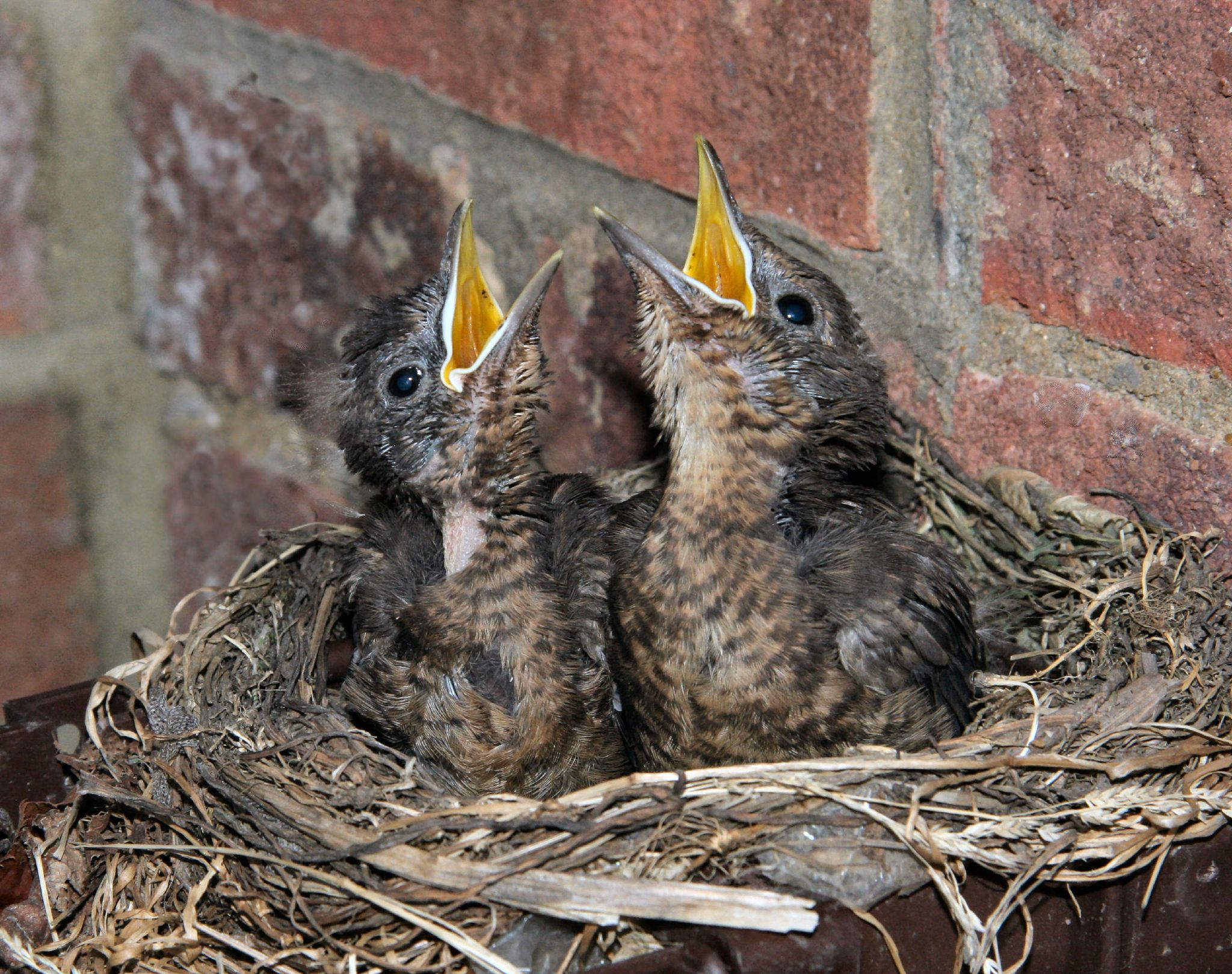
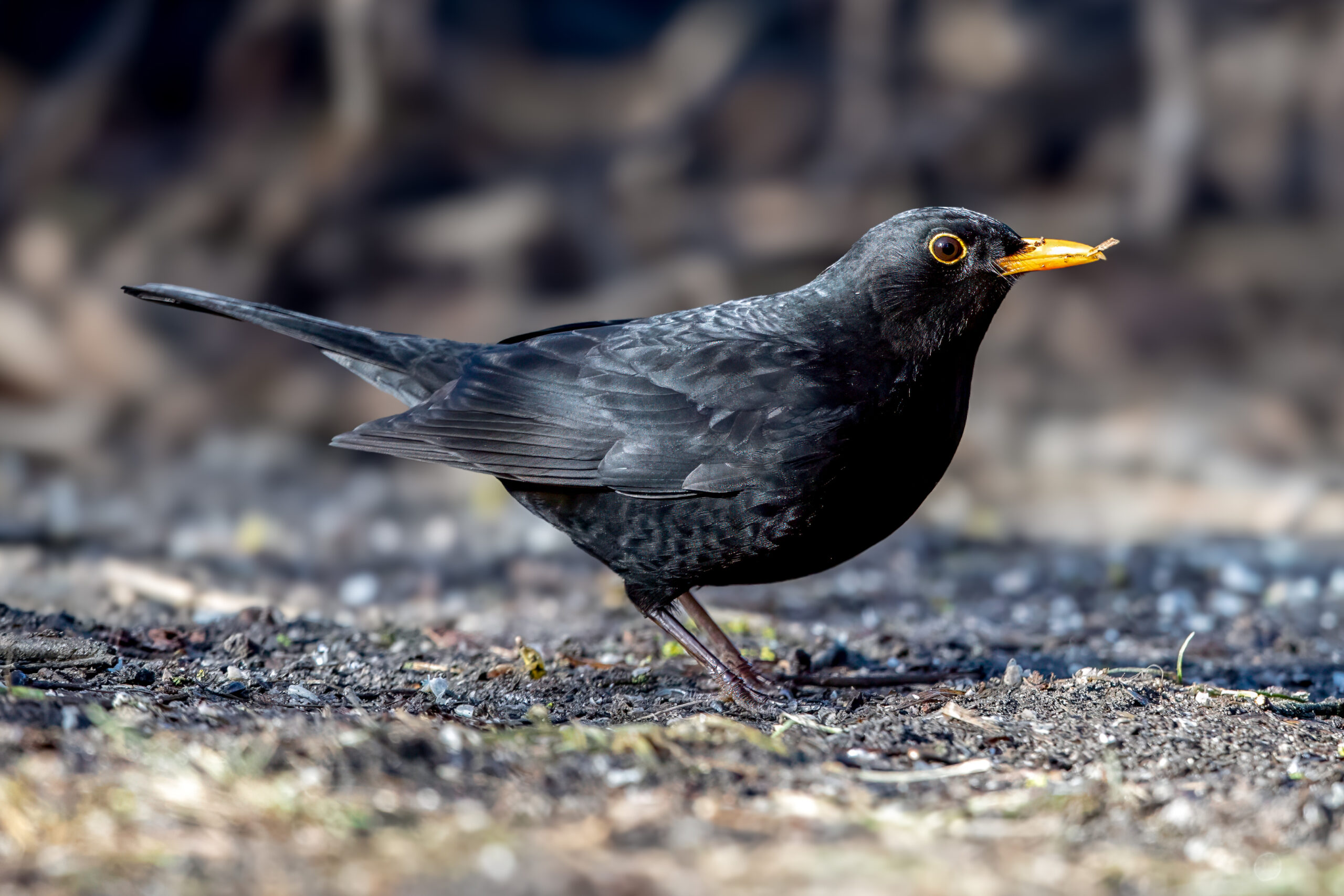
Variation in where urban Eurasian blackbirds (Turdus merula) placed their nests was driven mainly by phenotypic plasticity rather than detectable additive genetic differences. A 27-year study of a colour-ringed population in Szczecin, Poland, found that nest location, height and concealment all had estimated heritabilities close to zero.
Phenotypic plasticity means that the same genotype can produce different behaviours or traits under different conditions. In this study, the key evidence for plasticity was that the same individual birds changed aspects of nest placement through the breeding season and, for nest height, as they aged.
A pedigree separated inherited resemblance from environmental variation
The researchers combined records from more than 2,000 broods collected between 1997 and 2023 with a multigenerational pedigree of the urban population in the 21.9-hectare Stefan Żeromski Park. They used a quantitative-genetic “animal model”, which compares resemblance among individuals while taking their known relatedness into account.
This allowed the observed variation in nest traits to be divided into an additive genetic component, persistent individual or environmental differences, and residual variation. Additive genetic variation is the part produced by inherited allele effects that parents can predictably pass to offspring, and it is the component used to calculate narrow-sense heritability.
Heritability of the three nest traits was effectively zero
For nest location, height and concealment, within-sex heritability estimates were below 0.001 in the main analyses. In practical terms, less than about 0.1% of the measured variation in these nest-site traits was attributed to additive genetic differences among birds in this population.
This does not mean that genes are irrelevant to nesting behaviour as a biological ability. It means that the differences among these urban blackbirds in where and how they positioned nests showed almost no detectable additive genetic structure. Models that also accounted for laying date and female age gave the same broad result.
As a check that the pedigree and analytical framework could detect heritability when it was present, the researchers analysed adult tarsus length with the same approach. Tarsus length showed a much larger heritability estimate, around 0.28, supporting the interpretation that the near-zero values for nest-site choice were a real contrast rather than simply total failure of the method.
The same birds changed nest placement through the season
The proportion of nests placed directly on tree trunks declined as the breeding season progressed. Nest height rose early in the season, peaked during the second half of May and then declined, while nest concealment followed the opposite pattern — declining early and then increasing later.
Most of these seasonal shifts were explained by changes within individuals rather than by consistent differences between birds that happened to breed at different times. Older females also nested lower than younger females, while age was not clearly associated with nest location or concealment.
The authors link the seasonal pattern to changing vegetation and predation risk. As deciduous foliage develops, branches become more concealed and increasingly usable as nest sites. Early in the season, evergreen shrubs such as yews, junipers and thujas can provide dense cover, but in this population such low, well-hidden nests were also selectively targeted by corvids.
A hidden nest was not automatically a successful nest
At the level of individual breeding attempts, greater nest concealment was associated with a lower probability that the nest succeeded. The authors interpret this counterintuitive result in light of predation: dense low coniferous shrubs can conceal nests from view but may also be places where corvid predators learn to search effectively.
Nest height also interacted with where the nest was placed. Higher branch nests had a lower probability of reproductive success, whereas the relationship was not clear for nests positioned directly on trunks. These results show that no single nest-site characteristic was universally “better” across contexts.
Lifetime plasticity had trait-specific fitness associations
The researchers then asked whether birds that varied their nest placement more across repeated breeding attempts had different lifetime reproductive success. For birds that reached at least five years of age, greater lifetime variation in nest concealment was associated with more fledglings produced over the lifetime, whereas greater lifetime variation in nest height was associated with fewer.
This distinction is important: a highly concealed nest at one breeding attempt was not necessarily safer, yet changing the degree of concealment among attempts was positively associated with lifetime success. The authors suggest that varying concealment may help birds avoid predictable predators that can learn and revisit nest locations, while variation in height may sometimes represent non-adaptive or maladaptive responses.
The plasticity itself may still have a genetic basis
The study could estimate heritability of the nest-site traits, but not the heritability of each bird’s degree of plasticity. Too few individuals survived and bred over enough seasons for their individual reaction patterns to be compared genetically.
The conclusion is therefore not that urban nesting behaviour is genetically fixed at zero. Rather, the measured differences in nest placement in this Szczecin population were overwhelmingly associated with environmental and within-individual change, while whether the capacity to adjust behaviour is itself heritable remains unresolved.
Behaviour
Related news
Juvenile Harris's Hawks Manipulated Pine Cones for About Five Minutes
Two juvenile Harris's hawks in Buenos Aires Province tore pine cones from trees, carried them to new perches…
Read story →
Rock Doves Preferred Predictive Information Despite a Lower Food Payoff
Seven rock doves preferred an informative option that paid on 20% of trials over a non-informative option that…
Read story →
Task Uncertainty Increased Interference From Irrelevant Visual Information in Rhesus Macaque Decisions
Two rhesus macaques made less accurate visual decisions under task uncertainty; recordings and microstimulation in primary visual cortex…
Read story →SPECIES IN THIS STORY
Species in this story
Independent research and conservation news archive
Did you find this information useful?
Wildlife Vagabond is independently built and maintained. Voluntary support helps cover source verification, hosting and continued work on research and conservation news.
Support Wildlife VagabondThe news archive will remain freely available.