
Urban Common Mynas Had Higher Fledging Success, but Rural Nestlings Were in Better Condition
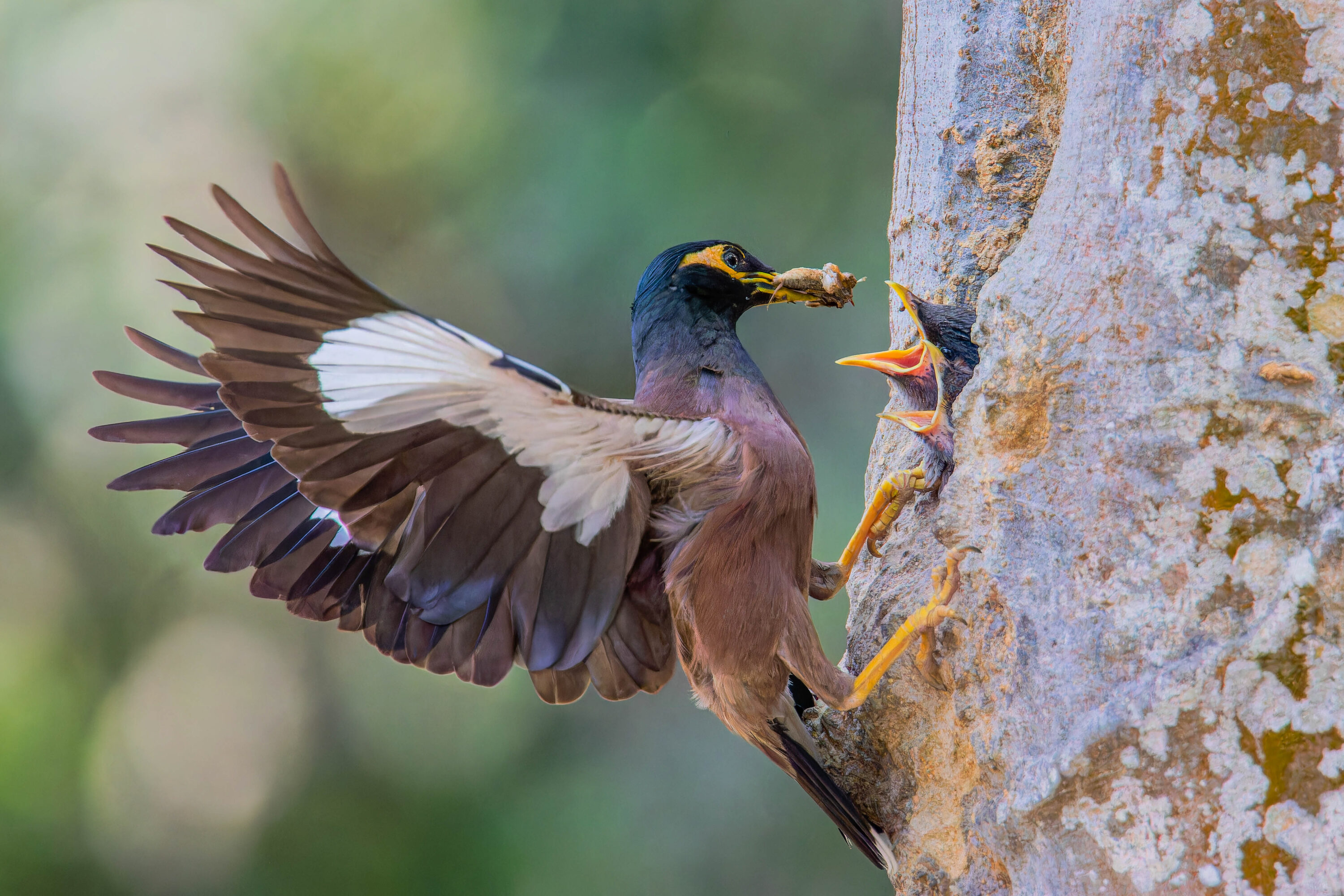
A nest-box study around Mardan in north-western Pakistan found contrasting effects of urban living on common mynas (Acridotheres tristis). Urban nests had higher fledging success, while rural nestlings generally showed stronger growth trajectories and better body condition. The researchers followed 116 breeding attempts in 200 nest boxes during the 2021 breeding season.
Breeding began earlier in the city. Urban pairs started laying in March, while laying at the rural sites began in April and continued later into the season. Rural nests had longer incubation and nestling periods, but clutch size and brood size did not differ clearly between the two habitats.
More urban nestlings reached fledging
Hatching success was similar in the two environments, but fledging success was significantly higher in urban nests: 86.6% of nestlings fledged, compared with 74.1% in rural nests. Predation was much more frequent in the rural sample, affecting both eggs and nestlings, which helps explain the difference in fledging success.
The higher urban fledging success did not mean that urban nests produced a clearly greater average number of fledglings per nest. The study therefore points to a difference in the proportion of young surviving to fledging rather than a simple increase in brood output across all measures.
Rural nestlings were in better condition
Growth data from 130 urban and 115 rural nestlings showed a different pattern. Rural young generally developed greater body length and longer tarsi at comparable ages, and the authors found better overall body condition in the rural group. Urban nestlings initially had longer wings, but their wing growth was slower. Rural nestlings also gained body mass faster, whereas bill growth and, more slightly, tail growth were faster in urban young. Development therefore responded to the urban–rural environment in a trait-specific way rather than shifting uniformly in one direction.
The authors describe these differences as developmental plasticity: common mynas can adjust their growth and breeding patterns to different environments, but the apparent advantages of urban breeding may come with costs to offspring development.
The mechanisms remain unresolved. Temperature and food availability were not measured directly, adults were not individually marked, and nestling growth was measured only in nests that succeeded. Explanations involving urban heat, food quality, pollution, artificial light or other environmental differences therefore remain hypotheses rather than demonstrated causes.
Reproduction & development
Related news

Rail Staff Say Two Common Mynas Regularly Ride Sydney Trains
Two common mynas were filmed sitting calmly inside a Sydney train, while a guard said staff know them…
Read story →
Six Cavity-Nesting Bird Species Bred Successfully in Artificial Nests in Punjab
Punjab Agricultural University reported successful breeding in artificial nests by six cavity-nesting species, including Indian roller, spotted owlet…
Read story →
Qatar Captured 12,844 Invasive Common Mynas From January to July
Qatar reported 12,844 common mynas captured from January through July 2026, bringing the project total to 61,999. Control…
Read story →SPECIES IN THIS STORY
Species in this story
Independent research and conservation news archive
Did you find this information useful?
Wildlife Vagabond is independently built and maintained. Voluntary support helps cover source verification, hosting and continued work on research and conservation news.
Support Wildlife VagabondThe news archive will remain freely available.