
Wood Pigeons Expanded Their Urban Breeding Range Faster Than Collared Doves

In many European cities, the breeding range of the Common Wood-Pigeon (Columba palumbus) has expanded. A comparison of repeated urban bird atlases from 15 cities found that this expansion was generally faster than the continued spread of the Eurasian Collared Dove (Streptopelia decaocto), whose urban distribution was already established in every city when the first atlas surveys were conducted.
The author compared maps from successive atlas surveys, which recorded breeding birds in grid squares generally 0.5–1 kilometre across. Comparing the squares where each species was recorded showed how the area occupied changed between surveys. In the cited first-to-second-atlas comparisons, average annual changes in the Wood Pigeon’s occupied area ranged from a decrease of 0.20 km² in Paris to an increase of 8.90 km² in Florence. In cities where Wood Pigeons arrived later, the rate of expansion could increase in subsequent survey intervals: reported later rates included 5.53 km² per year in Naples and 8.9 km² per year in Florence.
Why an occupied square is not a population count
Breeding-bird atlases are useful for tracing urban colonisation because they record where a species breeds, not just where somebody happens to see it. A pigeon occupying new grid squares may be spreading into previously unused neighbourhoods even if its total population size is unknown. Conversely, the Collared Dove’s slower expansion partly reflects that it already occupied much of the available urban area when monitoring began. The results therefore should not be read as evidence that Wood Pigeons are becoming more numerous than Collared Doves everywhere, or that one species is directly driving the other away.
Collared Doves were already established
The Collared Dove’s pattern differed. It was present in all 15 cities’ first atlases and generally had lower expansion rates than the Wood Pigeon. In about a third of the cities examined, its recorded range declined; elsewhere, it was stable in some cities where its distribution had become saturated, while continuing to expand more slowly in others.
The atlas comparisons show contrasting changes in urban breeding ranges, but they do not explain what caused them. The paper discusses competition, including for nesting sites, as a possibility, while noting that more specific analyses are needed. Survey periods and intervals differed among cities, so the reported annual rates are averages between surveys, not evidence that expansion proceeded at a constant pace.
Ecology
Related news
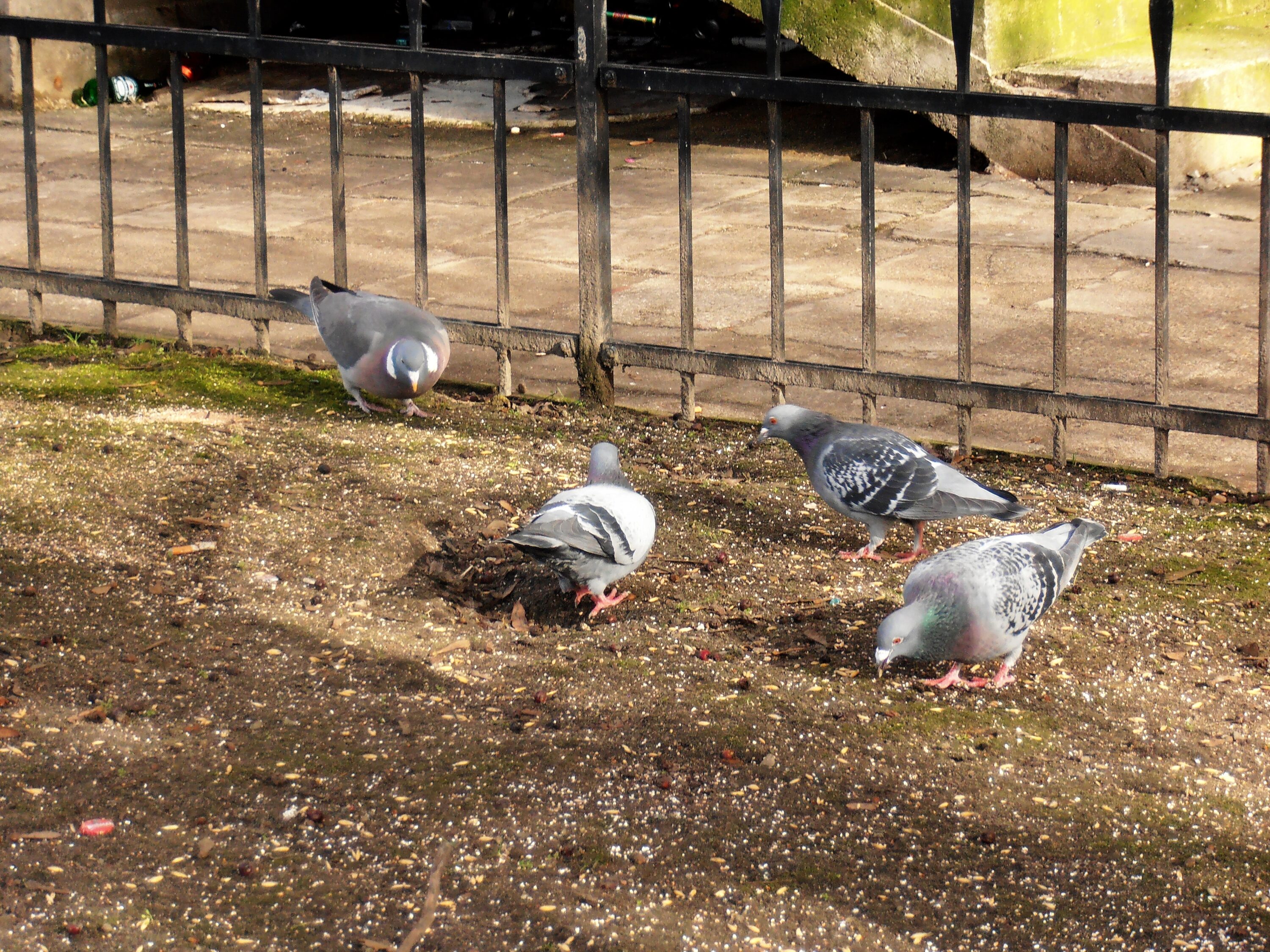
Common Wood-Pigeon Was Negatively Associated With Settlements in High Atlas Valleys
Across 179 survey points in two Central High Atlas valleys in Morocco, researchers recorded 1,073 pigeons and doves.…
Read story →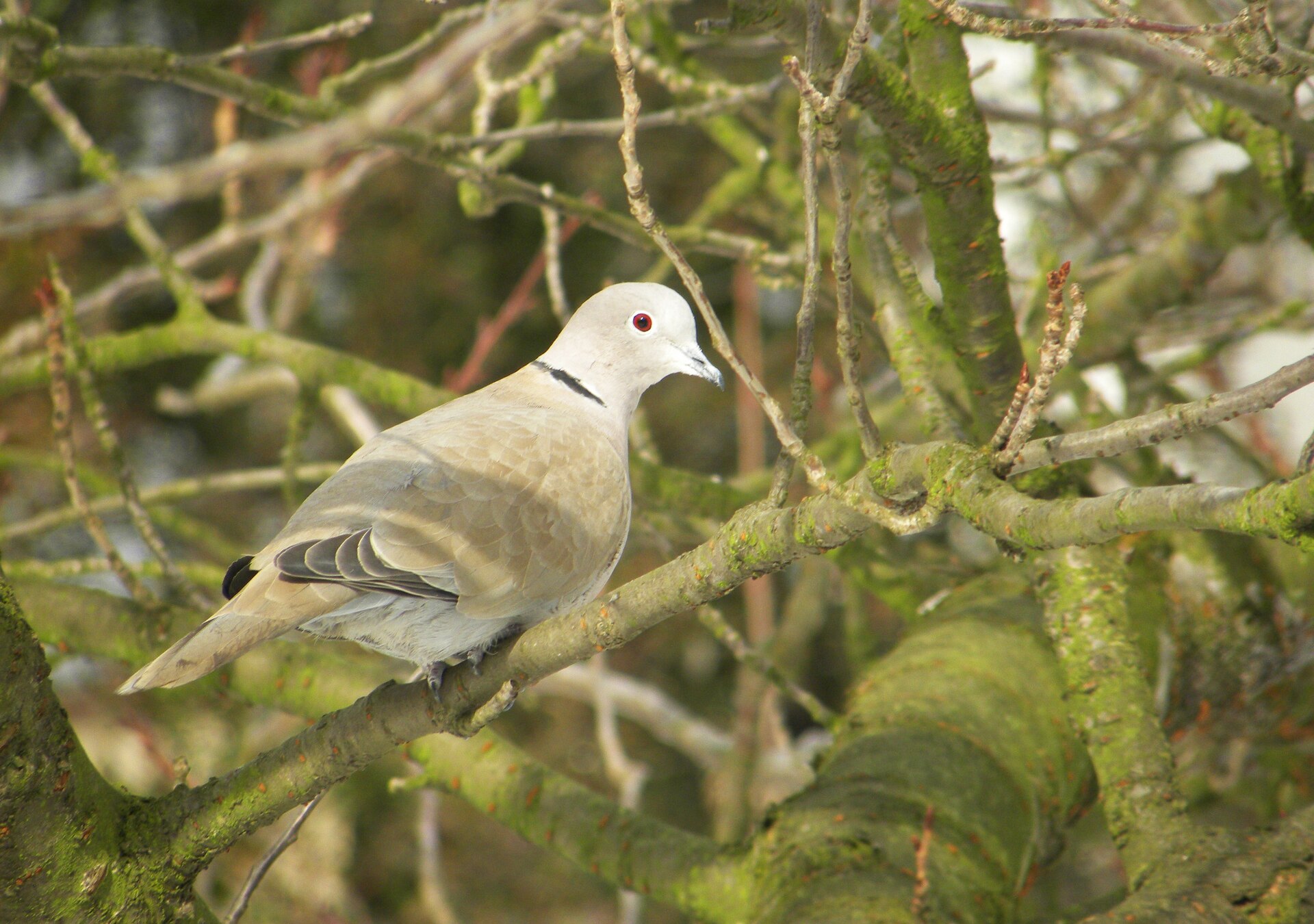
Collared doves sunbathed in winter; four other species did so in summer
A Piedmont field report describes 14 sunning observations in five bird species. All six Eurasian Collared Dove episodes…
Read story →
In western Mexico, an introduced grackle was confused with native birds
Interviews in an Indigenous community found that people sometimes mistook the introduced Great-tailed Grackle for native birds and…
Read story →SPECIES IN THIS STORY
Species in this story

Independent research and conservation news archive
Did you find this information useful?
Wildlife Vagabond is independently built and maintained. Voluntary support helps cover source verification, hosting and continued work on research and conservation news.
Support Wildlife VagabondThe news archive will remain freely available.