Snow Bunting
(Plectrophenax nivalis)

Description
The snow bunting (Plectrophenax nivalis) is a small Arctic passerine with a circumpolar distribution, breeding across the high Arctic of Eurasia and North America, including Greenland, Svalbard, northern Scandinavia, Russia, Alaska, and Canada. Outside the breeding season it moves south into open landscapes across northern temperate regions.
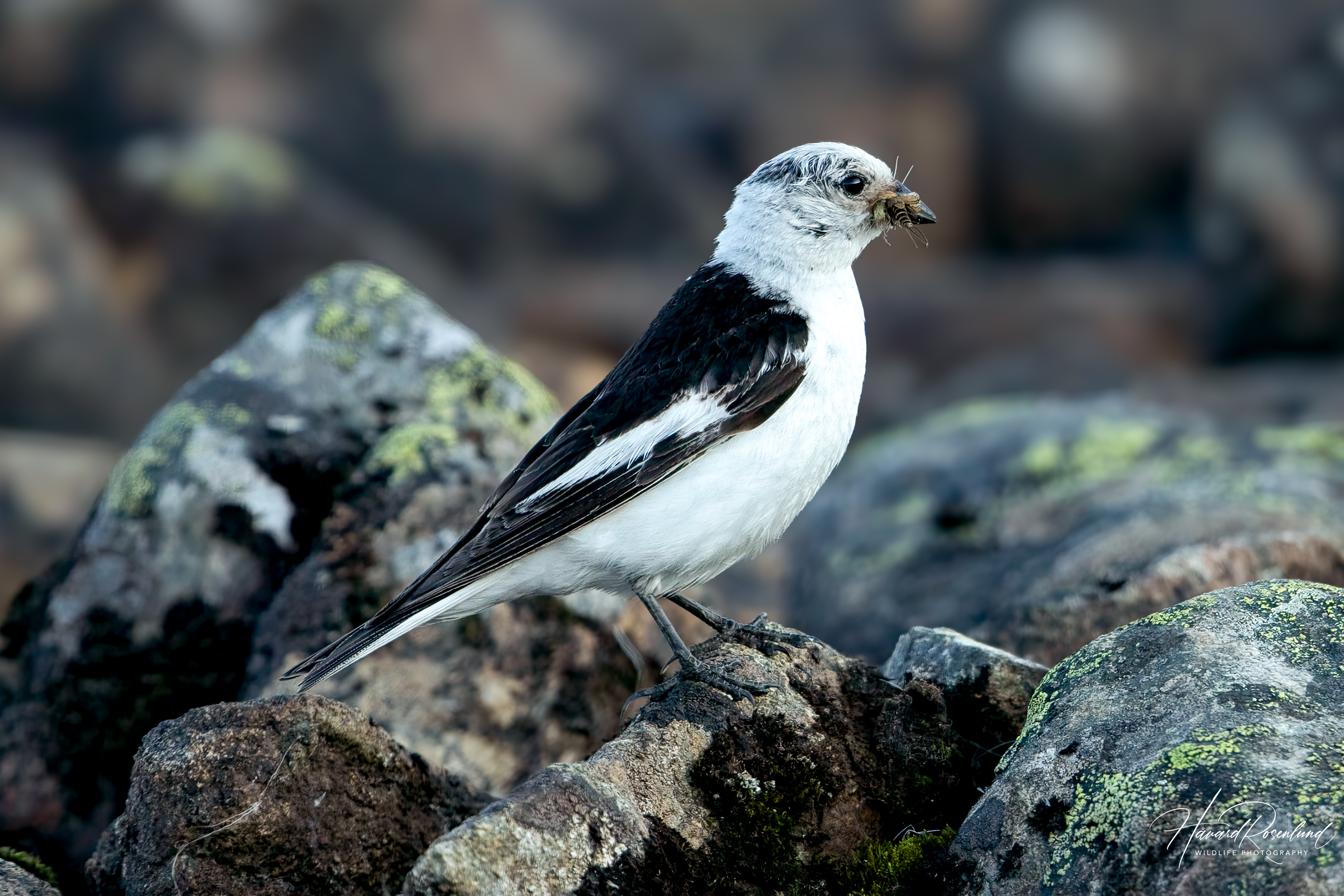
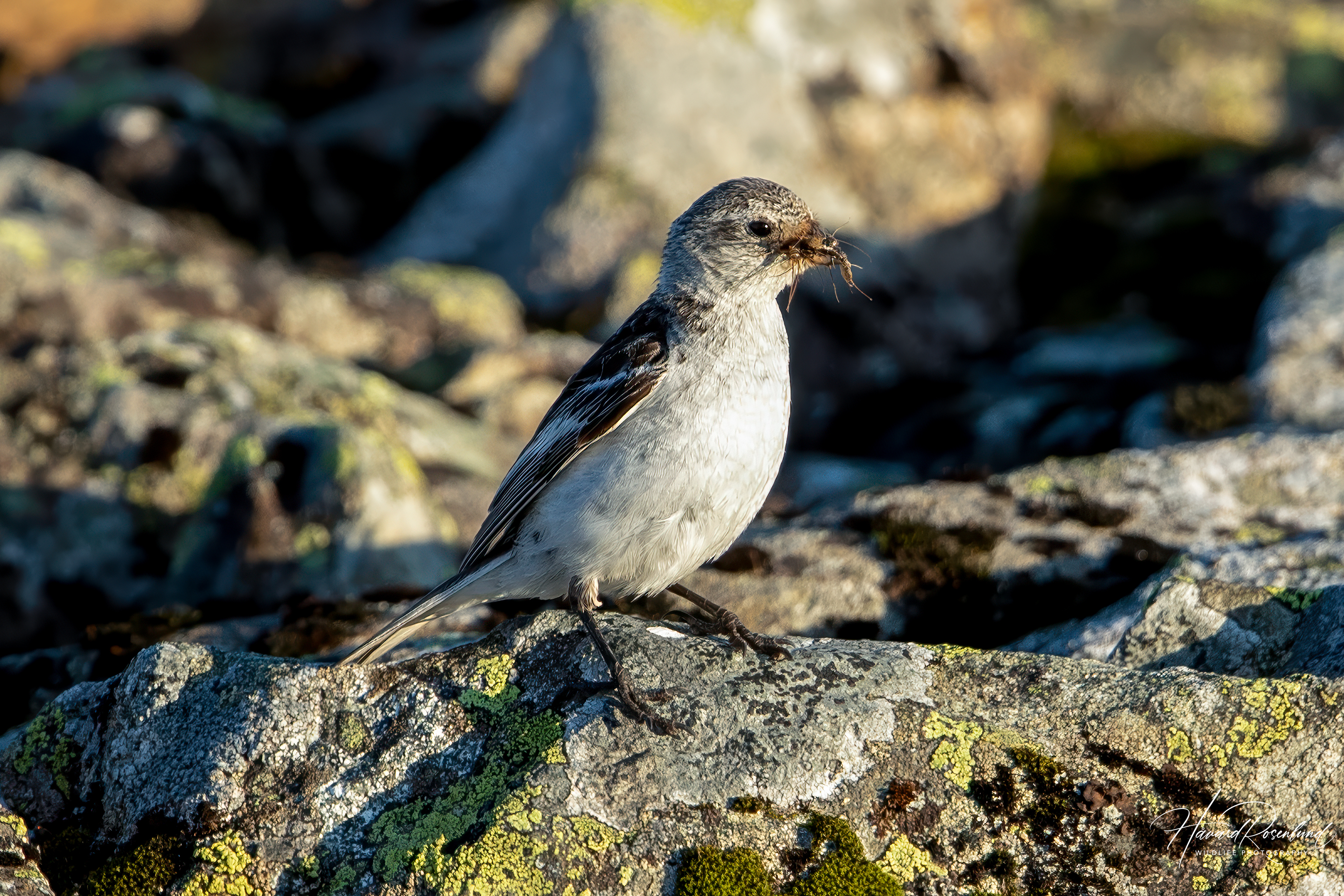
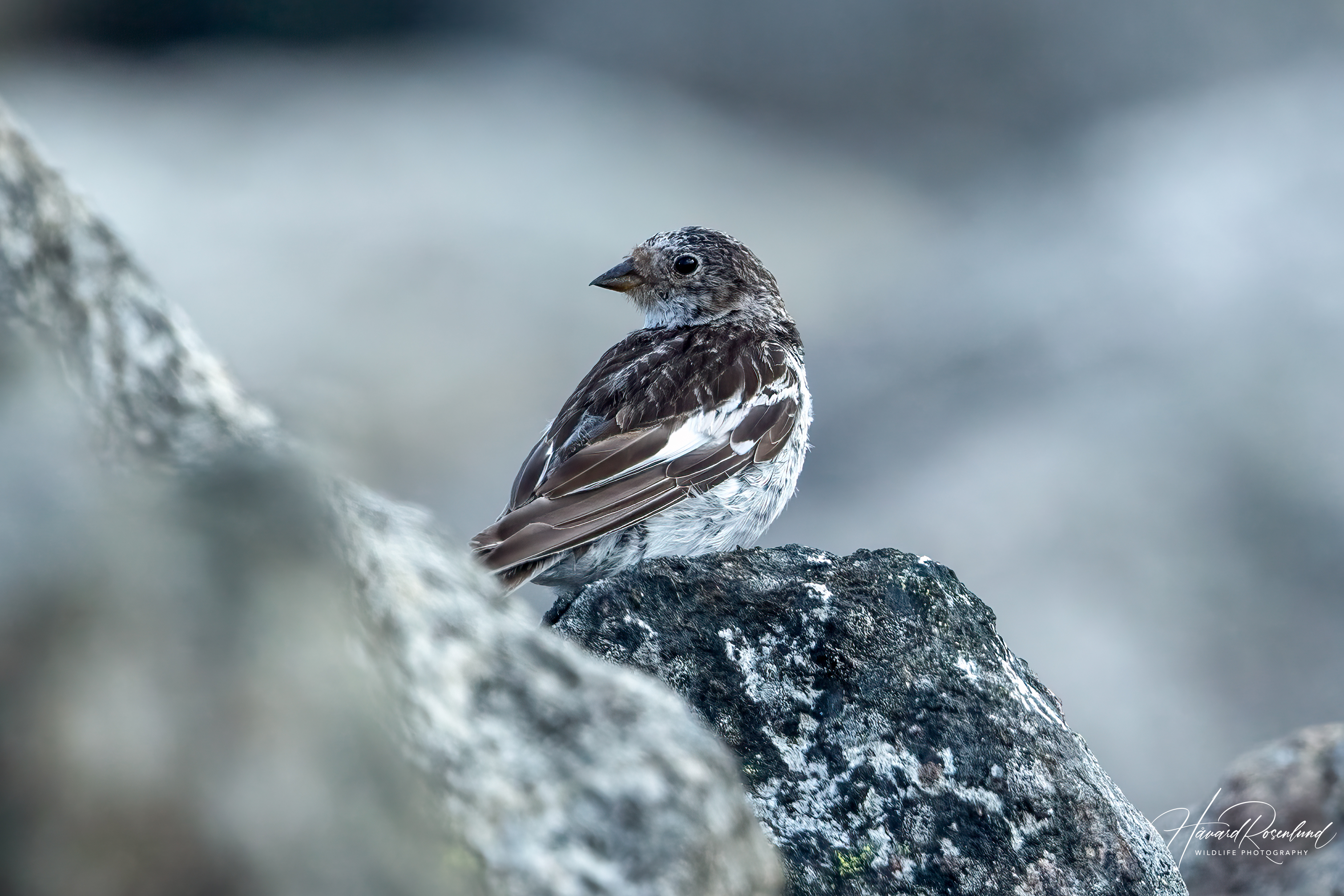
Adults measure about 15–17 cm (6–7 in) in length, with a wingspan of roughly 30–32 cm (12–13 in), and typically weigh 30–40 g (1.1–1.4 oz). In breeding plumage, males are strikingly white with contrasting black on the back, wings, and tail, while females are more subdued and brownish. In winter, both sexes appear warmer brown and buff-toned, becoming whiter again in spring as feather edges wear away rather than through a full molt.
Despite its name, the snow bunting is not a “true” bunting. It belongs to the family Calcariidae, together with longspurs, and is more closely related to them than to the Emberizidae buntings.
Diet & habitat
During the breeding season, snow buntings inhabit open Arctic tundra, rocky slopes, and sparsely vegetated ground. In winter they favor exposed coastal areas, open farmland, roadsides, and windswept fields where snow cover is shallow or broken.
Their diet is seasonal. In summer they feed mainly on insects and other small invertebrates, which are essential for chick development. Outside the breeding season they rely largely on seeds from grasses and other low plants, foraging mostly on the ground.
Behavior
Snow buntings are hardy, ground-oriented birds well adapted to cold and wind. They often run rather than hop while foraging and are frequently seen feeding in loose flocks during winter. These flocks can vary greatly in size depending on food availability.
During the breeding season they become territorial, especially males, which often arrive early on the tundra to claim nesting sites. Their flight is undulating, and they maintain contact through clear calls that carry well across open landscapes.
Migration
Snow buntings are strongly migratory, breeding in the high Arctic and wintering farther south. Spring migration begins early, with males typically arriving on breeding grounds while conditions are still harsh. Autumn migration leads birds to wintering areas across northern Europe, Asia, and North America, sometimes reaching well into the northern United States.
Some populations undertake long migrations, moving thousands of kilometers between Arctic breeding areas and temperate wintering grounds.
Nesting
Breeding takes place during the short Arctic summer. Nests are usually placed deep in rock crevices or cavities, providing shelter from cold and predators. The female lays 2–7 eggs, which are incubated for about 10–15 days.
Both parents feed the chicks, which fledge roughly 9–15 days after hatching. The breeding season is brief, and successful reproduction depends heavily on timing with peak insect availability.
Status
The snow bunting is currently classified as least concern globally on the IUCN Red List. However, as a species closely tied to Arctic environments, it is considered sensitive to climate change. Altered snow conditions, changing insect availability, and warming temperatures may affect breeding success in parts of its range.
Pictures