
Bangladesh-Wintering Redshanks Used a Narrower Himalayan Corridor Than Singapore Birds
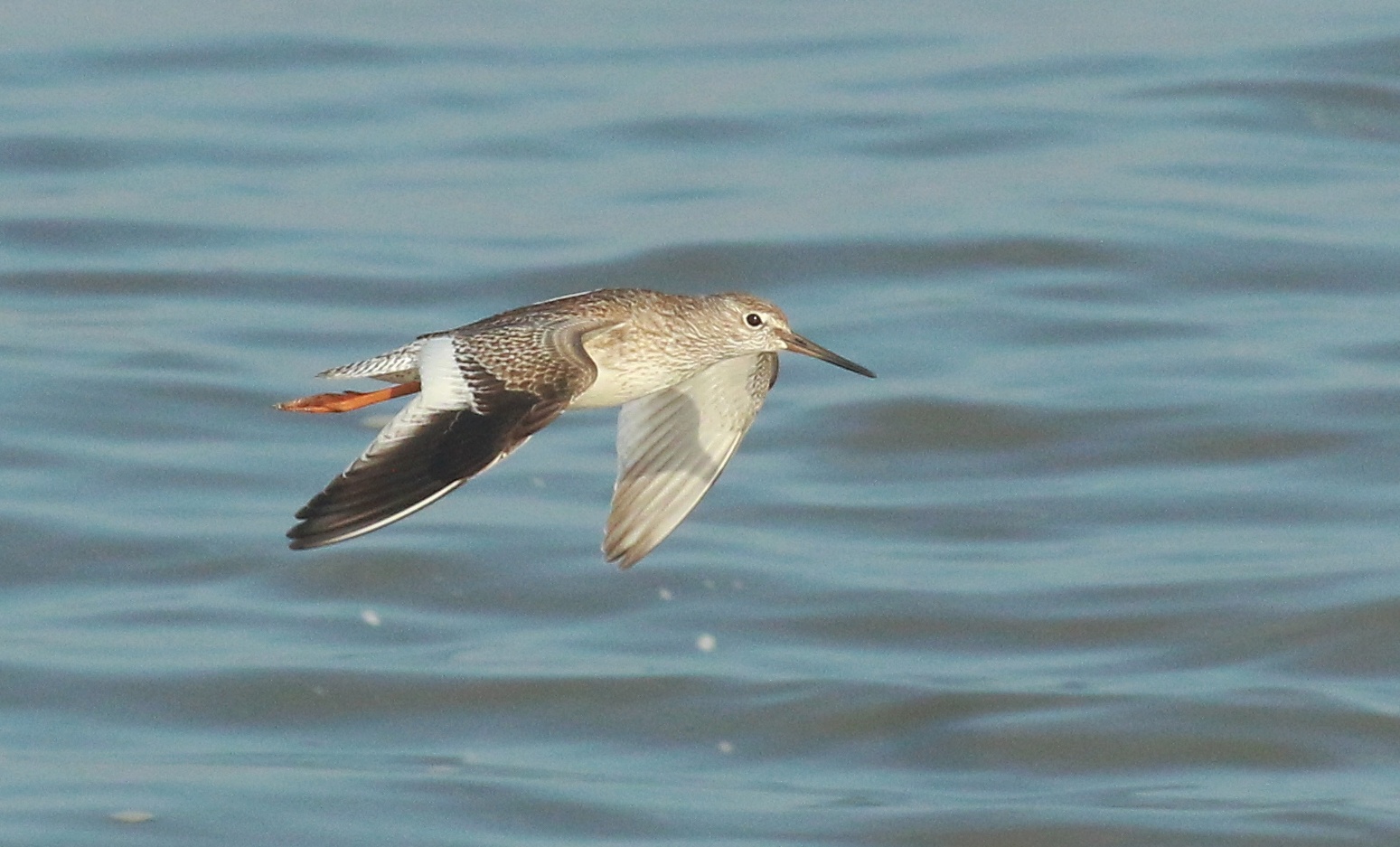
Nine Common Redshanks (Tringa totanus) tracked from non-breeding grounds in southern Bangladesh crossed the Himalayas toward breeding areas in Qinghai and Siberia. Their routes were then compared with previously tracked Common Redshanks wintering in Singapore, revealing a striking combination of shared mountain passage and different endpoints.
The findings were first publicly highlighted by Wader Study on 1 July 2026. The full research paper was published in the journal on 1 September 2026. The study addresses a major gap in knowledge about Common Redshank migration in the Central Asian Flyway, particularly for birds wintering in Bangladesh.
The Bangladesh birds used a much narrower mountain corridor
The Bangladesh-wintering birds followed a narrow trans-Himalayan corridor spanning about 4.7 degrees of longitude. The Singapore comparison group had used a corridor of about 13 degrees—roughly three times as wide. The Bangladesh group also had a shorter mean migration distance.
The comparison is important because both groups crossed the same major geographical barrier. The expectation was that birds facing the Himalayas might converge on similar low-cost passage routes even if they wintered far apart. The tracking data supported shared use of a broad trans-Himalayan pathway, but the Bangladesh birds were concentrated into a much narrower longitudinal corridor.
Similar passage did not lead to the same breeding destinations
Shared use of the mountain passage did not translate into clear overlap in breeding areas. Even among birds that reached the Qinghai–Tibetan Plateau, the two wintering groups showed no clear common breeding range.
Three of the nine Bangladesh-wintering individuals bred outside the previously known breeding distribution described for the species in the region. Two did so in Qinghai, China, and one reached Khakassia in Russia. These tracks extend the documented breeding connectivity of birds wintering in Bangladesh and show that a single non-breeding population can link southern Asian wetlands with widely separated breeding regions.
The same flyway can connect different wintering and breeding areas
The study illustrates why a flyway should not be treated as one uniform migration route. Birds can pass through the same broad mountain corridor while connecting different non-breeding and breeding areas. The Bangladesh and Singapore redshanks therefore shared part of the migration system without forming one geographically identical migration strategy.
The sample was small — nine tracked birds from Bangladesh — so the routes do not define the full migration pattern of all redshanks wintering there. Tracking studies are also inherently shaped by which tagged individuals provide usable movement data. The results nevertheless add direct movement evidence from a region where Common Redshank migration has been poorly documented.
Inland wetlands along the Central Asian Flyway remain poorly known
The authors highlight the Central Asian Flyway, including the Qinghai–Tibetan Plateau, as a priority for further tracking and wetland research. Much shorebird research in Asia has concentrated on coastal migration systems, while species such as Common Redshank can leave coastal non-breeding areas and make long overland movements through inland wetlands and across high mountain ranges.
For conservation, the central result is one of connectivity: protecting a wintering site alone does not capture the full annual cycle of these birds. Bangladesh-wintering redshanks depended on a narrow passage across the Himalayas and breeding areas in China and Russia, while the Singapore comparison birds used related passage routes but different destinations. Understanding those links is necessary before the most important inland stopover and breeding areas can be identified consistently across the flyway.
Ecology
Related news

Common Redshank Food Intake Rate Fell as Nephtys Worms Became More Abundant
A 2026 re-analysis of field data from 16 estuarine mudflats in southern England and South Wales found that…
Read story →
Latitude Shaped Redshank Arrival While Breeding Outcome Shaped Departure Across Europe
GPS tracking of 85 adult common redshanks across European breeding landscapes found spring arrival about two days later…
Read story →
Coastal Stopover Dependence Best Predicted Which Shorebirds Declined in Bangladesh Counts
Fourteen years of counts on Sonadia Island found downward trends in 12 of 20 migratory shorebirds. Seven of…
Read story →SPECIES IN THIS STORY
Species in this story

Independent research and conservation news archive
Did you find this information useful?
Wildlife Vagabond is independently built and maintained. Voluntary support helps cover source verification, hosting and continued work on research and conservation news.
Support Wildlife VagabondThe news archive will remain freely available.