
Berlin Red Squirrels Were Less Likely to Occur in Gardens With Cats
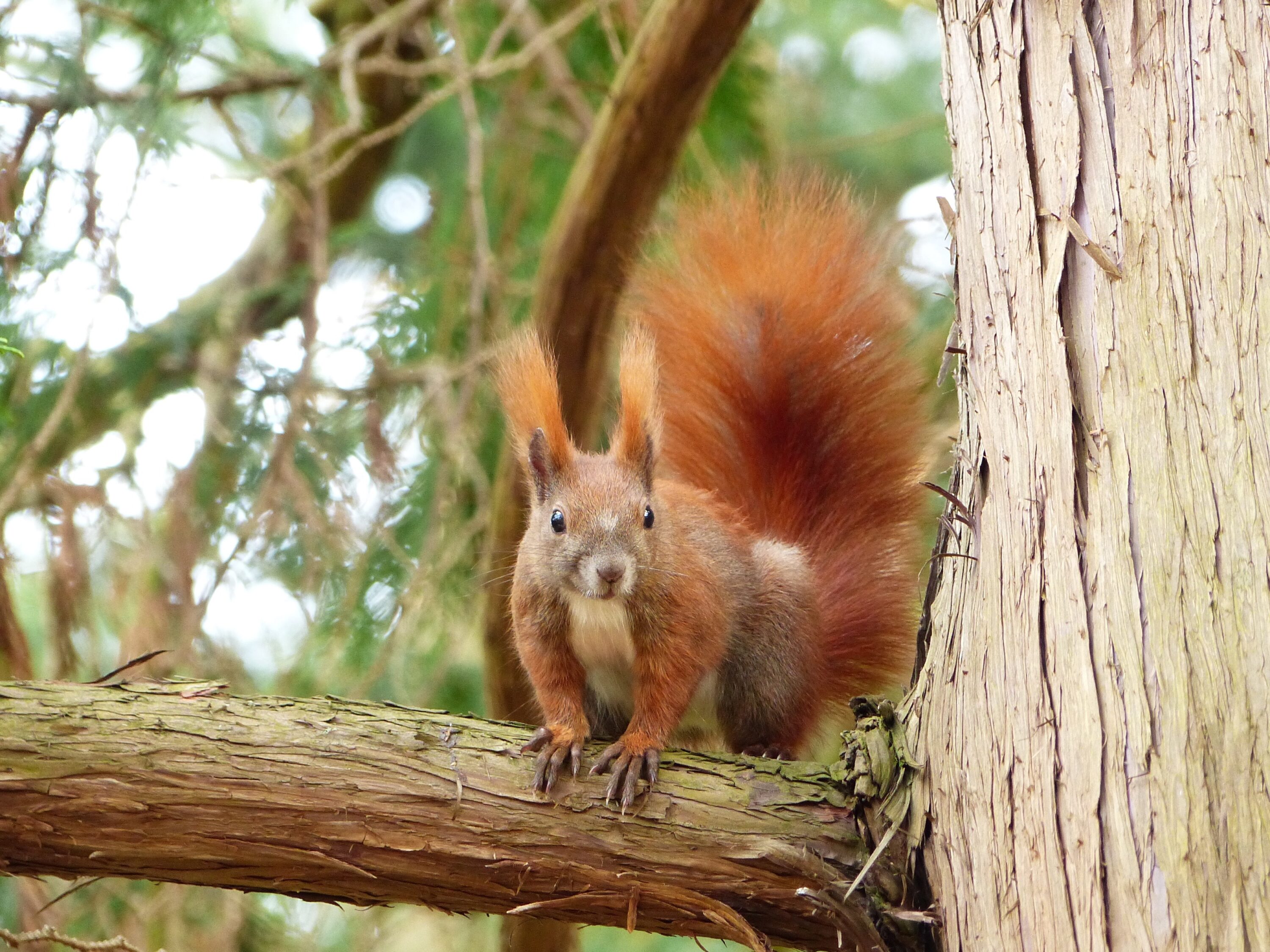
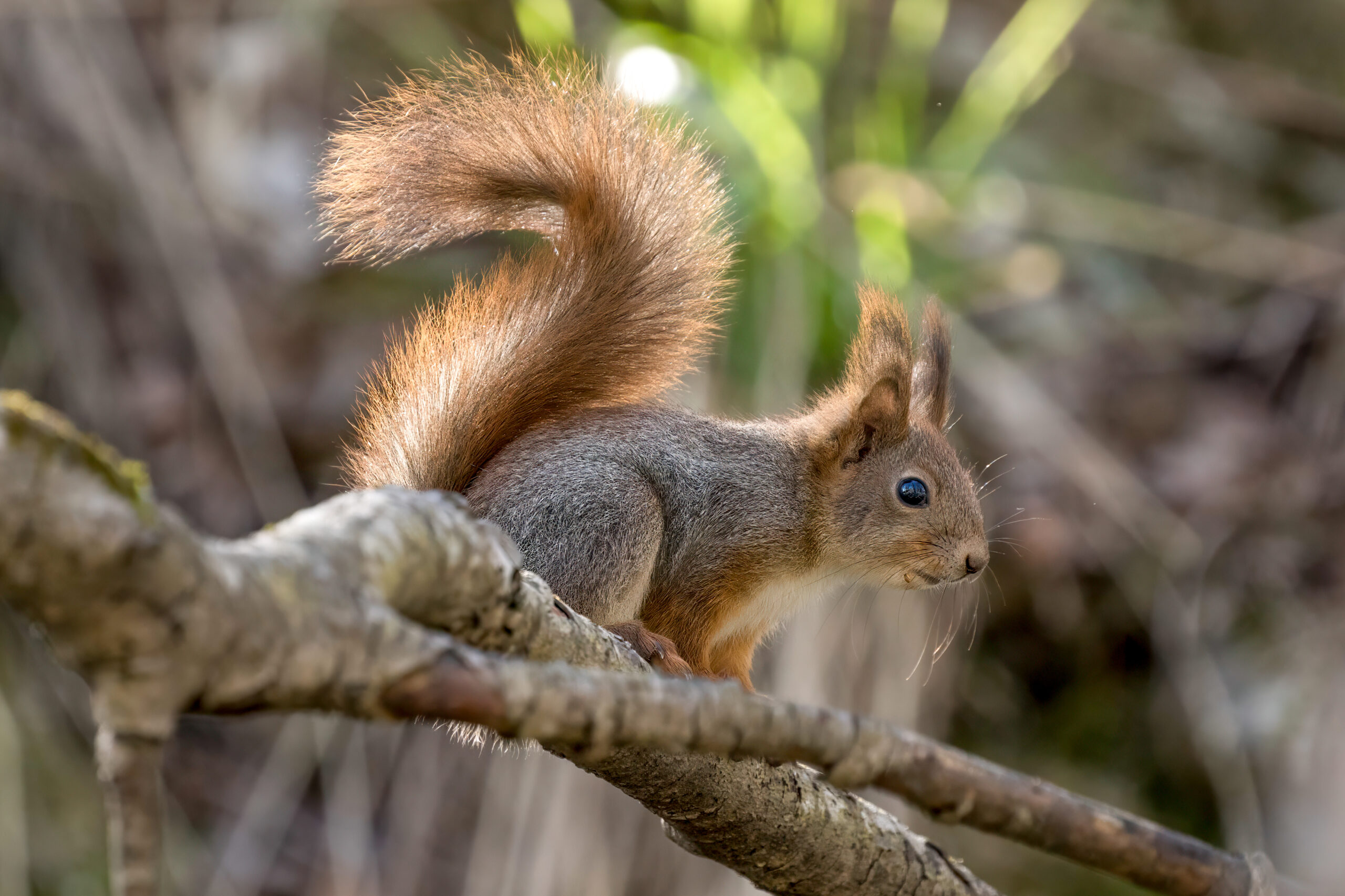
Eurasian red squirrels (Sciurus vulgaris) were less likely to occur in private gardens where domestic cats (Felis catus) were present, according to a Berlin, Germany camera-trap study published on 3 April 2026. The researchers also found that local tree cover and season were important for where squirrels occurred.
The study used about 150 camera traps per sampling season, with 575 camera-trap placements across private gardens during spring and autumn in 2019 and 2020. After filtering repeated detections, the cameras recorded 415 squirrels, 1,570 cats, 337 martens (Martes spp.), 1,018 red foxes (Vulpes vulpes) and 766 raccoons (Procyon lotor).
Tree cover and season strongly shaped squirrel occurrence
Red squirrels were more likely to occur in gardens with a higher proportion of local tree cover and were more likely to occur in autumn than in spring. These variables appeared consistently in the best-supported squirrel occupancy models.
When the researchers modelled squirrels together with the four mesocarnivore groups, the clearest negative relationship involved domestic cats. The results suggested that squirrels were more likely to occur when cats were absent. The authors interpret this as evidence consistent with avoidance of cats in urban gardens.
No clear avoidance of the wild mesocarnivores
The study did not find a clear positive or negative co-occurrence pattern between squirrels and red foxes, raccoons or martens at the garden-occupancy scale. The authors note that squirrels are mainly active during the day, while these wild mesocarnivores are more nocturnal, reducing temporal overlap even when they use the same urban spaces.
Raccoons and squirrels were sometimes more likely to occur together in areas with higher human population density. The researchers suggest that both species may independently be attracted to human-provided food rather than this reflecting a direct interaction between them.
The study did not measure predation events and therefore cannot show whether the cat-related pattern resulted from squirrels directly avoiding cats or from other differences between gardens with and without cats.
Ecology
Related news
Red Squirrels Stayed at Urban and Rural Sites at Similar Rates on Hokkaido
Across nine sites on Hokkaido, red squirrels had nearly identical four-month probabilities of remaining in urban and rural…
Read story →
Squirrelpox in Dollar Became Scotland’s Northernmost Confirmed Case
A red squirrel from Dollar, Clackmannanshire, had squirrelpox confirmed by pathology and qPCR, making it the northernmost reported…
Read story →
Portugal’s Eurasian Red Squirrels Showed Markedly Low Mitochondrial Diversity
The most comprehensive genetic sampling of Eurasian Red Squirrels in Portugal to date found markedly low mitochondrial diversity,…
Read story →SPECIES IN THIS STORY
Species in this story
Independent research and conservation news archive
Did you find this information useful?
Wildlife Vagabond is independently built and maintained. Voluntary support helps cover source verification, hosting and continued work on research and conservation news.
Support Wildlife VagabondThe news archive will remain freely available.