
Black Woodpecker Cavities Averaged 11.6 Litres and Grew With Tree Diameter
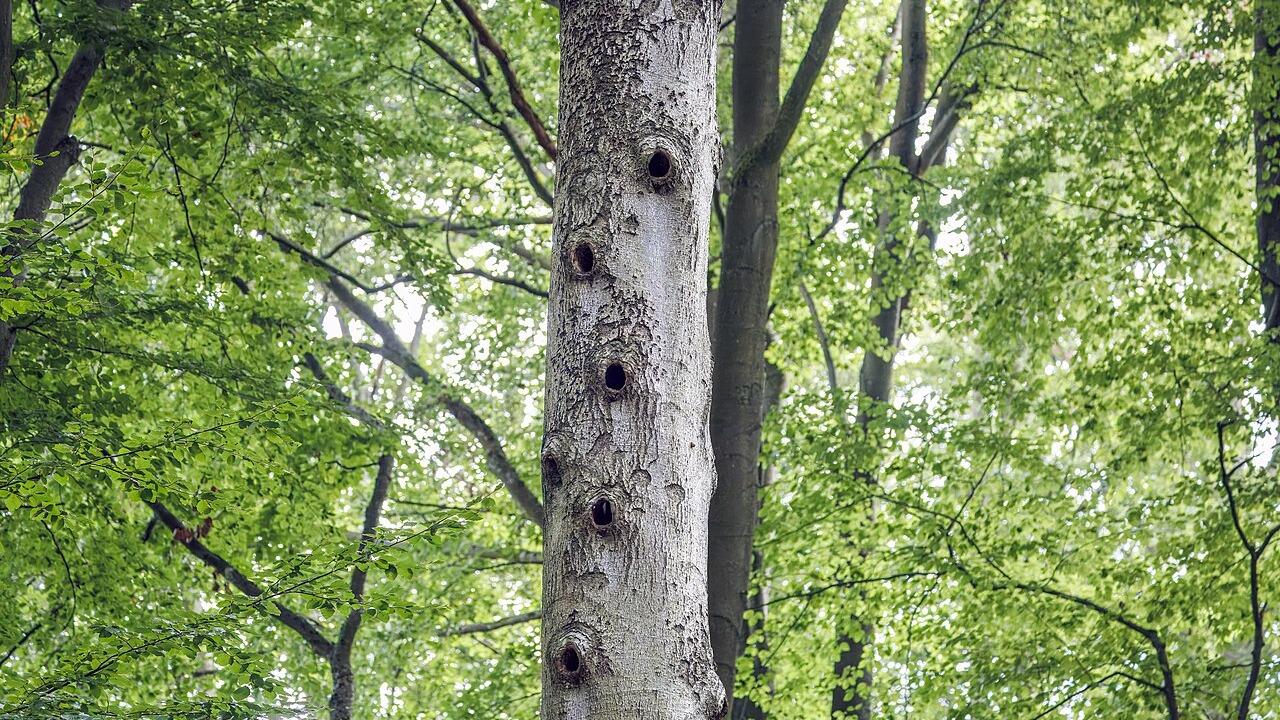
Black woodpeckers (Dryocopus martius) create some of the largest bird-made cavities in European forests. A study from Poland’s Augustów Forest measured 136 black-woodpecker cavities and found an average chamber volume of 11.6 litres, with cavity size strongly linked to the thickness of the tree trunk.
The researchers examined cavities in fallen, broken or uprooted trees, allowing the chambers to be measured directly. Around 76% had been excavated in Scots pine, while the remainder were in deciduous trees. The cavities were on average about 45 cm deep below the entrance and 18.7 cm wide inside the trunk.
Pine cavities were generally larger
Cavities in pine had a larger internal diameter than those in deciduous trees. Across all measured cavities, volume ranged from about 7 to 21 litres. Among deciduous-tree cavities, 63% were smaller than 10 litres, compared with 38% of those in pine.
The strongest predictors of chamber size were trunk diameter at the height of the entrance and diameter at breast height. Trees with a breast-height diameter below 40 cm always contained cavities smaller than 10 litres, while small cavities became much less common above that threshold.
Large trees provide larger forest cavities
Black woodpecker cavities are later used by other birds, mammals and social insects, making the species an important source of large tree holes in mixed and coniferous forests. Based on the relationship between tree size and cavity volume, the authors recommend retaining trees above 40 cm in diameter, especially trees containing decaying wood, in commercially managed forests.
Ecology
Related news
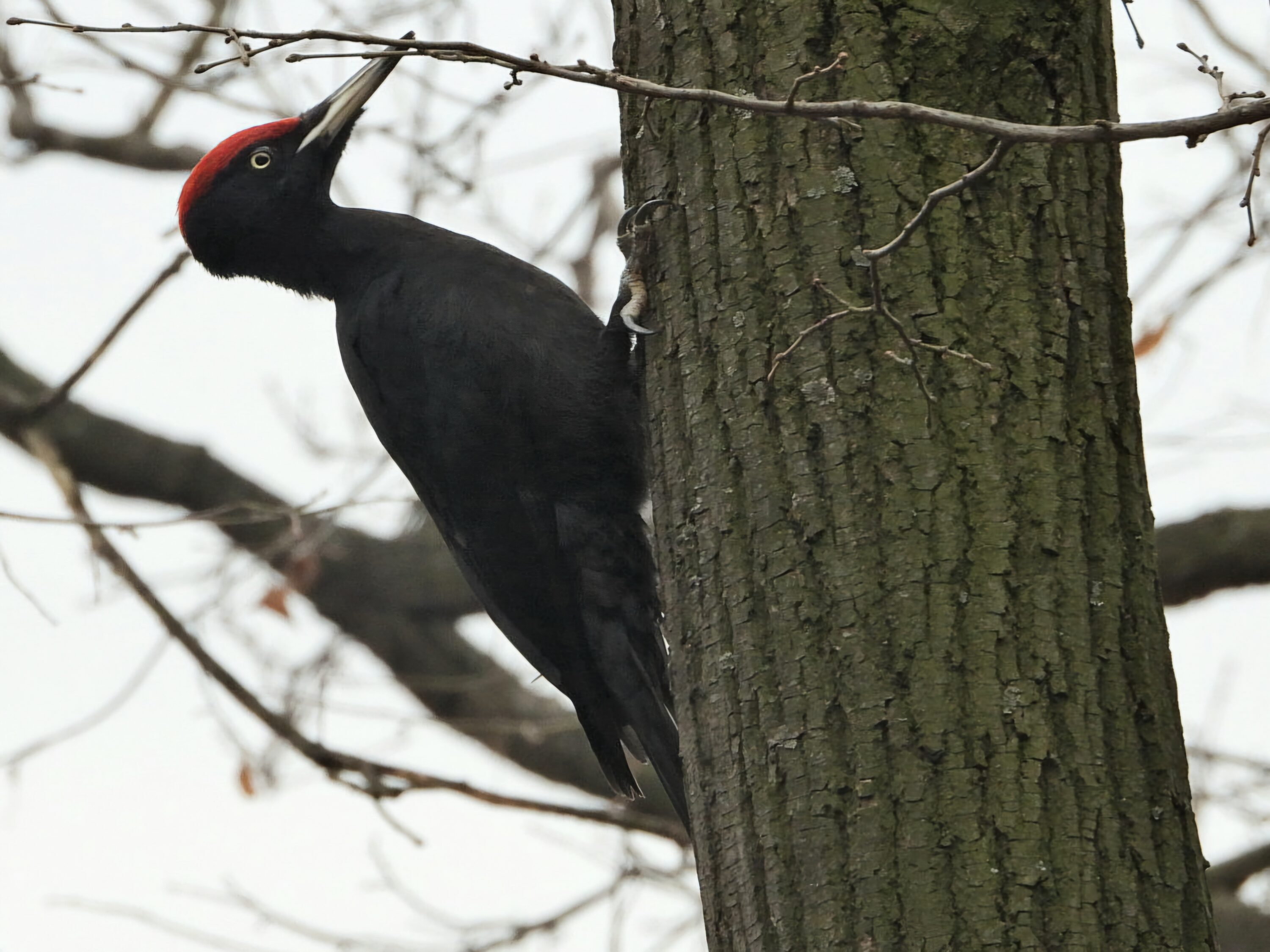
Inside inspections reveal animals missed at Black Woodpecker cavities
In Poland’s Augustów Forest, researchers recorded 50 animal taxa associated with Black Woodpecker cavities. Entrance cameras mostly recorded…
Read story →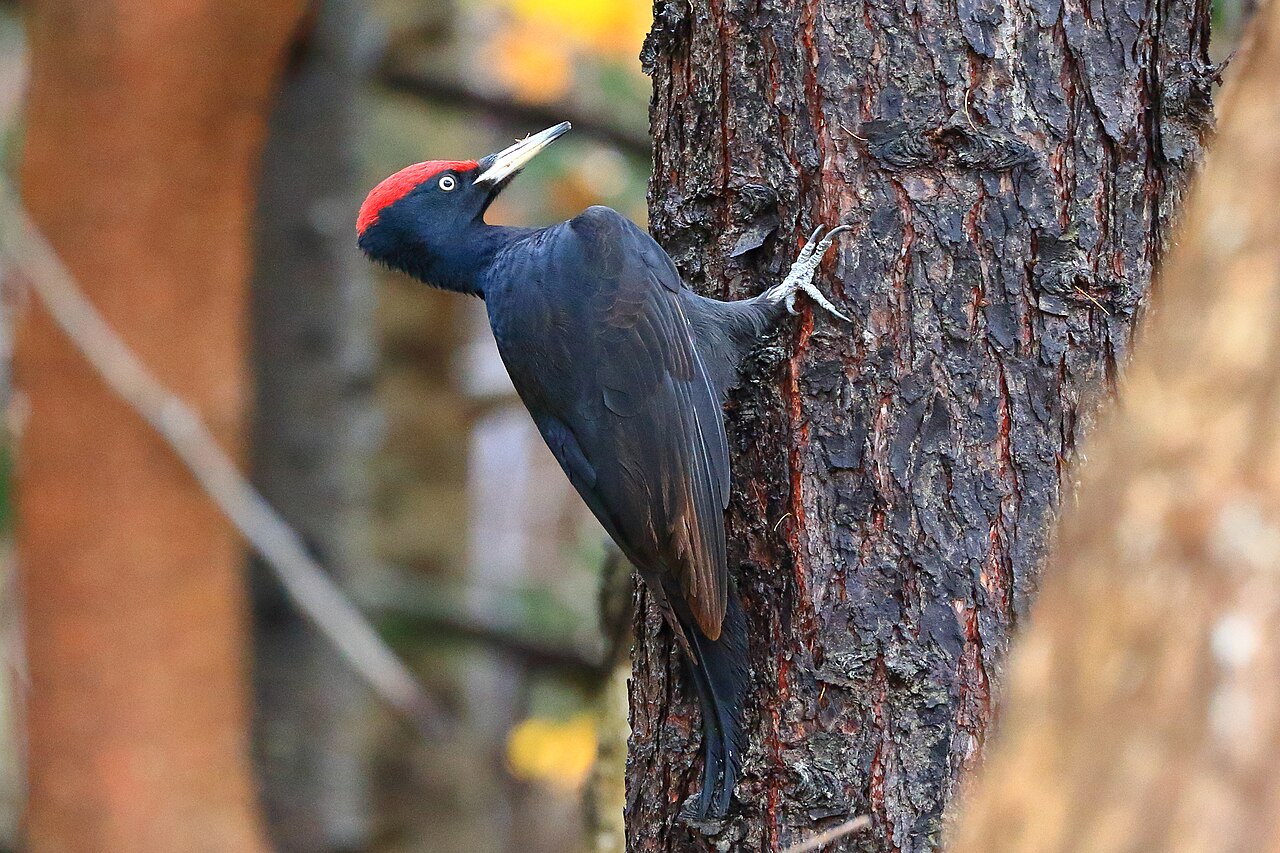
Fresh Black Woodpecker Evidence Found at Mount Moriyoshi, but No Detections in Iwate or Shirakami
A 2026 survey found fresh black-woodpecker evidence at Mount Moriyoshi in Akita, while 169 hours of acoustic monitoring…
Read story →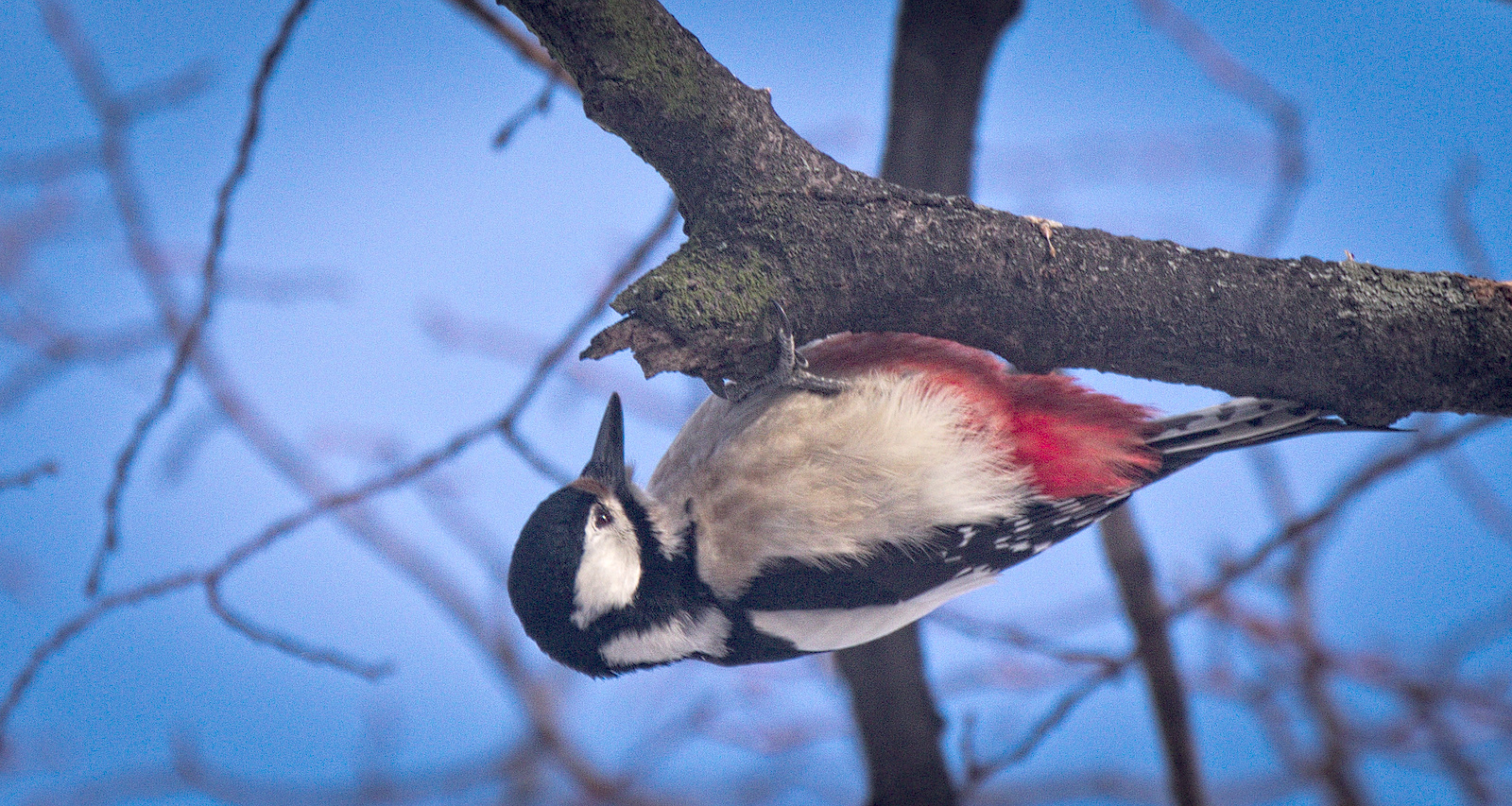
Six European Woodpeckers Shared a Common Eyelid Plan but Showed Microscopic Variation
Microscopic study of 40 woodpeckers from six European species found the same basic eyelid plan, including a fibrous…
Read story →SPECIES IN THIS STORY
Species in this story

Independent research and conservation news archive
Did you find this information useful?
Wildlife Vagabond is independently built and maintained. Voluntary support helps cover source verification, hosting and continued work on research and conservation news.
Support Wildlife VagabondThe news archive will remain freely available.