
Boutourlini’s blue monkey groups preferred undisturbed coffee forest and avoided open canopy
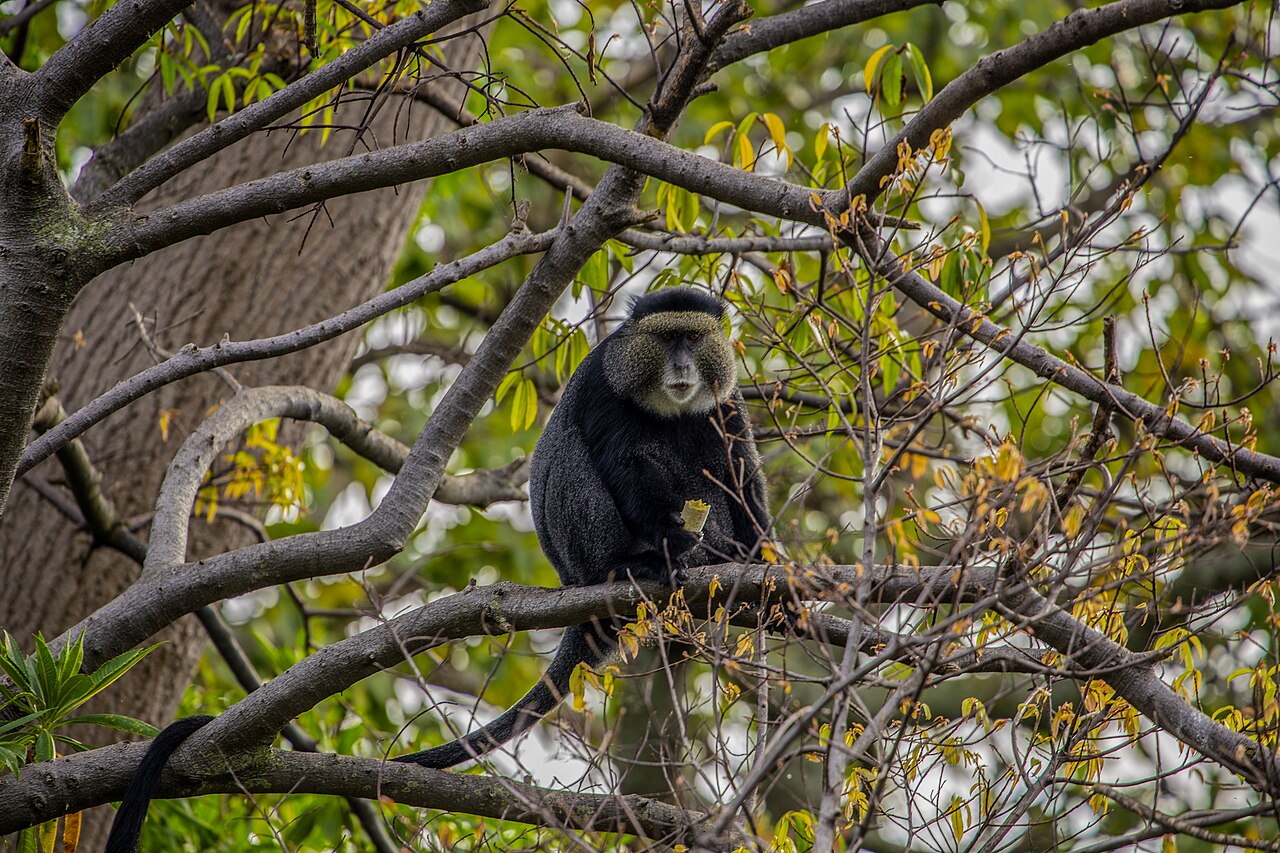
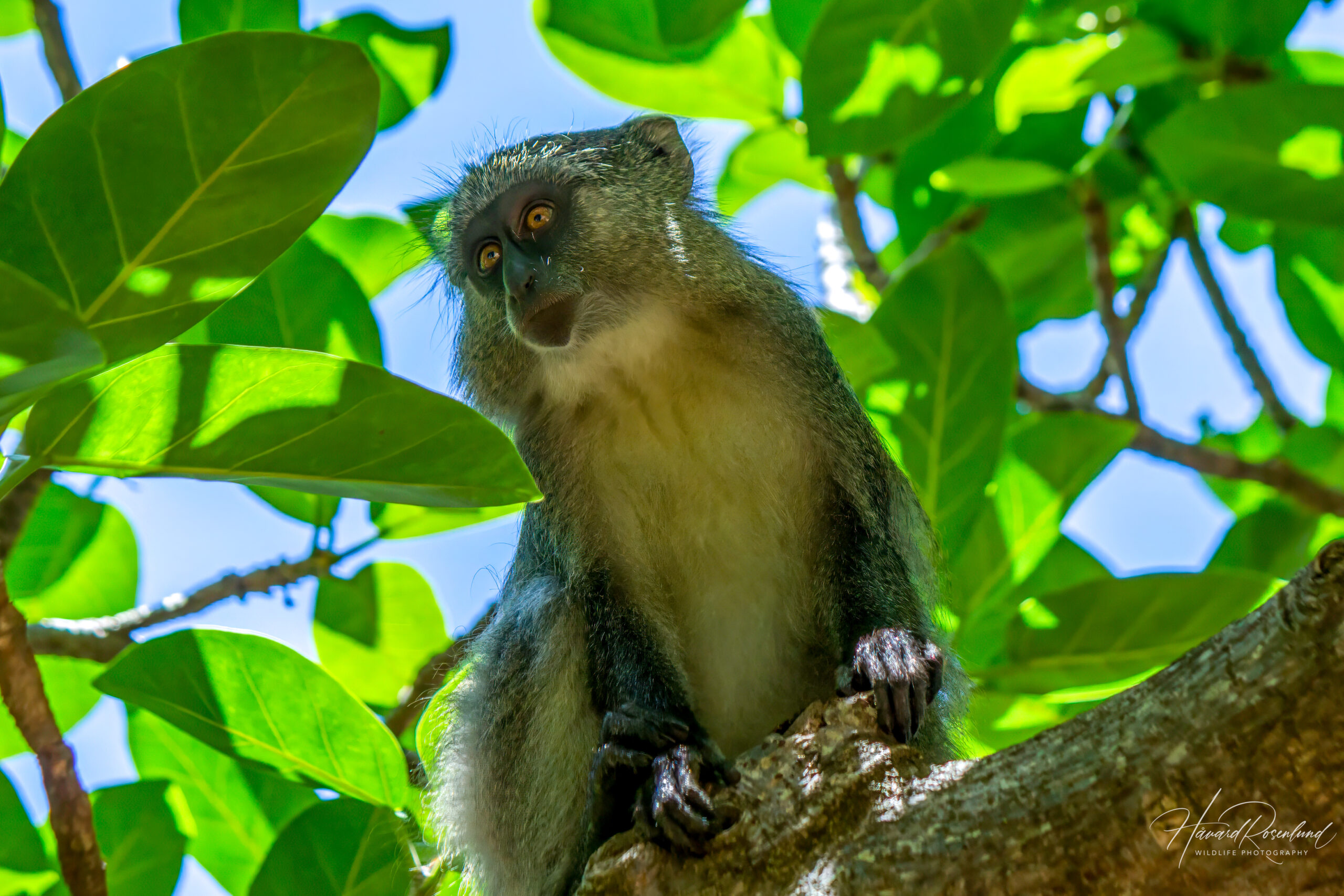
Two groups of Boutourlini’s blue monkey (Cercopithecus mitis boutourlinii) living under very different levels of human disturbance in an Ethiopian coffee forest showed the same strong habitat preference: both selected undisturbed natural coffee forest and avoided open-canopy areas within their ranges.
Researchers followed the two groups for 15 months, from November 2016 to January 2018, in Hamuma Coffee Forest in western Ethiopia. One group, known as the Low Disturbance group, contained 55–58 individuals and spent most of its time in undisturbed natural forest and lightly modified shade-coffee forest. The High Disturbance group contained 32–35 individuals and lived mainly among heavily modified open-canopy coffee forest and shade-coffee forest.
The groups differed more in social activity and range size than in daily activity
Despite this contrast in the habitats available to them, the analysis did not support clear group differences in feeding, travelling or resting. Social activity was clearly higher in the Low Disturbance group. The authors suggest that its larger group size, and therefore greater number of potential social partners, may have contributed to this difference.
Ranging patterns showed a clearer contrast. The High Disturbance group used a larger home range and a larger core area, whereas the Low Disturbance group concentrated its use within a smaller area. However, the analysis did not support a clear difference in daily travel distance, either across the year or between seasons.
Both groups still preferred undisturbed coffee forest
Habitat-selection analyses produced one of the study’s strongest shared patterns. Both groups strongly preferred undisturbed coffee forest when it was available — meaning they used it more than expected from its availability within their ranges — and avoided open-canopy habitat. The result shows that the monkeys continued to favour more intact forest structure even when one group lived in a landscape where disturbed coffee habitat made up much more of its surroundings.
The researchers describe this as evidence that Boutourlini’s blue monkeys can use a range of coffee-forest habitats and show considerable ecological flexibility. At the same time, they do not treat the two groups as a replicated test of disturbance. Only one group represented each disturbance level, and the groups also differed substantially in size. The authors therefore call for studies of more independent groups before drawing firmer conclusions about how habitat modification changes the subspecies’ behaviour and ranging ecology.
Boutourlini’s blue monkey is a threatened primate of western Ethiopia and southeastern South Sudan whose forest range is increasingly affected by agriculture and plantation development. The authors suggest that its ability to persist in modified coffee forests may help populations cope with landscape change, while the consistent preference for undisturbed forest highlights the continuing importance of retaining less-modified forest within these mosaics.
Ecology
Related news
Two Boutourlini’s blue monkey groups differed in feeding and movement across Saja Forest
A 15-month study of two Boutourlini’s blue monkey groups in Ethiopia found more feeding in the Saja Forest…
Read story →
Helminth infections were more common in Volcanoes golden monkeys than in Gishwati
Rwanda’s Volcanoes golden monkeys had a higher prevalence of helminth infection and more multiple infections than the much…
Read story →
African Bush Elephants Distinguished Artificial Food-Quantity Patterns at Close Range
In experiments in South Africa, four semi-tame elephants chose between visual patterns representing canopy size and leaf density.…
Read story →SPECIES IN THIS STORY
Species in this story
Independent research and conservation news archive
Did you find this information useful?
Wildlife Vagabond is independently built and maintained. Voluntary support helps cover source verification, hosting and continued work on research and conservation news.
Support Wildlife VagabondThe news archive will remain freely available.