
Danish Common Eider Sex-Ratio Survey Recorded 63.3% Males, Down From 69.3% in 2024

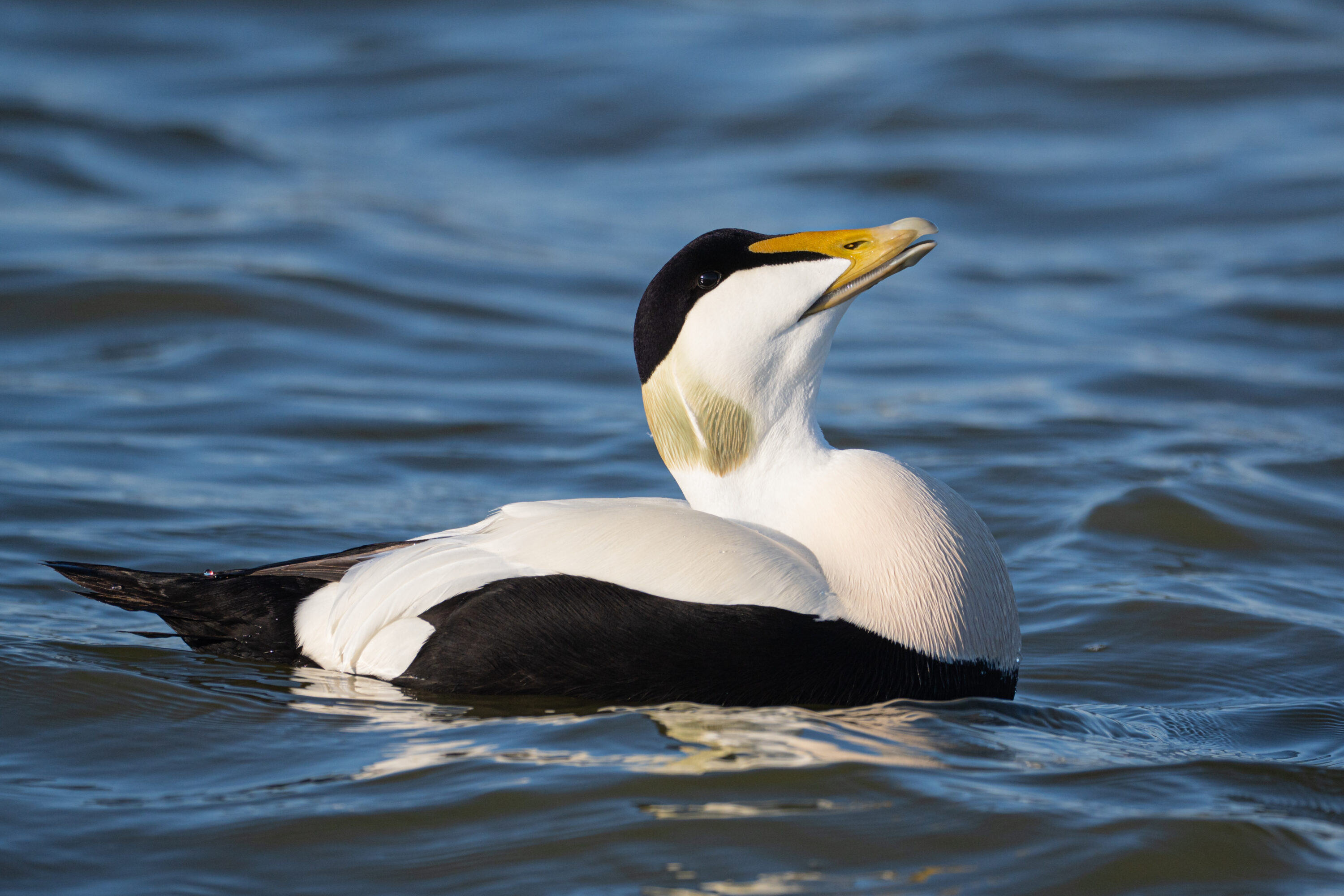
A nationwide Danish survey of common eiders (Somateria mollissima) found 63.3% males and 36.7% females among 22,090 birds analysed in March 2026. The result describes birds counted at selected coastal sites; it is not an estimate that exactly 63.3% of Denmark’s entire eider population is male.
Forty-one volunteer hunters submitted counts from 68 coastal locations. Ten locations with fewer than 20 eiders were excluded from the main analysis, leaving 58 locations across ten marine areas.
The male share fell from 69.3% in 2024 to 63.3% in 2026
Comparable Danish Hunters’ Association surveys recorded 63.6% males in 2011, 65.4% in 2021, 69.3% in 2024 and 63.3% in 2026. The change from 2024 to 2026 was statistically clear, while the 2026 ratio was not distinguishable from the 2011 result.
The 2026 result therefore represents a return towards the earlier survey level rather than a new historical low in male proportion.
Sex ratios varied strongly among marine areas
The 2026 female share ranged from 15.8% in the Wadden Sea to almost half in Smålandsfarvandet, where 49.3% of 2,171 birds were female. A 50% female share in the Baltic Sea was based on only 34 birds and is therefore much less informative.
Changes since 2024 also differed among regions: some marine areas shifted towards more females, others towards more males, and there was no single geographic pattern explaining the national change.
The survey samples mainly coastal resting birds
Sex was identified visually, and both resting and migrating birds could be included. In practice, however, the survey mainly covered coastal resting eiders, including sites close to breeding colonies. The report notes that this may overrepresent paired birds and produce a more even sex ratio than monitoring focused on migrating birds.
Spring migration counts at Hyllekrog, for example, have shown a lower female share. The two monitoring approaches sample different parts of the population, but both consistently show more males than females.
The female share matters for population monitoring
Female eiders are fully protected from hunting in Denmark, while males remain huntable. The report treats sex-ratio monitoring as one part of the evidence used to assess a declining population in which the number of females is especially important for reproductive output.
The 2026 survey confirms a persistent male-biased sex ratio but also shows why a single percentage should not be treated as a complete population census. Continued repeated monitoring is needed to distinguish long-term change from geographic and sampling variation.
Population & status
Related news
Colour-Banded Eider Linked Nunavut and Iceland More Than 2,800 Kilometres Apart
A male northern common eider banded on East Bay Island, Nunavut, in 2023 was filmed in western Iceland…
Read story →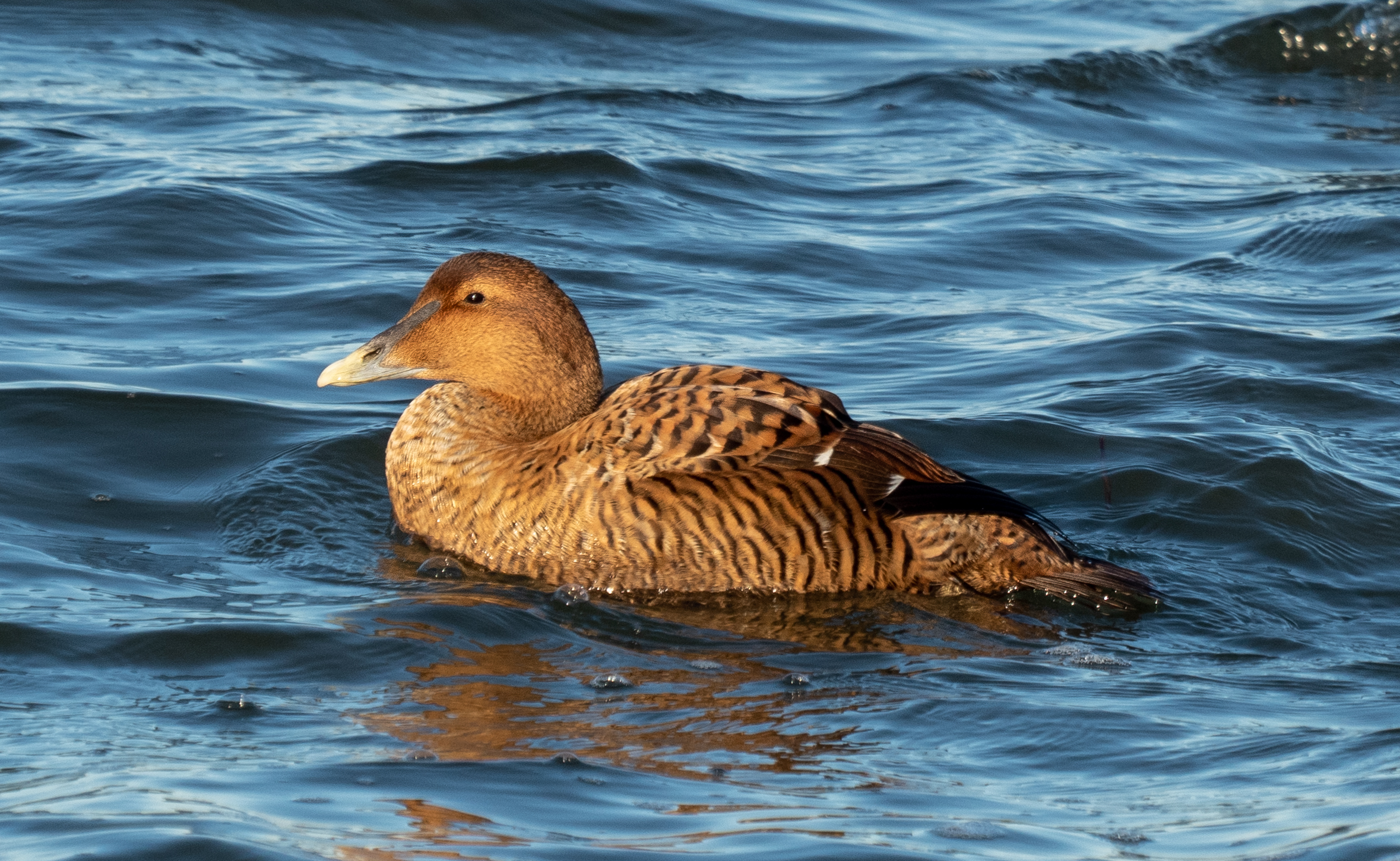
Only About Half of American Common Eider Females Were Estimated to Breed in a Given Year
Satellite tracking of 123 females across Maine and eastern Canada estimated overall breeding propensity at 53%, while regional…
Read story →
Higher PFOS Was Linked to Lower Egg Temperatures in Finnish Common Eiders
Researchers studied 18 female common goldeneyes and 37 female common eiders in Finland. Higher PFOS was linked to…
Read story →SPECIES IN THIS STORY
Species in this story

Independent research and conservation news archive
Did you find this information useful?
Wildlife Vagabond is independently built and maintained. Voluntary support helps cover source verification, hosting and continued work on research and conservation news.
Support Wildlife VagabondThe news archive will remain freely available.