
Two Models Estimated 13.5–19.6 Million Wild Boar Across Europe’s Core Range
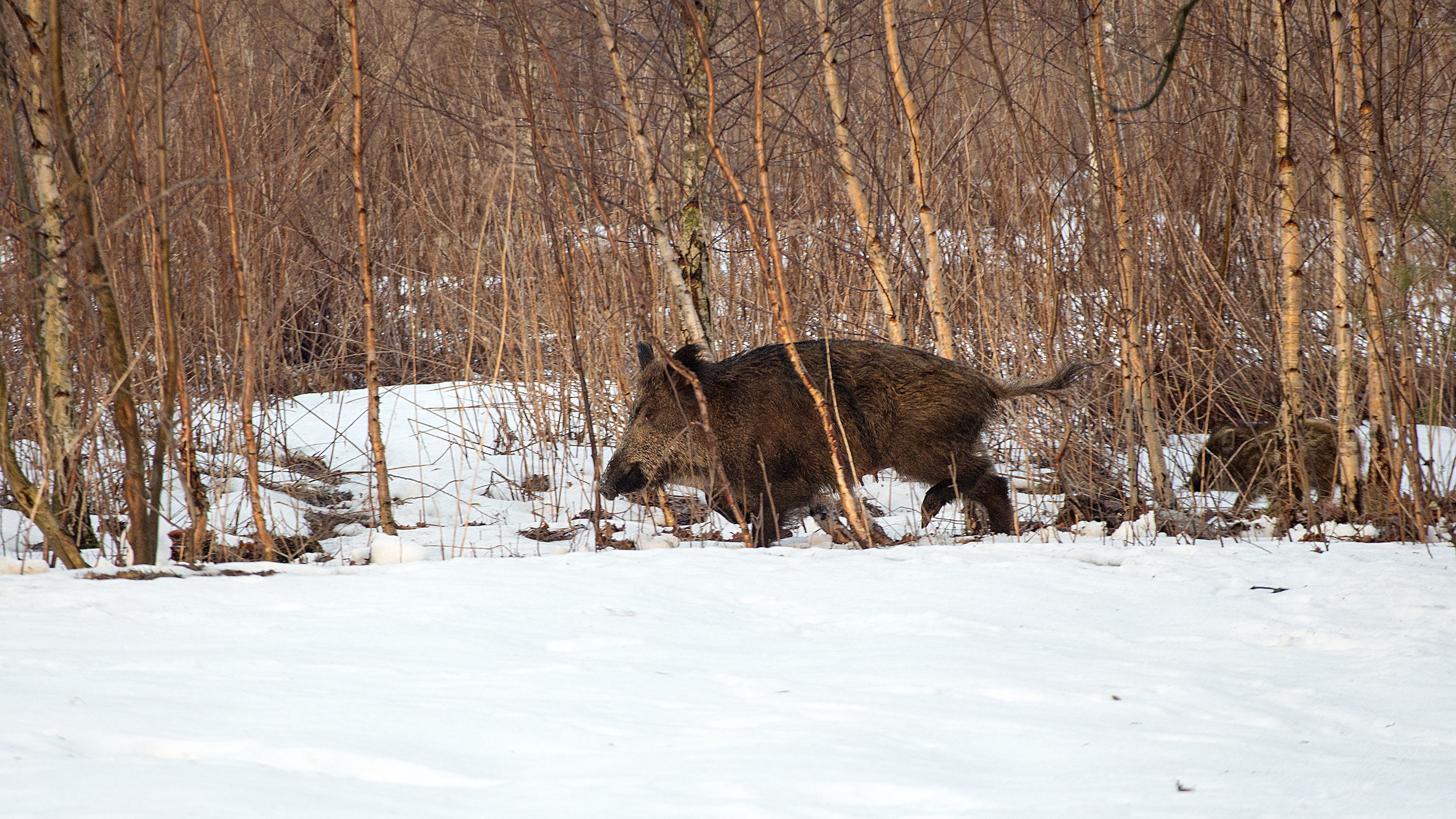
A continent-wide study of wild boar (Sus scrofa) combined two independent spatial models with comparable density estimates from 77 sites across Europe. One model used occurrence records and habitat suitability, while the other used hunting yields. Both were calibrated to local density data and produced estimates at a 2 × 2 km resolution.
Two models estimated 13.5–19.6 million wild boar
For the core European wild boar range, the occurrence-based model estimated about 13.5 million animals before the hunting season, while the hunting-yield model estimated about 19.6 million. Including countries where wild boar were absent or nearly absent, recently expanding or present only as small relict populations raised the respective Europe-wide totals to about 14.6 and 21.9 million. The authors regard the core-range estimates as more representative because those marginal or rapidly changing populations are harder to model reliably. These are not population estimates for one single calendar year. The researchers used data from periods before African swine fever was detected in each country or region, ranging from 2007 in Georgia to much later years in countries that remained free of the disease.
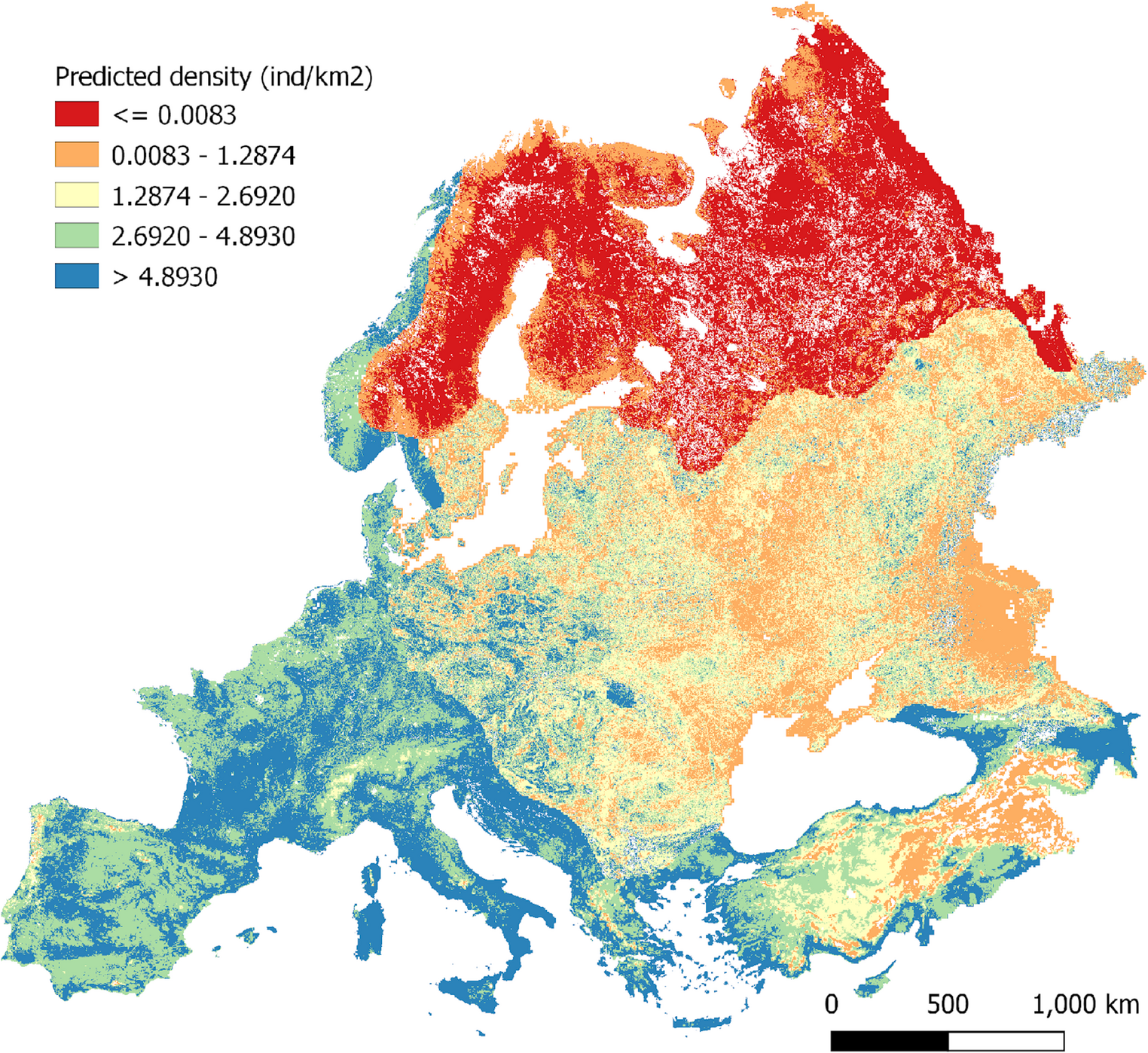
The two approaches produced broadly similar country-level estimates, although the occurrence model generally produced lower totals. Local density estimates used for calibration ranged from 0.18 to 74 wild boar per km². The hunting model showed a broad pattern of higher abundance in southern, western and central Europe and lower densities toward the north and northeast.
Country-level estimates require caution
The authors emphasise that estimates need to be interpreted country by country because wild boar distribution, hunting coverage, data quality and population history differ substantially. Expanding or relict populations can be especially difficult to model, and African swine fever itself can change both population size and hunting practices. The resulting maps are intended as a pre-ASF baseline for comparing disease impacts and management across Europe.
Population & status
Related news
Maps Show Where Wild Boar Could Thrive and Spread on Jeju Island
Researchers mapped potentially suitable wild-boar habitat across roughly 36% of Jeju Island and identified eight possible corridors linking…
Read story →
Roe Deer and Wild Boar Remained Key Wolf Prey as Diet Shifted Across North-western Italy
From 2021 to 2025, wolves in north-western Italy continued to feed mainly on wild prey. In the Po…
Read story →
Copper levels in wild boar differed across Slovak districts
An analysis of kidney, liver and muscle from 147 wild boar in four districts found that iron and…
Read story →SPECIES IN THIS STORY
Species in this story
Independent research and conservation news archive
Did you find this information useful?
Wildlife Vagabond is independently built and maintained. Voluntary support helps cover source verification, hosting and continued work on research and conservation news.
Support Wildlife VagabondThe news archive will remain freely available.