
Empordà nest-box project reported 151 European Roller chicks in 2025

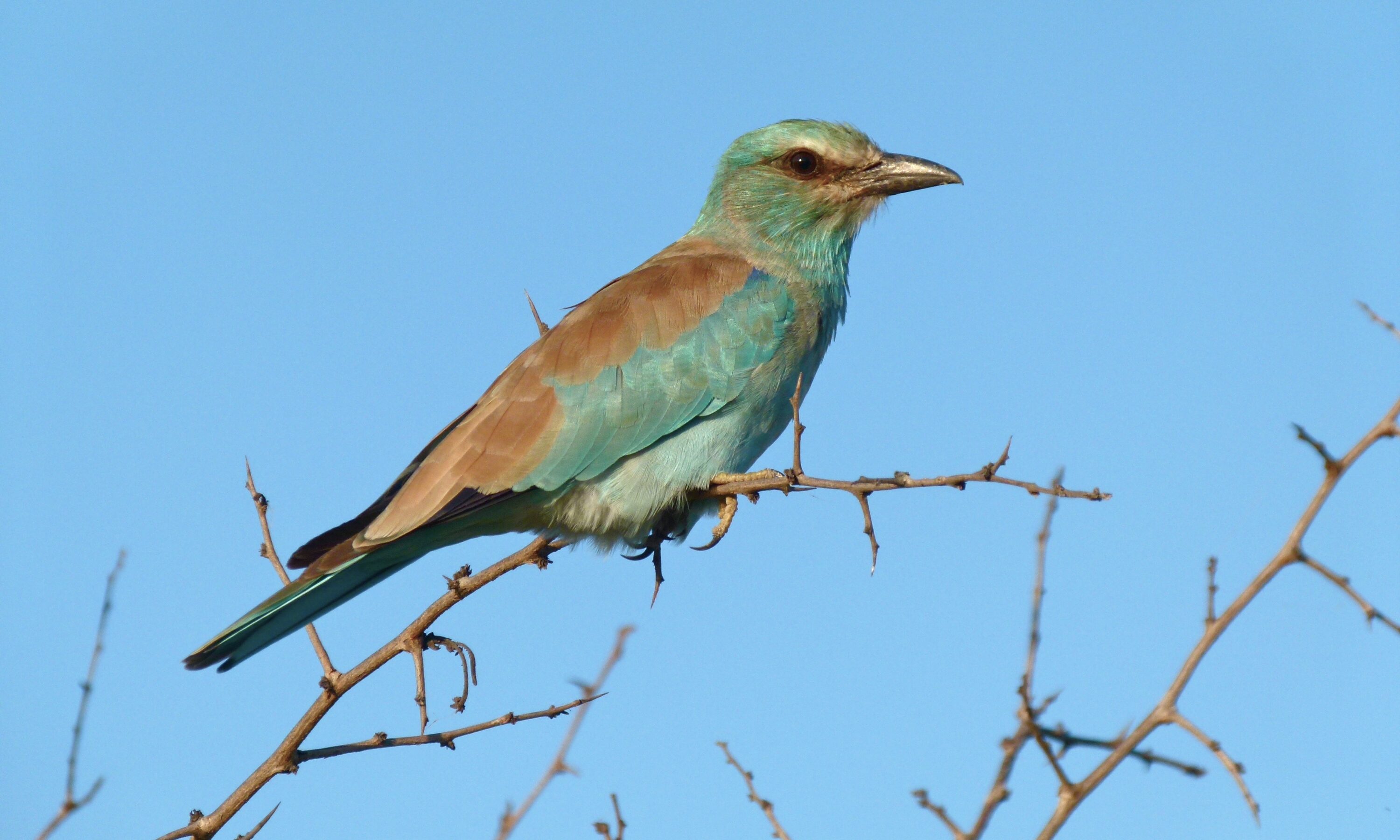
A nest-box conservation programme in northeastern Catalonia, Spain reported 151 European roller (Coracias garrulus) chicks during the 2025 breeding season. The figures, released in March 2026, come from Endesa’s Coracias project in the Aiguamolls de l’Empordà Natural Park and the Montgrí, Medes Islands and Baix Ter Natural Park.
The project uses electricity pylons as secure mounting points for nest boxes in landscapes where suitable natural cavities can be scarce. Endesa has been working with European rollers in the Empordà for years, combining nest-box provision with monitoring, camera traps and GPS tracking to support breeding and improve knowledge of how the birds use the landscape.
Project boxes held 44 pairs, 209 eggs and 151 chicks
For the 2025 season, the project reported 82 nest boxes in the two protected areas. A total of 44 European roller pairs used project boxes, and the season produced 209 eggs and 151 chicks. The reported box-occupancy figure was 59%. These numbers describe use of the project’s nest boxes rather than a complete census of every roller pair in the wider Empordà population.
Breeding results varied between sectors
Results varied between sectors. In the Mornau–Estanys area of Aiguamolls de l’Empordà, the project reported that breeding success — the proportion of nests that managed to raise chicks — increased from 61% to 92%. South of the Muga River, breeding results were also among the strongest in the park. In the Montgrí area, Bellcaire and Verges continued to show particularly high breeding performance.
European rollers depend on open agricultural and pastoral landscapes for feeding but require cavities for nesting. Old trees, traditional buildings and other natural or semi-natural cavities provide such sites, yet these can be scarce or disappear as landscapes change. The Coracias project addresses that particular limitation by adding artificial nesting cavities to areas that otherwise provide suitable feeding habitat.
Management
Related news
Portugal’s European Roller Breeding Population Grew 26% While Breeding Range Shrank 67%
More than two decades of monitoring found that Portugal’s European roller breeding population increased by about 26% since…
Read story →
European Roller Chicks in Cropland Landscapes Differed in Specific Antioxidant and Immune Markers
In central Italy, cropland-raised European roller chicks had lower expression of nine genes and lower catalase activity, but…
Read story →
Complete 2024 Census Found Only 16 European Roller Pairs in the Jaén Study Area
A comprehensive 2024 census found 16 European roller pairs in 10 active territories in Jaén and adjacent Córdoba,…
Read story →SPECIES IN THIS STORY
Species in this story

Independent research and conservation news archive
Did you find this information useful?
Wildlife Vagabond is independently built and maintained. Voluntary support helps cover source verification, hosting and continued work on research and conservation news.
Support Wildlife VagabondThe news archive will remain freely available.