
Rose-ringed and Monk Parakeets Filled Ecological Roles Rare Among Native Birds in Italian Cities
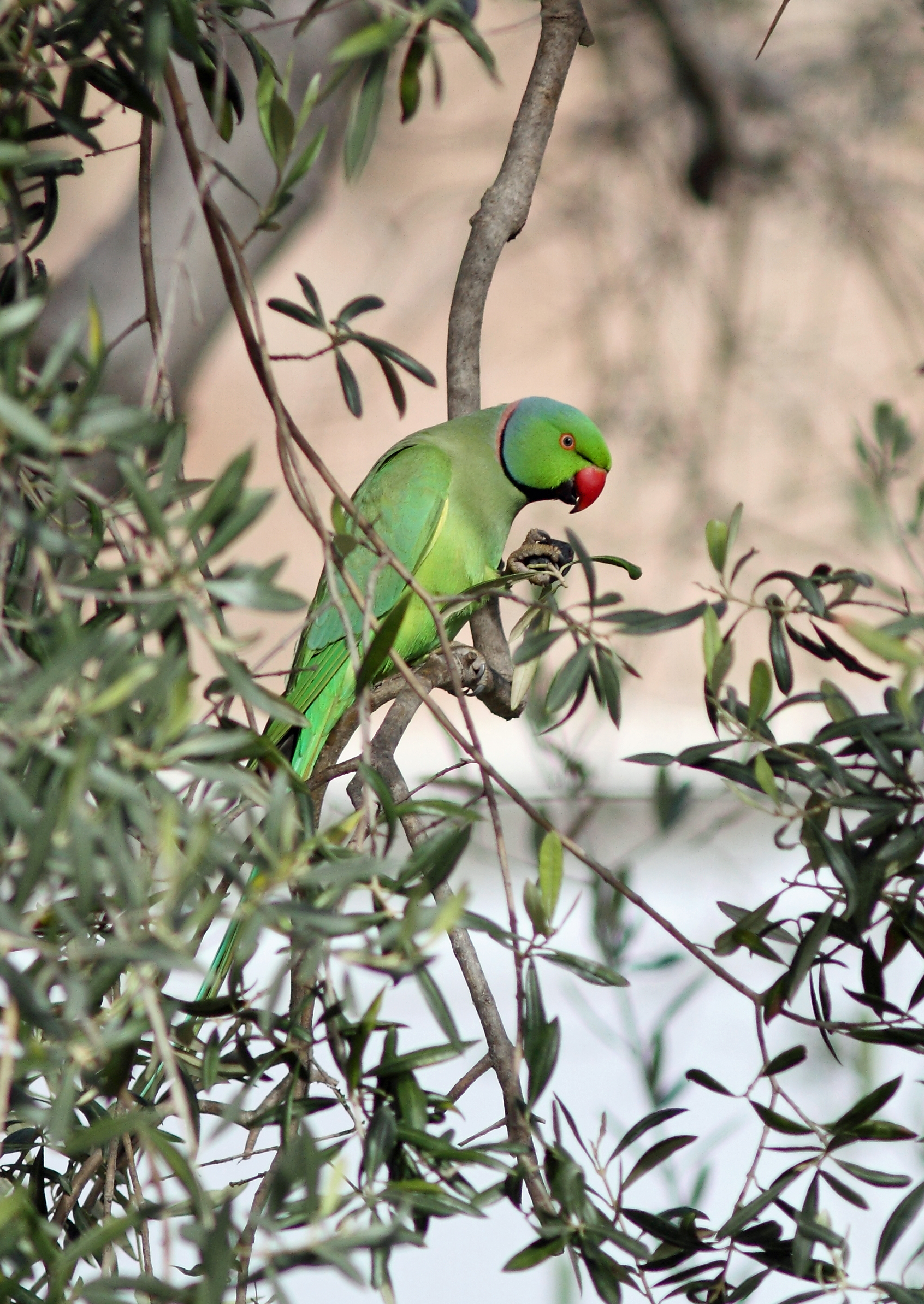
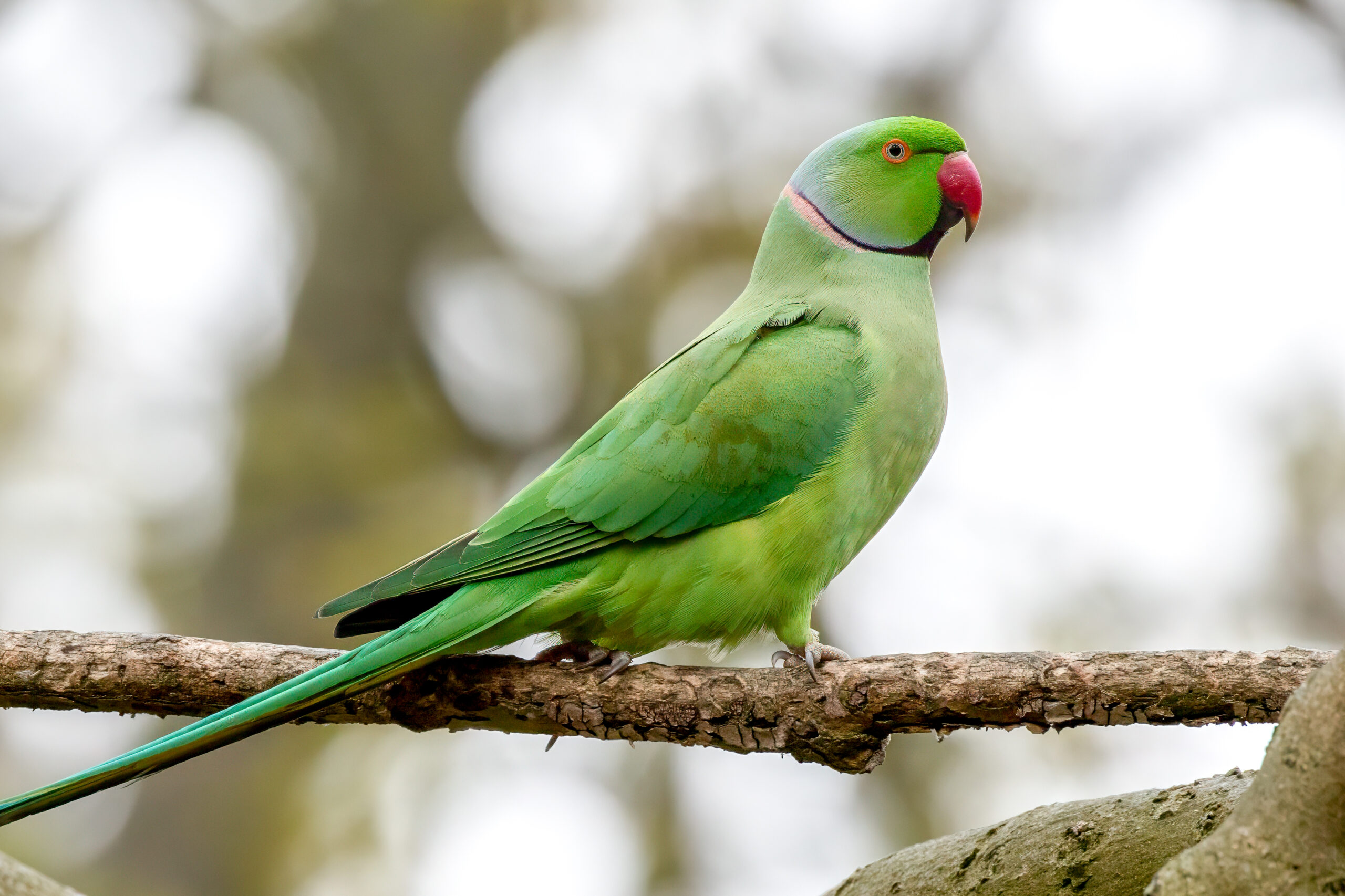
A study of urban bird communities in six Italian cities found that introduced rose-ringed parakeets (Psittacula krameri) and monk parakeets (Myiopsitta monachus) differed from many native birds in combinations of traits such as body size, diet, foraging, migration and reproduction. The result supported the “limiting similarity” hypothesis: species with different resource use and life-history strategies may compete less directly and therefore coexist more easily. The researchers found less support for the opposite explanation, environmental filtering, in which the environment mainly favours species with similar traits.
The researchers surveyed 220 points in Turin, Milan, Florence, Rome, Naples and Campobasso during both the breeding season and winter. They described bird species using traits related to body size, diet, foraging behaviour, territoriality, migration and reproduction. This allowed them to compare functional diversity – how much species differed in traits that influence their use of resources and the environment.
Across the surveys the researchers recorded 18,594 birds of 119 species. Parakeets were established in four of the six cities: rose-ringed parakeets occurred in Florence, Milan, Naples and Rome, while monk parakeets were found only in Rome. Both species were recorded in the breeding and winter surveys; Turin and Campobasso had no established parakeets in the study.
The parakeets had unusual combinations of ecological traits
In every city where the parakeets were established, they differed from most native birds in their combinations of traits. The authors interpret this as evidence that the parakeets occupy ecological roles that are uncommon among native species. This is why the results fit limiting similarity better than environmental filtering.
The more urbanised the sites were, the greater the differences among species in the ecological traits measured. The authors argue that highly modified cities can create opportunities that native specialists use less fully, leaving more room for generalists and introduced species.
Season also mattered. Species were more dissimilar overall during the breeding season than in winter, but the difference between sites with and without parakeets was clearest in winter. Communities without parakeets then tended to contain species that were more similar in their traits and resource use, whereas communities with parakeets showed greater differences among species. The authors link this to seasonal changes in bird communities and scarcer winter resources, which may strengthen competition between species that are ecologically similar.
The native birds were already ecologically dissimilar
The parakeets did not create this pattern by themselves. When the researchers removed the parakeets from communities where they occurred, the overall pattern changed little. Native birds at those sites were already relatively dissimilar in the traits measured.
The result therefore suggests that parakeets can establish in bird communities where species already overlap less in resource use and life-history strategies. It does not show that the introduced parrots alone created the differences between communities with and without parakeets.
Nest use was one area in which the parakeets were more similar to native birds. When the researchers repeated the breeding-season analysis without nesting habit, the parakeets stood out even more clearly from the rest of the bird community. The authors interpret this as a sign that competition may be stronger for nest sites, particularly for cavity-nesting rose-ringed parakeets.
The study compared ecological traits and bird-community composition. It did not directly measure competition or population effects on native birds, and it covered only one year in cities where the parakeets were already established. The results therefore support differences in resource use and life-history strategies as one explanation for successful establishment; they do not show that parakeets have no ecological impacts.
Ecology
Related news
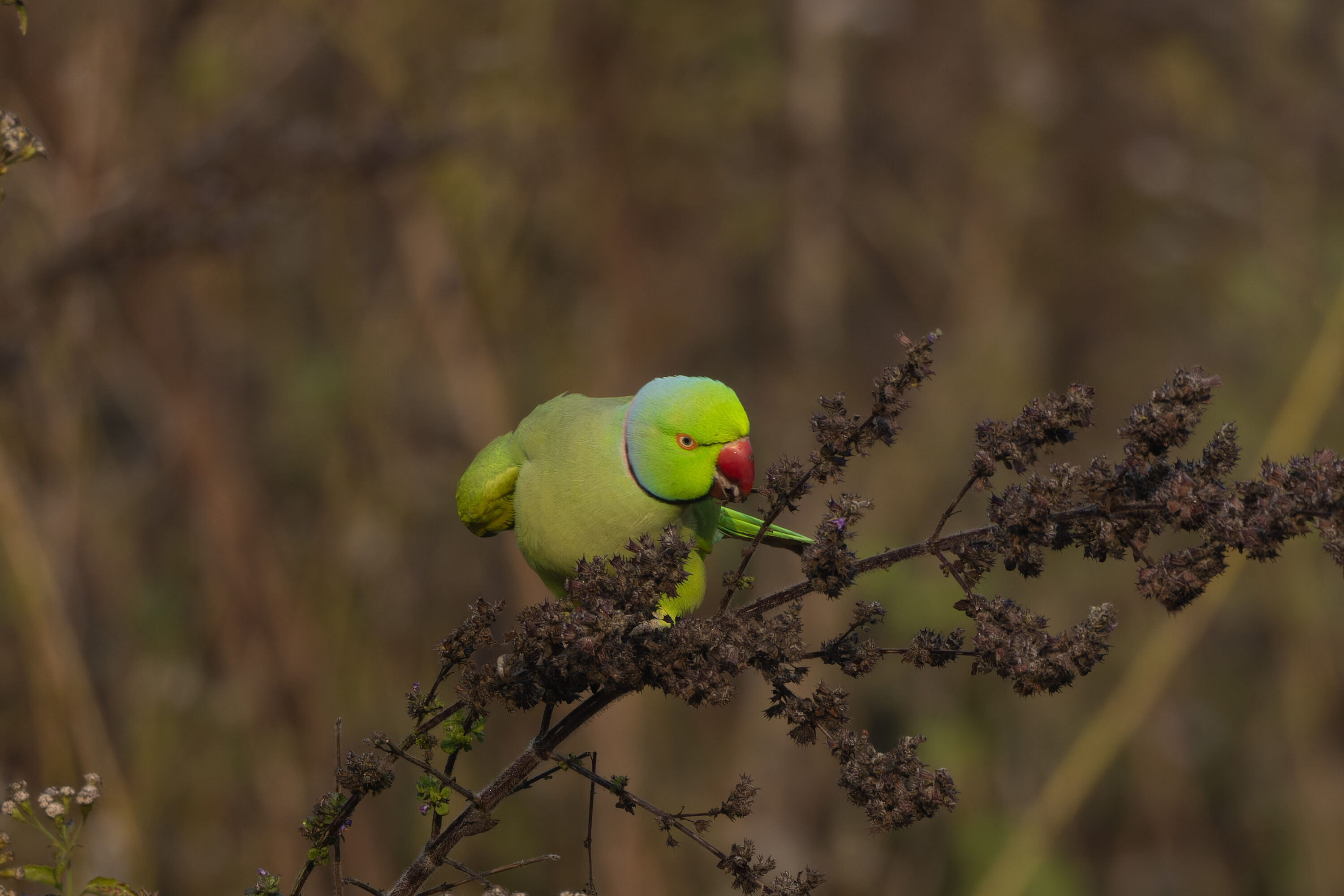
Rose-ringed Parakeet Index Showed Clear Increases on Both Time Scales in India
The 2025 State of India’s Birds update estimated a +60.6% long-term trend and a +2.3% current annual trend…
Read story →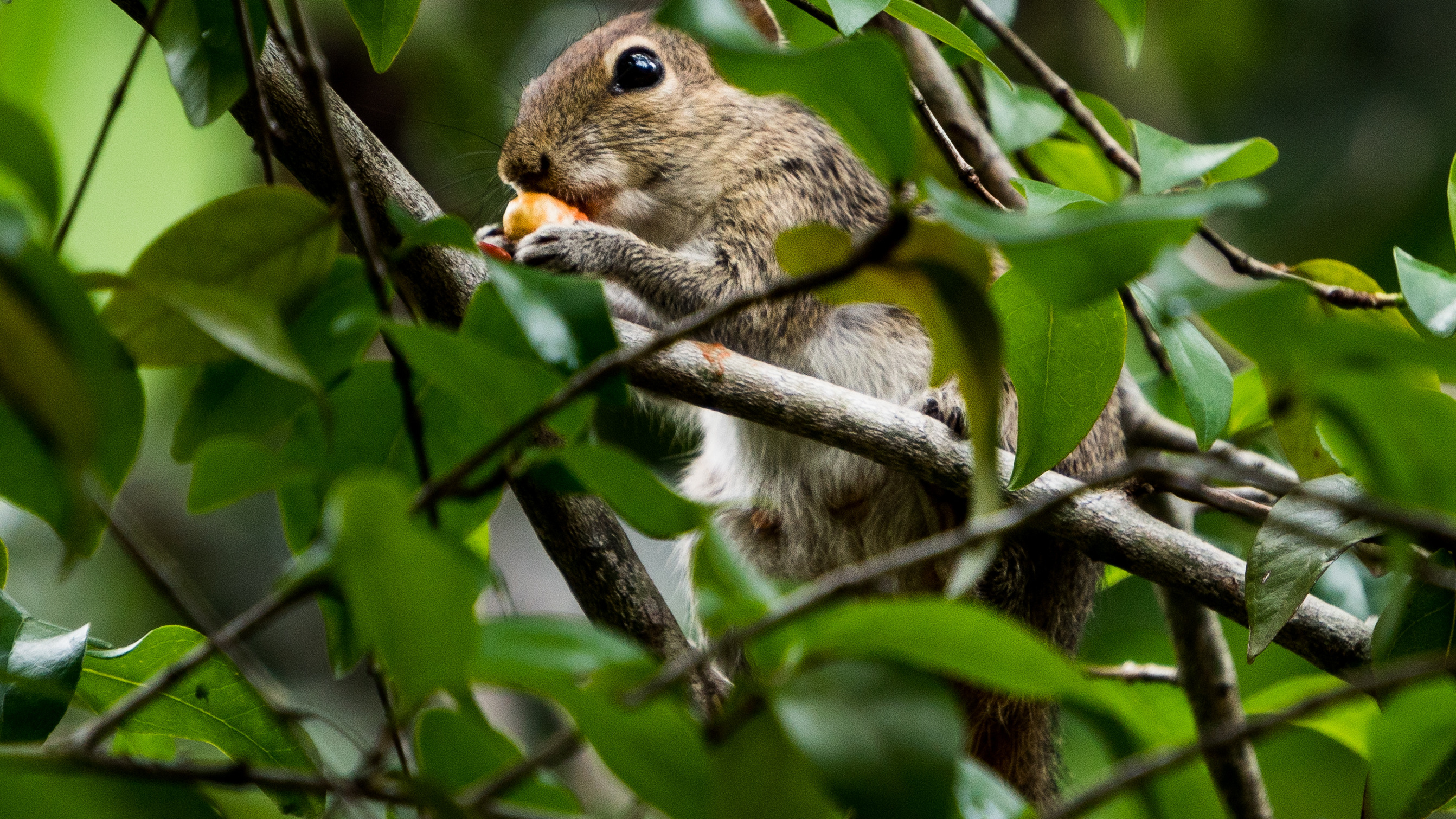
Birds and Indian Palm Squirrels Shared Seed-Dispersal Roles on a Lucknow Campus
A 2026 campus study in Lucknow recorded complementary seed-dispersal roles among birds and Indian palm squirrels, with squirrels…
Read story →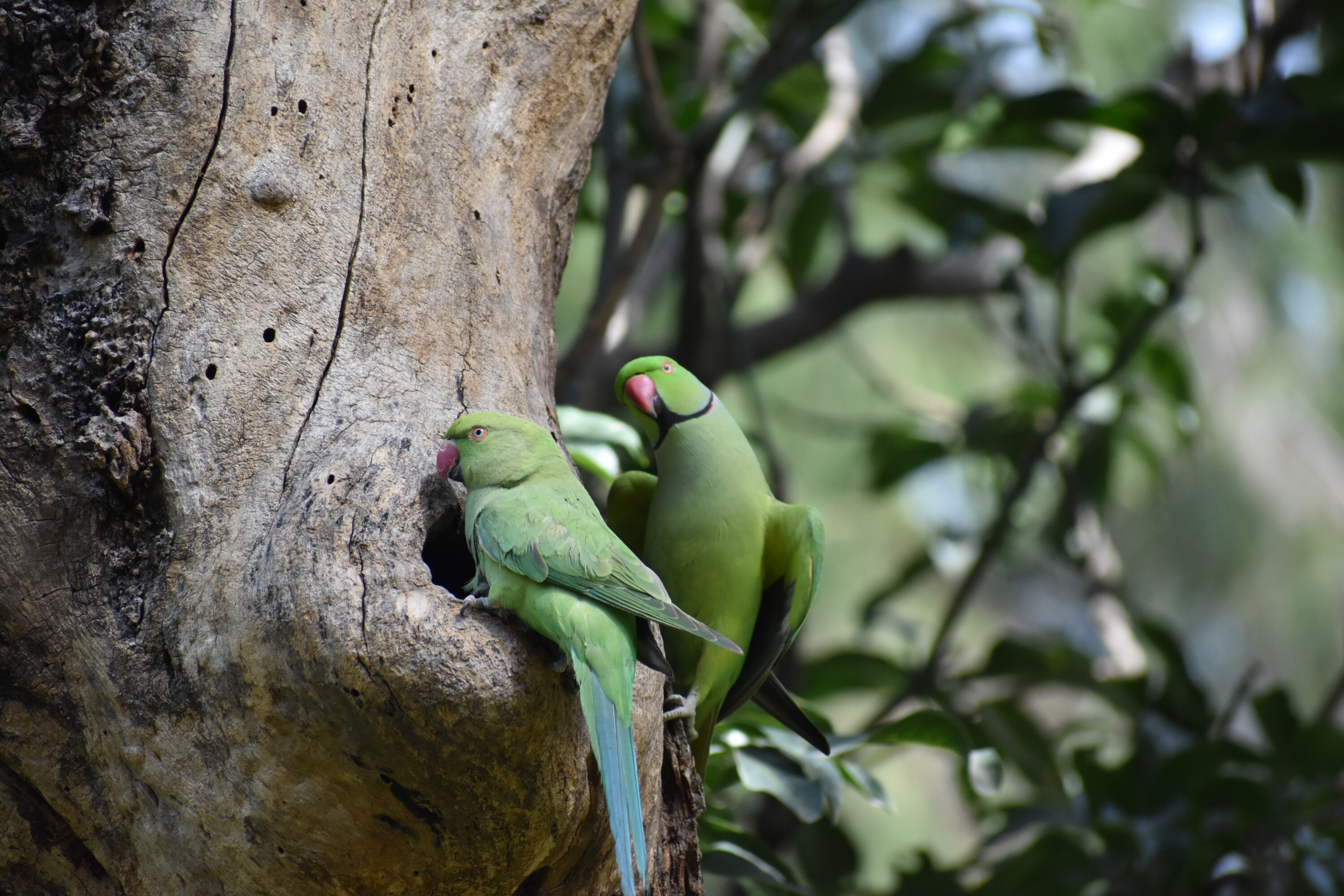
Modelled Rose-ringed Parakeet Abundance in Surveyed Thessaloniki Grids Rose by 64%
Repeated surveys of 99 one-square-kilometre grids in Thessaloniki estimated that rose-ringed parakeet abundance within the surveyed area increased…
Read story →SPECIES IN THIS STORY
Species in this story
Independent research and conservation news archive
Did you find this information useful?
Wildlife Vagabond is independently built and maintained. Voluntary support helps cover source verification, hosting and continued work on research and conservation news.
Support Wildlife VagabondThe news archive will remain freely available.