
Lower Moose Density Reduced the Share of Damaged Pines More Than Higher Pine Density in Sweden
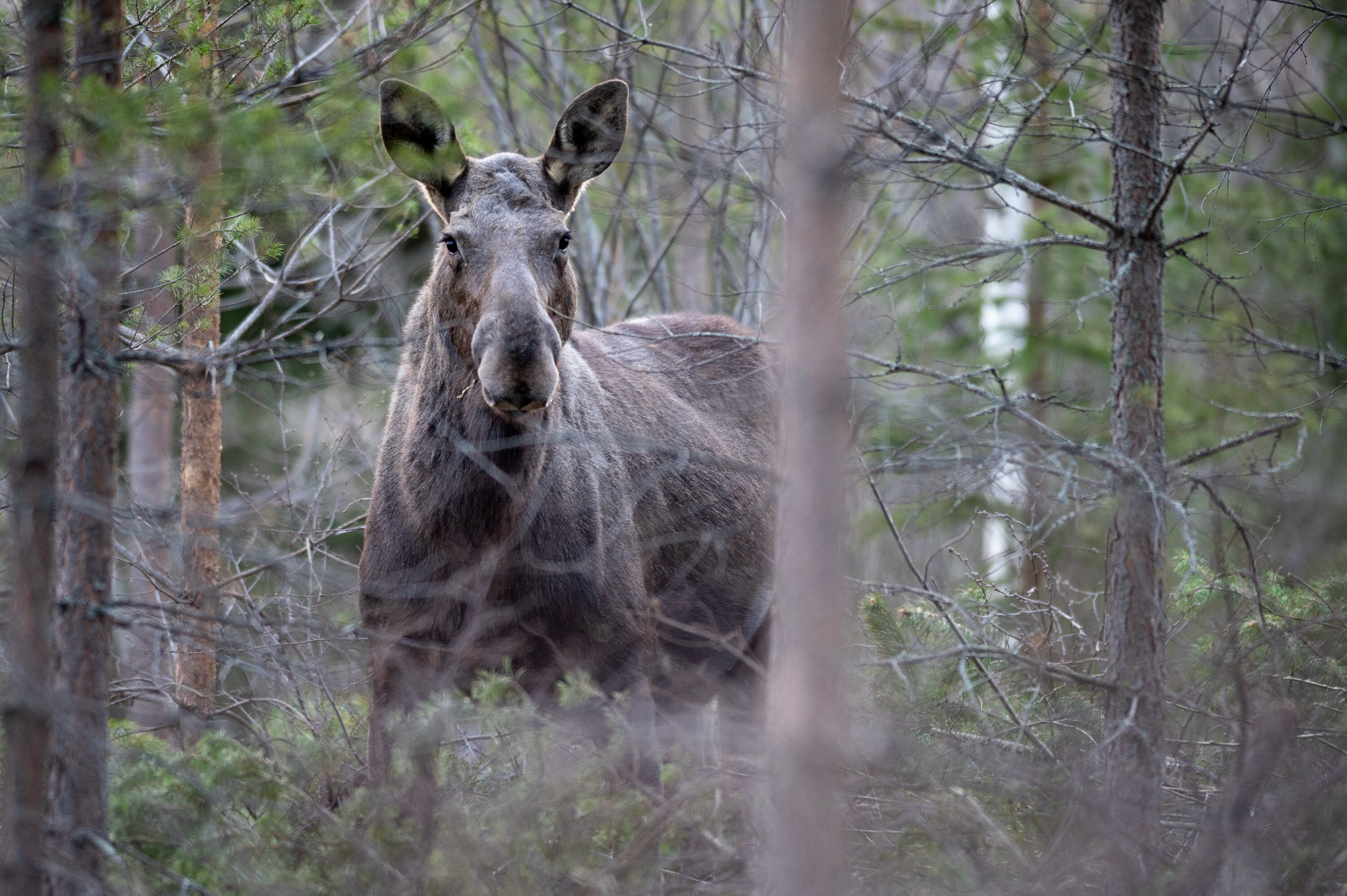
A nationwide Swedish analysis suggests that reducing moose (Alces alces) density can lower the proportion of browsing-damaged young pines more strongly than increasing the number of pine trees. The comparison addresses a long-running management question in a country where moose are highly valued but damage to regenerating Scots pine can impose substantial costs on forestry.
Ten years of national monitoring
The researchers combined Sweden’s national browsing inventory with spatially matched estimates of moose density for 2015–2024, giving 718 observations from 117 moose management areas. A young pine counted as damaged when its main stem had a browsed top shoot, stripped bark or a stem break; browsing of side shoots alone was not included. Damage caused by different deer species cannot always be distinguished from appearance alone.
The model estimated how the proportion of damaged pines changed with both moose density and pine density, while allowing general vulnerability to differ among management areas and years.
Moose density had the stronger average effect
The selected model explained 53 percent of the variation in the proportion of damaged trees. On average, the relative reduction in damage associated with a lower moose population was about 25 percent. The corresponding effect of increasing pine density was about 17 percent. In relative terms, reducing moose density therefore had roughly 1.5 times the effect of increasing the number of pines.
The result depends on what managers count. When the outcome was the number of damaged pines rather than the percentage damaged, pine density was the more influential variable. Adding more trees can reduce the damaged proportion even while the absolute number of damaged trees rises.
Local predictions remain difficult
Vulnerability varied substantially among management areas and from year to year, especially where pine density was low. For most individual areas, the available time series did not support reliable predictions of exactly how a local change in moose or pine density would affect damage.
The authors identify several factors that could improve future local estimates: alternative forage, browsing by other deer species, snow depth and snow duration, and longer monitoring series. These influences were not represented directly in the main model.
The study therefore provides a national average rather than a universal local prescription. It shows that both moose abundance and pine availability matter, while clarifying why the same action may produce different results in different forest landscapes. The paper was published in Wildlife Biology on 7 March 2026.
Management
Related news
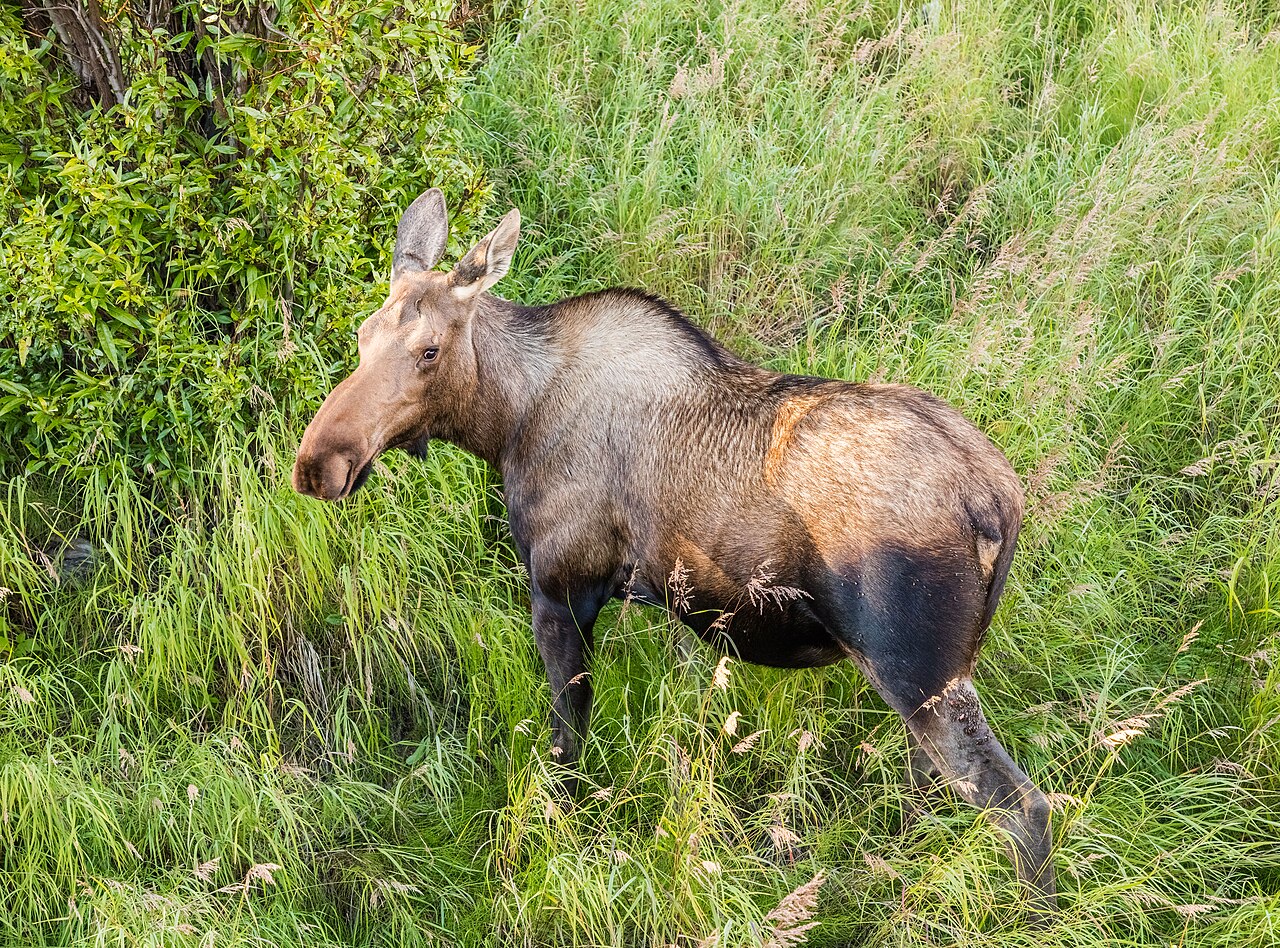
Arctic Moose Follow the River Valleys
GPS tracking in Alaska showed that half of 24 female moose migrated between summer and winter ranges. Migrants…
Read story →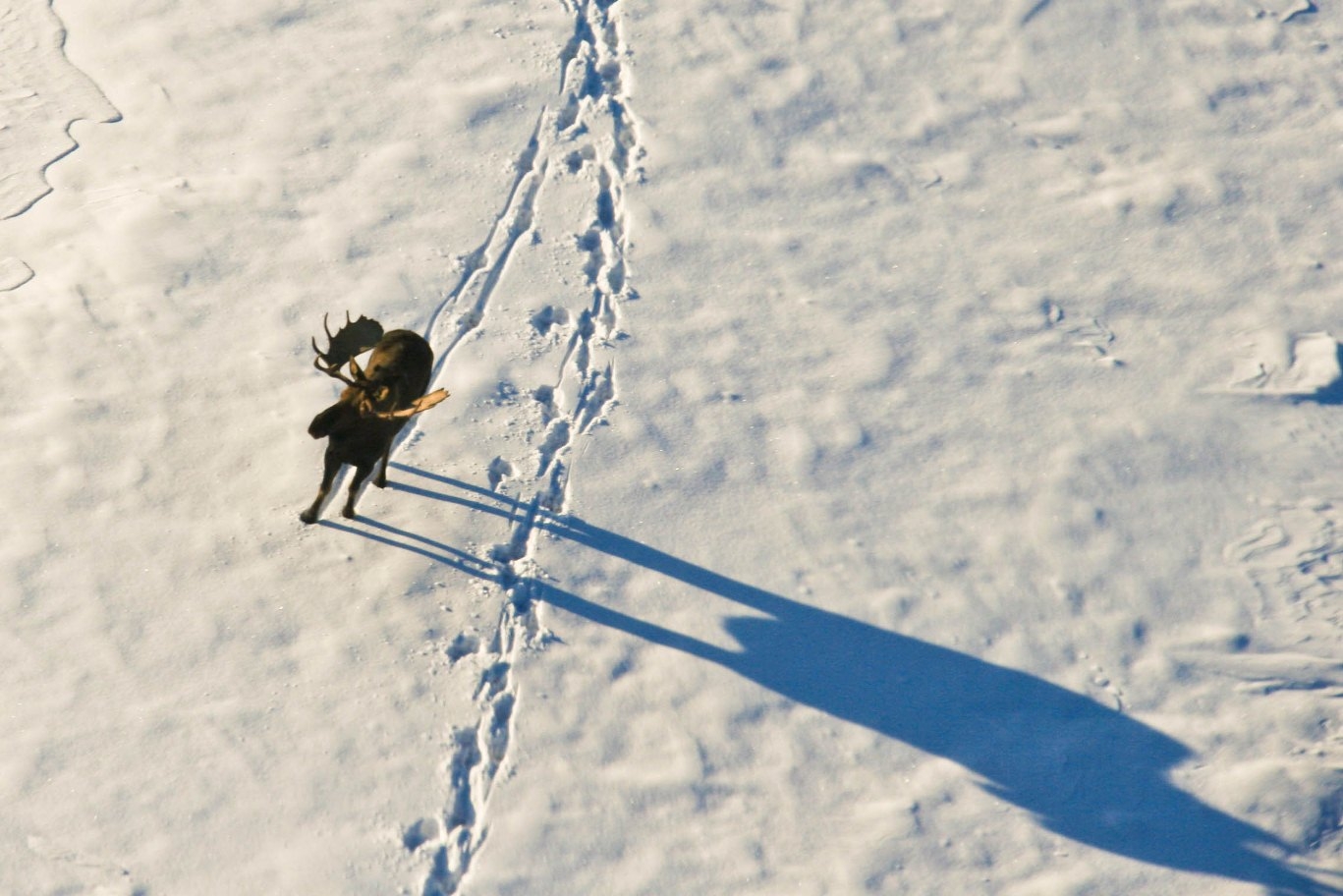
Thermal Drones Found Nearly All Moose in Favourable Winter Weather
Swedish trials found detection close to 100% in cold, overcast winter conditions, but the survey effort needed for…
Read story →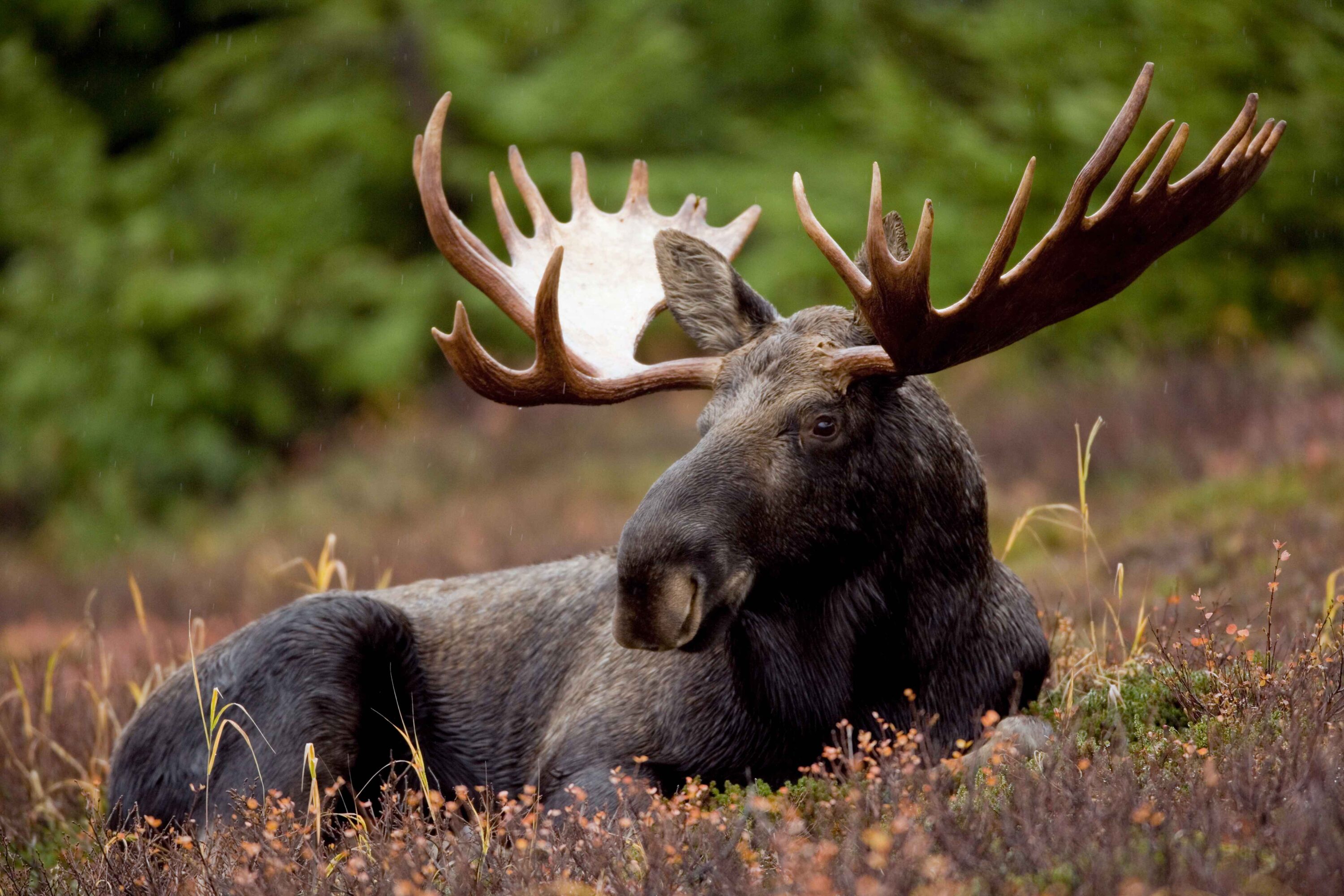
Even Adirondack Park’s Densest Moose Area Was Too Sparse for Precise Aerial Estimates
Helicopter surveys estimated about 92 moose in the Adirondack core in 2024 and 112 in 2025, but broad…
Read story →SPECIES IN THIS STORY
Species in this story
Independent research and conservation news archive
Did you find this information useful?
Wildlife Vagabond is independently built and maintained. Voluntary support helps cover source verification, hosting and continued work on research and conservation news.
Support Wildlife VagabondThe news archive will remain freely available.